Biocracked
←

#muscle

3 articles
Approach: conceptual metaphor. Palette: D, bold color field.

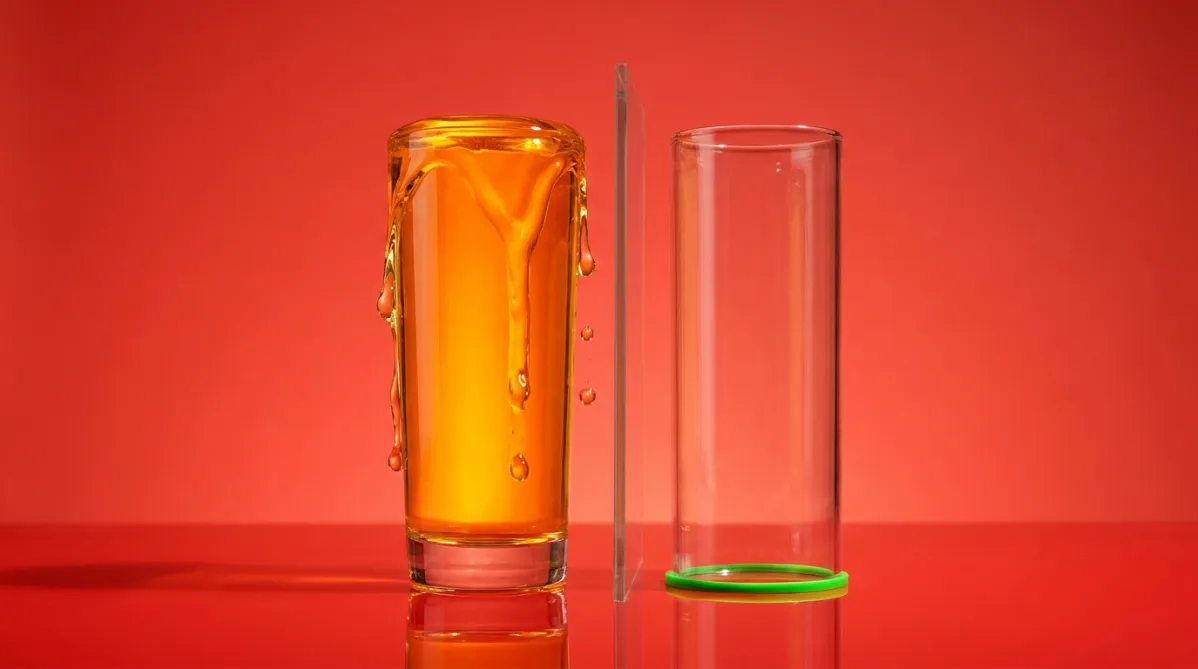
A tall glass of bright orange-gold liquid sits in the center of the frame, filled to the brim and overflowing down its sides, shot at a slight low angle. Beside it, a sealed, empty glass cylinder with a thin glass wall stays bone dry. A clear glass barrier stands between them, so the flow clearly never crosses. The backdrop is a saturated tomato-red seamless paper, with a glossy red surface reflecting both vessels. Hard, directional studio light from the upper left throws crisp, warm-neutral shadows and bright highlights along the glass rims and liquid droplets. One small electric green ring sits at the base of the empty cylinder as a subtle accent. Mood: tense, ironic, clean and editorial. Photorealistic, shallow depth of field, no text or labels.
supplements

Seu CoQ10 chega ao sangue, mas não às mitocôndrias

BY NOVA CHEN ·

Um novo ensaio em humanos avaliou um suplemento de longevidade popular com biópsias musculares, e os resultados são desconfortáveis para o marketing. Em 40 adultos saudáveis, com idade média de 74 anos, 400 mg/dia de CoQ10 durante 12 semanas aumentaram os níveis sanguíneos, mas não alteraram o conteúdo de CoQ10 no músculo nem nas mitocôndrias. A função mitocondrial, o VO₂máx, o controle da glicemia e a composição corporal permaneceram inalterados. O estudo é pequeno, de curta duração e limitado a idosos robustos; o autor sênior ainda presta consultoria para a Pharma Nord. Veja o que o estudo mostra, o que não pode afirmar e quem ainda pode querer conversar com um médico sobre o CoQ10.
**Approach: Lab in action. Palette: D, bold color field (teal).**

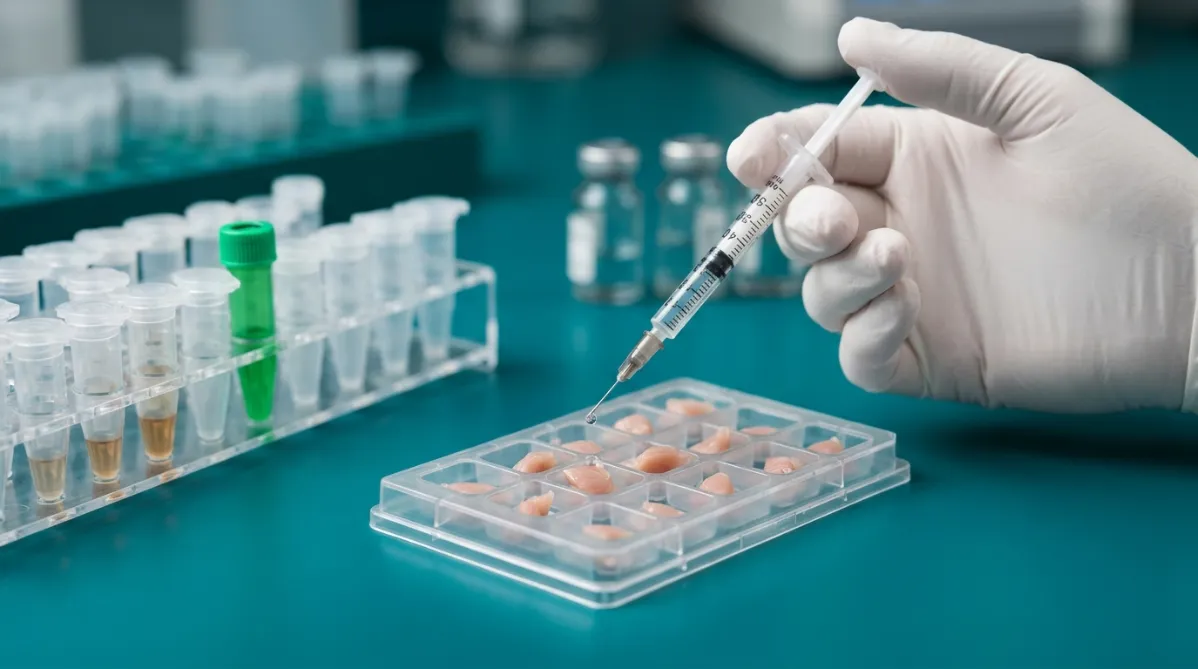
Overhead three-quarter angle on a gloved hand holding a small insulin-style syringe over a tray of mouse-muscle tissue samples. The nitrile glove is bright white, and the backdrop is a saturated teal lab bench surface with a soft sheen. Tiny clear microtubes sit in a rack, and a few contain a faint amber liquid. One thin electric green cap on a tube is the only green accent. The lighting is bright, even studio-like lab light with crisp, soft-edged shadows and a gentle highlight on the syringe barrel and a single hanging droplet at the needle tip. The depth of field is shallow, so the background tubes blur into teal. The mood is precise, focused and quietly hopeful, with no readable text or labels anywhere.
peptides

Uma única aplicação fez as mitocôndrias musculares de ratos velhos funcionarem como as de jovens em 1 hora

BY HELIX WARD ·

Uma única injeção de SS‑31 (elamipretida) restaurou a produção de energia mitocondrial em músculos de ratos muito velhos a níveis de jovens em apenas uma hora. O resultado vem de um estudo em ratos de 2013, não de ensaios em humanos. O peptídeo não teve efeito observável em músculos jovens, e oito dias de tratamento aumentaram a resistência dos animais idosos. Em humanos, a elamipretida recebeu aprovação acelerada da FDA para a síndrome de Barth, mas falhou nos principais desfechos do ensaio MMPOWER‑3 em miopatia mitocondrial.
Approach: the human outcome. Palette: bold color field, mustard yellow.

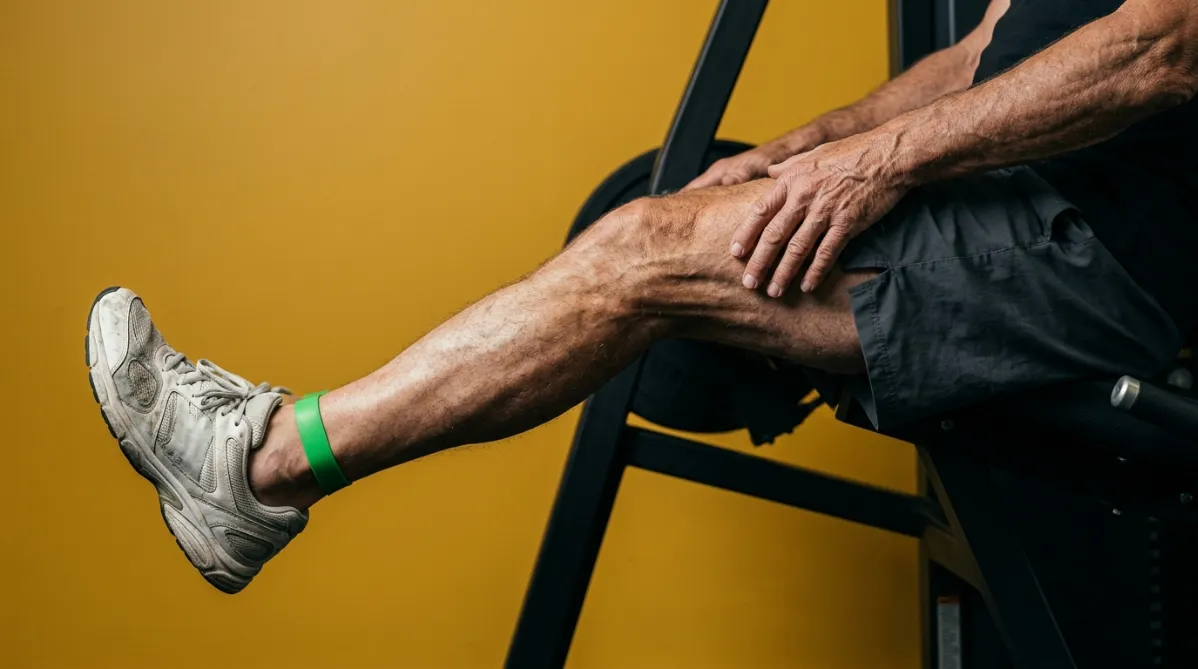
A tight, low-angle side view of an older man's muscular calf and thigh mid-leg-press or seated leg extension, shot from knee level. His weathered, sinewy skin shows fine hair and visible tendon definition, and his hands rest on the knee. He wears a plain charcoal athletic short and a worn white sneaker. The backdrop is a seamless saturated mustard-yellow wall, with a matte black gym machine frame cutting diagonally through the frame. Soft, directional studio light from camera left creates gentle highlights on the quadriceps and a warm shadow. A small electric green resistance band is looped around his ankle as the only green accent. The face stays out of frame. The mood is determined, strong and quietly hopeful, with a shallow depth of field and a crisp editorial feel.
peptides

15 g de peptídeos de colágeno: dobre o ganho de força nas pernas em homens mais velhos

BY HELIX WARD ·

A internet diz que colágeno não serve para músculo, mas um ensaio randomizado com homens mais velhos sarcopênicos mostra que a questão é mais complexa. Após 12 semanas de treinamento de resistência, os participantes que consumiram 15 g/dia de peptídeos de colágeno ganharam cerca de 45 % a mais de massa magra (+4,2 kg vs +2,9 kg) e mais que o dobro do ganho de força nas pernas em relação ao grupo placebo. O detalhe é que o placebo era sílica, não proteína, portanto o aporte proteico extra pode explicar parte do efeito. A seguir, confira o que o estudo encontrou, por que o colágeno pode ser útil e quem pode se beneficiar.

This page is available in