Biocracked
←

#muscle

3 articles
Approach: conceptual metaphor. Palette: D, bold color field.

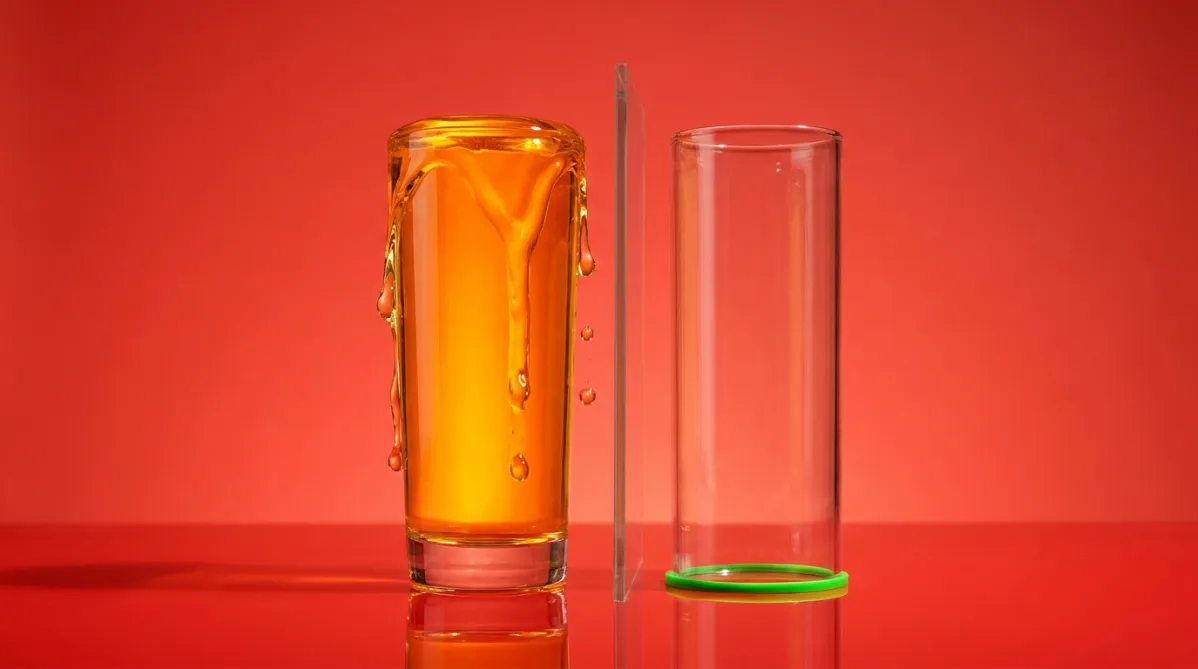
A tall glass of bright orange-gold liquid sits in the center of the frame, filled to the brim and overflowing down its sides, shot at a slight low angle. Beside it, a sealed, empty glass cylinder with a thin glass wall stays bone dry. A clear glass barrier stands between them, so the flow clearly never crosses. The backdrop is a saturated tomato-red seamless paper, with a glossy red surface reflecting both vessels. Hard, directional studio light from the upper left throws crisp, warm-neutral shadows and bright highlights along the glass rims and liquid droplets. One small electric green ring sits at the base of the empty cylinder as a subtle accent. Mood: tense, ironic, clean and editorial. Photorealistic, shallow depth of field, no text or labels.
supplements

Tu CoQ10 llega a la sangre, pero no a tus mitocondrias

BY NOVA CHEN ·

Un ensayo clínico reciente evaluó, mediante biopsias musculares, un suplemento de longevidad muy popular. En 40 adultos sanos de 74 ± 4 años, 400 mg/día de CoQ10 aumentaron los niveles plasmáticos pero no modificaron el contenido ni la función mitocondrial del músculo. Los resultados, incómodos para el marketing, ponen en duda la capacidad del CoQ10 de actuar como potenciador mitocondrial en personas mayores robustas.
**Approach: Lab in action. Palette: D, bold color field (teal).**

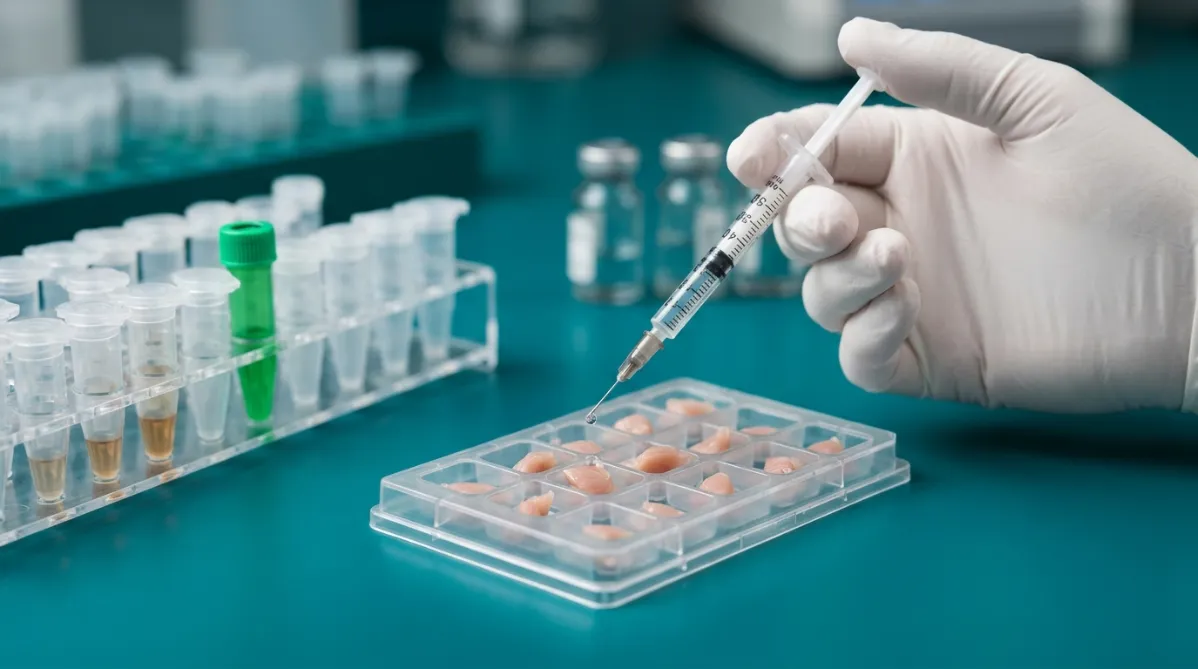
Overhead three-quarter angle on a gloved hand holding a small insulin-style syringe over a tray of mouse-muscle tissue samples. The nitrile glove is bright white, and the backdrop is a saturated teal lab bench surface with a soft sheen. Tiny clear microtubes sit in a rack, and a few contain a faint amber liquid. One thin electric green cap on a tube is the only green accent. The lighting is bright, even studio-like lab light with crisp, soft-edged shadows and a gentle highlight on the syringe barrel and a single hanging droplet at the needle tip. The depth of field is shallow, so the background tubes blur into teal. The mood is precise, focused and quietly hopeful, with no readable text or labels anywhere.
peptides

Una Inyección Hace que las Mitocondrias del Músculo de Ratón Anciano Actúen como Jóvenes en 1 Hora

BY HELIX WARD ·

Una sola inyección de SS‑31 (elamipretida) restauró la producción de energía mitocondrial muscular en ratones muy viejos a niveles de jóvenes en una hora. Ese resultado proviene de un estudio de 2013 en ratones, no de ensayos en humanos. El péptido no tuvo efecto observable en músculo joven, y ocho días de tratamiento mejoraron la resistencia en los animales ancianos. En humanos, la elamipretida obtuvo la aprobación acelerada de la FDA para el síndrome de Barth, pero no alcanzó sus objetivos principales en el ensayo MMPOWER‑3 de miopatía mitocondrial.
Approach: the human outcome. Palette: bold color field, mustard yellow.

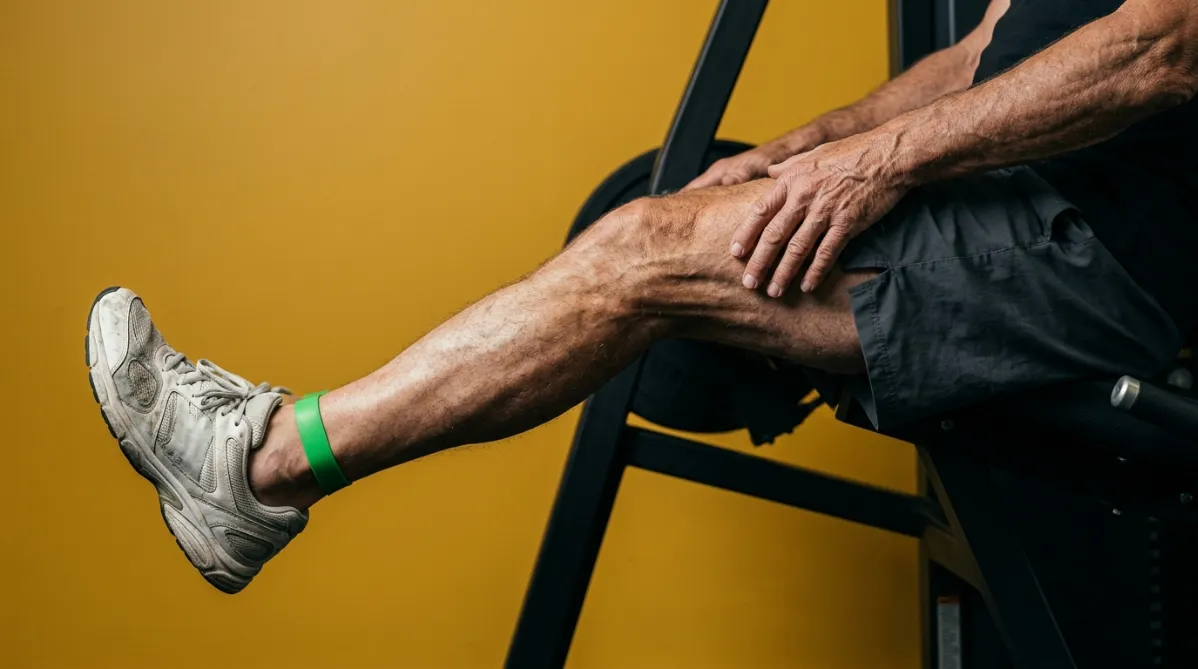
A tight, low-angle side view of an older man's muscular calf and thigh mid-leg-press or seated leg extension, shot from knee level. His weathered, sinewy skin shows fine hair and visible tendon definition, and his hands rest on the knee. He wears a plain charcoal athletic short and a worn white sneaker. The backdrop is a seamless saturated mustard-yellow wall, with a matte black gym machine frame cutting diagonally through the frame. Soft, directional studio light from camera left creates gentle highlights on the quadriceps and a warm shadow. A small electric green resistance band is looped around his ankle as the only green accent. The face stays out of frame. The mood is determined, strong and quietly hopeful, with a shallow depth of field and a crisp editorial feel.
peptides

15 g de péptidos de colágeno duplican la ganancia de fuerza en piernas de hombres mayores

BY HELIX WARD ·

Internet suele decir que el colágeno no sirve para los músculos, pero un ensayo aleatorio en hombres mayores con sarcopenia muestra que la cuestión es más compleja. Tras 12 semanas de entrenamiento con pesas, los sujetos que tomaron 15 g/día de péptidos de colágeno ganaron alrededor de un 45 % más de masa magra (+4,2 kg vs +2,9 kg) y más del doble de fuerza en las piernas que el grupo placebo. El truco está en que el placebo fue sílice, no proteína, de modo que el exceso de proteína por sí sola podría explicar parte del efecto. A continuación, los hallazgos del estudio, por qué el colágeno podría ayudar y quién podría beneficiarse.

This page is available in