Biocracked
←

Peptides

6 articles
Approach: macro science with a conceptual twist. Palette: bold color field.

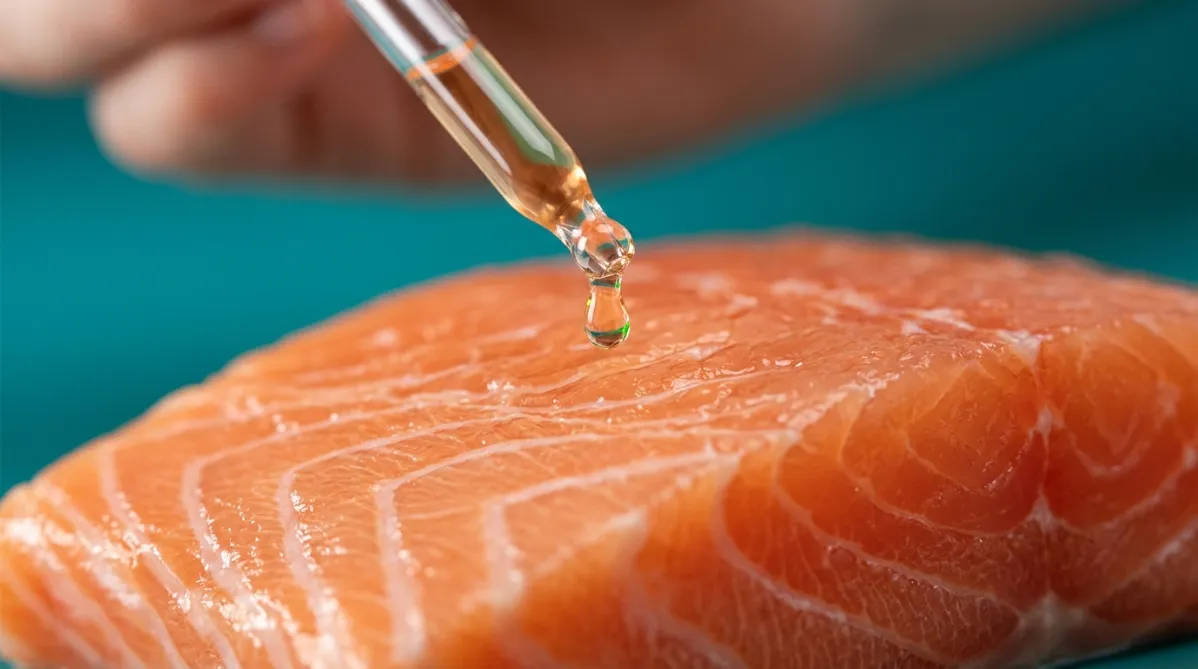
Extreme close-up, slightly high three-quarter angle, of a raw salmon fillet's translucent coral flesh, with a glass pipette releasing a single droplet of pale amber peptide solution onto the muscle fibers. Glistening myotome layers and fine white connective lines are sharp in the foreground, with shallow depth of field melting the rest. The salmon sits on a saturated teal backdrop, so the orange-pink flesh contrasts strongly with it. Soft, large-source studio light from upper left gives crisp specular highlights on the droplet and moist fibers, with gentle neutral shadows. A tiny electric green reflection glints inside the droplet. The mood is precise, fresh and curious, like a food-science lab photograph. Photorealistic, with no text.
peptides

Péptidos de salmón vs suero: +13 % de ferritina en 8 semanas (estudio piloto con 14 personas)

BY NOVA CHEN ·

Un pequeño ensayo noruego mostró que 12 g/día de hidrolizado de proteína de salmón elevaron la ferritina en aproximadamente un 13 % y los glóbulos rojos en un 7 % frente al suero durante ocho semanas. Los resultados secundarios sugirieron menos inflamación, mejores marcadores de glucosa y una composición corporal mejorada. Sin embargo, el estudio contó con solo 14 participantes y fue patrocinado por la industria, por lo que sus hallazgos son una señal, no una prueba concluyente. A continuación explicamos qué son los péptidos de salmón, qué encontró el ensayo, cómo difieren del colágeno y por qué hay que ser cauteloso.
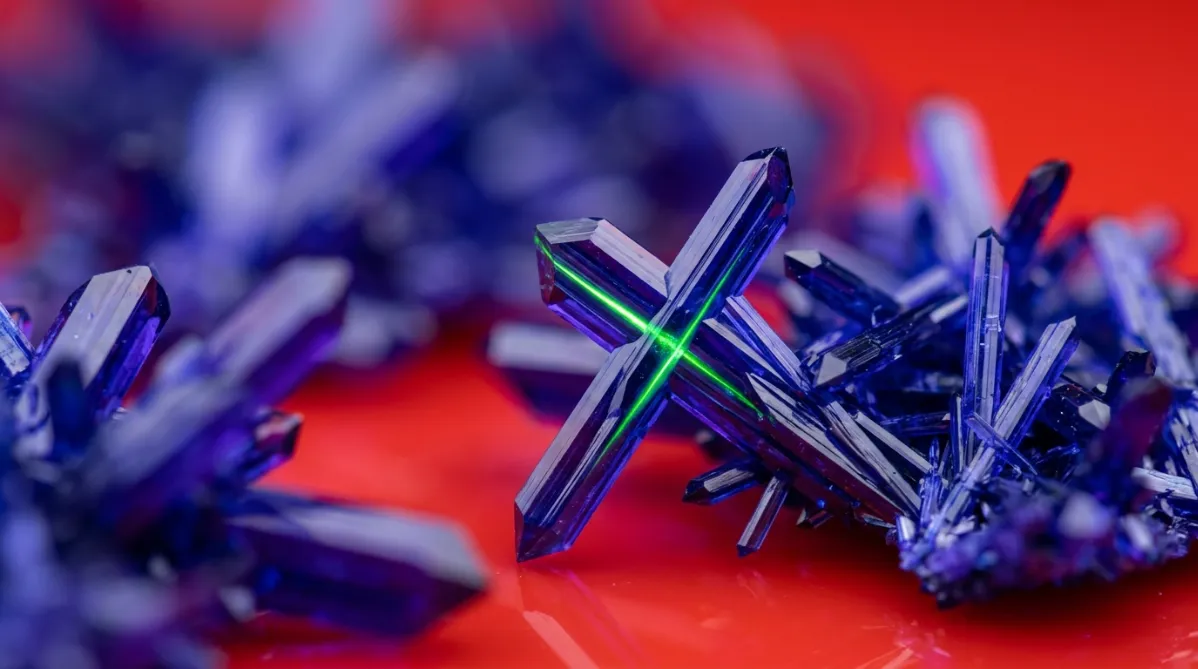
Macro science: an extreme close-up of GHK-Cu copper peptide crystals, deep blue-violet needle-like crystals with faceted edges, shot at a low three-quarter angle with a shallow depth of field so the nearest crystals are razor sharp and the rest dissolve into soft blur. The crystals sit on a smooth, glossy tomato-red backdrop that fills the frame, creating a bold color field. Lighting is a single large softbox from the upper left, giving crisp specular highlights on the crystal faces and a soft, warm-red bounce in the shadows. One tiny thread of electric green light refracts through a single crystal edge as a subtle accent. Mood: striking, precise, curious, scientific without feeling sterile. Photorealistic microscopy-meets-studio look, no text, no labels, no people.
peptides

El péptido de cobre GHK-Cu podría sintonizar redes genéticas detrás de la reparación de la piel

BY NOVA CHEN ·

GHK‑Cu, el péptido de cobre presente en innumerables sueros, podría hacer mucho más que hidratar la piel. Una revisión de 2018 sugiere que los nuevos datos de expresión génica pueden explicar cómo esta pequeña molécula impulsa la síntesis de colágeno, la reparación tisular, la regulación de la inflamación e incluso la reparación del ADN. Aquí te resumimos lo que dice el artículo sobre la piel envejecida y la regeneración, y atendemos a las advertencias prácticas sobre su uso tópico y los límites de una revisión.
Approach: Lab in action. Palette: D, bold color field.

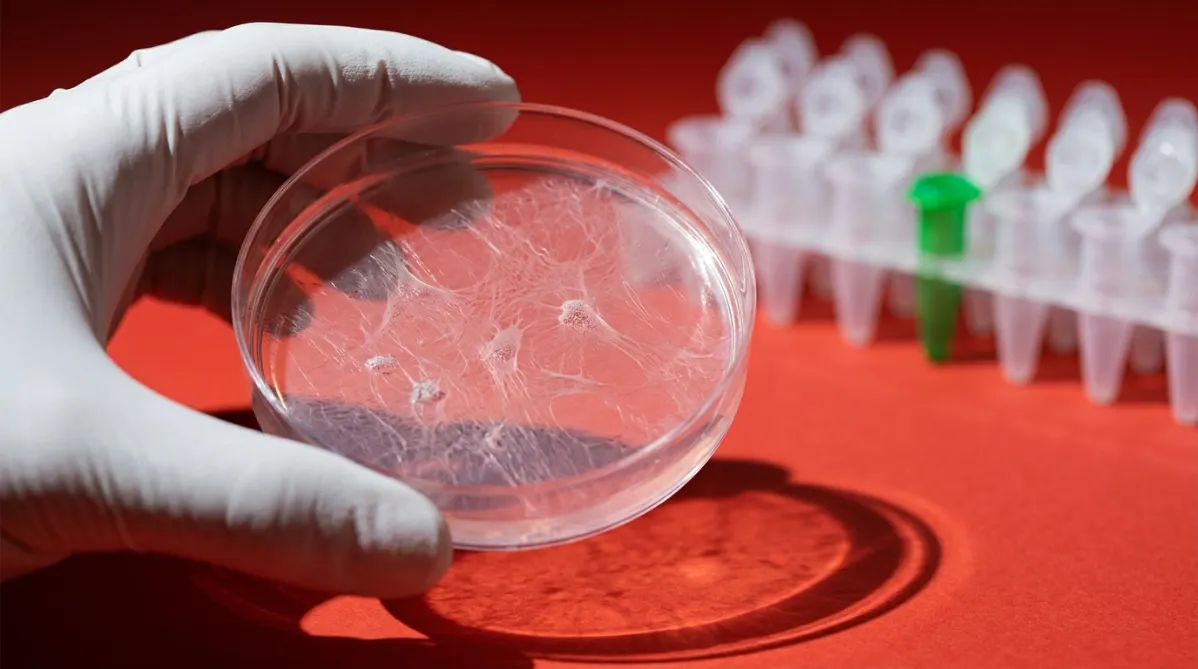
A gloved hand holds a clear petri dish at a slight low angle, close and slightly above eye level, against a saturated tomato-red backdrop. Inside the dish, a thin, translucent layer of pale pink culture medium holds a faint, lacy web of fibroblast cells, with a few small clusters just visible. Hard, clean studio light from the upper left throws a crisp curved shadow of the dish onto the red surface and picks out bright highlights on the rim and the glove's matte white nitrile. In the soft-focus background, a rack of empty microcentrifuge tubes stands out in cool white. One tiny electric green cap on a single tube adds a small accent. The mood is precise and skeptical: a promising result still confined to the dish.
peptides

Epithalon activó la telomerasa en células, pero no en personas

BY HELIX WARD ·

Un pequeño péptido de cuatro aminoácidos habría activado la telomerasa, una enzima que la mayoría de las células adultas mantienen silenciada, y alargado los telómeros en células humanas. Ese hallazgo alimenta el bombo en torno a la supuesta longevidad del epithalón. Sin embargo, el experimento se realizó con fibroblastos fetales en placa, no con personas, y la afirmación de que extiende la vida es solo una hipótesis. A continuación se muestra lo que realmente demostró el estudio de 2003, qué dejó fuera y cómo interpretarlo antes de comprar cualquier producto.
Approach: the human outcome. Palette: natural.

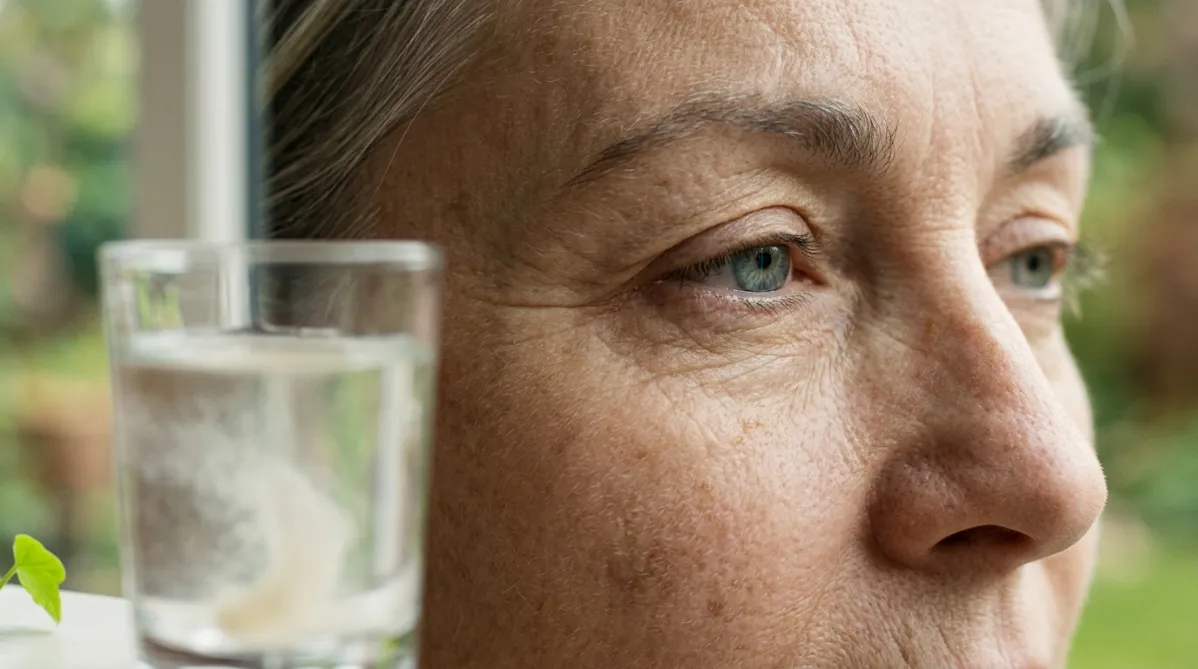
Extreme close-up of a woman's eye and the delicate skin around it, shot from a slight three-quarter angle with a 100mm macro lens and a shallow depth of field. Her skin is a mature 50s complexion with fine crow's feet that are sharp and tactile, with visible pores and soft vellus hairs. Her gaze is relaxed and not at the camera, and the face is cropped so identity isn't the focus. Soft, directional window daylight rakes across the skin from the left to bring out the wrinkle texture, with gentle warm skin tones and a blurred leafy green background outdoors. A single glass of water with a faint dissolving powder swirl sits out of focus in the foreground, with a tiny electric green leaf highlight at the edge. The mood is calm, honest and quietly scientific.
peptides

2,5 g de péptidos de colágeno reducen las arrugas alrededor de los ojos un 20 % en 8 semanas

BY NOVA CHEN ·

El colágeno es uno de los suplementos de belleza y longevidad más demandados, pero pocos productos cuentan con ensayos humanos controlados con placebo. En un estudio con 114 mujeres de 45 a 65 años, 2,5 g diarios del péptido bioactivo Verisol disminuyeron el volumen de las arrugas bajo los ojos un 20 % frente al placebo tras 8 semanas. Las biopsias revelaron un 65 % más de procollagen‑I y un 18 % más de elastina; el aumento de fibrilina (6 %) no resultó significativo. El efecto se mantuvo 4 semanas después de la última dosis, aunque los resultados se limitan a ese péptido de marca y a esa población específica.

A wide, editorial-style still life photographed from slightly above on a pale warm-gray stone surface, lit by soft diffused morning light from the left. At the center, a delicate chain of 16 small, glossy beads in alternating muted terracotta, sage green, and cream is arranged in a gentle S-curve, each bead slightly different in size, like a hand-strung necklace. It stands for a peptide chain in a tactile, abstract way. Beside the chain, a translucent glass petri dish holds a thin layer of pale amber liquid with a few soft ripples. Behind it, a cross-section of a ripe fig and a halved blood orange show their intricate internal textures, suggesting cellular structure and mitochondria without literal illustration.

On the left side of the frame, a small ceramic mouse figurine in matte off-white sits calmly next to a sprig of dried wheat. It is a subtle nod to the mouse study and is stylized and minimal, not cartoonish. On the right, an open, softly blurred notebook with thin hand-drawn circles and curved lines, like looping pathway diagrams, lies under a brass pen. A few pages are visible but the text is illegible.

Scatter a few elements for texture: a small sprig of eucalyptus, a folded linen napkin in oatmeal tone, and a single clear glass pipette resting diagonally across the lower foreground. The palette is warm neutrals with accents of sage, terracotta, and soft amber, giving a calm, modern wellness-journal look. Shallow depth of field keeps the bead chain crisp while the background gently dissolves into creamy bokeh. Generous negative space across the upper right leaves room for headline overlay. The overall mood is clean, contemporary, and intellectually curious: scientific but warm, like a premium health and science magazine cover, with fine grain, natural shadows, and no text, logos, or futuristic elements.
peptides

MOTS‑c explicado: el péptido mitocondrial de 16 aminoácidos que activó AMPK y protegió a ratones de la obesidad inducida por dieta

BY DR. SYNAPSE ·

Un diminuto péptido de 16 aminoácidos codificado en el ADN mitocondrial, no en el núcleo, activó AMPK en músculo y protegió a ratones de la obesidad inducida por la dieta y la resistencia a la insulina, según un estudio de 2015 publicado en *Cell Metabolism*. MOTS‑c se ha convertido en uno de los nombres más comentados en los círculos de péptidos y biohacking. Sin embargo, se trata de un trabajo de descubrimiento en ratón y a nivel molecular sin datos de resultados en humanos, y MOTS‑c no es una terapia aprobada. Este artículo explica qué es MOTS‑c, cómo parece funcionar a través del ciclo del folato y AMPK, qué mostraron los ratones y qué conclusiones sí o no son válidas.
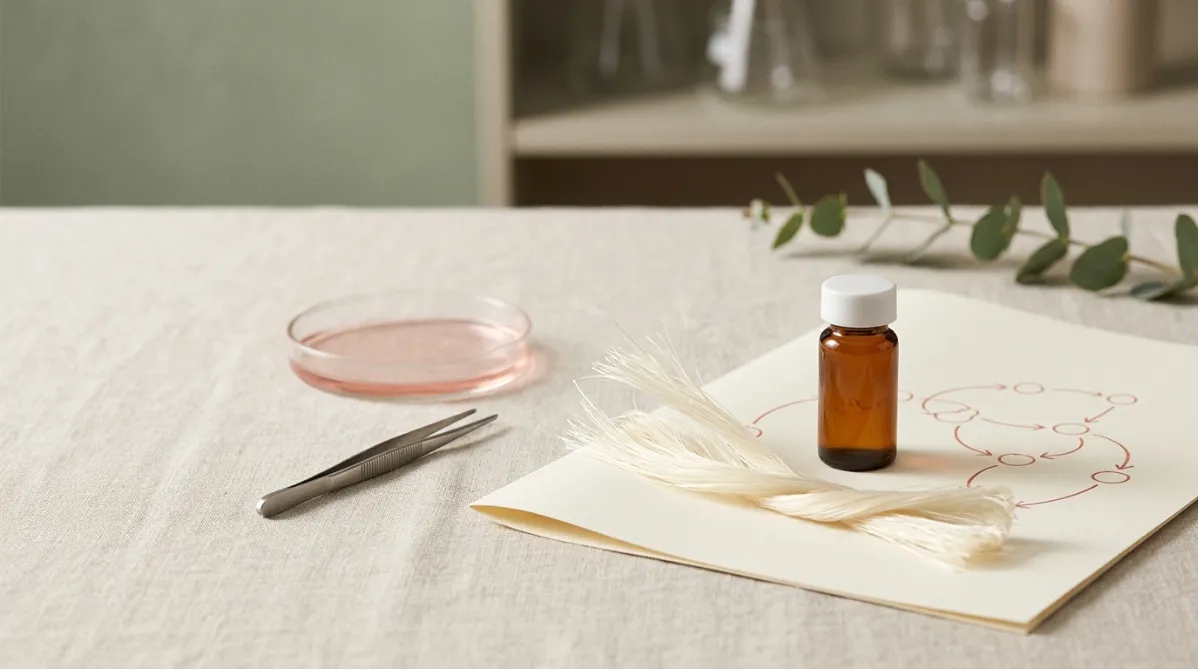
A wide, editorial-style still life photographed in soft natural window light on a pale oatmeal-colored linen surface. In the center foreground, a single small amber glass vial with a matte white cap sits slightly off-center to the right, unlabeled and minimal. Beside it lies a delicate, translucent skein of tendon-like fibers, rendered as fine pale ivory threads gently fanning out and twisting together, resting on a folded sheet of cream paper. To the left, a glass petri dish with a thin layer of soft blush-pink liquid, catching a subtle highlight, and a slim pair of stainless steel tweezers laid diagonally across the surface.

Behind the objects, a softly blurred background in muted sage green and warm taupe suggests a quiet laboratory shelf, with out-of-focus glassware shapes and a single trailing sprig of eucalyptus adding an organic note. A thin, hand-drawn style line diagram of interconnected nodes and curved arrows, in faint terracotta ink, is printed on the paper beneath the fibers. It hints at a cellular signaling pathway without any text or readable labels.

The composition uses generous negative space on the left third for potential title overlay, with a shallow depth of field and a gentle diagonal flow from the petri dish to the vial. The color palette is restrained and warm: cream, sage, blush, amber, and terracotta accents, with soft shadows and a faint film-grain texture. The mood is calm, thoughtful, and scientific but approachable, like a contemporary health and science magazine cover. Shot as if with a 50mm lens at f/2.8, top-down at a slight 30-degree angle, with crisp focus on the vial and fibers. No people, no text, no futuristic elements.
peptides

BPC-157 y la reparación del tendón: lo que muestra la investigación sobre la vía FAK‑paxilina y lo que no muestra

BY DR. SYNAPSE ·

BPC‑157, un péptido de 15 aminoácidos muy popular en los foros de “curación”, se respalda en un estudio de 2011 que ha sido citado con frecuencia por sus supuestos efectos reparadores en tendones. Los investigadores hallaron que el péptido acelera el crecimiento de fibroblastos tendinosos, mejora la supervivencia celular bajo estrés oxidativo y potencia la migración, probablemente a través de la vía FAK‑paxilina. Sin embargo, no incrementó directamente la proliferación de células y todos los resultados provienen de tejido y células de rata en condiciones de laboratorio. Este artículo explica el mecanismo, por qué no equivale a evidencia clínica y cuál es el estatus regulatorio del compuesto.

This page is available in