Biocracked
←

Peptides

6 articles
Approach: macro science with a conceptual twist. Palette: bold color field.

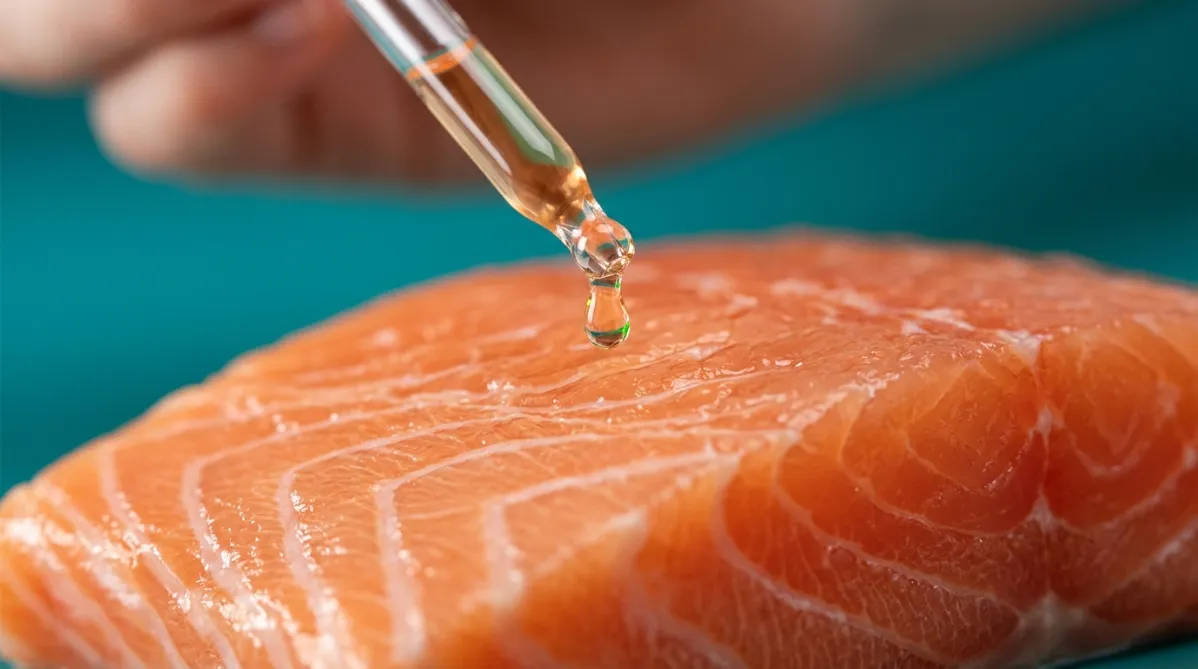
Extreme close-up, slightly high three-quarter angle, of a raw salmon fillet's translucent coral flesh, with a glass pipette releasing a single droplet of pale amber peptide solution onto the muscle fibers. Glistening myotome layers and fine white connective lines are sharp in the foreground, with shallow depth of field melting the rest. The salmon sits on a saturated teal backdrop, so the orange-pink flesh contrasts strongly with it. Soft, large-source studio light from upper left gives crisp specular highlights on the droplet and moist fibers, with gentle neutral shadows. A tiny electric green reflection glints inside the droplet. The mood is precise, fresh and curious, like a food-science lab photograph. Photorealistic, with no text.
peptides

Lososové peptidy vs syrovátka: +13 % ferritinu za 8 týdnů (pilotní studie s 14 účastníky)

BY NOVA CHEN ·

Malý norský výzkum zjistil, že denní dávka 12 g hydrolyzátu lososových proteinů zvýšila ferritin o zhruba 13 % a počet červených krvinek o 7 % ve srovnání se syrovátkou během osmi týdnů. Vedlejší výsledky naznačovaly nižší zánětlivost, lepší glukózové ukazatele a příznivé změny tělesné kompozice. Studie však zahrnovala jen 14 lidí a byla financována průmyslem, takže jde spíše o signál než o důkaz. V tomto textu se dozvíte, co jsou lososové peptidy, co výzkum ukázal, jak se liší od kolagenu a proč je nutná opatrnost.
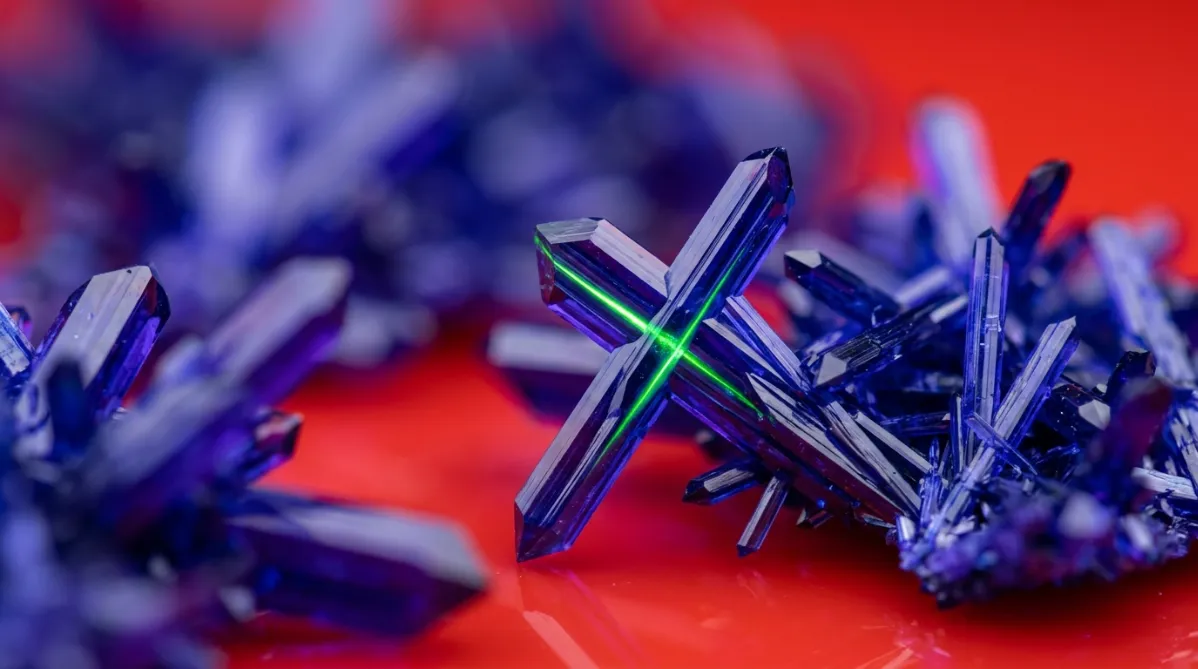
Macro science: an extreme close-up of GHK-Cu copper peptide crystals, deep blue-violet needle-like crystals with faceted edges, shot at a low three-quarter angle with a shallow depth of field so the nearest crystals are razor sharp and the rest dissolve into soft blur. The crystals sit on a smooth, glossy tomato-red backdrop that fills the frame, creating a bold color field. Lighting is a single large softbox from the upper left, giving crisp specular highlights on the crystal faces and a soft, warm-red bounce in the shadows. One tiny thread of electric green light refracts through a single crystal edge as a subtle accent. Mood: striking, precise, curious, scientific without feeling sterile. Photorealistic microscopy-meets-studio look, no text, no labels, no people.
peptides

Peptid GHK‑Cu může ladit genové sítě pro obnovu pokožky

BY NOVA CHEN ·

Recenze z roku 2018 popisuje, jak peptid GHK‑Cu ovlivňuje řadu genových drah spojených se syntézou kolagenu, opravou tkání a regulací zánětu. Přináší pohled na potenciál tohoto měďi‑vázaného peptidu pro lokální péči o pleť, ale také upozorňuje na omezení dat a potřebu klinických studií u lidí.
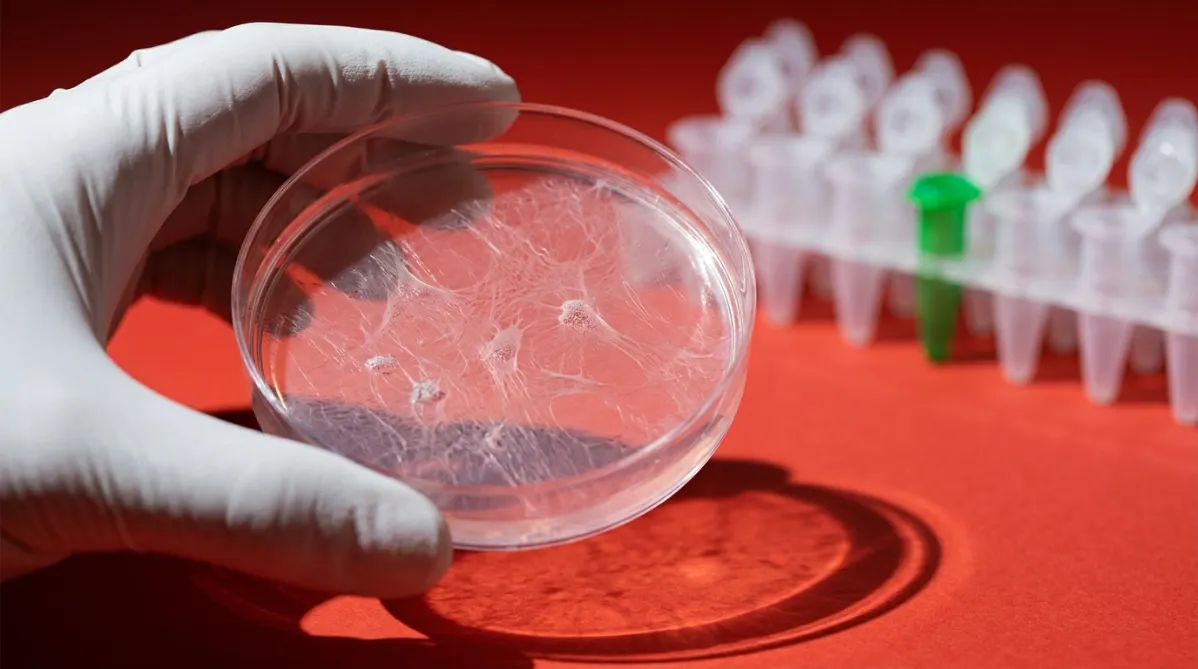
Approach: Lab in action. Palette: D, bold color field.

A gloved hand holds a clear petri dish at a slight low angle, close and slightly above eye level, against a saturated tomato-red backdrop. Inside the dish, a thin, translucent layer of pale pink culture medium holds a faint, lacy web of fibroblast cells, with a few small clusters just visible. Hard, clean studio light from the upper left throws a crisp curved shadow of the dish onto the red surface and picks out bright highlights on the rim and the glove's matte white nitrile. In the soft-focus background, a rack of empty microcentrifuge tubes stands out in cool white. One tiny electric green cap on a single tube adds a small accent. The mood is precise and skeptical: a promising result still confined to the dish.
peptides

Epithalon zapnul telomerázu v buňkách – ale ne u lidí

BY HELIX WARD ·

Malý čtyřaminokyselinový peptid údajně aktivoval telomerázu – enzym, který je u většiny dospělých buněk potlačen – a prodloužil telomery v lidských buňkách. To je jádro představy o epithalonu jako prostředku prodlužujícím život. Studie však pochází z kultury fetálních fibroblastů v laboratoři, ne z klinických studií na lidech, a zmínka o prodloužení životnosti je jen hypotéza. V následujícím textu si ukážeme, co studie z roku 2003 skutečně dokázala, co opomněla a jak ji pochopit, než si něco koupíte.
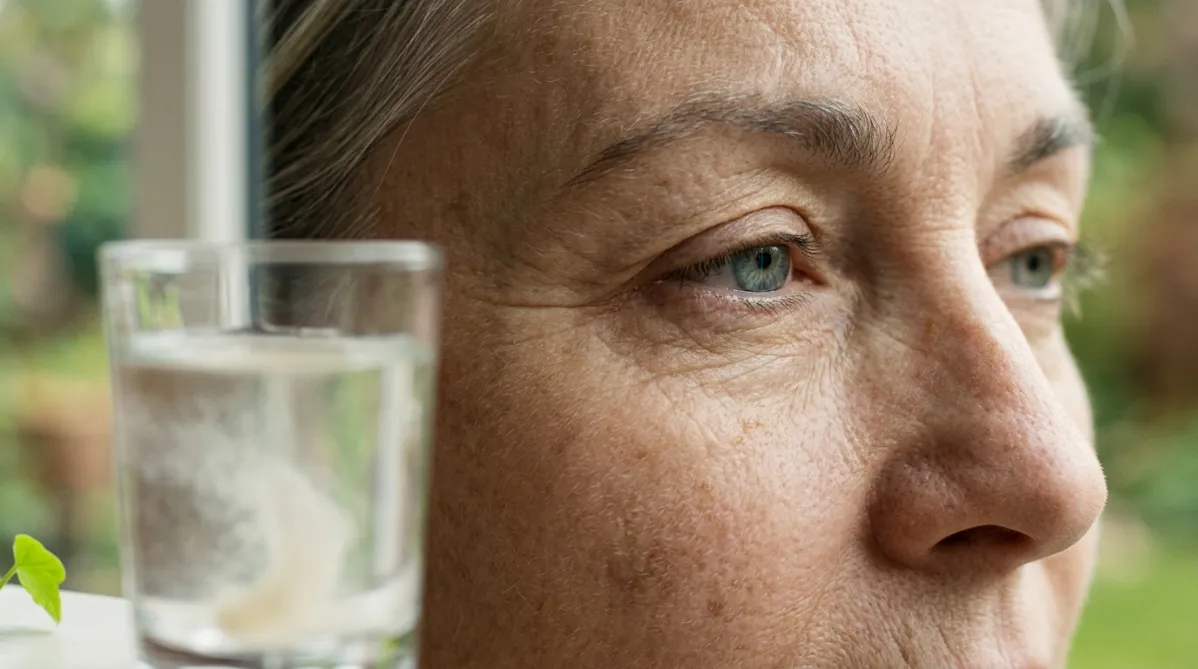
Approach: the human outcome. Palette: natural.

Extreme close-up of a woman's eye and the delicate skin around it, shot from a slight three-quarter angle with a 100mm macro lens and a shallow depth of field. Her skin is a mature 50s complexion with fine crow's feet that are sharp and tactile, with visible pores and soft vellus hairs. Her gaze is relaxed and not at the camera, and the face is cropped so identity isn't the focus. Soft, directional window daylight rakes across the skin from the left to bring out the wrinkle texture, with gentle warm skin tones and a blurred leafy green background outdoors. A single glass of water with a faint dissolving powder swirl sits out of focus in the foreground, with a tiny electric green leaf highlight at the edge. The mood is calm, honest and quietly scientific.
peptides

2,5 g kolagenových peptidů snížilo o 20 % objem očních vrásek během 8 týdnů

BY NOVA CHEN ·

Kolagen patří k nejoblíbenějším doplňkům pro krásu i dlouhověkost, ale jen málo produktů disponuje údaji z placebo‑kontrolovaných studií na lidech. V tomto výzkumu s 114 ženami ve věku 45–65 let snížila denní dávka 2,5 g specifického bioaktivního peptidu Verisol objem očních vrásek o 20 % oproti placebu po 8 týdnech. Biopsie prokázaly zvýšení prokolagenu typu I o 65 % a elastinu o 18 %, zatímco nárůst fibrillinu o 6 % nebyl statisticky významný. Efekt byl stále pozorovatelný 4 týdny po poslední dávce. Výsledky však platí jen pro tento konkrétní značkový peptid a pro studovanou skupinu lidí, nikoliv pro každý kolagenový prášek.
A wide, editorial-style still life photographed from slightly above on a pale warm-gray stone surface, lit by soft diffused morning light from the left. At the center, a delicate chain of 16 small, glossy beads in alternating muted terracotta, sage green, and cream is arranged in a gentle S-curve, each bead slightly different in size, like a hand-strung necklace. It stands for a peptide chain in a tactile, abstract way. Beside the chain, a translucent glass petri dish holds a thin layer of pale amber liquid with a few soft ripples. Behind it, a cross-section of a ripe fig and a halved blood orange show their intricate internal textures, suggesting cellular structure and mitochondria without literal illustration.

On the left side of the frame, a small ceramic mouse figurine in matte off-white sits calmly next to a sprig of dried wheat. It is a subtle nod to the mouse study and is stylized and minimal, not cartoonish. On the right, an open, softly blurred notebook with thin hand-drawn circles and curved lines, like looping pathway diagrams, lies under a brass pen. A few pages are visible but the text is illegible.

Scatter a few elements for texture: a small sprig of eucalyptus, a folded linen napkin in oatmeal tone, and a single clear glass pipette resting diagonally across the lower foreground. The palette is warm neutrals with accents of sage, terracotta, and soft amber, giving a calm, modern wellness-journal look. Shallow depth of field keeps the bead chain crisp while the background gently dissolves into creamy bokeh. Generous negative space across the upper right leaves room for headline overlay. The overall mood is clean, contemporary, and intellectually curious: scientific but warm, like a premium health and science magazine cover, with fine grain, natural shadows, and no text, logos, or futuristic elements.
peptides

MOTS‑c: 16‑aminokyselinový mitochondriální peptid, který aktivoval AMPK a ochránil myši před dietou vyvolanou obezitou

BY DR. SYNAPSE ·

Malý 16‑aminokyselinový peptid zakódovaný v mitochondriální DNA, nikoli v jádru, aktivoval AMPK ve svalech a ochránil myši před dietou vyvolanou obezitou a inzulínovou rezistencí ve studii *Cell Metabolism* z roku 2015. MOTS‑c se tak stal jedním z nejčastěji vyhledávaných názvů mezi výzkumníky peptidů a biohackery. Je však důležité si uvědomit, že se jedná o výzkum na myších a molekulární mechaniku, bez jakýchkoli klinických dat u lidí, a MOTS‑c není schválená terapie. Tento článek objasňuje, co MOTS‑c je, jak podle autorů funguje přes folátový cyklus a AMPK, co ukázaly myši a jaké závěry si čtenáři mohou a nemohou odvodit.
A wide, editorial-style still life photographed in soft natural window light on a pale oatmeal-colored linen surface. In the center foreground, a single small amber glass vial with a matte white cap sits slightly off-center to the right, unlabeled and minimal. Beside it lies a delicate, translucent skein of tendon-like fibers, rendered as fine pale ivory threads gently fanning out and twisting together, resting on a folded sheet of cream paper. To the left, a glass petri dish with a thin layer of soft blush-pink liquid, catching a subtle highlight, and a slim pair of stainless steel tweezers laid diagonally across the surface.

Behind the objects, a softly blurred background in muted sage green and warm taupe suggests a quiet laboratory shelf, with out-of-focus glassware shapes and a single trailing sprig of eucalyptus adding an organic note. A thin, hand-drawn style line diagram of interconnected nodes and curved arrows, in faint terracotta ink, is printed on the paper beneath the fibers. It hints at a cellular signaling pathway without any text or readable labels.

The composition uses generous negative space on the left third for potential title overlay, with a shallow depth of field and a gentle diagonal flow from the petri dish to the vial. The color palette is restrained and warm: cream, sage, blush, amber, and terracotta accents, with soft shadows and a faint film-grain texture. The mood is calm, thoughtful, and scientific but approachable, like a contemporary health and science magazine cover. Shot as if with a 50mm lens at f/2.8, top-down at a slight 30-degree angle, with crisp focus on the vial and fibers. No people, no text, no futuristic elements.
peptides

BPC‑157 a hojení šlach: Co ukazují výzkumy na FAK‑Paxillin a co ne

BY DR. SYNAPSE ·

BPC‑157, 15‑aminokyselinový peptid populární v online kruzích zaměřených na „hojení“, si získal pověst díky studii z roku 2011, která ukázala urychlený růst fibroblastů z explantů šlach a zvýšené přežití buněk pod oxidačním stresem, pravděpodobně aktivací dráhy FAK‑paxillin. Studie však neprokázala přímý nárůst proliferace buněk a veškeré výsledky pocházejí z krysích tkání a buněk v laboratoři. To znamená, že jde o mechanistický výzkum, ne o klinický důkaz u lidí. Navíc BPC‑157 není schváleným lékem a jeho prodej jako „výzkumné chemikálie“ není regulován. Při zranění šlachy se proto doporučuje spoléhat na standardní lékařskou péči, ne na laboratorní výsledky.

This page is available in