Biocracked
←

#peptides

4 articles
Approach: Data as art, with a conceptual twist. Palette: bold color field (D).

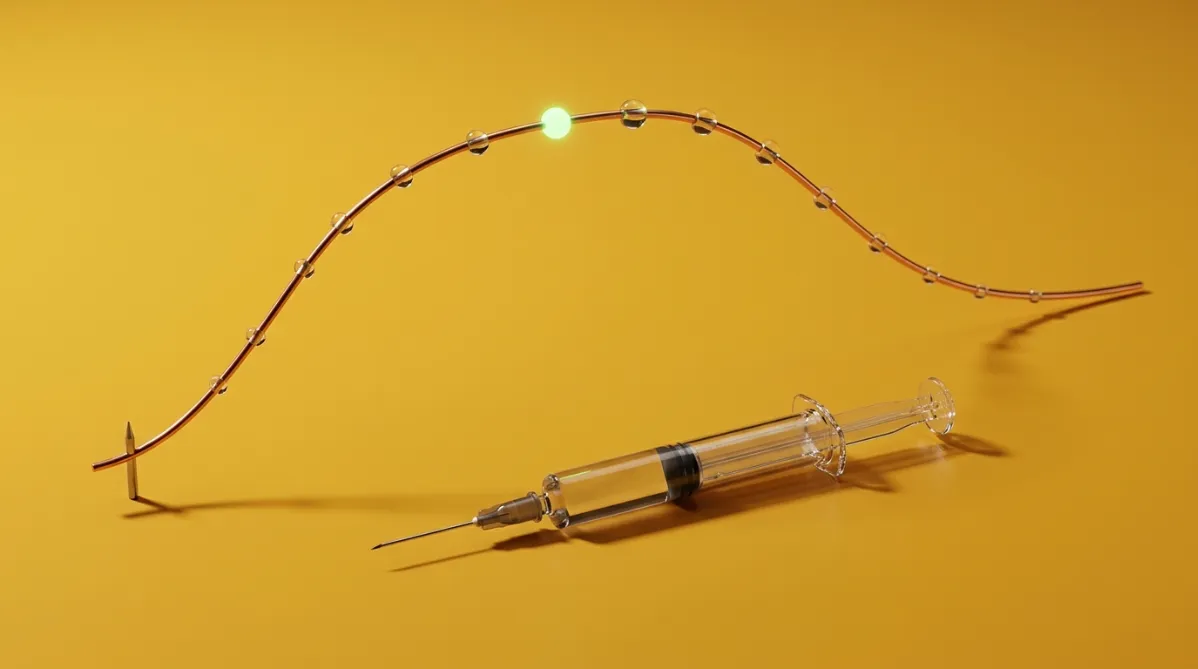
Subject: a single glass syringe lying on a saturated mustard-yellow acrylic surface, shot from a low three-quarter angle with a shallow depth of field. Behind it, a long arc of thin copper wire rises in a gentle curve from a small spike to a broad plateau and then slowly tapers, echoing a hormone curve stretched across days. Small, evenly spaced glass beads sit along the wire, each slightly larger toward the plateau. One bead glows soft electric green.

Lighting: hard single softbox from the upper left, creating crisp, short shadows in warm umber on the yellow. Specular highlights on the glass and copper.

Mood: precise, patient, and quietly analytical, with a slow-release rhythm. No text or markings anywhere.
peptides

Lidské studie CJC‑1295: Co ukazují originální data o GH a IGF‑I

BY HELIX WARD ·

Jedno podání CJC‑1295 zvýšilo růstový hormon (GH) 2‑ až 10‑násobně po dobu šesti a více dnů a IGF‑I 1,5‑ až 3‑násobně po 9‑11 dní u zdravých dospělých ve věku 21‑61 let. Poločas rozpadu peptidu byl odhadnut na 5,8‑8,1 dne a po opakovaném podání zůstával IGF‑I nad bazální úrovní až 28 dní. Žádné závažné nežádoucí účinky nebyly zaznamenány; nejlépe snášely dávky 30‑60 µg/kg. Studie však sledovala jen hormonální hladiny a bezpečnost, ne svalovou hmotu, tuk ani výkonnost. Níže je shrnuto, co původní data skutečně ukazují, jak se CJC‑1295 s DAC liší od mod GRF 1‑29 a proč je tato látka stále neschváleným, WADA‑zakázaným výzkumným peptidem.
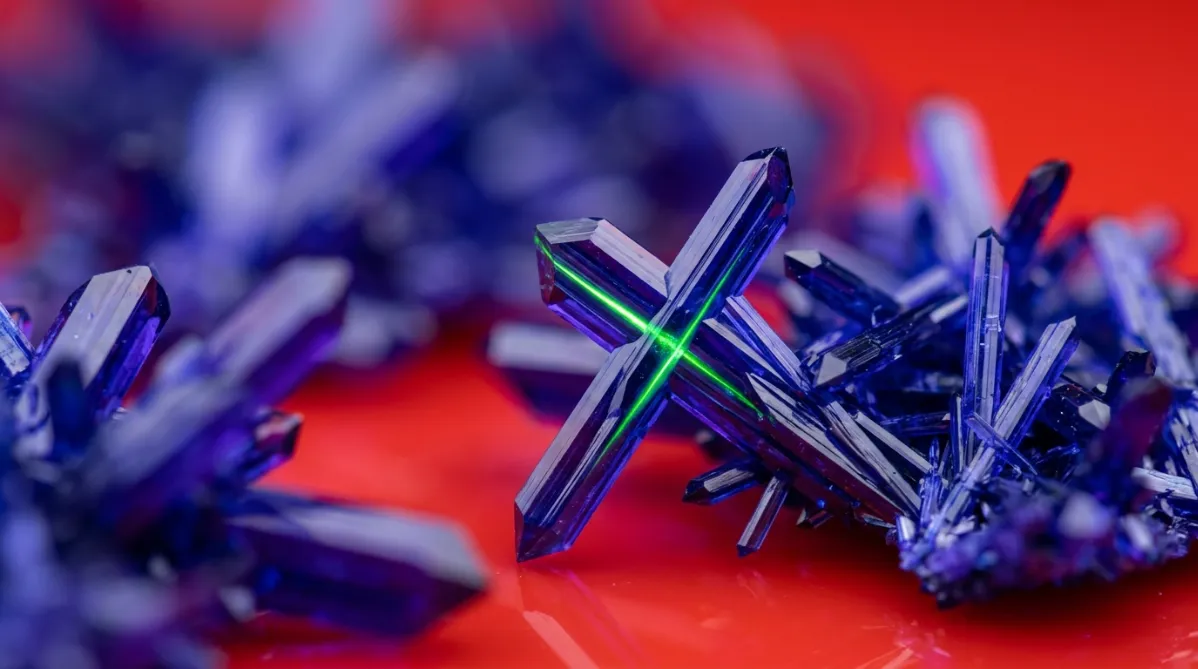
Macro science: an extreme close-up of GHK-Cu copper peptide crystals, deep blue-violet needle-like crystals with faceted edges, shot at a low three-quarter angle with a shallow depth of field so the nearest crystals are razor sharp and the rest dissolve into soft blur. The crystals sit on a smooth, glossy tomato-red backdrop that fills the frame, creating a bold color field. Lighting is a single large softbox from the upper left, giving crisp specular highlights on the crystal faces and a soft, warm-red bounce in the shadows. One tiny thread of electric green light refracts through a single crystal edge as a subtle accent. Mood: striking, precise, curious, scientific without feeling sterile. Photorealistic microscopy-meets-studio look, no text, no labels, no people.
peptides

Peptid GHK‑Cu může ladit genové sítě pro obnovu pokožky

BY NOVA CHEN ·

Recenze z roku 2018 popisuje, jak peptid GHK‑Cu ovlivňuje řadu genových drah spojených se syntézou kolagenu, opravou tkání a regulací zánětu. Přináší pohled na potenciál tohoto měďi‑vázaného peptidu pro lokální péči o pleť, ale také upozorňuje na omezení dat a potřebu klinických studií u lidí.
Approach: Lab in action. Palette: D, bold color field.

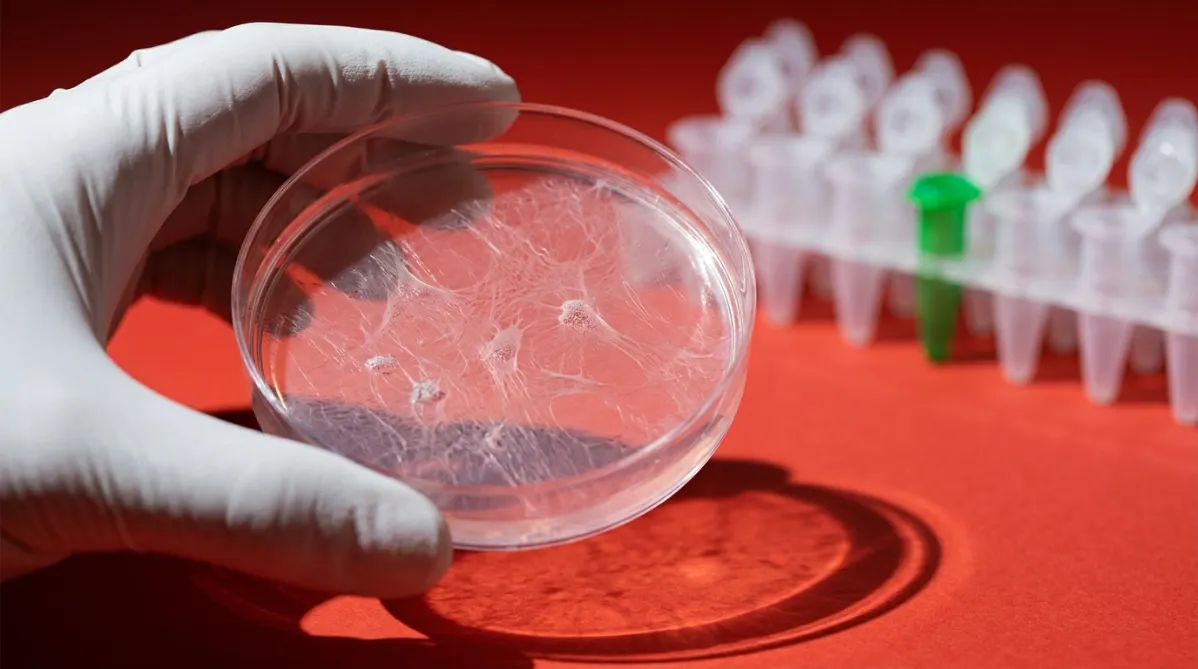
A gloved hand holds a clear petri dish at a slight low angle, close and slightly above eye level, against a saturated tomato-red backdrop. Inside the dish, a thin, translucent layer of pale pink culture medium holds a faint, lacy web of fibroblast cells, with a few small clusters just visible. Hard, clean studio light from the upper left throws a crisp curved shadow of the dish onto the red surface and picks out bright highlights on the rim and the glove's matte white nitrile. In the soft-focus background, a rack of empty microcentrifuge tubes stands out in cool white. One tiny electric green cap on a single tube adds a small accent. The mood is precise and skeptical: a promising result still confined to the dish.
peptides

Epithalon zapnul telomerázu v buňkách – ale ne u lidí

BY HELIX WARD ·

Malý čtyřaminokyselinový peptid údajně aktivoval telomerázu – enzym, který je u většiny dospělých buněk potlačen – a prodloužil telomery v lidských buňkách. To je jádro představy o epithalonu jako prostředku prodlužujícím život. Studie však pochází z kultury fetálních fibroblastů v laboratoři, ne z klinických studií na lidech, a zmínka o prodloužení životnosti je jen hypotéza. V následujícím textu si ukážeme, co studie z roku 2003 skutečně dokázala, co opomněla a jak ji pochopit, než si něco koupíte.
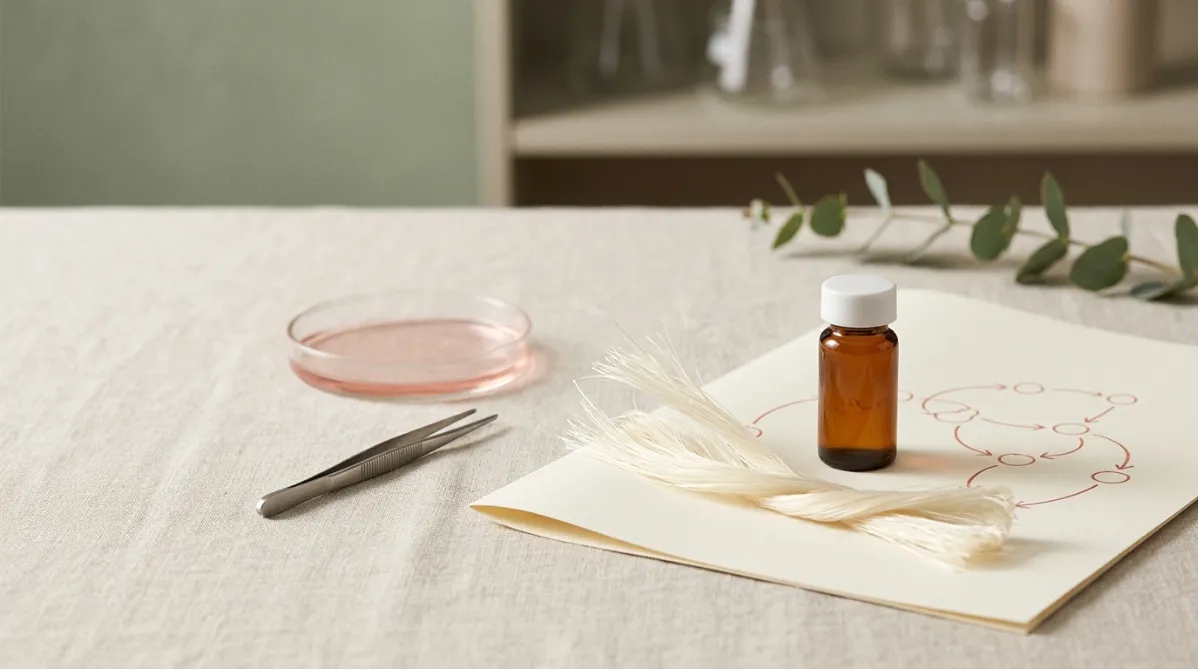
A wide, editorial-style still life photographed in soft natural window light on a pale oatmeal-colored linen surface. In the center foreground, a single small amber glass vial with a matte white cap sits slightly off-center to the right, unlabeled and minimal. Beside it lies a delicate, translucent skein of tendon-like fibers, rendered as fine pale ivory threads gently fanning out and twisting together, resting on a folded sheet of cream paper. To the left, a glass petri dish with a thin layer of soft blush-pink liquid, catching a subtle highlight, and a slim pair of stainless steel tweezers laid diagonally across the surface.

Behind the objects, a softly blurred background in muted sage green and warm taupe suggests a quiet laboratory shelf, with out-of-focus glassware shapes and a single trailing sprig of eucalyptus adding an organic note. A thin, hand-drawn style line diagram of interconnected nodes and curved arrows, in faint terracotta ink, is printed on the paper beneath the fibers. It hints at a cellular signaling pathway without any text or readable labels.

The composition uses generous negative space on the left third for potential title overlay, with a shallow depth of field and a gentle diagonal flow from the petri dish to the vial. The color palette is restrained and warm: cream, sage, blush, amber, and terracotta accents, with soft shadows and a faint film-grain texture. The mood is calm, thoughtful, and scientific but approachable, like a contemporary health and science magazine cover. Shot as if with a 50mm lens at f/2.8, top-down at a slight 30-degree angle, with crisp focus on the vial and fibers. No people, no text, no futuristic elements.
peptides

BPC‑157 a hojení šlach: Co ukazují výzkumy na FAK‑Paxillin a co ne

BY DR. SYNAPSE ·

BPC‑157, 15‑aminokyselinový peptid populární v online kruzích zaměřených na „hojení“, si získal pověst díky studii z roku 2011, která ukázala urychlený růst fibroblastů z explantů šlach a zvýšené přežití buněk pod oxidačním stresem, pravděpodobně aktivací dráhy FAK‑paxillin. Studie však neprokázala přímý nárůst proliferace buněk a veškeré výsledky pocházejí z krysích tkání a buněk v laboratoři. To znamená, že jde o mechanistický výzkum, ne o klinický důkaz u lidí. Navíc BPC‑157 není schváleným lékem a jeho prodej jako „výzkumné chemikálie“ není regulován. Při zranění šlachy se proto doporučuje spoléhat na standardní lékařskou péči, ne na laboratorní výsledky.

This page is available in