Biocracked
←

#peptides

4 articles
Approach: Data as art, with a conceptual twist. Palette: bold color field (D).

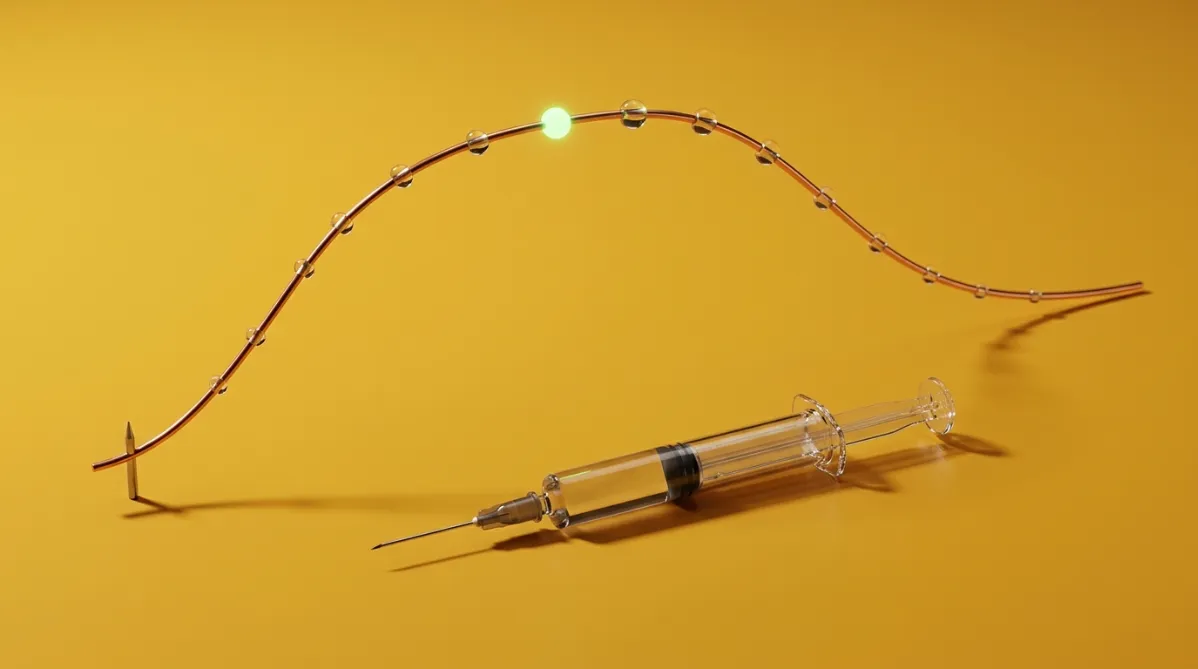
Subject: a single glass syringe lying on a saturated mustard-yellow acrylic surface, shot from a low three-quarter angle with a shallow depth of field. Behind it, a long arc of thin copper wire rises in a gentle curve from a small spike to a broad plateau and then slowly tapers, echoing a hormone curve stretched across days. Small, evenly spaced glass beads sit along the wire, each slightly larger toward the plateau. One bead glows soft electric green.

Lighting: hard single softbox from the upper left, creating crisp, short shadows in warm umber on the yellow. Specular highlights on the glass and copper.

Mood: precise, patient, and quietly analytical, with a slow-release rhythm. No text or markings anywhere.
peptides

CJC‑1295 Menselijke Studie: wat de oorspronkelijke GH‑ en IGF‑I‑gegevens laten zien

BY HELIX WARD ·

Een enkele injectie van CJC‑1295 verhoogde het groeihormoon 2‑ tot 10‑voudig gedurende zes dagen of langer en IGF‑I 1,5‑ tot 3‑voudig gedurende 9‑11 dagen bij gezonde volwassenen van 21‑61 jaar. De halfwaardetijd van het peptide werd geschat op 5,8‑8,1 dagen en IGF‑I bleef tot 28 dagen boven het beginniveau na herhaalde doseringen. Er werden geen ernstige bijwerkingen gemeld; doses van 30‑60 µg/kg werden het best getolereerd. De trial uit 2006 mat hormonen en veiligheid, niet spier‑ of vetmassa, noch prestaties. Hieronder staat wat de oorspronkelijke data werkelijk laten zien, hoe CJC‑1295 met‑DAC verschilt van mod GRF 1‑29 en waarom het middel een niet‑goedgekeurd, WADA‑verboden onderzoekspéptide blijft.
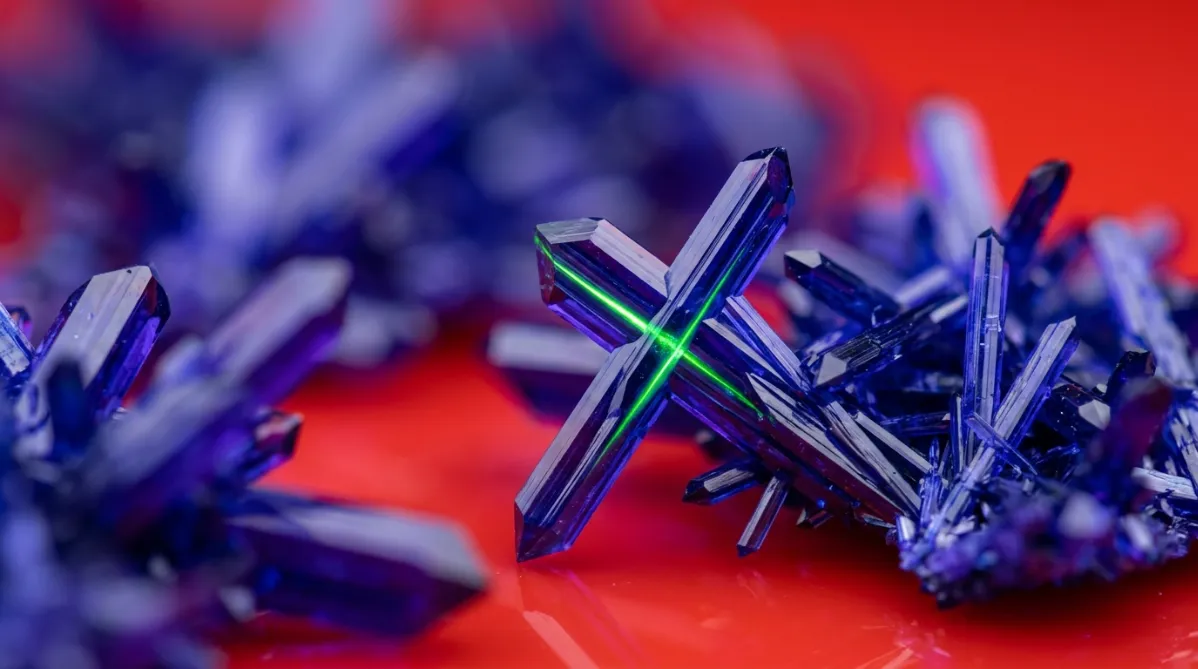
Macro science: an extreme close-up of GHK-Cu copper peptide crystals, deep blue-violet needle-like crystals with faceted edges, shot at a low three-quarter angle with a shallow depth of field so the nearest crystals are razor sharp and the rest dissolve into soft blur. The crystals sit on a smooth, glossy tomato-red backdrop that fills the frame, creating a bold color field. Lighting is a single large softbox from the upper left, giving crisp specular highlights on the crystal faces and a soft, warm-red bounce in the shadows. One tiny thread of electric green light refracts through a single crystal edge as a subtle accent. Mood: striking, precise, curious, scientific without feeling sterile. Photorealistic microscopy-meets-studio look, no text, no labels, no people.
peptides

GHK‑Cu‑koperpeptide kan genennetwerken achter huidherstel afstemmen

BY NOVA CHEN ·

GHK‑Cu, het koperpeptide dat in talloze serums zit, doet waarschijnlijk meer dan alleen hydrateren. Een review uit 2018 stelt dat nieuwe gen‑expressie‑data kunnen verklaren hoe dit kleine molecuul verband houdt met collageenopbouw, weefselherstel, ontstekingsregulatie en zelfs DNA‑reparatie. Hieronder vind je wat het artikel werkelijk meldt over verouderende huid en regeneratie, en waar het bewijs ophoudt. Lees eerst de praktische kanttekeningen over topisch gebruik voordat je de hype gelooft.
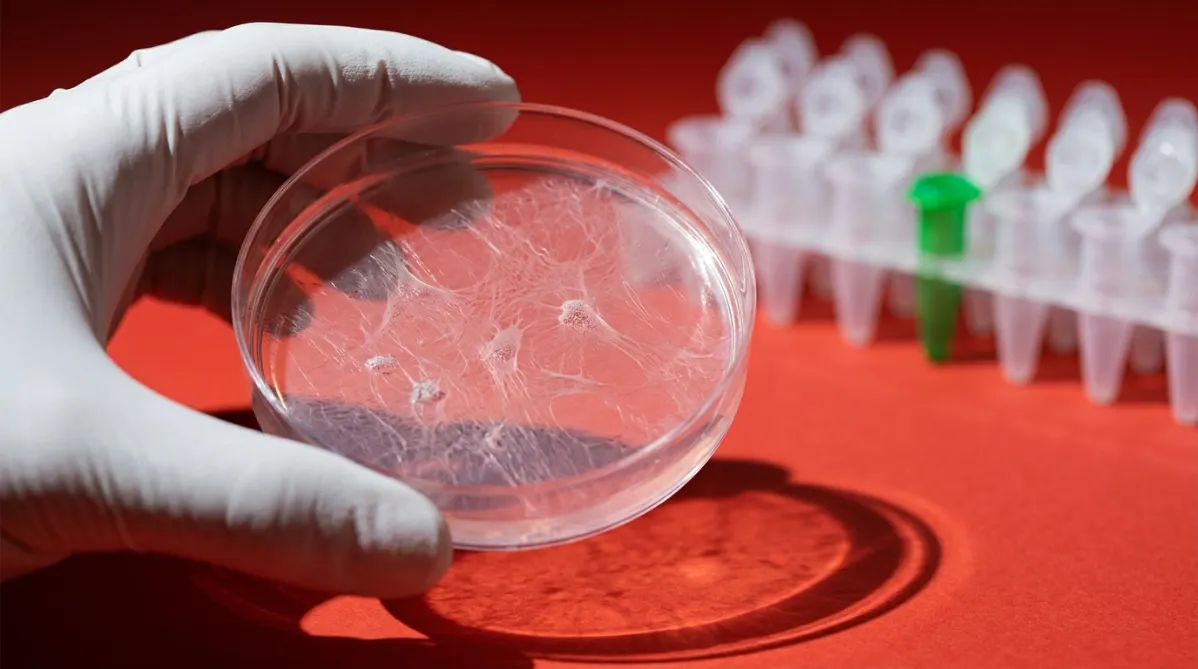
Approach: Lab in action. Palette: D, bold color field.

A gloved hand holds a clear petri dish at a slight low angle, close and slightly above eye level, against a saturated tomato-red backdrop. Inside the dish, a thin, translucent layer of pale pink culture medium holds a faint, lacy web of fibroblast cells, with a few small clusters just visible. Hard, clean studio light from the upper left throws a crisp curved shadow of the dish onto the red surface and picks out bright highlights on the rim and the glove's matte white nitrile. In the soft-focus background, a rack of empty microcentrifuge tubes stands out in cool white. One tiny electric green cap on a single tube adds a small accent. The mood is precise and skeptical: a promising result still confined to the dish.
peptides

Epithalon schakelt telomerase in cellen in – maar niet bij mensen

BY HELIX WARD ·

Een piepklein peptide van vier aminozuren zou telomerase activeren – een enzym dat de meeste volwassen cellen stilhoudt – en telomeren verlengen in menselijke cellen. Dat is de basis van de hype rond Epithalon. Het onderzoek werd echter uitgevoerd op foetale fibroblasten in een petrischaal, niet op mensen, en de bewering over levensverlenging blijft een hypothese. Hieronder lees je wat de studie van 2003 werkelijk aantoonde, wat er ontbrak en hoe je dit kritisch moet lezen voordat je iets koopt.
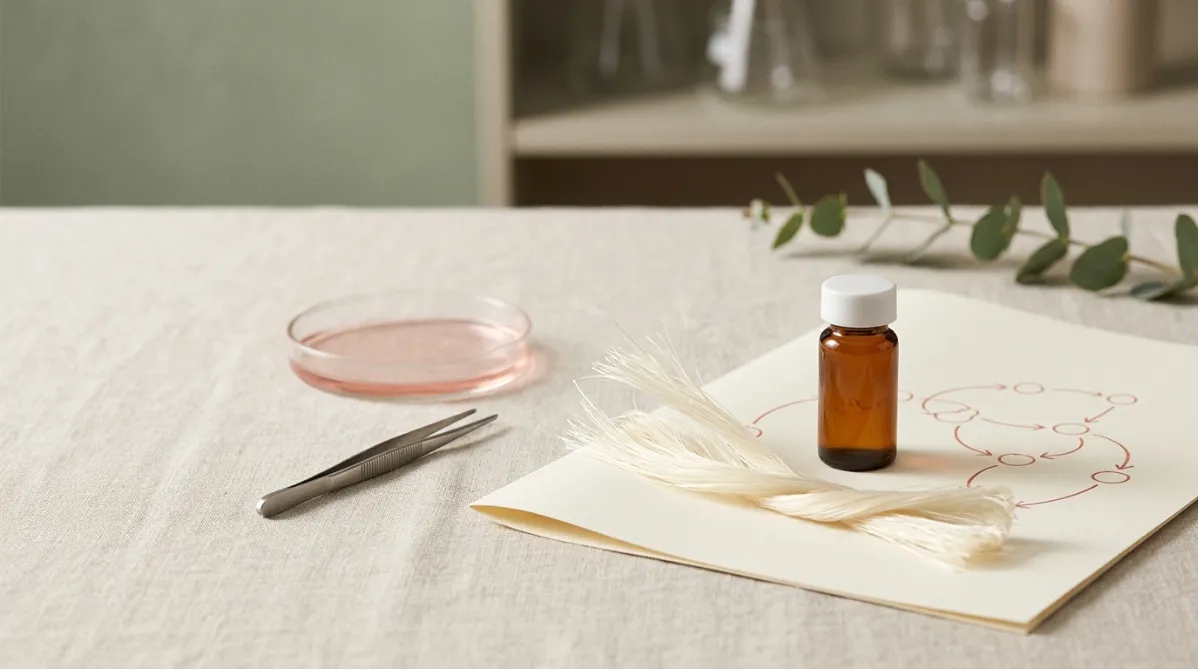
A wide, editorial-style still life photographed in soft natural window light on a pale oatmeal-colored linen surface. In the center foreground, a single small amber glass vial with a matte white cap sits slightly off-center to the right, unlabeled and minimal. Beside it lies a delicate, translucent skein of tendon-like fibers, rendered as fine pale ivory threads gently fanning out and twisting together, resting on a folded sheet of cream paper. To the left, a glass petri dish with a thin layer of soft blush-pink liquid, catching a subtle highlight, and a slim pair of stainless steel tweezers laid diagonally across the surface.

Behind the objects, a softly blurred background in muted sage green and warm taupe suggests a quiet laboratory shelf, with out-of-focus glassware shapes and a single trailing sprig of eucalyptus adding an organic note. A thin, hand-drawn style line diagram of interconnected nodes and curved arrows, in faint terracotta ink, is printed on the paper beneath the fibers. It hints at a cellular signaling pathway without any text or readable labels.

The composition uses generous negative space on the left third for potential title overlay, with a shallow depth of field and a gentle diagonal flow from the petri dish to the vial. The color palette is restrained and warm: cream, sage, blush, amber, and terracotta accents, with soft shadows and a faint film-grain texture. The mood is calm, thoughtful, and scientific but approachable, like a contemporary health and science magazine cover. Shot as if with a 50mm lens at f/2.8, top-down at a slight 30-degree angle, with crisp focus on the vial and fibers. No people, no text, no futuristic elements.
peptides

BPC‑157 en peesherstel: wat het FAK‑Paxillin‑onderzoek toont en wat het niet toont

BY DR. SYNAPSE ·

BPC‑157, een 15‑amino‑zuur‑peptide dat vaak wordt geprezen in online ‘genees‑kringen’, heeft een veel geciteerde studie uit 2011 achter zijn reputatie op het gebied van peesherstel. Onderzoekers vonden dat het de groei van pees‑fibroblasten versnelde, de overleving van cellen onder oxidatieve stress verbeterde en de migratie stimuleerde, vermoedelijk via de FAK‑paxillin‑route. Het verhoogde echter niet direct de celproliferatie, en alle resultaten komen uit rattenweefsel en -cellen in het laboratorium. Dit artikel legt het onderliggende mechanisme uit, verduidelijkt waarom er geen menselijk bewijs is, en bespreekt de niet‑goedgekeurde regelgevende status van het peptide.

This page is available in