Biocracked
←

#peptides

4 articles
Approach: Data as art, with a conceptual twist. Palette: bold color field (D).

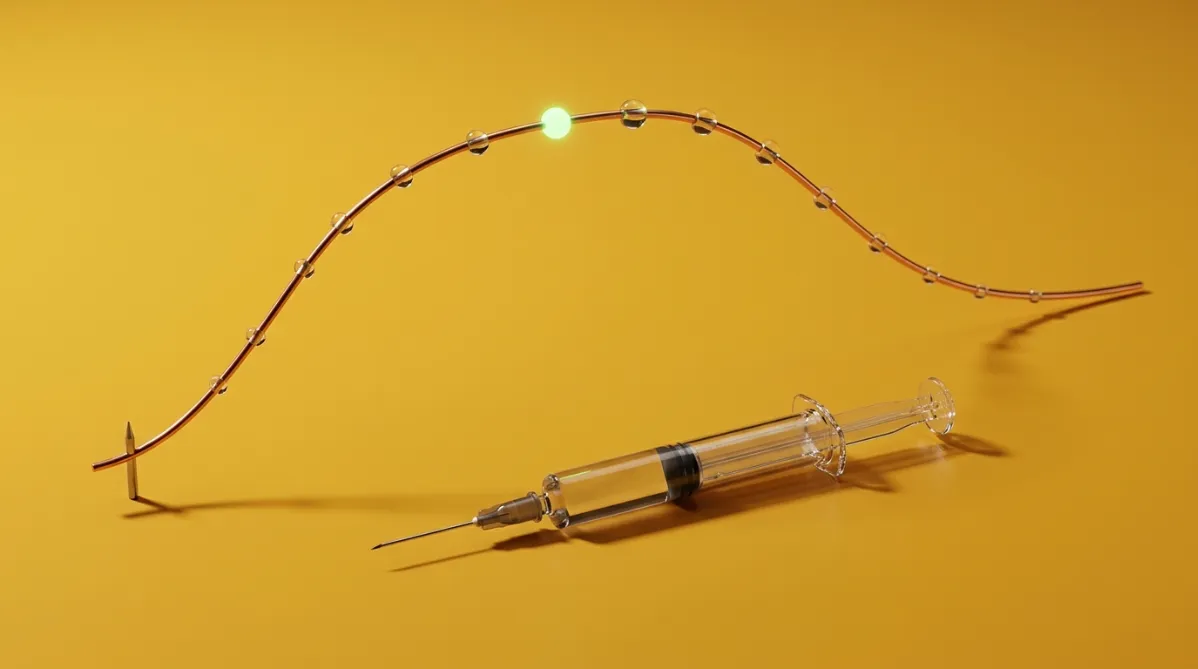
Subject: a single glass syringe lying on a saturated mustard-yellow acrylic surface, shot from a low three-quarter angle with a shallow depth of field. Behind it, a long arc of thin copper wire rises in a gentle curve from a small spike to a broad plateau and then slowly tapers, echoing a hormone curve stretched across days. Small, evenly spaced glass beads sit along the wire, each slightly larger toward the plateau. One bead glows soft electric green.

Lighting: hard single softbox from the upper left, creating crisp, short shadows in warm umber on the yellow. Specular highlights on the glass and copper.

Mood: precise, patient, and quietly analytical, with a slow-release rhythm. No text or markings anywhere.
peptides

Ensaio em humanos com CJC‑1295: o que os dados originais de GH e IGF‑I revelam

BY HELIX WARD ·

Uma única dose de CJC‑1295 elevou o hormônio de crescimento de 2 a 10 vezes por seis dias ou mais e o IGF‑I de 1,5 a 3 vezes por 9‑11 dias em adultos saudáveis de 21 a 61 anos. A meia‑vida do peptídeo foi estimada em 5,8‑8,1 dias, e o IGF‑I permaneceu acima da linha basal por até 28 dias após doses repetidas. Não foram observadas reações adversas graves; as doses de 30‑60 µg/kg foram as melhor toleradas. Contudo, o estudo de 2006 avaliou apenas hormônios e segurança, não massa muscular, gordura ou desempenho. Veja o que os dados originais realmente mostram, como o CJC‑1295 com DAC difere do mod GRF 1‑29 e por que o composto ainda é um peptídeo de pesquisa não aprovado e proibido pela WADA.
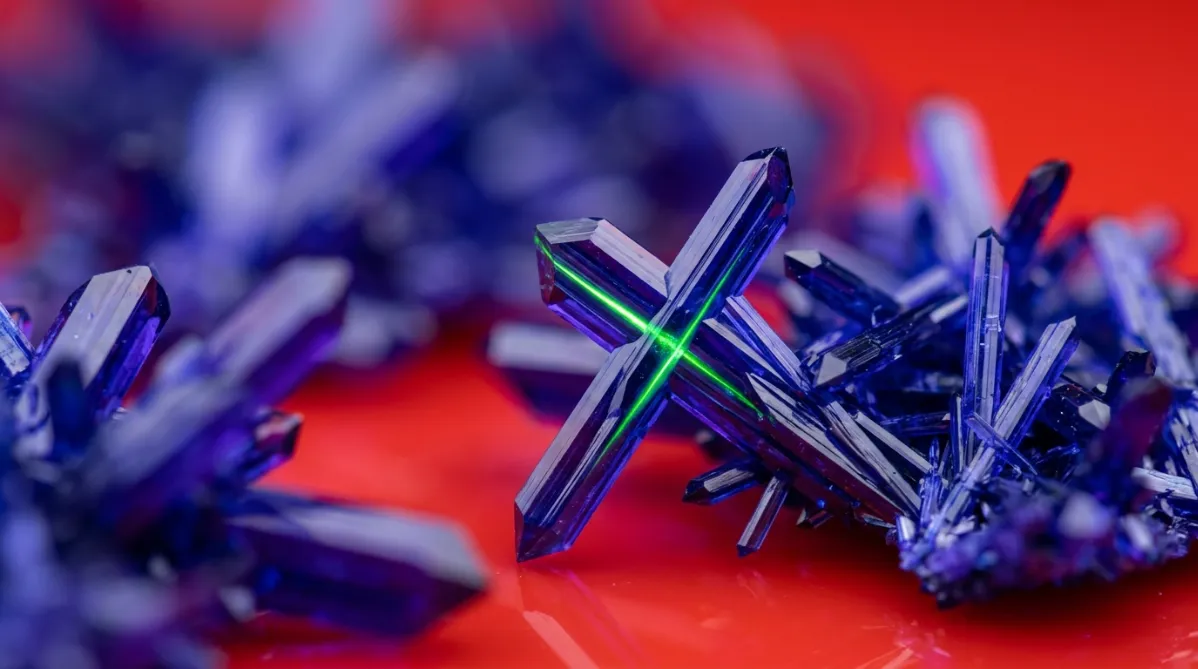
Macro science: an extreme close-up of GHK-Cu copper peptide crystals, deep blue-violet needle-like crystals with faceted edges, shot at a low three-quarter angle with a shallow depth of field so the nearest crystals are razor sharp and the rest dissolve into soft blur. The crystals sit on a smooth, glossy tomato-red backdrop that fills the frame, creating a bold color field. Lighting is a single large softbox from the upper left, giving crisp specular highlights on the crystal faces and a soft, warm-red bounce in the shadows. One tiny thread of electric green light refracts through a single crystal edge as a subtle accent. Mood: striking, precise, curious, scientific without feeling sterile. Photorealistic microscopy-meets-studio look, no text, no labels, no people.
peptides

GHK‑Cu, o Peptídeo de Cobre, Pode Sintonizar Redes Genéticas na Reparação da Pele

BY NOVA CHEN ·

GHK‑Cu, o peptídeo de cobre presente em diversos séruns, pode fazer muito mais que hidratar. Uma revisão de 2018 sugere que mudanças na expressão gênica explicam sua ligação com a formação de colágeno, reparo tecidual, controle da inflamação e até mesmo a reparação do DNA. Conheça o que o estudo realmente relata sobre pele envelhecida e regeneração, e onde as evidências se interrompem. Antes de acreditar no hype, veja as ressalvas práticas sobre o uso tópico e o que uma revisão pode ou não comprovar.
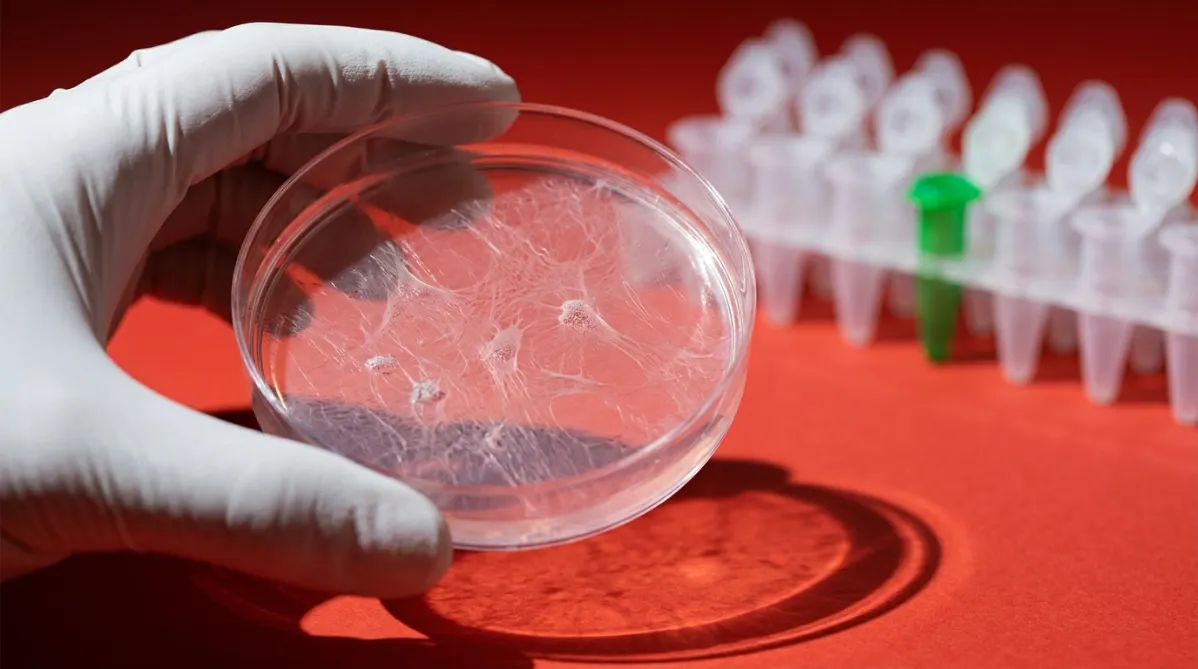
Approach: Lab in action. Palette: D, bold color field.

A gloved hand holds a clear petri dish at a slight low angle, close and slightly above eye level, against a saturated tomato-red backdrop. Inside the dish, a thin, translucent layer of pale pink culture medium holds a faint, lacy web of fibroblast cells, with a few small clusters just visible. Hard, clean studio light from the upper left throws a crisp curved shadow of the dish onto the red surface and picks out bright highlights on the rim and the glove's matte white nitrile. In the soft-focus background, a rack of empty microcentrifuge tubes stands out in cool white. One tiny electric green cap on a single tube adds a small accent. The mood is precise and skeptical: a promising result still confined to the dish.
peptides

Epithalon ativa a telomerase em células — mas não em pessoas

BY HELIX WARD ·

Um peptídeo de quatro aminoácidos teria ativado a telomerase – enzima que a maioria das células adultas mantém silenciosa – e alongado os telômeros em células humanas. Esse achado alimenta o burburinho de longevidade em torno do Epithalon, mas o experimento foi realizado em fibroblastos fetais em cultura, não em pessoas. Veja o que o estudo de 2003 realmente mostrou, o que fica de fora e como interpretá‑lo antes de comprar qualquer coisa.
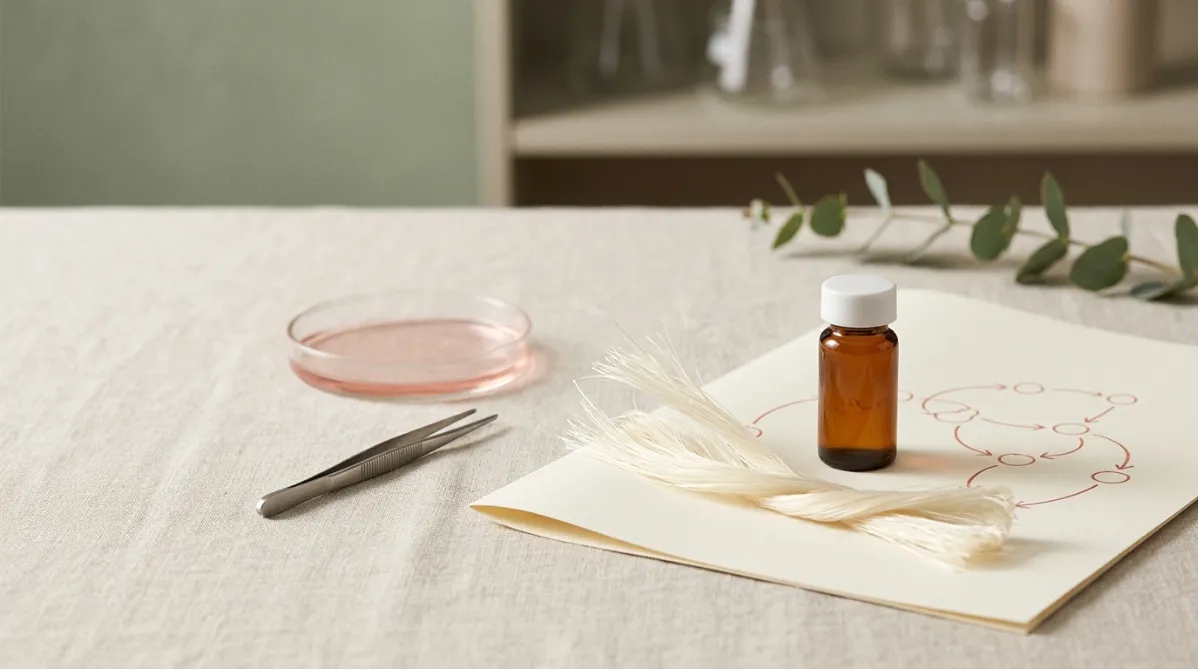
A wide, editorial-style still life photographed in soft natural window light on a pale oatmeal-colored linen surface. In the center foreground, a single small amber glass vial with a matte white cap sits slightly off-center to the right, unlabeled and minimal. Beside it lies a delicate, translucent skein of tendon-like fibers, rendered as fine pale ivory threads gently fanning out and twisting together, resting on a folded sheet of cream paper. To the left, a glass petri dish with a thin layer of soft blush-pink liquid, catching a subtle highlight, and a slim pair of stainless steel tweezers laid diagonally across the surface.

Behind the objects, a softly blurred background in muted sage green and warm taupe suggests a quiet laboratory shelf, with out-of-focus glassware shapes and a single trailing sprig of eucalyptus adding an organic note. A thin, hand-drawn style line diagram of interconnected nodes and curved arrows, in faint terracotta ink, is printed on the paper beneath the fibers. It hints at a cellular signaling pathway without any text or readable labels.

The composition uses generous negative space on the left third for potential title overlay, with a shallow depth of field and a gentle diagonal flow from the petri dish to the vial. The color palette is restrained and warm: cream, sage, blush, amber, and terracotta accents, with soft shadows and a faint film-grain texture. The mood is calm, thoughtful, and scientific but approachable, like a contemporary health and science magazine cover. Shot as if with a 50mm lens at f/2.8, top-down at a slight 30-degree angle, with crisp focus on the vial and fibers. No people, no text, no futuristic elements.
peptides

BPC‑157 e reparação de tendão: o que a pesquisa FAK‑paxilina mostra e o que não mostra

BY DR. SYNAPSE ·

BPC‑157 é um peptídeo de 15 aminoácidos que ganhou popularidade nos círculos online de “cura”. Seu nome ficou associado a um estudo de 2011 que apontava benefícios na reparação de tendões, ao acelerar a migração de fibroblastos, melhorar a sobrevivência celular sob estresse oxidativo e aumentar a mobilidade, provavelmente por meio da via FAK‑paxilina. Contudo, o trabalho não demonstrou aumento direto da proliferação celular e todos os resultados foram obtidos em tecidos e células de ratos em laboratório. Este artigo detalha o mecanismo proposto, explica por que ele não constitui evidência em humanos e revisa o status regulatório do peptídeo, que ainda não foi aprovado.

This page is available in