Biocracked
←

Peptides

6 articles
Approach: macro science with a conceptual twist. Palette: bold color field.

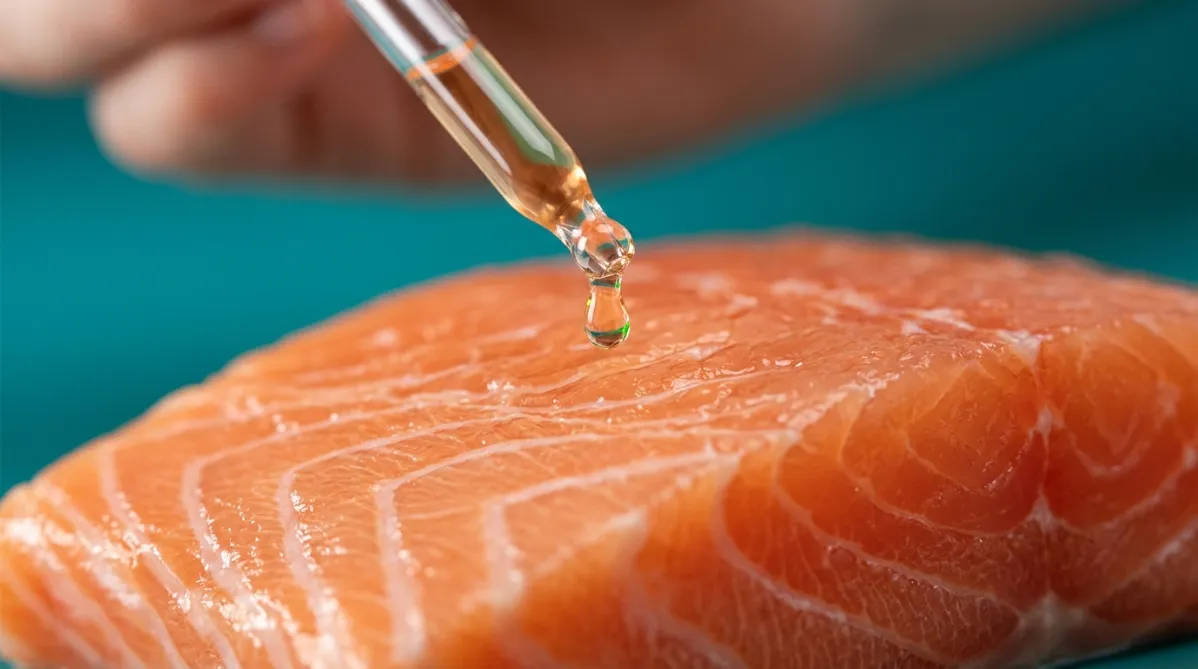
Extreme close-up, slightly high three-quarter angle, of a raw salmon fillet's translucent coral flesh, with a glass pipette releasing a single droplet of pale amber peptide solution onto the muscle fibers. Glistening myotome layers and fine white connective lines are sharp in the foreground, with shallow depth of field melting the rest. The salmon sits on a saturated teal backdrop, so the orange-pink flesh contrasts strongly with it. Soft, large-source studio light from upper left gives crisp specular highlights on the droplet and moist fibers, with gentle neutral shadows. A tiny electric green reflection glints inside the droplet. The mood is precise, fresh and curious, like a food-science lab photograph. Photorealistic, with no text.
peptides

Peptídeos de Salmão vs Whey: +13% de Ferritina em 8 Semanas (Estudo Piloto com 14 Pessoas)

BY NOVA CHEN ·

Um pequeno ensaio norueguês constatou que 12 g/dia de hidrolisado de proteína de salmão aumentaram a ferritina em cerca de 13 % e os glóbulos vermelhos em torno de 7 % em comparação com whey ao longo de oito semanas. Resultados secundários apontaram menor inflamação, melhores marcadores de glicose e composição corporal aprimorada. Contudo, o estudo contou apenas 14 participantes e foi patrocinado pela indústria, sendo mais um sinal do que uma prova definitiva. Aqui explicamos o que são os peptídeos de salmão, o que o ensaio encontrou, como eles diferem do colágeno e por que a cautela é essencial.
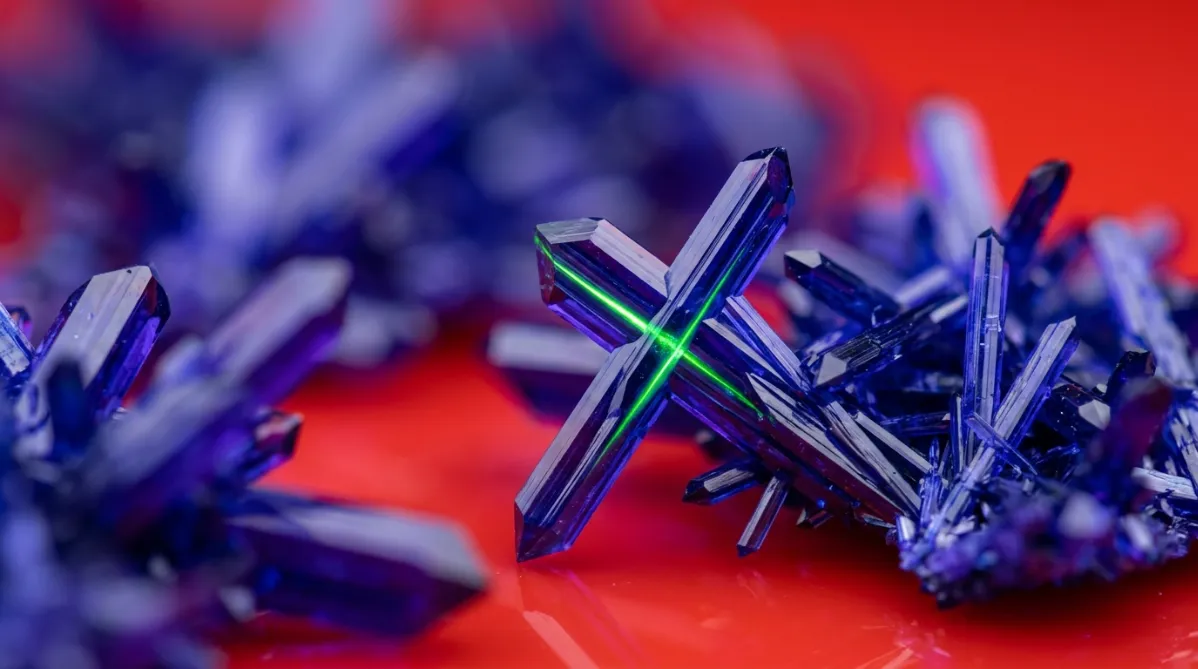
Macro science: an extreme close-up of GHK-Cu copper peptide crystals, deep blue-violet needle-like crystals with faceted edges, shot at a low three-quarter angle with a shallow depth of field so the nearest crystals are razor sharp and the rest dissolve into soft blur. The crystals sit on a smooth, glossy tomato-red backdrop that fills the frame, creating a bold color field. Lighting is a single large softbox from the upper left, giving crisp specular highlights on the crystal faces and a soft, warm-red bounce in the shadows. One tiny thread of electric green light refracts through a single crystal edge as a subtle accent. Mood: striking, precise, curious, scientific without feeling sterile. Photorealistic microscopy-meets-studio look, no text, no labels, no people.
peptides

GHK‑Cu, o Peptídeo de Cobre, Pode Sintonizar Redes Genéticas na Reparação da Pele

BY NOVA CHEN ·

GHK‑Cu, o peptídeo de cobre presente em diversos séruns, pode fazer muito mais que hidratar. Uma revisão de 2018 sugere que mudanças na expressão gênica explicam sua ligação com a formação de colágeno, reparo tecidual, controle da inflamação e até mesmo a reparação do DNA. Conheça o que o estudo realmente relata sobre pele envelhecida e regeneração, e onde as evidências se interrompem. Antes de acreditar no hype, veja as ressalvas práticas sobre o uso tópico e o que uma revisão pode ou não comprovar.
Approach: Lab in action. Palette: D, bold color field.

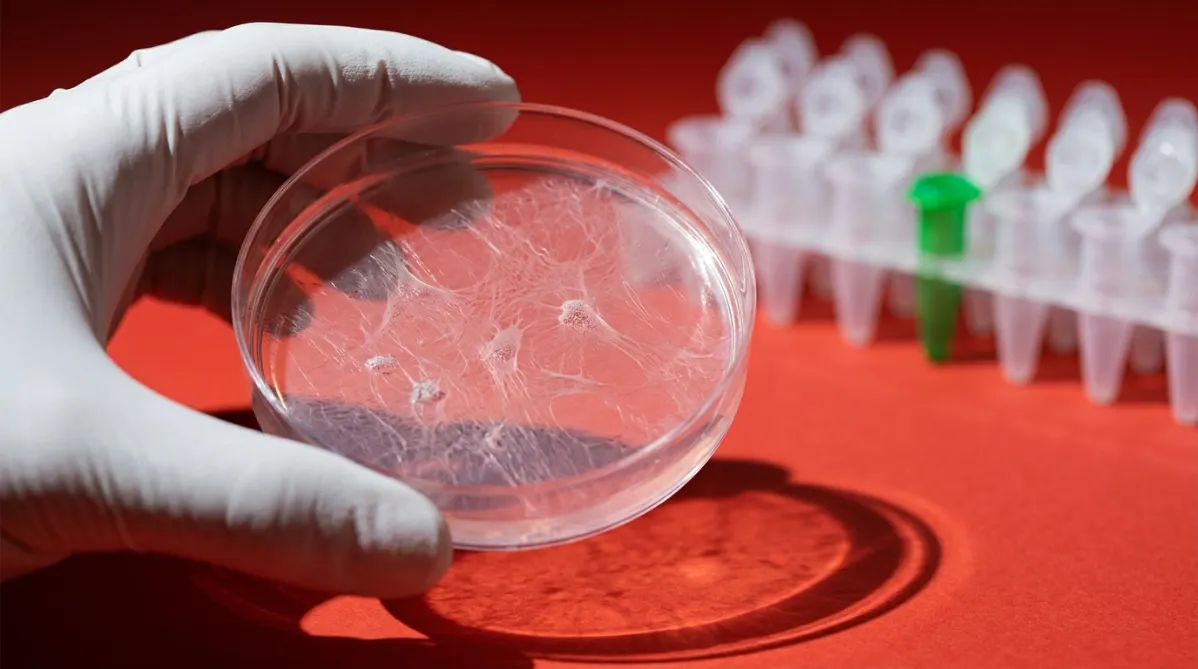
A gloved hand holds a clear petri dish at a slight low angle, close and slightly above eye level, against a saturated tomato-red backdrop. Inside the dish, a thin, translucent layer of pale pink culture medium holds a faint, lacy web of fibroblast cells, with a few small clusters just visible. Hard, clean studio light from the upper left throws a crisp curved shadow of the dish onto the red surface and picks out bright highlights on the rim and the glove's matte white nitrile. In the soft-focus background, a rack of empty microcentrifuge tubes stands out in cool white. One tiny electric green cap on a single tube adds a small accent. The mood is precise and skeptical: a promising result still confined to the dish.
peptides

Epithalon ativa a telomerase em células — mas não em pessoas

BY HELIX WARD ·

Um peptídeo de quatro aminoácidos teria ativado a telomerase – enzima que a maioria das células adultas mantém silenciosa – e alongado os telômeros em células humanas. Esse achado alimenta o burburinho de longevidade em torno do Epithalon, mas o experimento foi realizado em fibroblastos fetais em cultura, não em pessoas. Veja o que o estudo de 2003 realmente mostrou, o que fica de fora e como interpretá‑lo antes de comprar qualquer coisa.
Approach: the human outcome. Palette: natural.

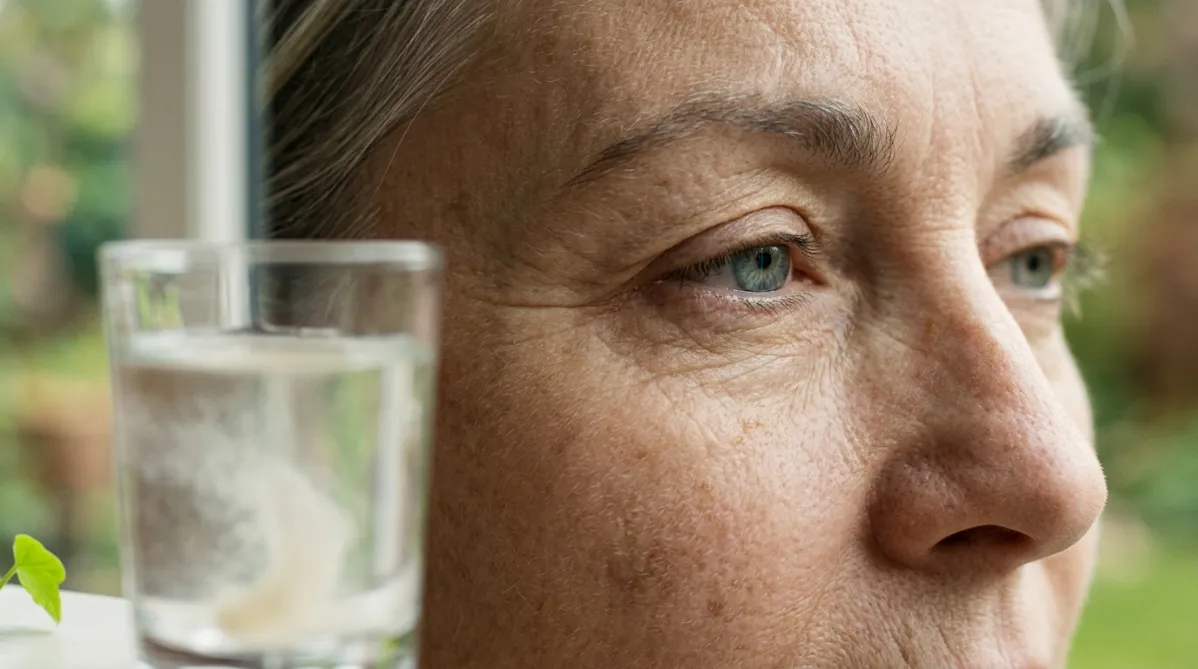
Extreme close-up of a woman's eye and the delicate skin around it, shot from a slight three-quarter angle with a 100mm macro lens and a shallow depth of field. Her skin is a mature 50s complexion with fine crow's feet that are sharp and tactile, with visible pores and soft vellus hairs. Her gaze is relaxed and not at the camera, and the face is cropped so identity isn't the focus. Soft, directional window daylight rakes across the skin from the left to bring out the wrinkle texture, with gentle warm skin tones and a blurred leafy green background outdoors. A single glass of water with a faint dissolving powder swirl sits out of focus in the foreground, with a tiny electric green leaf highlight at the edge. The mood is calm, honest and quietly scientific.
peptides

2,5 g de Peptídeos de Colágeno Reduzem Rugas ao Redor dos Olhos em 20 % em 8 Semanas

BY NOVA CHEN ·

O colágeno está entre os suplementos de beleza e longevidade mais estudados, mas poucos têm dados humanos controlados por placebo. Em um ensaio com 114 mulheres de 45 a 65 anos, 2,5 g diários do peptídeo bioativo Verisol reduziram o volume das rugas ao redor dos olhos em 20 % em comparação ao placebo após 8 semanas. Biópsias mostraram 65 % mais procolágeno tipo I e 18 % mais elastina; o aumento de 6 % em fibrilina não foi significativo. O efeito ainda era detectável quatro semanas após a última dose. Os resultados se aplicam apenas a esse peptídeo de marca e a essa população específica, não a todos os pós de colágeno.

A wide, editorial-style still life photographed from slightly above on a pale warm-gray stone surface, lit by soft diffused morning light from the left. At the center, a delicate chain of 16 small, glossy beads in alternating muted terracotta, sage green, and cream is arranged in a gentle S-curve, each bead slightly different in size, like a hand-strung necklace. It stands for a peptide chain in a tactile, abstract way. Beside the chain, a translucent glass petri dish holds a thin layer of pale amber liquid with a few soft ripples. Behind it, a cross-section of a ripe fig and a halved blood orange show their intricate internal textures, suggesting cellular structure and mitochondria without literal illustration.

On the left side of the frame, a small ceramic mouse figurine in matte off-white sits calmly next to a sprig of dried wheat. It is a subtle nod to the mouse study and is stylized and minimal, not cartoonish. On the right, an open, softly blurred notebook with thin hand-drawn circles and curved lines, like looping pathway diagrams, lies under a brass pen. A few pages are visible but the text is illegible.

Scatter a few elements for texture: a small sprig of eucalyptus, a folded linen napkin in oatmeal tone, and a single clear glass pipette resting diagonally across the lower foreground. The palette is warm neutrals with accents of sage, terracotta, and soft amber, giving a calm, modern wellness-journal look. Shallow depth of field keeps the bead chain crisp while the background gently dissolves into creamy bokeh. Generous negative space across the upper right leaves room for headline overlay. The overall mood is clean, contemporary, and intellectually curious: scientific but warm, like a premium health and science magazine cover, with fine grain, natural shadows, and no text, logos, or futuristic elements.
peptides

MOTS‑c Explicado: o peptídeo mitocondrial de 16 aminoácidos que ativou a AMPK e protegeu camundongos da obesidade induzida por dieta

BY DR. SYNAPSE ·

Um peptídeo de 16 aminoácidos codificado no DNA mitocondrial, e não nuclear, ativou a AMPK no músculo e impediu que camundongos desenvolvessem obesidade e resistência à insulina em um estudo de 2015 publicado na *Cell Metabolism*. O MOTS‑c tornou‑se um dos nomes mais comentados nos círculos de peptídeos e biohacking, mas trata‑se apenas de um estudo em roedores e de descoberta molecular, sem dados em humanos e sem aprovação terapêutica. Este artigo explica o que é o MOTS‑c, como ele parece agir através do ciclo do folato e da AMPK, o que os experimentos em camundongos demonstraram e quais conclusões podem (ou não) ser tiradas.
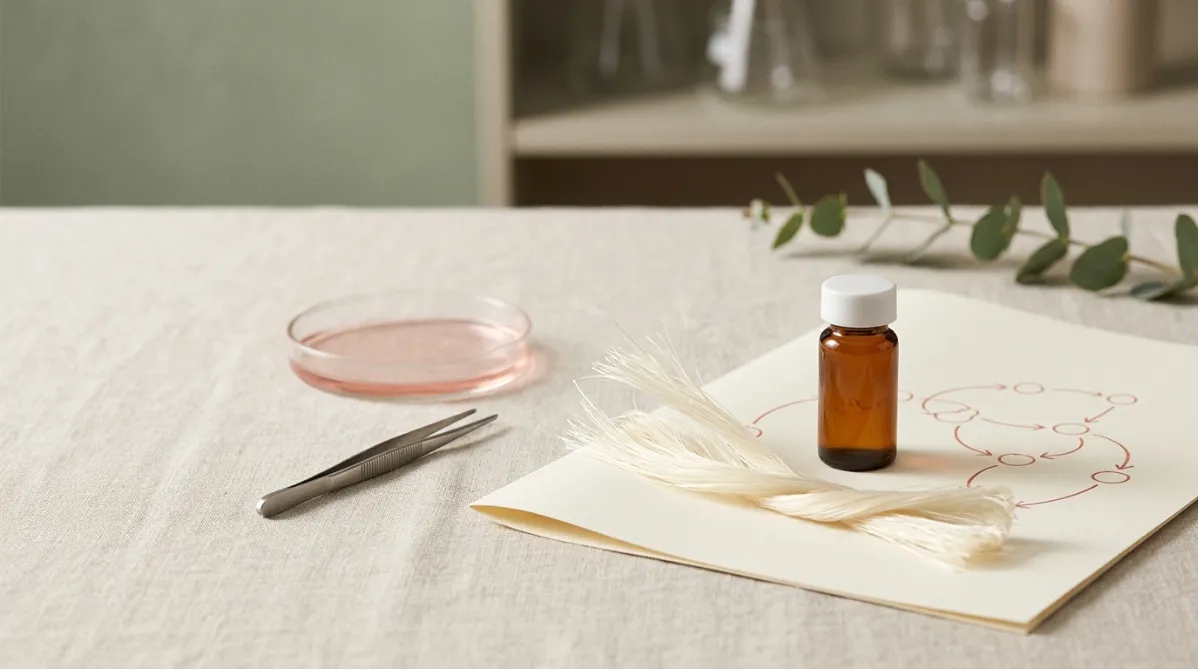
A wide, editorial-style still life photographed in soft natural window light on a pale oatmeal-colored linen surface. In the center foreground, a single small amber glass vial with a matte white cap sits slightly off-center to the right, unlabeled and minimal. Beside it lies a delicate, translucent skein of tendon-like fibers, rendered as fine pale ivory threads gently fanning out and twisting together, resting on a folded sheet of cream paper. To the left, a glass petri dish with a thin layer of soft blush-pink liquid, catching a subtle highlight, and a slim pair of stainless steel tweezers laid diagonally across the surface.

Behind the objects, a softly blurred background in muted sage green and warm taupe suggests a quiet laboratory shelf, with out-of-focus glassware shapes and a single trailing sprig of eucalyptus adding an organic note. A thin, hand-drawn style line diagram of interconnected nodes and curved arrows, in faint terracotta ink, is printed on the paper beneath the fibers. It hints at a cellular signaling pathway without any text or readable labels.

The composition uses generous negative space on the left third for potential title overlay, with a shallow depth of field and a gentle diagonal flow from the petri dish to the vial. The color palette is restrained and warm: cream, sage, blush, amber, and terracotta accents, with soft shadows and a faint film-grain texture. The mood is calm, thoughtful, and scientific but approachable, like a contemporary health and science magazine cover. Shot as if with a 50mm lens at f/2.8, top-down at a slight 30-degree angle, with crisp focus on the vial and fibers. No people, no text, no futuristic elements.
peptides

BPC‑157 e reparação de tendão: o que a pesquisa FAK‑paxilina mostra e o que não mostra

BY DR. SYNAPSE ·

BPC‑157 é um peptídeo de 15 aminoácidos que ganhou popularidade nos círculos online de “cura”. Seu nome ficou associado a um estudo de 2011 que apontava benefícios na reparação de tendões, ao acelerar a migração de fibroblastos, melhorar a sobrevivência celular sob estresse oxidativo e aumentar a mobilidade, provavelmente por meio da via FAK‑paxilina. Contudo, o trabalho não demonstrou aumento direto da proliferação celular e todos os resultados foram obtidos em tecidos e células de ratos em laboratório. Este artigo detalha o mecanismo proposto, explica por que ele não constitui evidência em humanos e revisa o status regulatório do peptídeo, que ainda não foi aprovado.

This page is available in