Biocracked
←

Peptides

6 articles
Approach: macro science with a conceptual twist. Palette: bold color field.

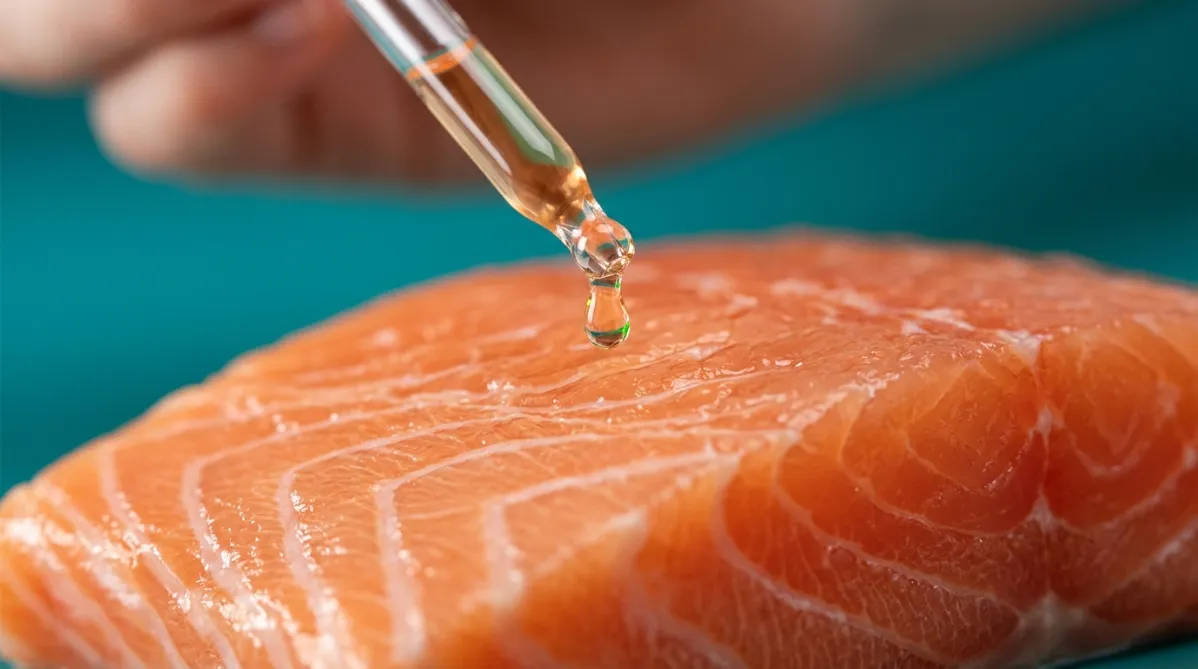
Extreme close-up, slightly high three-quarter angle, of a raw salmon fillet's translucent coral flesh, with a glass pipette releasing a single droplet of pale amber peptide solution onto the muscle fibers. Glistening myotome layers and fine white connective lines are sharp in the foreground, with shallow depth of field melting the rest. The salmon sits on a saturated teal backdrop, so the orange-pink flesh contrasts strongly with it. Soft, large-source studio light from upper left gives crisp specular highlights on the droplet and moist fibers, with gentle neutral shadows. A tiny electric green reflection glints inside the droplet. The mood is precise, fresh and curious, like a food-science lab photograph. Photorealistic, with no text.
peptides

Лососеві пептиди vs сироватка: +13 % феритину за 8 тижнів (пілотне дослідження на 14 учасників)

BY NOVA CHEN ·

Невелике норвезьке дослідження показало, що 12 г/день гідролізату лососевих білків підвищують рівень феритину приблизно на 13 % і кількість еритроцитів – на 7 % у порівнянні зі сироваткою за вісім тижнів. Додаткові дані натякають на зниження запалення, поліпшення глюкозних маркерів і кращу композицію тіла. Оскільки дослідження охоплювало лише 14 учасників і фінансувалося виробником, це лише сигнал, а не доказ. Нижче – що таке лососеві пептиди, які результати отримали, чим вони відрізняються від колагенових і чому варто бути обережним.
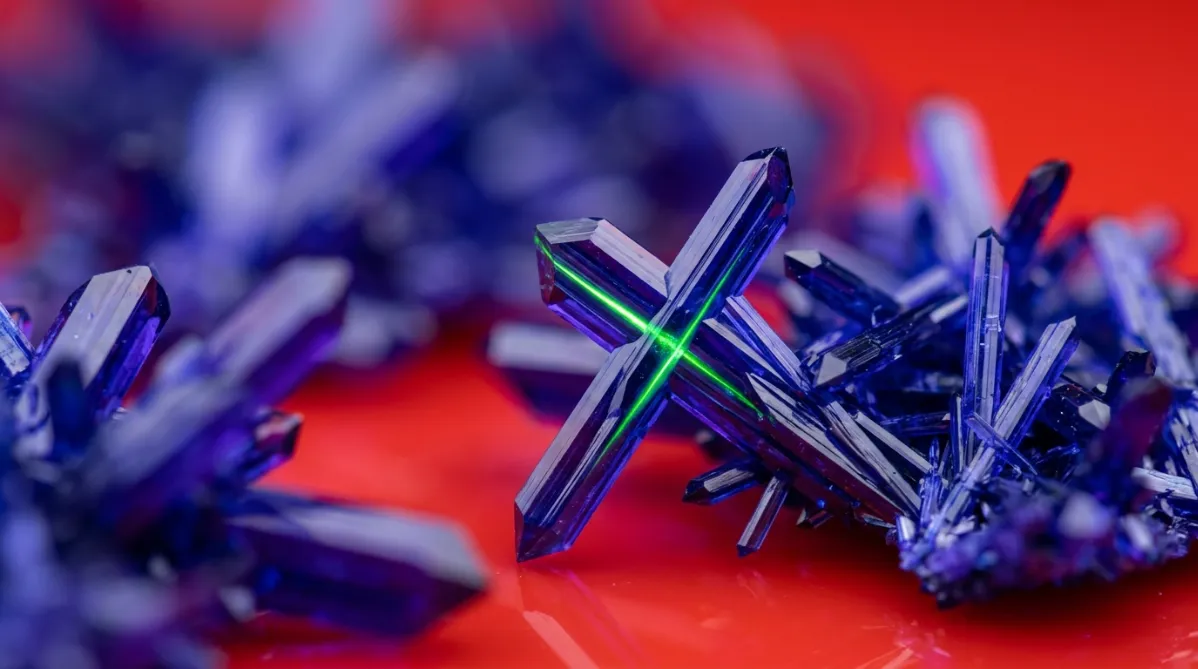
Macro science: an extreme close-up of GHK-Cu copper peptide crystals, deep blue-violet needle-like crystals with faceted edges, shot at a low three-quarter angle with a shallow depth of field so the nearest crystals are razor sharp and the rest dissolve into soft blur. The crystals sit on a smooth, glossy tomato-red backdrop that fills the frame, creating a bold color field. Lighting is a single large softbox from the upper left, giving crisp specular highlights on the crystal faces and a soft, warm-red bounce in the shadows. One tiny thread of electric green light refracts through a single crystal edge as a subtle accent. Mood: striking, precise, curious, scientific without feeling sterile. Photorealistic microscopy-meets-studio look, no text, no labels, no people.
peptides

GHK‑Cu мідний пептид може перепрограмувати генові мережі, що лежать в основі відновлення шкіри

BY NOVA CHEN ·

GHK‑Cu — мідний пептид, який входить до складу багатьох косметичних засобів, здатний набагато більше, ніж просто зволожувати шкіру. Огляд 2018 року розкриває, як нові дані генної експресії пояснюють зв’язок цієї крихітної молекули з синтезом колагену, регенерацією тканин, контролем запалення та навіть відновленням ДНК. У статті підсумовано, що саме доводять дослідження, а де межі наявних доказів. Перед тим як довіряти гіпотезам, ознайомтеся з практичними застереженнями щодо місцевого застосування та тим, що можна, а що — ні, підтвердити оглядом.
Approach: Lab in action. Palette: D, bold color field.

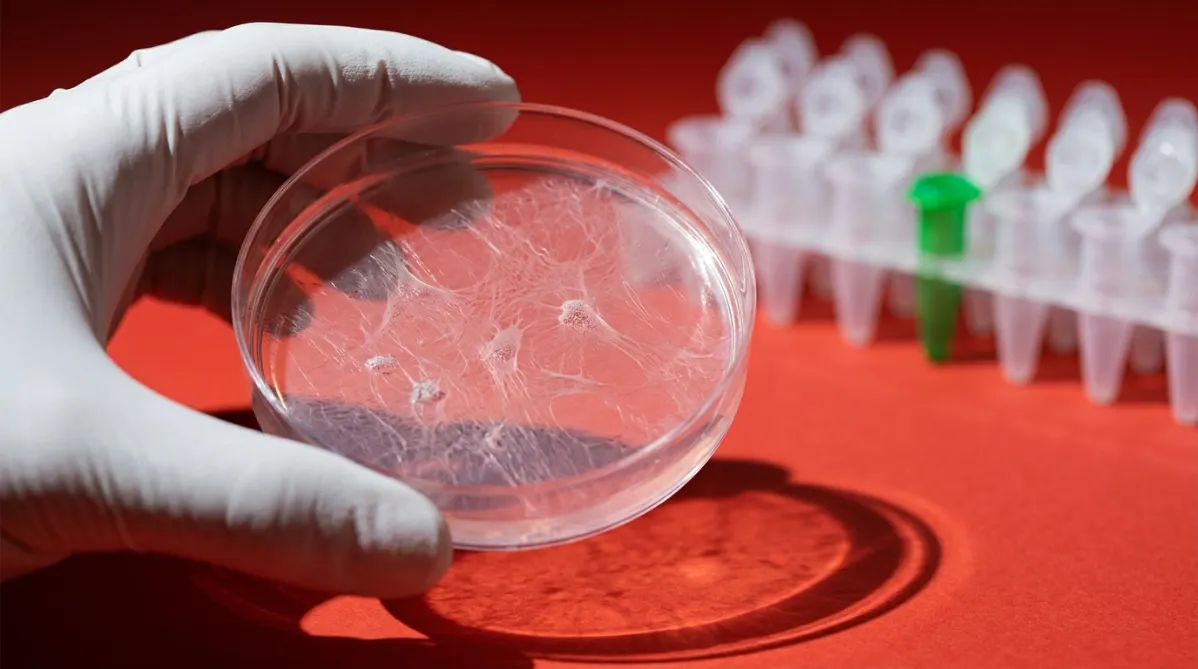
A gloved hand holds a clear petri dish at a slight low angle, close and slightly above eye level, against a saturated tomato-red backdrop. Inside the dish, a thin, translucent layer of pale pink culture medium holds a faint, lacy web of fibroblast cells, with a few small clusters just visible. Hard, clean studio light from the upper left throws a crisp curved shadow of the dish onto the red surface and picks out bright highlights on the rim and the glove's matte white nitrile. In the soft-focus background, a rack of empty microcentrifuge tubes stands out in cool white. One tiny electric green cap on a single tube adds a small accent. The mood is precise and skeptical: a promising result still confined to the dish.
peptides

Епіталон активував теломеразу в клітинах, але не у людей

BY HELIX WARD ·

Короткий пептид з чотирьох амінокислот, за повідомленнями, активував теломеразу — фермент, який у більшості дорослих клітин залишається вимкненим, і подовжив теломери в людських клітинах. Це відкриття стало підґрунтям «буззу» навколо Епіталону як засобу довголіття. Однак дослідження проводилося лише на фетальних фібробластах у пробірці, а не на людей, і заяви про продовження життя залишаються лише гіпотезою. Нижче розглянуто, що саме показало дослідження 2003 року, чого в ньому не сказано та як читати його перед покупкою.
Approach: the human outcome. Palette: natural.

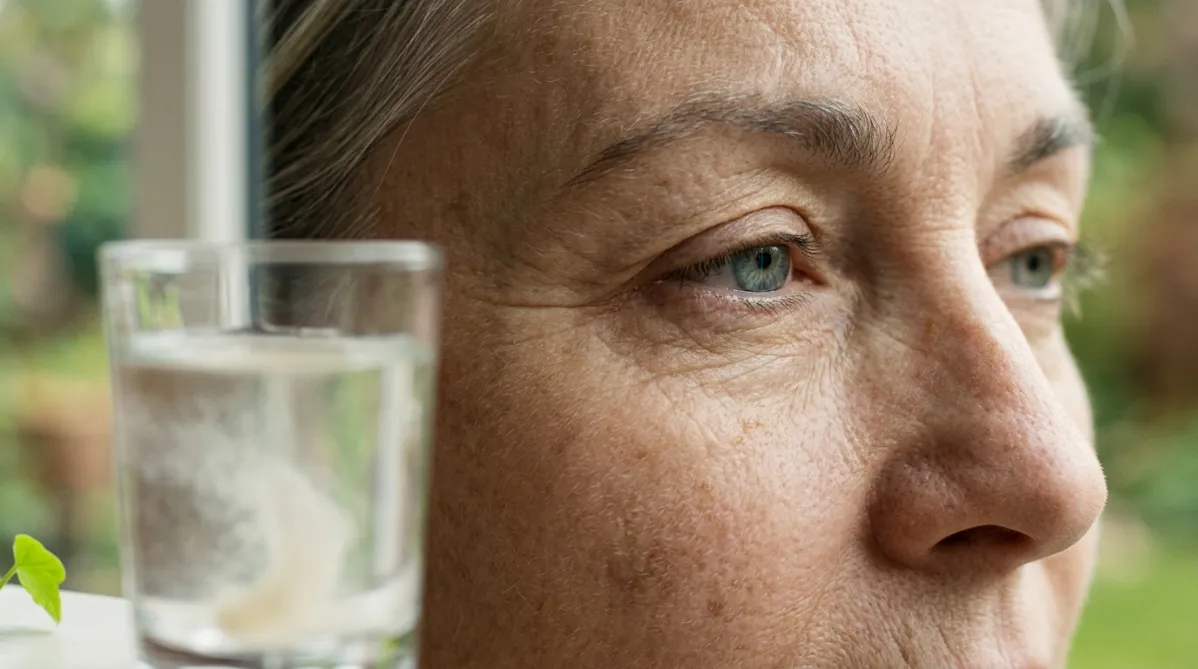
Extreme close-up of a woman's eye and the delicate skin around it, shot from a slight three-quarter angle with a 100mm macro lens and a shallow depth of field. Her skin is a mature 50s complexion with fine crow's feet that are sharp and tactile, with visible pores and soft vellus hairs. Her gaze is relaxed and not at the camera, and the face is cropped so identity isn't the focus. Soft, directional window daylight rakes across the skin from the left to bring out the wrinkle texture, with gentle warm skin tones and a blurred leafy green background outdoors. A single glass of water with a faint dissolving powder swirl sits out of focus in the foreground, with a tiny electric green leaf highlight at the edge. The mood is calm, honest and quietly scientific.
peptides

2,5 г колагенових пептидів зменшують зморшки навколо очей на 20 % за 8 тижнів

BY NOVA CHEN ·

Колаген — один із найпопулярніших засобів для краси та довголіття, проте лише небагато продуктів мають підтвердження з плацебо‑контрольованих досліджень на людях. У цьому випробуванні, у якому брало участь 114 жінок віком 45‑65 років, щоденна доза 2,5 г біоактивного пептиду Verisol зменшила обсяг зморшок навколо очей на 20 % у порівнянні з плацебо після 8 тижнів. Біопсії виявили збільшення рівня проколагену типу I на 65 % і еластину на 18 %, а підвищення фібрілліна (6 %) не виявилось статистично значущим. Ефект залишався помітним ще через 4 тижні після останньої дози. Однак результати стосуються лише одного брендованого пептиду в одній популяції і не можуть бути екстрапольовані на інші колагенові продукти. Нижче розбираємо, що саме доводить дослідження, а що — ні.
A wide, editorial-style still life photographed from slightly above on a pale warm-gray stone surface, lit by soft diffused morning light from the left. At the center, a delicate chain of 16 small, glossy beads in alternating muted terracotta, sage green, and cream is arranged in a gentle S-curve, each bead slightly different in size, like a hand-strung necklace. It stands for a peptide chain in a tactile, abstract way. Beside the chain, a translucent glass petri dish holds a thin layer of pale amber liquid with a few soft ripples. Behind it, a cross-section of a ripe fig and a halved blood orange show their intricate internal textures, suggesting cellular structure and mitochondria without literal illustration.

On the left side of the frame, a small ceramic mouse figurine in matte off-white sits calmly next to a sprig of dried wheat. It is a subtle nod to the mouse study and is stylized and minimal, not cartoonish. On the right, an open, softly blurred notebook with thin hand-drawn circles and curved lines, like looping pathway diagrams, lies under a brass pen. A few pages are visible but the text is illegible.

Scatter a few elements for texture: a small sprig of eucalyptus, a folded linen napkin in oatmeal tone, and a single clear glass pipette resting diagonally across the lower foreground. The palette is warm neutrals with accents of sage, terracotta, and soft amber, giving a calm, modern wellness-journal look. Shallow depth of field keeps the bead chain crisp while the background gently dissolves into creamy bokeh. Generous negative space across the upper right leaves room for headline overlay. The overall mood is clean, contemporary, and intellectually curious: scientific but warm, like a premium health and science magazine cover, with fine grain, natural shadows, and no text, logos, or futuristic elements.
peptides

MOTS‑c Пояснено: 16‑амінокислотний мітохондріальний пептид, який активував AMPK і захистив мишей від дієтою‑зумовленого ожиріння

BY DR. SYNAPSE ·

Крихітний 16‑амінокислотний пептид, закодований у мітохондріальній ДНК, а не в ядрі, активував AMPK у м’язах і захистив мишей від дієтою‑зумовленого ожиріння та інсулінової резистентності у дослідженні 2015 року, опублікованому в *Cell Metabolism*. MOTS‑c зараз одне з найобговорюваніших імен у колах, зайнятих пептидами та біохакінгом. Проте це дослідження на мишах – молекулярне відкриття без даних про людей, і MOTS‑c не є схваленою терапією. У цій статті пояснюємо, що таке MOTS‑c, як, ймовірно, він діє через фолатний цикл і AMPK, що показали миші та які висновки можна, а які ні – робити.
A wide, editorial-style still life photographed in soft natural window light on a pale oatmeal-colored linen surface. In the center foreground, a single small amber glass vial with a matte white cap sits slightly off-center to the right, unlabeled and minimal. Beside it lies a delicate, translucent skein of tendon-like fibers, rendered as fine pale ivory threads gently fanning out and twisting together, resting on a folded sheet of cream paper. To the left, a glass petri dish with a thin layer of soft blush-pink liquid, catching a subtle highlight, and a slim pair of stainless steel tweezers laid diagonally across the surface.

Behind the objects, a softly blurred background in muted sage green and warm taupe suggests a quiet laboratory shelf, with out-of-focus glassware shapes and a single trailing sprig of eucalyptus adding an organic note. A thin, hand-drawn style line diagram of interconnected nodes and curved arrows, in faint terracotta ink, is printed on the paper beneath the fibers. It hints at a cellular signaling pathway without any text or readable labels.

The composition uses generous negative space on the left third for potential title overlay, with a shallow depth of field and a gentle diagonal flow from the petri dish to the vial. The color palette is restrained and warm: cream, sage, blush, amber, and terracotta accents, with soft shadows and a faint film-grain texture. The mood is calm, thoughtful, and scientific but approachable, like a contemporary health and science magazine cover. Shot as if with a 50mm lens at f/2.8, top-down at a slight 30-degree angle, with crisp focus on the vial and fibers. No people, no text, no futuristic elements.
peptides

BPC‑157 і відновлення сухожиль: що показують дослідження FAK‑paxillin, а що ні

BY DR. SYNAPSE ·

BPC‑157 — 15‑амінокислотний пептид, який активно обговорюють у інтернет‑спільнотах про «зцілення». У його підґрунті лежить широко цитоване дослідження 2011 р., у якому вчені виявили пришвидшення вивільнення фібробластів з сухожильних тканин, підвищення їх виживаності під окислювальним стресом та стимуляцію міграції, ймовірно, через активацію шляху FAK‑paxillin. Пептид не підвищував пряму проліферацію клітин, а всі результати отримані лише на тканинах і клітинах щурів у лабораторії. У статті розбирається механізм дії, пояснюється, чому це не є доказом для людей, і розглядається нерегульований статус пептиду.

This page is available in