Biocracked
←

Peptides

6 articles
Approach: macro science with a conceptual twist. Palette: bold color field.

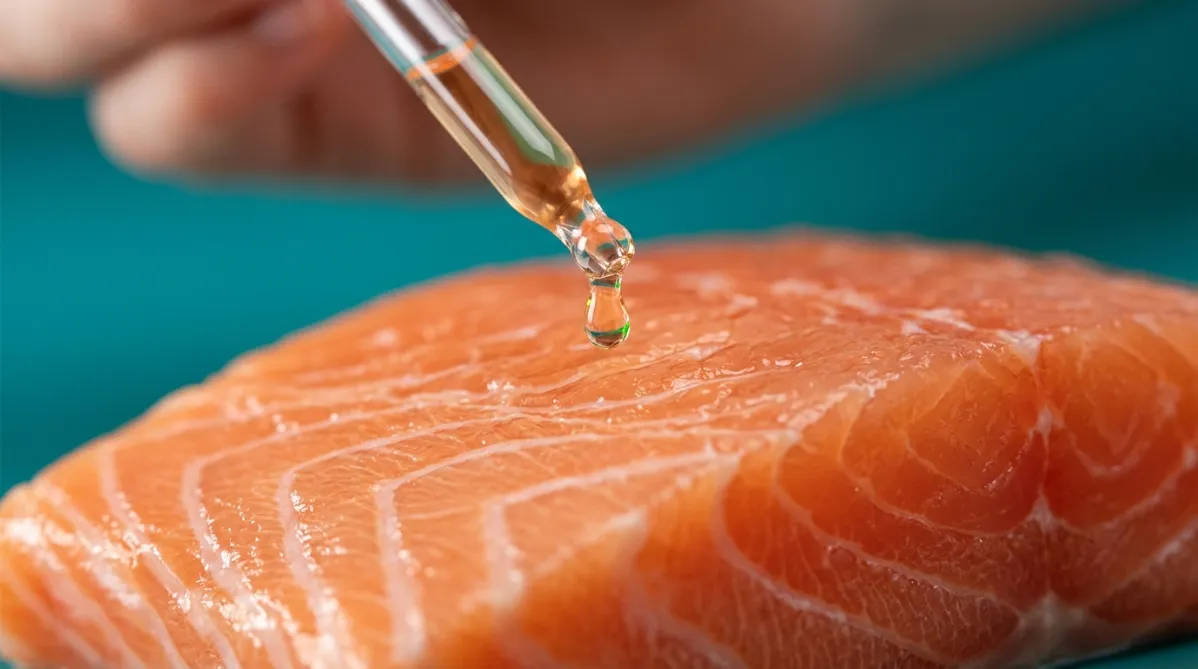
Extreme close-up, slightly high three-quarter angle, of a raw salmon fillet's translucent coral flesh, with a glass pipette releasing a single droplet of pale amber peptide solution onto the muscle fibers. Glistening myotome layers and fine white connective lines are sharp in the foreground, with shallow depth of field melting the rest. The salmon sits on a saturated teal backdrop, so the orange-pink flesh contrasts strongly with it. Soft, large-source studio light from upper left gives crisp specular highlights on the droplet and moist fibers, with gentle neutral shadows. A tiny electric green reflection glints inside the droplet. The mood is precise, fresh and curious, like a food-science lab photograph. Photorealistic, with no text.
peptides

Peptide de somon vs zer: +13 % feritină în 8 săptămâni (pilot cu 14 participanți)

BY NOVA CHEN ·

Un mic studiu norvegian a arătat că 12 g/zi de hidrolizat de proteină de somon au crescut feritina cu aproximativ 13 % și numărul eritrocitelor cu aproximativ 7 % în comparație cu zerul, pe parcursul a opt săptămâni. Rezultatele secundare sugerau inflamație mai scăzută, markeri glicemici mai buni și compoziție corporală îmbunătățită. Însă studiul a implicat doar 14 participanți și a fost sponsorizat de industrie, așa că reprezintă un semnal, nu o dovadă. Iată ce sunt peptidele de somon, ce a arătat studiul, cum diferă de colagen și de ce prudența este esențială.
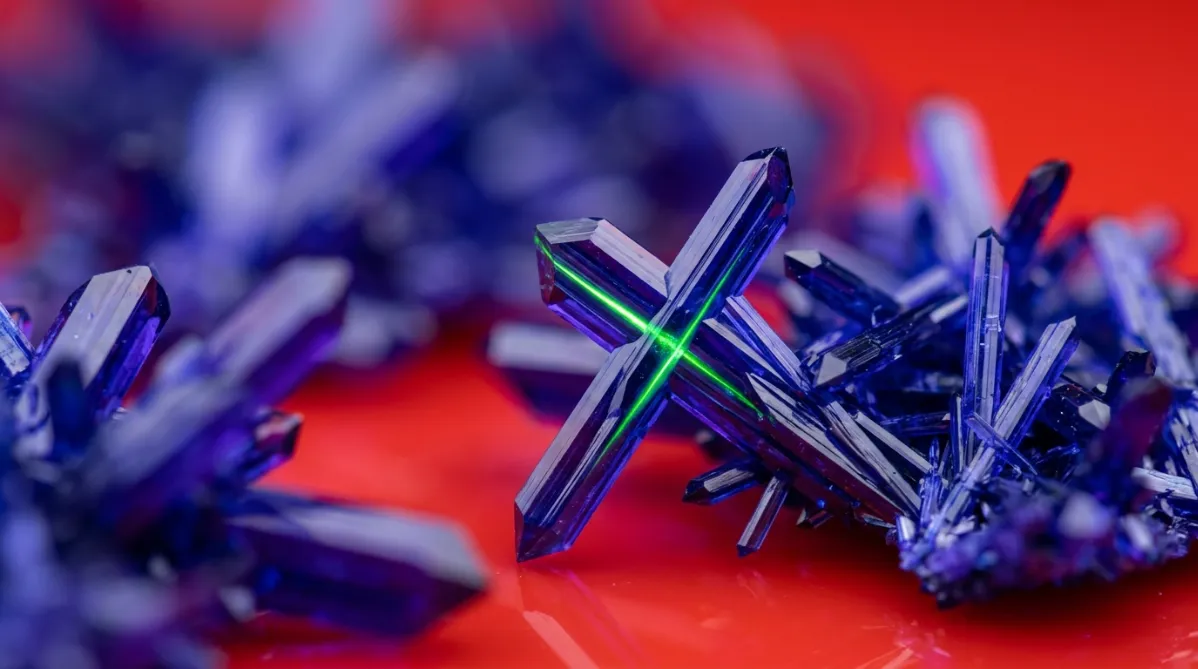
Macro science: an extreme close-up of GHK-Cu copper peptide crystals, deep blue-violet needle-like crystals with faceted edges, shot at a low three-quarter angle with a shallow depth of field so the nearest crystals are razor sharp and the rest dissolve into soft blur. The crystals sit on a smooth, glossy tomato-red backdrop that fills the frame, creating a bold color field. Lighting is a single large softbox from the upper left, giving crisp specular highlights on the crystal faces and a soft, warm-red bounce in the shadows. One tiny thread of electric green light refracts through a single crystal edge as a subtle accent. Mood: striking, precise, curious, scientific without feeling sterile. Photorealistic microscopy-meets-studio look, no text, no labels, no people.
peptides

Peptidul cu Cupru GHK‑Cu ar putea regla rețelele genice implicate în repararea pielii

BY NOVA CHEN ·

GHK‑Cu, peptidul cu cupru prezintă în numeroase seruri, ar putea face mult mai mult decât să hidrateze pielea. O recenzie din 2018 susţine că noile date despre expresia genelor pot explica legătura dintre această moleculă mică și sinteza colagenului, repararea ţesuturilor, reglarea inflamaţiei și chiar refacerea ADN‑ului. Află ce spune studiul despre pielea îmbătrânită și regenerare și care sunt limitele dovezilor. Înainte să cazi în capcana hype‑ului, vezi avertismentele practice privind utilizarea topică și ce poate (şi ce nu poate) demonstra recenzia.
Approach: Lab in action. Palette: D, bold color field.

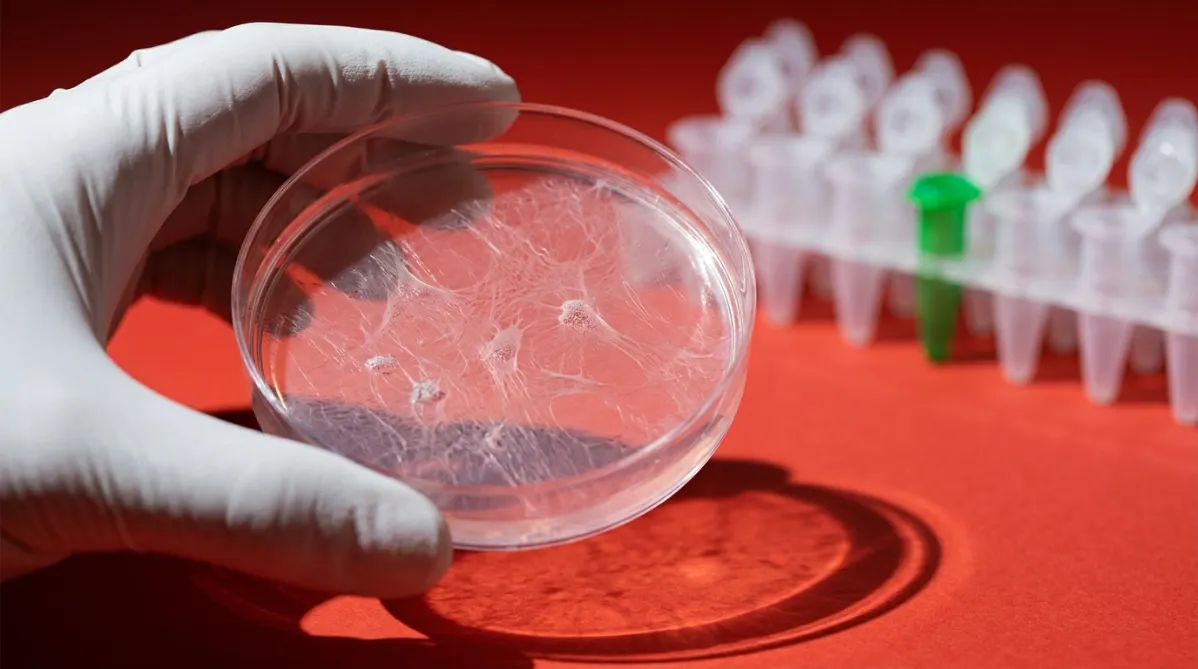
A gloved hand holds a clear petri dish at a slight low angle, close and slightly above eye level, against a saturated tomato-red backdrop. Inside the dish, a thin, translucent layer of pale pink culture medium holds a faint, lacy web of fibroblast cells, with a few small clusters just visible. Hard, clean studio light from the upper left throws a crisp curved shadow of the dish onto the red surface and picks out bright highlights on the rim and the glove's matte white nitrile. In the soft-focus background, a rack of empty microcentrifuge tubes stands out in cool white. One tiny electric green cap on a single tube adds a small accent. The mood is precise and skeptical: a promising result still confined to the dish.
peptides

Epithalon a activat telomeraza în celule – dar nu în oameni

BY HELIX WARD ·

Un peptid de patru aminoacizi ar fi activat telomeraza – enzima pe care majoritatea celulelor adulte o ține în repaus – și ar fi prelungit telomerele în celulele umane. Acesta este nucleul entuziasmului din jurul Epithalonului în discuțiile despre longevitate. Însă studiul a fost realizat pe fibroblaste fetale în cultură, nu pe oameni, iar afirmația privind prelungirea duratei de viață rămâne doar o ipoteză. Iată ce dovedește cu adevărat studiul din 2003, ce a omis și cum să-l interpretezi înainte să cumperi ceva.
Approach: the human outcome. Palette: natural.

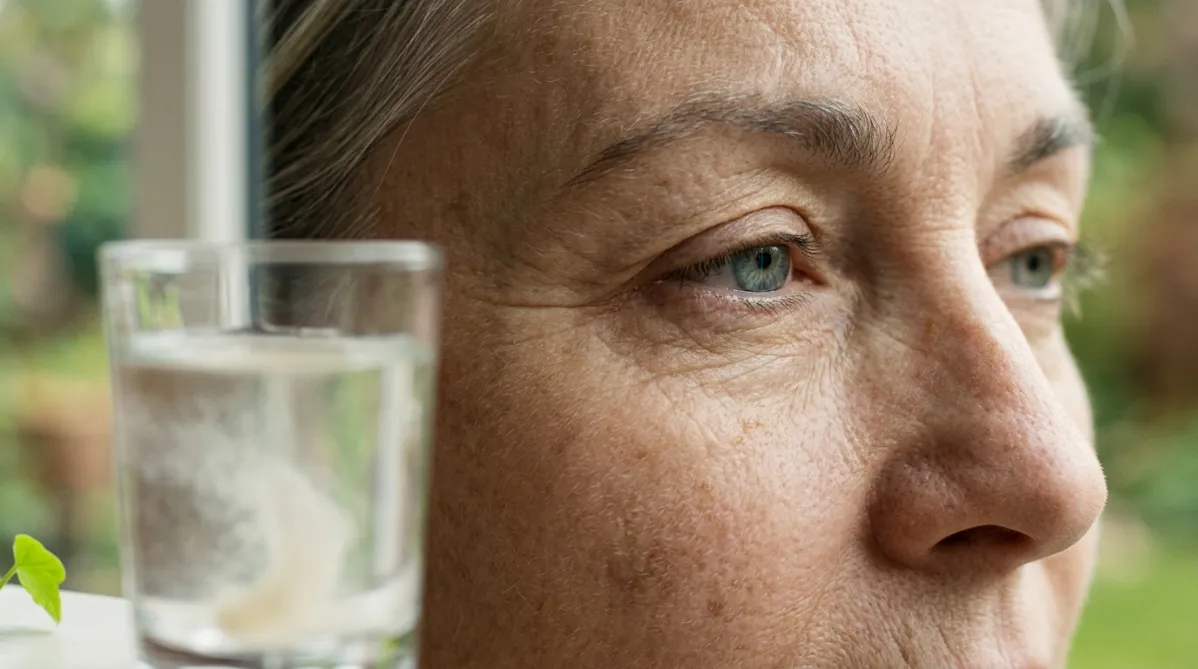
Extreme close-up of a woman's eye and the delicate skin around it, shot from a slight three-quarter angle with a 100mm macro lens and a shallow depth of field. Her skin is a mature 50s complexion with fine crow's feet that are sharp and tactile, with visible pores and soft vellus hairs. Her gaze is relaxed and not at the camera, and the face is cropped so identity isn't the focus. Soft, directional window daylight rakes across the skin from the left to bring out the wrinkle texture, with gentle warm skin tones and a blurred leafy green background outdoors. A single glass of water with a faint dissolving powder swirl sits out of focus in the foreground, with a tiny electric green leaf highlight at the edge. The mood is calm, honest and quietly scientific.
peptides

2,5 g de peptide de colagen reduc ridurile de la ochi cu 20 % în 8 săptămâni

BY NOVA CHEN ·

Colagenul este unul dintre cele mai căutate suplimente pentru frumusețe și longevitate, dar puține produse dispun de date umane controlate prin placebo. Într-un studiu cu 114 femei cu vârste cuprinse între 45‑65 de ani, 2,5 g pe zi de peptidă bioactivă Verisol au redus volumul ridurilor de la ochi cu 20 % față de placebo, după 8 săptămâni. Biopsiile au arătat un +65 % de procollagen tip I și +18 % de elastină, în timp ce creșterea de 6 % a fibrilinei nu a fost semnificativă. Efectul a rămas detectabil și la 4 săptămâni după ultima doză. Totuși, rezultatele se aplică doar unei peptide branduite și unei singure populații, nu oricărei pudre de colagen.
A wide, editorial-style still life photographed from slightly above on a pale warm-gray stone surface, lit by soft diffused morning light from the left. At the center, a delicate chain of 16 small, glossy beads in alternating muted terracotta, sage green, and cream is arranged in a gentle S-curve, each bead slightly different in size, like a hand-strung necklace. It stands for a peptide chain in a tactile, abstract way. Beside the chain, a translucent glass petri dish holds a thin layer of pale amber liquid with a few soft ripples. Behind it, a cross-section of a ripe fig and a halved blood orange show their intricate internal textures, suggesting cellular structure and mitochondria without literal illustration.

On the left side of the frame, a small ceramic mouse figurine in matte off-white sits calmly next to a sprig of dried wheat. It is a subtle nod to the mouse study and is stylized and minimal, not cartoonish. On the right, an open, softly blurred notebook with thin hand-drawn circles and curved lines, like looping pathway diagrams, lies under a brass pen. A few pages are visible but the text is illegible.

Scatter a few elements for texture: a small sprig of eucalyptus, a folded linen napkin in oatmeal tone, and a single clear glass pipette resting diagonally across the lower foreground. The palette is warm neutrals with accents of sage, terracotta, and soft amber, giving a calm, modern wellness-journal look. Shallow depth of field keeps the bead chain crisp while the background gently dissolves into creamy bokeh. Generous negative space across the upper right leaves room for headline overlay. The overall mood is clean, contemporary, and intellectually curious: scientific but warm, like a premium health and science magazine cover, with fine grain, natural shadows, and no text, logos, or futuristic elements.
peptides

MOTS‑c explicat: Peptidul mitocondrial de 16 aminoacizi care activează AMPK și protejează șoarecii de obezitatea indusă de dietă

BY DR. SYNAPSE ·

Un peptid de doar 16 aminoacizi, codificat în ADN‑ul mitocondrial – nu în nucleul celular – a activat AMPK în mușchi și a protejat șoarecii de obezitatea și rezistența la insulină induse de dietă, conform unui studiu din 2015 publicat în *Cell Metabolism*. MOTS‑c este astăzi unul dintre cele mai căutate nume în cercurile de peptide și biohacking. Totuși, articolul descrie o descoperire moleculară la nivel de șoareci, fără date clinice la oameni, iar MOTS‑c nu este un tratament aprobat. În continuare explicăm ce este MOTS‑c, cum pare să funcționeze prin ciclul folatului și AMPK, ce au arătat studiile pe șoareci și ce ar trebui – și ce nu ar trebui – să concluzioneze cititorii.
A wide, editorial-style still life photographed in soft natural window light on a pale oatmeal-colored linen surface. In the center foreground, a single small amber glass vial with a matte white cap sits slightly off-center to the right, unlabeled and minimal. Beside it lies a delicate, translucent skein of tendon-like fibers, rendered as fine pale ivory threads gently fanning out and twisting together, resting on a folded sheet of cream paper. To the left, a glass petri dish with a thin layer of soft blush-pink liquid, catching a subtle highlight, and a slim pair of stainless steel tweezers laid diagonally across the surface.

Behind the objects, a softly blurred background in muted sage green and warm taupe suggests a quiet laboratory shelf, with out-of-focus glassware shapes and a single trailing sprig of eucalyptus adding an organic note. A thin, hand-drawn style line diagram of interconnected nodes and curved arrows, in faint terracotta ink, is printed on the paper beneath the fibers. It hints at a cellular signaling pathway without any text or readable labels.

The composition uses generous negative space on the left third for potential title overlay, with a shallow depth of field and a gentle diagonal flow from the petri dish to the vial. The color palette is restrained and warm: cream, sage, blush, amber, and terracotta accents, with soft shadows and a faint film-grain texture. The mood is calm, thoughtful, and scientific but approachable, like a contemporary health and science magazine cover. Shot as if with a 50mm lens at f/2.8, top-down at a slight 30-degree angle, with crisp focus on the vial and fibers. No people, no text, no futuristic elements.
peptides

BPC-157 și repararea tendonului: ce arată studiul asupra căii FAK‑paxillin și ce nu arată

BY DR. SYNAPSE ·

BPC‑157, un peptide de 15 aminoacizi foarte popular în mediile online de „vindecare”, se bazează pe un studiu din 2011, foarte citat, care i-a consolidat reputația în repararea tendonului. Cercetătorii au observat că peptidele accelerează creșterea fibroblastelor, îmbunătățesc supraviețuirea celulară în condiții de stres oxidativ și stimulează migrarea, aparent prin activarea căii FAK‑paxillin. Cu toate acestea, nu a fost demonstrată creșterea directă a proliferării celulare, iar toate rezultatele provin din experimente pe țesut și celule de șoarece, în laborator. Acest articol explică mecanismul, arată de ce nu reprezintă dovadă pentru oameni și revizuiește statutul său neautorizat din punct de vedere regulativ.

This page is available in