Biocracked
←

Peptides

6 articles
Approach: macro science with a conceptual twist. Palette: bold color field.

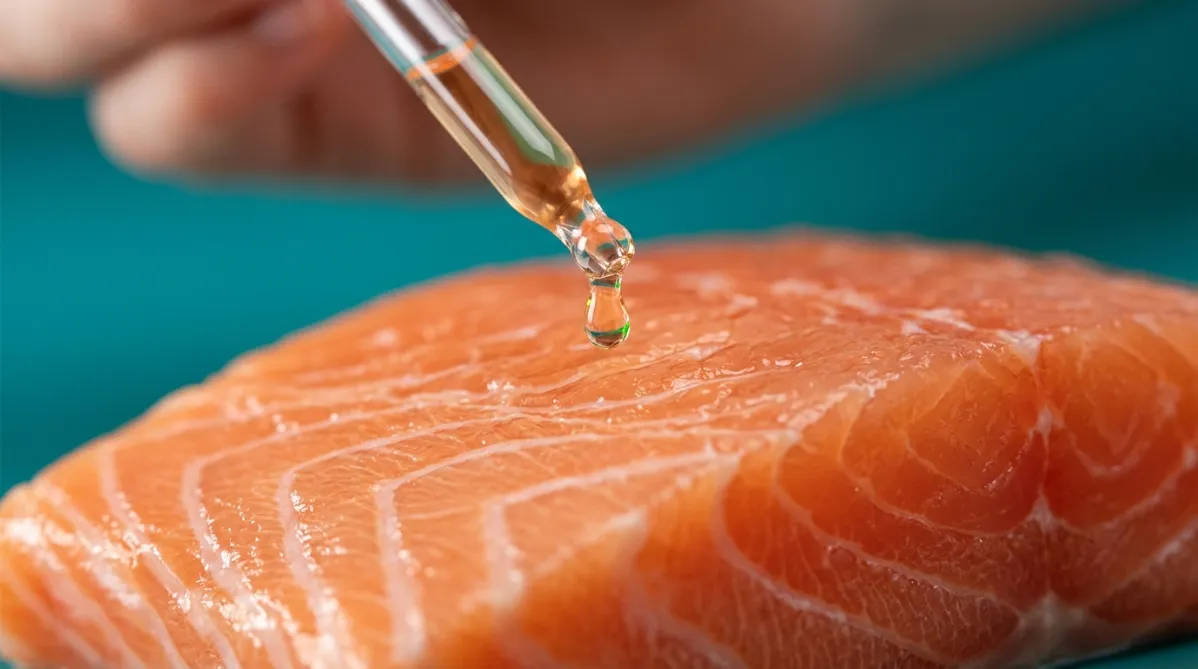
Extreme close-up, slightly high three-quarter angle, of a raw salmon fillet's translucent coral flesh, with a glass pipette releasing a single droplet of pale amber peptide solution onto the muscle fibers. Glistening myotome layers and fine white connective lines are sharp in the foreground, with shallow depth of field melting the rest. The salmon sits on a saturated teal backdrop, so the orange-pink flesh contrasts strongly with it. Soft, large-source studio light from upper left gives crisp specular highlights on the droplet and moist fibers, with gentle neutral shadows. A tiny electric green reflection glints inside the droplet. The mood is precise, fresh and curious, like a food-science lab photograph. Photorealistic, with no text.
peptides

Лососевые пептиды vs сывороточный протеин: +13 % ферритина за 8 недель (пилотное исследование на 14 участников)

BY NOVA CHEN ·

Небольшое норвежское исследование установило, что приём 12 г/дн гидролизата белка лосося повышал уровень ферритина примерно на 13 % и количество эритроцитов — на 7 % — по сравнению с изолятом сывороточного протеина. Вторичные показатели намекали на снижение воспаления, улучшение глюкозного метаболизма и более благоприятную композицию тела. Однако исследование включало лишь 14 участников и было спонсировано производителем, поэтому результаты следует рассматривать как сигнал, а не подтверждённое доказательство.
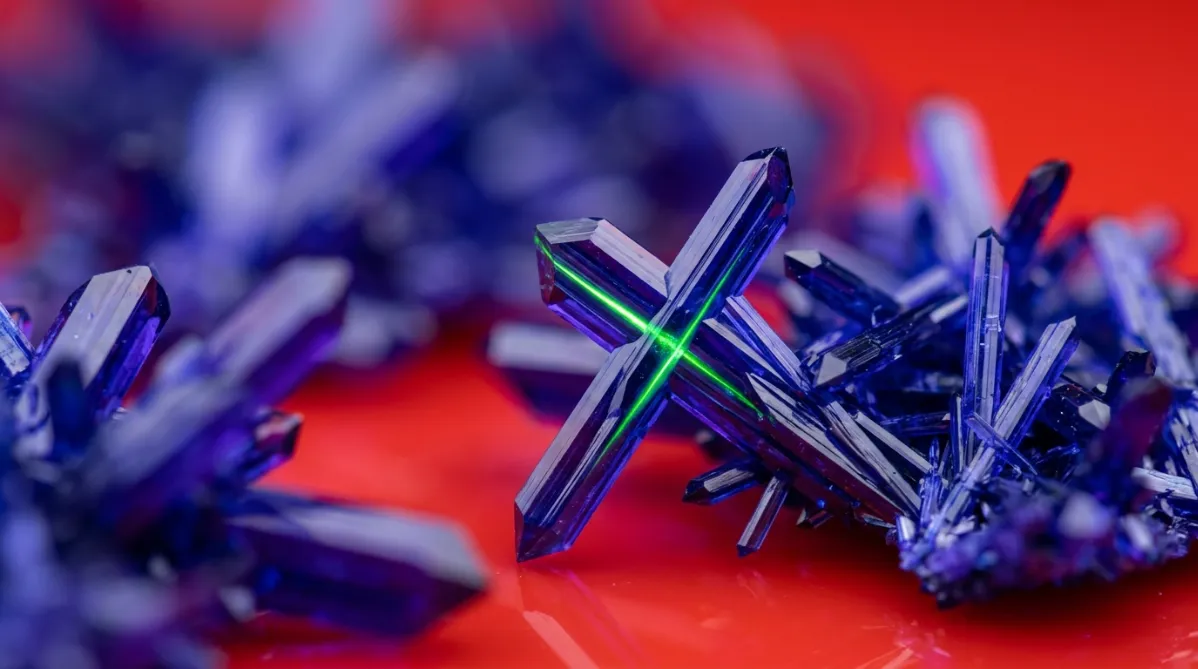
Macro science: an extreme close-up of GHK-Cu copper peptide crystals, deep blue-violet needle-like crystals with faceted edges, shot at a low three-quarter angle with a shallow depth of field so the nearest crystals are razor sharp and the rest dissolve into soft blur. The crystals sit on a smooth, glossy tomato-red backdrop that fills the frame, creating a bold color field. Lighting is a single large softbox from the upper left, giving crisp specular highlights on the crystal faces and a soft, warm-red bounce in the shadows. One tiny thread of electric green light refracts through a single crystal edge as a subtle accent. Mood: striking, precise, curious, scientific without feeling sterile. Photorealistic microscopy-meets-studio look, no text, no labels, no people.
peptides

GHK‑Cu (медный пептид) может регулировать генетические сети, отвечающие за восстановление кожи

BY NOVA CHEN ·

GHK‑Cu, медный пептид, который встречается во многих сыворотках, может делать гораздо больше, чем просто увлажнять кожу. Обзор 2018 года утверждает, что новые данные о генной экспрессии способны объяснить, как эта крошечная молекула связана с синтезом коллагена, восстановлением тканей, контролем воспаления и даже репарацией ДНК. Ниже – что именно сообщает статья о стареющей коже и регенерации, и где заканчиваются доказательства. Прежде чем поверить рекламным заявлениям, ознакомьтесь с практическими оговорками по топическому применению и тем, что обзор может, а что не может доказать.
Approach: Lab in action. Palette: D, bold color field.

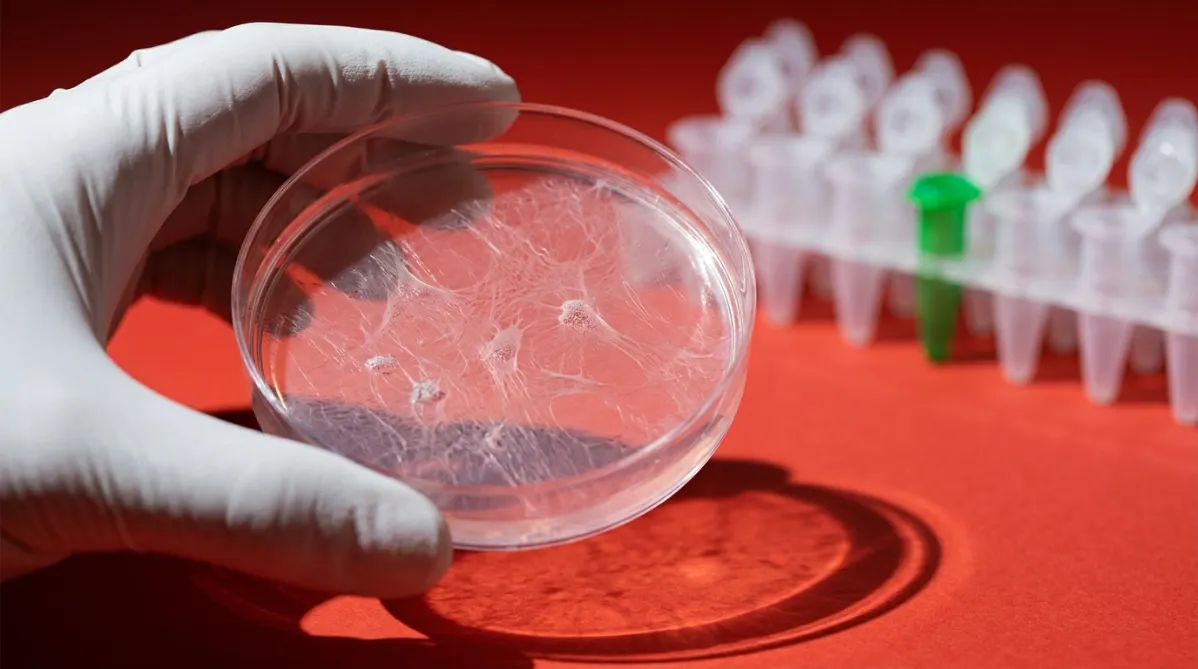
A gloved hand holds a clear petri dish at a slight low angle, close and slightly above eye level, against a saturated tomato-red backdrop. Inside the dish, a thin, translucent layer of pale pink culture medium holds a faint, lacy web of fibroblast cells, with a few small clusters just visible. Hard, clean studio light from the upper left throws a crisp curved shadow of the dish onto the red surface and picks out bright highlights on the rim and the glove's matte white nitrile. In the soft-focus background, a rack of empty microcentrifuge tubes stands out in cool white. One tiny electric green cap on a single tube adds a small accent. The mood is precise and skeptical: a promising result still confined to the dish.
peptides

Эпиталон активирует теломеразу в клетках — но не у людей

BY HELIX WARD ·

Четырёхаминокислотный пептид, по данным исследований, активирует теломеразу — фермент, который в подавляющем большинстве взрослых клеток находится в неактивном состоянии, и удлиняет теломеры в человеческих клетках. Это открытие подпитывает разговоры о долголетии эпиталона. Однако эксперимент был проведён на фетальных фибробластах в пробирке, а не на людях, и упоминание о продлении жизни остаётся лишь гипотезой. В статье мы разберём, какие результаты действительно получены в исследовании 2003 года, какие детали упущены и как правильно оценить их перед покупкой.
Approach: the human outcome. Palette: natural.

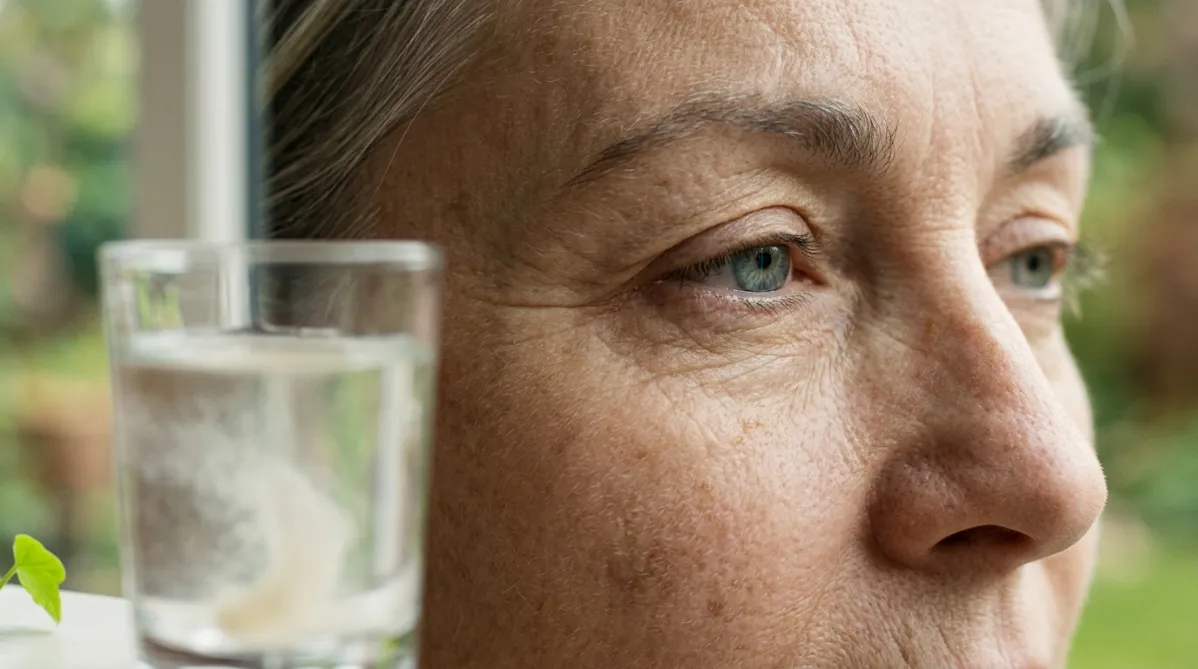
Extreme close-up of a woman's eye and the delicate skin around it, shot from a slight three-quarter angle with a 100mm macro lens and a shallow depth of field. Her skin is a mature 50s complexion with fine crow's feet that are sharp and tactile, with visible pores and soft vellus hairs. Her gaze is relaxed and not at the camera, and the face is cropped so identity isn't the focus. Soft, directional window daylight rakes across the skin from the left to bring out the wrinkle texture, with gentle warm skin tones and a blurred leafy green background outdoors. A single glass of water with a faint dissolving powder swirl sits out of focus in the foreground, with a tiny electric green leaf highlight at the edge. The mood is calm, honest and quietly scientific.
peptides

2,5 г коллагеновых пептидов уменьшают морщины вокруг глаз на 20 % за 8 недель

BY NOVA CHEN ·

Коллаген – одна из самых популярных добавок для красоты и долголетия, но лишь немногие препараты подкреплены данными плацебо‑контролируемых клинических исследований. В исследовании на 114 женщинах 45–65 лет ежедневный приём 2,5 г специфического биологически активного пептида Verisol сократил объём морщин вокруг глаз на 20 % по сравнению с плацебо за 8 недель. Биопсии показали рост про‑коллагена I на 65 % и эластина на 18 %, а увеличение уровня фибриллина (6 %) не достигло статистической значимости.

A wide, editorial-style still life photographed from slightly above on a pale warm-gray stone surface, lit by soft diffused morning light from the left. At the center, a delicate chain of 16 small, glossy beads in alternating muted terracotta, sage green, and cream is arranged in a gentle S-curve, each bead slightly different in size, like a hand-strung necklace. It stands for a peptide chain in a tactile, abstract way. Beside the chain, a translucent glass petri dish holds a thin layer of pale amber liquid with a few soft ripples. Behind it, a cross-section of a ripe fig and a halved blood orange show their intricate internal textures, suggesting cellular structure and mitochondria without literal illustration.

On the left side of the frame, a small ceramic mouse figurine in matte off-white sits calmly next to a sprig of dried wheat. It is a subtle nod to the mouse study and is stylized and minimal, not cartoonish. On the right, an open, softly blurred notebook with thin hand-drawn circles and curved lines, like looping pathway diagrams, lies under a brass pen. A few pages are visible but the text is illegible.

Scatter a few elements for texture: a small sprig of eucalyptus, a folded linen napkin in oatmeal tone, and a single clear glass pipette resting diagonally across the lower foreground. The palette is warm neutrals with accents of sage, terracotta, and soft amber, giving a calm, modern wellness-journal look. Shallow depth of field keeps the bead chain crisp while the background gently dissolves into creamy bokeh. Generous negative space across the upper right leaves room for headline overlay. The overall mood is clean, contemporary, and intellectually curious: scientific but warm, like a premium health and science magazine cover, with fine grain, natural shadows, and no text, logos, or futuristic elements.
peptides

MOTS‑c: объяснение 16‑аминокислотного митохондриального пептида, активирующего AMPK и защищающего мышей от диетически‑индуцированного ожирения

BY DR. SYNAPSE ·

Короткий 16‑аминокислотный пептид, закодированный в митохондриальной ДНК, активирует AMPK в мышцах и защищает мышей от диетически‑индуцированного ожирения и инсулинорезистентности. Это открытие 2015 года в журнале *Cell Metabolism* сделало MOTS‑c одним из самых обсуждаемых пептидов в биохакинге, однако данные получены только на животных, а препарат не одобрен для применения у людей.
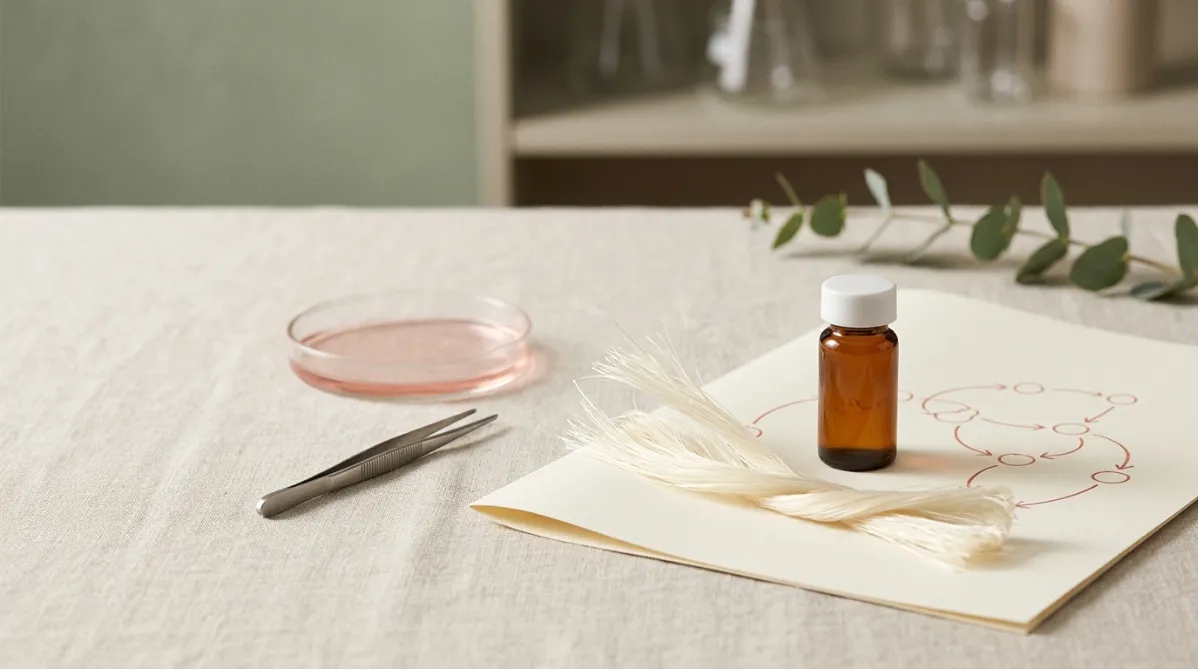
A wide, editorial-style still life photographed in soft natural window light on a pale oatmeal-colored linen surface. In the center foreground, a single small amber glass vial with a matte white cap sits slightly off-center to the right, unlabeled and minimal. Beside it lies a delicate, translucent skein of tendon-like fibers, rendered as fine pale ivory threads gently fanning out and twisting together, resting on a folded sheet of cream paper. To the left, a glass petri dish with a thin layer of soft blush-pink liquid, catching a subtle highlight, and a slim pair of stainless steel tweezers laid diagonally across the surface.

Behind the objects, a softly blurred background in muted sage green and warm taupe suggests a quiet laboratory shelf, with out-of-focus glassware shapes and a single trailing sprig of eucalyptus adding an organic note. A thin, hand-drawn style line diagram of interconnected nodes and curved arrows, in faint terracotta ink, is printed on the paper beneath the fibers. It hints at a cellular signaling pathway without any text or readable labels.

The composition uses generous negative space on the left third for potential title overlay, with a shallow depth of field and a gentle diagonal flow from the petri dish to the vial. The color palette is restrained and warm: cream, sage, blush, amber, and terracotta accents, with soft shadows and a faint film-grain texture. The mood is calm, thoughtful, and scientific but approachable, like a contemporary health and science magazine cover. Shot as if with a 50mm lens at f/2.8, top-down at a slight 30-degree angle, with crisp focus on the vial and fibers. No people, no text, no futuristic elements.
peptides

BPC‑157 и ремонт сухожилий: что показывает исследование пути FAK‑Paxillin и что нет

BY DR. SYNAPSE ·

BPC‑157 — 15‑аминокислотный пептид, популярный в онлайн‑сообществах «лечения», известен благодаря часто цитируемому исследованию 2011 года, которое дало ему репутацию средства для восстановления сухожилий. Учёные обнаружили, что он ускоряет рост фибробластов сухожилия, повышает их выживаемость при окислительном стрессе и усиливает миграцию, вероятно, за счёт активации пути FAK‑paxillin. Однако он не повышал прямую пролиферацию клеток, а все результаты получены только на тканях и клетках крыс в лаборатории. В статье разбирается механизм действия, объясняется, почему это не является доказательством эффективности у людей, и рассматривается нерегулируемый статус пептида.

This page is available in