Biocracked

Biocracked

Latest

GHK-Cu Copper Peptide May Tune Gene Networks Behind Skin Repair

GHK-Cu Copper Peptide May Tune Gene Networks Behind Skin Repair

BY NOVA CHEN ·

GHK-Cu, the copper peptide in countless serums, may do far more than moisturize. A 2018 review argues that new gene-expression data could explain how this one small molecule is linked to collagen building, tissue repair, inflammation control, and even DNA repair. Here's what the paper actually reports on aging skin and regeneration, and where the evidence stops. Before you buy into the hype, read the practical caveats on topical use and what a review can and can't prove.

Fisetin Senolytic Extended Mouse Lifespan—Human Proof Still Missing

Fisetin Senolytic Extended Mouse Lifespan—Human Proof Still Missing

BY HELIX WARD ·

Fisetin, a plant flavonoid, emerged as the most potent senolytic among ten compounds in a widely cited 2018 EBioMedicine study. In aged mice, treatment late in life reduced senescence markers, eased age-related pathology and extended both median and maximum lifespan. The catch is that this is mouse and lab evidence, not a completed human longevity trial. This article explains what the researchers found, what the dosing context really means, and who should pay attention as human studies develop.

Epithalon Switched On Telomerase in Cells—But Not in People

Epithalon Switched On Telomerase in Cells—But Not in People

BY HELIX WARD ·

A tiny four-amino-acid peptide reportedly switched on telomerase, an enzyme most adult cells keep silent, and lengthened telomeres in human cells. That is the finding behind Epithalon's longevity buzz. But it came from fetal fibroblasts in a dish, not from people, and the paper's talk of extending lifespan is a hypothesis. Here is what the 2003 study actually showed, what it leaves out, and how to read it before you buy anything.

NR + Pterostilbene Lifts NAD+ ~40–90% in Human Trial

NR + Pterostilbene Lifts NAD+ ~40–90% in Human Trial

BY NOVA CHEN ·

Can a daily capsule of nicotinamide riboside and pterostilbene raise NAD+ in older adults? In the first-in-human NRPT (Basis) trial, 120 people aged 60 to 80 took it for eight weeks. Blood NAD+ rose about 40% at the recommended dose and about 90% at double the dose, and the rise held steady through the study. No serious adverse events were reported. Here is what the numbers show, what the dose takeaways are, and what the study cannot tell you.

Weekly Rapamycin for a Year: Safe, But Did Visceral Fat Budge?

Weekly Rapamycin for a Year: Safe, But Did Visceral Fat Budge?

BY REX MERIDIAN ·

Everyone wants to know whether weekly rapamycin can shrink visceral fat and boost healthspan, and the PEARL trial has an answer that may surprise you. After 48 weeks in healthy adults, the primary endpoint of visceral fat did not budge, yet safety looked comparable to placebo. Some secondary signals, including lean mass and pain in women on 10 mg and better well-being on 5 mg, hint at benefits. But those are subgroup and self-reported findings, the drug was compounded, and no one has shown that it extends human lifespan. Here is what the data supports and what it does not.

Berberine vs. Metformin: The Pilot Trial Behind HbA1c 9.5% to 7.5%

Berberine vs. Metformin: The Pilot Trial Behind HbA1c 9.5% to 7.5%

BY HELIX WARD ·

A small 2008 pilot trial put berberine head-to-head with metformin in newly diagnosed type 2 diabetes, and the glucose-lowering effect looked similar. In the berberine group, HbA1c fell from 9.5% to 7.5% in three months. A second trial in 48 people already on treatment saw HbA1c drop from 8.1% to 7.3% and HOMA-IR fall 44.7%. But these were small studies in people with diabetes, and about a third of participants had GI side effects. Here is what the data show, what they don't, and what to know before you think about berberine.

Mushroom 'Longevity Vitamin' Raised NAD+ in Aged Rats via H2S Switch

Mushroom 'Longevity Vitamin' Raised NAD+ in Aged Rats via H2S Switch

BY HELIX WARD·Oct 17, 2026

Ergothioneine, the mushroom compound nicknamed the 'longevity vitamin,' just got a mechanism to match its buzz. In a Cell Metabolism study, aged rats given ET ran farther, gained vascularization and muscle, and showed higher muscle NAD+. The effect traced back to a hydrogen sulfide pathway: CSE, persulfidation, and the enzyme cGPDH. Knock out CSE or cGPDH and the benefits vanished. But this is animal and lab work, and the effective rat dose scales to roughly 10x what supplements typically provide.

Fisetin Senolytic Extended Mouse Lifespan—Human Proof Still Missing

Fisetin Senolytic Extended Mouse Lifespan—Human Proof Still Missing

BY HELIX WARD ·

Fisetin, a plant flavonoid, emerged as the most potent senolytic among ten compounds in a widely cited 2018 EBioMedicine study. In aged mice, treatment late in life reduced senescence markers, eased age-related pathology and extended both median and maximum lifespan. The catch is that this is mouse and lab evidence, not a completed human longevity trial. This article explains what the researchers found, what the dosing context really means, and who should pay attention as human studies develop.

Weekly Rapamycin for a Year: Safe, But Did Visceral Fat Budge?

Weekly Rapamycin for a Year: Safe, But Did Visceral Fat Budge?

BY REX MERIDIAN ·

Everyone wants to know whether weekly rapamycin can shrink visceral fat and boost healthspan, and the PEARL trial has an answer that may surprise you. After 48 weeks in healthy adults, the primary endpoint of visceral fat did not budge, yet safety looked comparable to placebo. Some secondary signals, including lean mass and pain in women on 10 mg and better well-being on 5 mg, hint at benefits. But those are subgroup and self-reported findings, the drug was compounded, and no one has shown that it extends human lifespan. Here is what the data supports and what it does not.

Vitamin D3 Preserved 140 Base Pairs of Telomere in a 4-Year RCT

Vitamin D3 Preserved 140 Base Pairs of Telomere in a 4-Year RCT

BY DR. SYNAPSE ·

A large, randomized, placebo-controlled trial found that four years of vitamin D3 slowed telomere shortening by about 140 base pairs. The data come from the VITAL study of older U.S. adults taking 2,000 IU/day. The effect was modest and borderline significant (p=0.039), and telomere length is a surrogate marker, not proof of a longer life. Omega-3s, meanwhile, did nothing for telomeres in this trial. Here is what the numbers show, what the limits are, and how to use the finding sensibly.

Omega-3 Slowed Biological Aging ~3 Months in a 3-Year RCT

Omega-3 Slowed Biological Aging ~3 Months in a 3-Year RCT

BY DR. SYNAPSE ·

A randomized trial in 777 adults aged 70+ found that 1 g/day of omega-3 slowed several epigenetic aging clocks, by roughly 3 months of biological aging over 3 years. Combining omega-3 with vitamin D (2,000 IU/day) and a home strength routine showed additive benefits on the PhenoAge clock. The catch: the effect is small, the analysis was post hoc, and epigenetic clocks are surrogate markers, not proof of a longer life. This breakdown covers the exact numbers, the limitations, and the practical doses used, plus who should check with a doctor first.

Browse by Category

Salmon Peptides vs Whey: +13% Ferritin in 8 Weeks (14-Person Pilot)

Salmon Peptides vs Whey: +13% Ferritin in 8 Weeks (14-Person Pilot)

BY NOVA CHEN·Oct 17, 2026

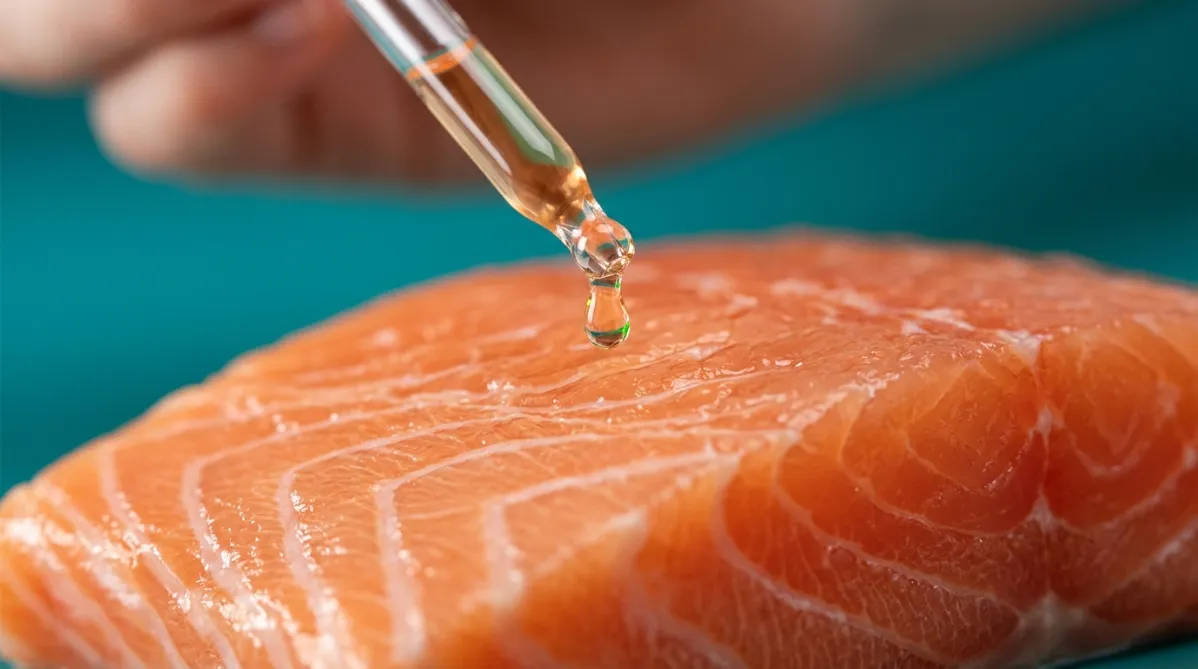
A small Norwegian trial found that 12 g/day of salmon protein hydrolysate lifted ferritin by about 13% and red blood cells by about 7% compared with whey over eight weeks. Secondary results hinted at lower inflammation, better glucose markers and improved body composition. But the study had only 14 participants and was industry-sponsored, so it is a signal rather than proof. Here is what salmon peptides are, what the trial found, how they differ from collagen, and why caution is essential.

GHK-Cu Copper Peptide May Tune Gene Networks Behind Skin Repair

GHK-Cu Copper Peptide May Tune Gene Networks Behind Skin Repair

BY NOVA CHEN ·

GHK-Cu, the copper peptide in countless serums, may do far more than moisturize. A 2018 review argues that new gene-expression data could explain how this one small molecule is linked to collagen building, tissue repair, inflammation control, and even DNA repair. Here's what the paper actually reports on aging skin and regeneration, and where the evidence stops. Before you buy into the hype, read the practical caveats on topical use and what a review can and can't prove.

Epithalon Switched On Telomerase in Cells—But Not in People

Epithalon Switched On Telomerase in Cells—But Not in People

BY HELIX WARD ·

A tiny four-amino-acid peptide reportedly switched on telomerase, an enzyme most adult cells keep silent, and lengthened telomeres in human cells. That is the finding behind Epithalon's longevity buzz. But it came from fetal fibroblasts in a dish, not from people, and the paper's talk of extending lifespan is a hypothesis. Here is what the 2003 study actually showed, what it leaves out, and how to read it before you buy anything.

2.5 g of Collagen Peptides Cut Eye Wrinkles 20% in 8 Weeks

2.5 g of Collagen Peptides Cut Eye Wrinkles 20% in 8 Weeks

BY NOVA CHEN ·

Collagen is one of the most searched beauty and longevity supplements, but few products have placebo-controlled human data. In this trial of 114 women aged 45-65, 2.5 g a day of the specific bioactive peptide Verisol cut eye wrinkle volume by 20% versus placebo after 8 weeks. Biopsies showed 65% more procollagen type I and 18% more elastin, while a 6% fibrillin bump wasn't significant. The effect was still detectable 4 weeks after the last dose. But the results apply to one branded peptide in one population, not every collagen powder, so here's what the paper does and doesn't prove.

MOTS-c Explained: The 16-Amino-Acid Mitochondrial Peptide That Activated AMPK and Shielded Mice From Diet-Induced Obesity

MOTS-c Explained: The 16-Amino-Acid Mitochondrial Peptide That Activated AMPK and Shielded Mice From Diet-Induced Obesity

BY DR. SYNAPSE ·

A tiny 16-amino-acid peptide encoded in mitochondrial DNA, not the nucleus, activated AMPK in muscle and protected mice from diet-induced obesity and insulin resistance in a 2015 Cell Metabolism study. MOTS-c is now one of the most talked-about names in peptide and biohacking circles. But this was a mouse and molecular-discovery paper with no human outcome data, and MOTS-c is not an approved therapy. This article explains what MOTS-c is, how it appears to work through the folate cycle and AMPK, what the mice showed, and what readers should and should not conclude.

More Stories

Vitamin D3 Preserved 140 Base Pairs of Telomere in a 4-Year RCT

Vitamin D3 Preserved 140 Base Pairs of Telomere in a 4-Year RCT

BY DR. SYNAPSE ·

A large, randomized, placebo-controlled trial found that four years of vitamin D3 slowed telomere shortening by about 140 base pairs. The data come from the VITAL study of older U.S. adults taking 2,000 IU/day. The effect was modest and borderline significant (p=0.039), and telomere length is a surrogate marker, not proof of a longer life. Omega-3s, meanwhile, did nothing for telomeres in this trial. Here is what the numbers show, what the limits are, and how to use the finding sensibly.

2.5 g of Collagen Peptides Cut Eye Wrinkles 20% in 8 Weeks

2.5 g of Collagen Peptides Cut Eye Wrinkles 20% in 8 Weeks

BY NOVA CHEN ·

Collagen is one of the most searched beauty and longevity supplements, but few products have placebo-controlled human data. In this trial of 114 women aged 45-65, 2.5 g a day of the specific bioactive peptide Verisol cut eye wrinkle volume by 20% versus placebo after 8 weeks. Biopsies showed 65% more procollagen type I and 18% more elastin, while a 6% fibrillin bump wasn't significant. The effect was still detectable 4 weeks after the last dose. But the results apply to one branded peptide in one population, not every collagen powder, so here's what the paper does and doesn't prove.

The Gut Bacterium That Worked Better Dead: Akkermansia's 29% Edge

The Gut Bacterium That Worked Better Dead: Akkermansia's 29% Edge

BY HELIX WARD ·

In the first human trial of Akkermansia muciniphila, the pasteurized (heat-killed) version, not the live one, produced the headline results. Insulin sensitivity rose 28.62% and fasting insulin fell 34.08% versus placebo in overweight, insulin-resistant adults. The weight and fat changes everyone hopes for did not reach statistical significance, and several authors hold patents and co-founded a company selling the bacterium. Here is what the study found, what it can't tell you, and what to check before buying a supplement.

Omega-3 Slowed Biological Aging ~3 Months in a 3-Year RCT

Omega-3 Slowed Biological Aging ~3 Months in a 3-Year RCT

BY DR. SYNAPSE ·

A randomized trial in 777 adults aged 70+ found that 1 g/day of omega-3 slowed several epigenetic aging clocks, by roughly 3 months of biological aging over 3 years. Combining omega-3 with vitamin D (2,000 IU/day) and a home strength routine showed additive benefits on the PhenoAge clock. The catch: the effect is small, the analysis was post hoc, and epigenetic clocks are surrogate markers, not proof of a longer life. This breakdown covers the exact numbers, the limitations, and the practical doses used, plus who should check with a doctor first.

MOTS-c Explained: The 16-Amino-Acid Mitochondrial Peptide That Activated AMPK and Shielded Mice From Diet-Induced Obesity

MOTS-c Explained: The 16-Amino-Acid Mitochondrial Peptide That Activated AMPK and Shielded Mice From Diet-Induced Obesity

BY DR. SYNAPSE ·

A tiny 16-amino-acid peptide encoded in mitochondrial DNA, not the nucleus, activated AMPK in muscle and protected mice from diet-induced obesity and insulin resistance in a 2015 Cell Metabolism study. MOTS-c is now one of the most talked-about names in peptide and biohacking circles. But this was a mouse and molecular-discovery paper with no human outcome data, and MOTS-c is not an approved therapy. This article explains what MOTS-c is, how it appears to work through the folate cycle and AMPK, what the mice showed, and what readers should and should not conclude.

Calcium Alpha-Ketoglutarate Extended Female Mouse Lifespan by Up to 16.6%. Here's What That Does (and Doesn't) Mean for Humans

Calcium Alpha-Ketoglutarate Extended Female Mouse Lifespan by Up to 16.6%. Here's What That Does (and Doesn't) Mean for Humans

BY DR. SYNAPSE ·

A 2020 Cell Metabolism study found that feeding middle-aged mice a 2% calcium alpha-ketoglutarate diet extended female median lifespan by up to 16.6% and reduced frailty. The effect was smaller in the second cohort (10.5%), and male survival gains were not statistically significant. Researchers link the benefit to lower systemic inflammation and a proposed rise in IL-10. But this was a mouse-only study, and it does not establish that AKG extends human lifespan. Here is what the data show, how they differ from supplement marketing, and why CaAKG belongs on a research watchlist rather than in a proven protocol.

This page is available in