Biocracked
←

Longevity

8 articles
Approach: macro science. Palette: warm (amber and copper).

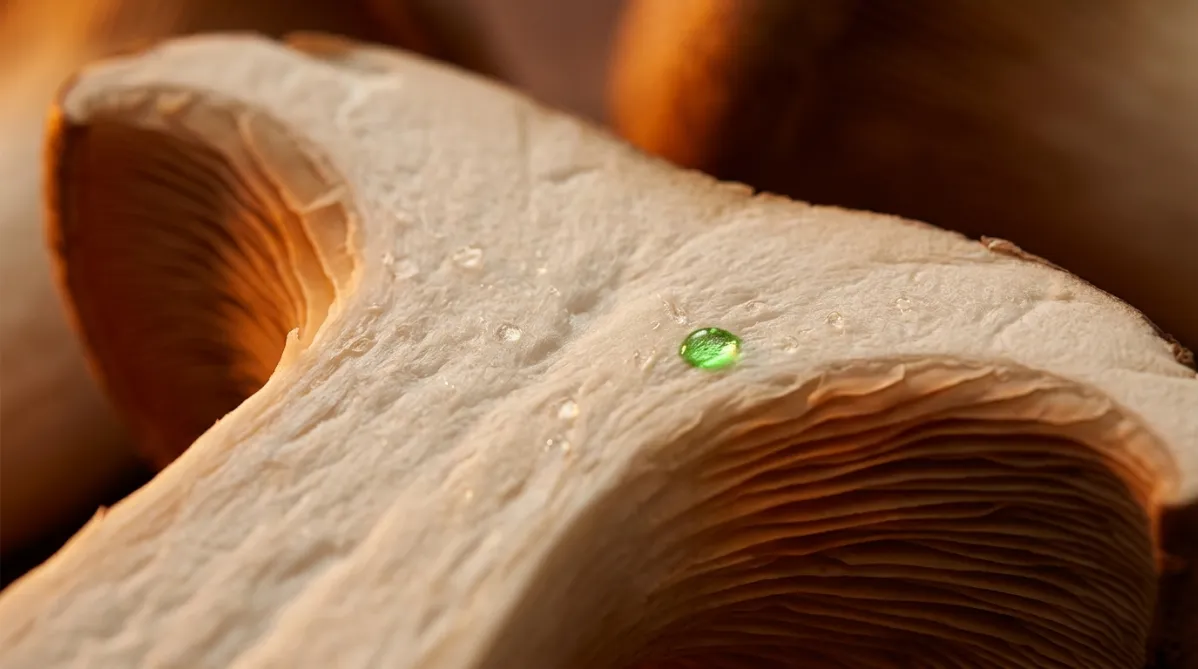
Extreme close-up of a freshly sliced king oyster mushroom stem and gill edge, shot at a slight 30-degree overhead angle with a macro lens and shallow depth of field. The pale cream flesh shows individual fibrous hyphae and glistening moisture beads. Warm low-angle golden light rakes across from the left, turning the gill ridges into amber and copper lines with deep honey-brown shadows. A single tiny droplet on the cut surface catches a pinpoint of electric green reflection, as if lit from a hidden source. Background melts into out-of-focus burnished orange and chocolate tones. The mood is quiet, intimate and investigative, with real organic texture and no text.
longevity

Mushroom 'Longevity Vitamin' Raised NAD+ in Aged Rats via H2S Switch

BY HELIX WARD ·

Ergothioneine, the mushroom compound nicknamed the 'longevity vitamin,' just got a mechanism to match its buzz. In a Cell Metabolism study, aged rats given ET ran farther, gained vascularization and muscle, and showed higher muscle NAD+. The effect traced back to a hydrogen sulfide pathway: CSE, persulfidation, and the enzyme cGPDH. Knock out CSE or cGPDH and the benefits vanished. But this is animal and lab work, and the effective rat dose scales to roughly 10x what supplements typically provide.
Approach: macro science. Palette: bold color field (violet).

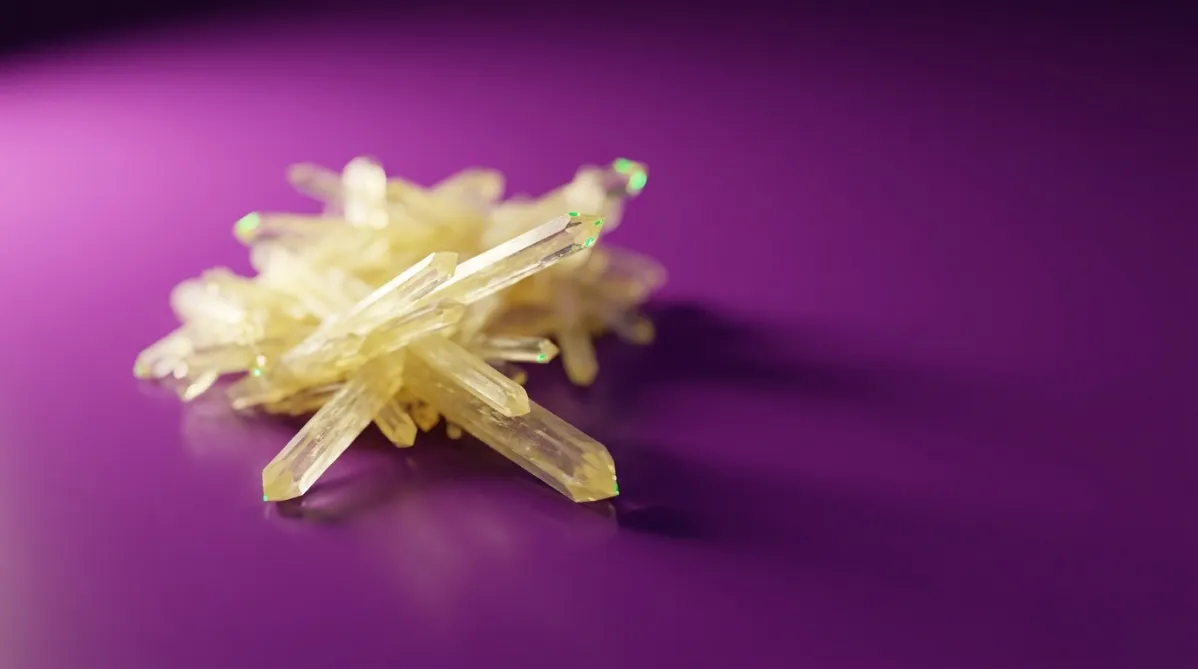
Extreme close-up of fisetin crystals, a small cluster of pale yellow needle-like flavonoid crystals with translucent, faceted edges, resting on a smooth glossy deep violet surface. The camera sits low at a shallow three-quarter angle with a very shallow depth of field, so the front crystals are razor sharp and the rest dissolves into soft magenta-violet blur. Lighting is a single crisp, slightly warm studio key from upper left that makes the crystal edges glow and throws long soft shadows across the violet. A few tiny electric green (#00e676) specks of reflected light catch on the crystal tips. The mood is precise, curious and quietly promising, like a sample under inspection, with plenty of clear violet space on the right side of the frame.
longevity

Fisetin Senolytic Extended Mouse Lifespan—Human Proof Still Missing

BY HELIX WARD ·

Fisetin, a plant flavonoid, emerged as the most potent senolytic among ten compounds in a widely cited 2018 EBioMedicine study. In aged mice, treatment late in life reduced senescence markers, eased age-related pathology and extended both median and maximum lifespan. The catch is that this is mouse and lab evidence, not a completed human longevity trial. This article explains what the researchers found, what the dosing context really means, and who should pay attention as human studies develop.
Approach: conceptual metaphor. Palette: bold color field.

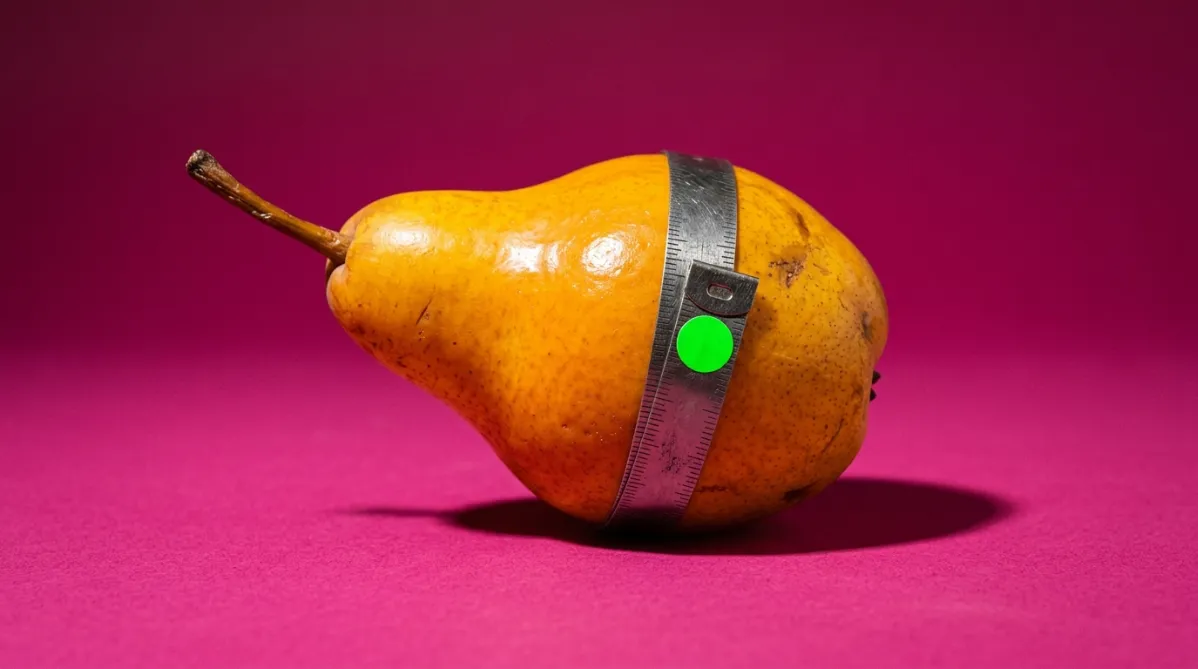
A single steel bathroom-style analog tape measure, pulled taut and wrapped around a ripe, glossy yellow-orange pear lying on its side, with the tape's tip locked at the same unmarked point, suggesting a waistline that did not shrink. The pear sits on a saturated magenta seamless backdrop, shot from a low three-quarter angle with a shallow depth of field, the stem sharp and the background softly blurred. Hard but slightly diffused studio key light from upper left casts a crisp, short shadow in deeper magenta on the surface. A tiny electric green sticky dot marks the tape's end, with no numbers or writing visible. Mood: playful, skeptical, deadpan, scientific restraint rather than hype.
longevity

Weekly Rapamycin for a Year: Safe, But Did Visceral Fat Budge?

BY REX MERIDIAN ·

Everyone wants to know whether weekly rapamycin can shrink visceral fat and boost healthspan, and the PEARL trial has an answer that may surprise you. After 48 weeks in healthy adults, the primary endpoint of visceral fat did not budge, yet safety looked comparable to placebo. Some secondary signals, including lean mass and pain in women on 10 mg and better well-being on 5 mg, hint at benefits. But those are subgroup and self-reported findings, the drug was compounded, and no one has shown that it extends human lifespan. Here is what the data supports and what it does not.

**Approach: Conceptual metaphor. Palette: B, Warm.**

A close, slightly high three-quarter view of a single weathered hemp rope stretched horizontally across the frame, shot at a shallow depth of field. On the left the rope is thick and tightly twisted. On the right it has frayed down to a few thin strands, with a short, neat whipping of bright electric green thread binding the rope just where the fraying stops. Golden-hour sunlight enters low from the left and picks out each individual fiber in honey and copper tones. Soft amber shadows fall across a blurred, sun-warmed wooden dock in the background. The mood is quiet and cautiously hopeful, suggesting something worn down slowly but partly held in place. The image is photorealistic and has no text.
longevity

Vitamin D3 Preserved 140 Base Pairs of Telomere in a 4-Year RCT

BY DR. SYNAPSE ·

A large, randomized, placebo-controlled trial found that four years of vitamin D3 slowed telomere shortening by about 140 base pairs. The data come from the VITAL study of older U.S. adults taking 2,000 IU/day. The effect was modest and borderline significant (p=0.039), and telomere length is a surrogate marker, not proof of a longer life. Omega-3s, meanwhile, did nothing for telomeres in this trial. Here is what the numbers show, what the limits are, and how to use the finding sensibly.
A bright, airy editorial still life on a pale warm-white linen surface, shot from a slightly elevated three-quarter angle in soft natural window light. On the left, a small hand-thrown ceramic dish in matte oatmeal glaze holds several translucent golden-amber omega-3 softgel capsules, catching the light like tiny honey droplets. Next to it sits a smaller dish with a few pale yellow vitamin D capsules. Beside them, a halved fresh salmon fillet in coral-pink with delicate white marbling rests on a slate-gray stone board, with a sprig of dill and a thin lemon wedge. A few walnuts and a small glass bottle of olive oil lend a quiet Mediterranean feel.

On the right side of the frame, a pair of lightweight sage-green resistance bands and a single brushed-steel dumbbell in a muted tone rest on a folded cream towel, hinting at a home strength routine. Behind them, a vintage brass pocket watch lies open, its face softly out of focus, with a thin ribbon of cream fabric curling beside it to suggest the passage of time. A sparse, elegant sprig of dried eucalyptus arches across the top corner.

The palette is calm and modern: warm cream, soft sage, muted coral, honey gold, and stone gray, with gentle diffused shadows and a shallow depth of field. The background fades into a creamy blur with a hint of a sunlit window and sheer curtain. The composition leaves generous negative space across the upper left and center for headline text. The overall mood is clean, trustworthy, and contemporary, like a premium health and science journal feature, with subtle film-like grain, natural textures, and minimalist styling.
longevity

Omega-3 Slowed Biological Aging ~3 Months in a 3-Year RCT

BY DR. SYNAPSE ·

A randomized trial in 777 adults aged 70+ found that 1 g/day of omega-3 slowed several epigenetic aging clocks, by roughly 3 months of biological aging over 3 years. Combining omega-3 with vitamin D (2,000 IU/day) and a home strength routine showed additive benefits on the PhenoAge clock. The catch: the effect is small, the analysis was post hoc, and epigenetic clocks are surrogate markers, not proof of a longer life. This breakdown covers the exact numbers, the limitations, and the practical doses used, plus who should check with a doctor first.

A wide landscape editorial photograph of a minimalist laboratory-meets-wellness still life on a pale, warm-gray stone countertop, softly lit by diffused morning window light from the left. In the center foreground, a small amber glass supplement jar with a plain matte white label sits beside a scattering of fine white powder and a few loose white capsules on a ceramic dish. Next to it rests a clean, open notebook with faint hand-drawn line graphs, two diverging curves rising gently, one slightly higher than the other, drawn in muted sage-green and charcoal ink. A slim brass pen lies across the page.

In the soft-focus midground, a delicate glass beaker filled with clear liquid catches a thin streak of light, casting a gentle caustic shimmer across the stone. A sprig of dried eucalyptus and a small sliver of citrus peel add organic texture. Behind them, an out-of-focus wall of pale oat-colored tiles and a floating wooden shelf holds a few blurred ceramic vessels and a small potted fern.

The color palette is calm and editorial: warm creams, sage green, soft amber, muted terracotta accents, and touches of charcoal. Shallow depth of field with a crisp focus on the jar and notebook, creamy bokeh in the background. Subtle film-like grain, natural shadows, and generous negative space on the right third of the frame, suitable for headline overlay. The mood is thoughtful, measured, and trustworthy, like a contemporary science and wellness journal cover: modern, tactile, quietly optimistic, and grounded rather than hyped.
longevity

Calcium Alpha-Ketoglutarate Extended Female Mouse Lifespan by Up to 16.6%. Here's What That Does (and Doesn't) Mean for Humans

BY DR. SYNAPSE ·

A 2020 Cell Metabolism study found that feeding middle-aged mice a 2% calcium alpha-ketoglutarate diet extended female median lifespan by up to 16.6% and reduced frailty. The effect was smaller in the second cohort (10.5%), and male survival gains were not statistically significant. Researchers link the benefit to lower systemic inflammation and a proposed rise in IL-10. But this was a mouse-only study, and it does not establish that AKG extends human lifespan. Here is what the data show, how they differ from supplement marketing, and why CaAKG belongs on a research watchlist rather than in a proven protocol.

A wide, softly lit editorial still life on a pale warm-gray stone surface, shot from a slightly elevated three-quarter angle. On the left, a small cluster of fresh yellow-gold onions with papery skins, one cut in half to show its pale concentric layers, sits beside a few dusty-red capers and a sprig of dill. These are natural quercetin sources and read as quiet botanical details. In the center, a minimalist glass apothecary dish holds a few small, round, off-white tablets. Beside it, a slim amber glass vial lies on its side with a plain unlabeled cap.

On the right, a neatly arranged clinical element: a vintage-style wooden-handled stopwatch and a crisp paper stride-length measuring tape curled in a loose spiral, hinting at the 6-minute walk test and gait speed measures. Behind these, a softly out-of-focus wall of pale sage green with a subtle shadow of a window frame cast diagonally across it. A single translucent anatomical line drawing of lungs, rendered in fine charcoal ink on cream paper, leans against the wall, its delicate branching bronchi echoing the veining of a nearby green leaf.

Lighting is soft morning daylight from the upper left, creating gentle long shadows and a calm, thoughtful mood. The palette is muted and modern: butter yellow, sage, cream, warm gray, with small accents of terracotta and amber. Shallow depth of field keeps the tablets and onion sharp while the background melts into a creamy blur. Generous negative space across the upper right makes room for headline overlay. The composition feels like a contemporary science journal or wellness-research magazine cover: clean, tactile, restrained, with subtle film grain and natural color grading. No text, no logos, no people, no futuristic elements.
longevity

The First Humans to Take Dasatinib + Quercetin: What a 14-Patient IPF Pilot Did (and Didn't) Show

BY DR. SYNAPSE ·

In 2019, researchers reported the first-ever human use of the senolytic combination dasatinib plus quercetin, in 14 patients with idiopathic pulmonary fibrosis. After three weeks of intermittent dosing, participants showed meaningful gains in 6-minute walk distance, gait speed and chair-stand time, even though lung function itself did not change. The pilot also logged one serious adverse event and frequent respiratory, skin and GI complaints. But this was an open-label, uncontrolled study of a cancer drug paired with a pharmacologic-dose flavonoid, not a supplement protocol. Here's what the trial actually tested, what it found, and how to read it critically.
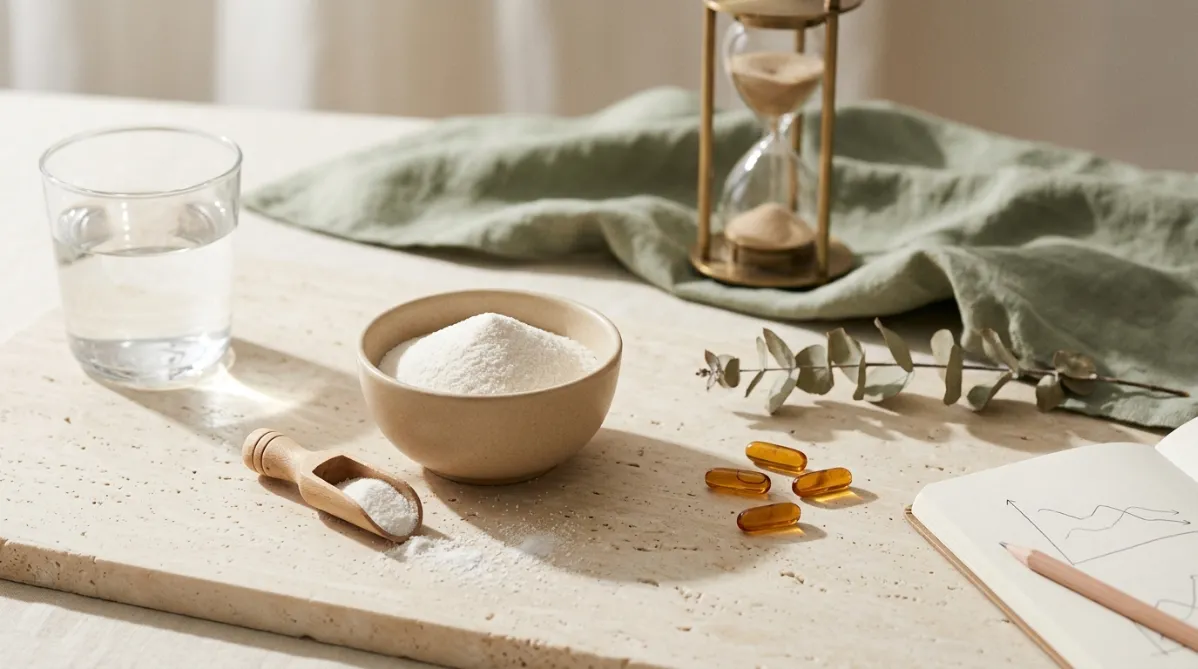
A serene editorial still life shot from a slightly elevated angle on a pale travertine surface, bathed in soft morning window light with gentle long shadows. At the center sits a small matte ceramic bowl in warm oatmeal tone, holding a fine mound of white crystalline powder, with a delicate wooden scoop resting beside it. A few grains are scattered naturally across the stone. To the left, a clear glass of water catches the light, throwing a subtle caustic shimmer onto the surface. To the right, a neatly arranged trio of translucent amber glass capsules and a single sprig of dried eucalyptus add organic texture.

In the softly blurred background, a sage-green linen cloth drapes across the frame, and a vintage brass hourglass stands upright, its sand halfway through. This is a subtle nod to aging and time. A small open notebook with faint, abstract hand-drawn line graphs trending gently downward, with no legible text, rests at the edge of the composition, with a slim pencil placed across it.

The palette is calm and modern: creamy ivory, warm sand, muted sage, soft terracotta, and touches of honey amber. The mood is quiet, thoughtful, and scientific without being clinical, like a contemporary wellness and science magazine cover. Shallow depth of field keeps the powder bowl crisp, with creamy bokeh behind it. Generous negative space on the right side of the wide 16:9 frame leaves room for headline overlay. Fine film-like grain, natural color grading, and minimalist composition give it a refined, trendy journal feel.
longevity

Taurine, the Cheap Amino Acid That Stretched Mouse Lifespans by Up to 12%, Falls With Age in Humans

BY DR. SYNAPSE ·

A 2023 Science study found that circulating taurine, a cheap and widely available amino acid, declines with age in mice, monkeys and humans. Supplementing middle-aged mice extended median lifespan by roughly 10-12% and improved healthspan in both rodents and monkeys. The compound appeared to curb cellular senescence, DNA damage, mitochondrial dysfunction and inflammaging. Human data remain observational, and the mouse doses scale to several grams a day, so the evidence is far from proof. Here is what the study showed, what doses people have discussed, and why researchers say trials are needed before anyone treats taurine as an anti-aging pill.

This page is available in