Biocracked
A serene editorial still life shot from a slightly elevated angle on a pale travertine surface, bathed in soft morning window light with gentle long shadows. At the center sits a small matte ceramic bowl in warm oatmeal tone, holding a fine mound of white crystalline powder, with a delicate wooden scoop resting beside it. A few grains are scattered naturally across the stone. To the left, a clear glass of water catches the light, throwing a subtle caustic shimmer onto the surface. To the right, a neatly arranged trio of translucent amber glass capsules and a single sprig of dried eucalyptus add organic texture.

In the softly blurred background, a sage-green linen cloth drapes across the frame, and a vintage brass hourglass stands upright, its sand halfway through. This is a subtle nod to aging and time. A small open notebook with faint, abstract hand-drawn line graphs trending gently downward, with no legible text, rests at the edge of the composition, with a slim pencil placed across it.

The palette is calm and modern: creamy ivory, warm sand, muted sage, soft terracotta, and touches of honey amber. The mood is quiet, thoughtful, and scientific without being clinical, like a contemporary wellness and science magazine cover. Shallow depth of field keeps the powder bowl crisp, with creamy bokeh behind it. Generous negative space on the right side of the wide 16:9 frame leaves room for headline overlay. Fine film-like grain, natural color grading, and minimalist composition give it a refined, trendy journal feel.
Longevity

Taurine, the Cheap Amino Acid That Stretched Mouse Lifespans by Up to 12%, Falls With Age in Humans

Dr. Synapse · · 4 min read

A low-cost amino acid sold in energy drinks and supplement aisles has become one of the more intriguing candidates in longevity research. A 2023 study in Science, led by Vijay Yadav's group at Columbia University and the National Institute of Immunology in New Delhi, reported that circulating taurine falls steadily with age in mice, monkeys and humans. Restoring it in animals improved health and, in rodents, extended life. The headline number is a lifespan gain of roughly 10-12% in mice. That figure is striking, but it needs context before anyone reaches for a tub of powder.

What the researchers found

Taurine is a sulfur-containing amino acid found in meat, fish and dairy. The body also makes it in small amounts. It supports bile acid conjugation, osmoregulation, mitochondrial function and antioxidant defense. The research team measured blood levels across species and found a consistent downward trend with age. In humans the drop was large, with levels in older adults far below those in children.

The team then tested whether the decline mattered. Middle-aged mice, about 14 months old, received daily taurine supplementation. Their median lifespan increased by about 10% in males and 12% in females, according to the paper's reporting. Treated animals also showed better markers of healthspan, including:

  • Improved bone density and muscle endurance
  • Better glucose handling and less weight gain
  • Reduced anxiety-like and depressive-like behavior
  • Healthier immune and metabolic profiles

In worms, taurine also extended lifespan. In a smaller, shorter study of middle-aged rhesus monkeys, supplementation improved healthspan markers such as body weight, bone mineral density, blood sugar and liver injury indicators. Monkey lifespan was not measured, because that experiment would take decades.

Why it might work

The authors describe taurine as acting on several hallmarks of aging at once. In cells and animals, supplementation reduced markers of cellular senescence, the buildup of dysfunctional "zombie" cells. It lessened DNA damage, protected against mitochondrial dysfunction, helped in telomerase-deficient models, and dampened the chronic low-grade inflammation known as inflammaging. This broad profile suggests taurine may be a supporting player in cellular maintenance rather than a single-target drug.

The human evidence

The human data in the paper are observational. In a large European cohort, lower taurine levels tracked with conditions such as obesity, type 2 diabetes, hypertension and heightened inflammation. Taurine also rose after acute endurance exercise in several groups of people, which hints that part of exercise's benefit could involve this molecule.

These are correlations. Low taurine could drive disease, or disease and poor metabolic health could lower taurine. The authors acknowledge this and conclude only that clinical trials "seem warranted."

What about human doses?

The mouse doses were high, in the range of hundreds of milligrams to about a gram per kilogram of body weight daily. Scaling to humans by body surface area is imprecise, but commentators have estimated equivalent human doses on the order of a few grams per day, with a wide range of uncertainty depending on the method. For comparison:

  • A typical energy drink contains around 1 gram of taurine.
  • European food safety assessments have considered intakes up to about 3 grams per day as observed safe in healthy adults.
  • Clinical studies in conditions such as heart failure and diabetes have used roughly 1.5 to 6 grams daily, generally with good tolerability over limited periods.

No trial has established an optimal or proven anti-aging dose in people. Anyone with kidney disease, those on medication for blood pressure or heart conditions, and pregnant individuals should speak with a clinician first. Extrapolating from mice is also a known source of failed longevity promises.

Evidence level and caveats

Several points temper the excitement:

  1. Mice are not people. Many interventions that extend mouse lifespan, often by similar margins, have not translated to humans.
  2. No human lifespan data. The monkey work covered healthspan markers over months, not survival.
  3. Association is not causation. The link between low taurine and disease in people does not show that supplementation would reverse it.
  4. Declines may not be universal. Follow-up work and commentary have questioned how consistently taurine falls with age and how well blood levels reflect tissue stores. The "taurine deficiency drives aging" claim remains a hypothesis under active debate.
  5. Conflicts of interest. Columbia University has filed provisional patent applications on which senior author Vijay Yadav is an inventor, a standard disclosure but worth noting.
  6. Diet matters. People who eat meat and seafood already get substantial taurine, so benefits might be largest in those with low intake or increased needs, a question the study cannot answer.

Why it still matters

Taurine is inexpensive, widely available and has a long record of use at moderate doses, which makes it unusually practical to test. It also fits a broader picture in which aging involves the gradual loss of protective circulating molecules, some of which might be replaced. The authors' call for randomized trials is reasonable: measure baseline taurine, supplement at defined doses, and track functional outcomes such as glucose control, muscle strength, inflammation and bone health.

Until those results arrive, taurine is best viewed as a promising lead rather than an established longevity tool. A 10-12% extension in mouse lifespan is a meaningful signal, but the path from that signal to a recommendation for people runs through trials that have not yet been completed.

Original study

Read the original research on pubmed.ncbi.nlm.nih.gov →

This article summarizes published research for general information. It is not medical advice.

DS

Written by

Dr. Synapse

Dr. Synapse writes for Biocracked: biohacking science, longevity & human performance.

Related Articles

A wide landscape editorial photograph of a minimalist laboratory-meets-wellness still life on a pale, warm-gray stone countertop, softly lit by diffused morning window light from the left. In the center foreground, a small amber glass supplement jar with a plain matte white label sits beside a scattering of fine white powder and a few loose white capsules on a ceramic dish. Next to it rests a clean, open notebook with faint hand-drawn line graphs, two diverging curves rising gently, one slightly higher than the other, drawn in muted sage-green and charcoal ink. A slim brass pen lies across the page.

In the soft-focus midground, a delicate glass beaker filled with clear liquid catches a thin streak of light, casting a gentle caustic shimmer across the stone. A sprig of dried eucalyptus and a small sliver of citrus peel add organic texture. Behind them, an out-of-focus wall of pale oat-colored tiles and a floating wooden shelf holds a few blurred ceramic vessels and a small potted fern.

The color palette is calm and editorial: warm creams, sage green, soft amber, muted terracotta accents, and touches of charcoal. Shallow depth of field with a crisp focus on the jar and notebook, creamy bokeh in the background. Subtle film-like grain, natural shadows, and generous negative space on the right third of the frame, suitable for headline overlay. The mood is thoughtful, measured, and trustworthy, like a contemporary science and wellness journal cover: modern, tactile, quietly optimistic, and grounded rather than hyped.
longevity

Calcium Alpha-Ketoglutarate Extended Female Mouse Lifespan by Up to 16.6%. Here's What That Does (and Doesn't) Mean for Humans

BY DR. SYNAPSE ·

A 2020 Cell Metabolism study found that feeding middle-aged mice a 2% calcium alpha-ketoglutarate diet extended female median lifespan by up to 16.6% and reduced frailty. The effect was smaller in the second cohort (10.5%), and male survival gains were not statistically significant. Researchers link the benefit to lower systemic inflammation and a proposed rise in IL-10. But this was a mouse-only study, and it does not establish that AKG extends human lifespan. Here is what the data show, how they differ from supplement marketing, and why CaAKG belongs on a research watchlist rather than in a proven protocol.

Approach: macro science. Palette: warm (amber and copper).

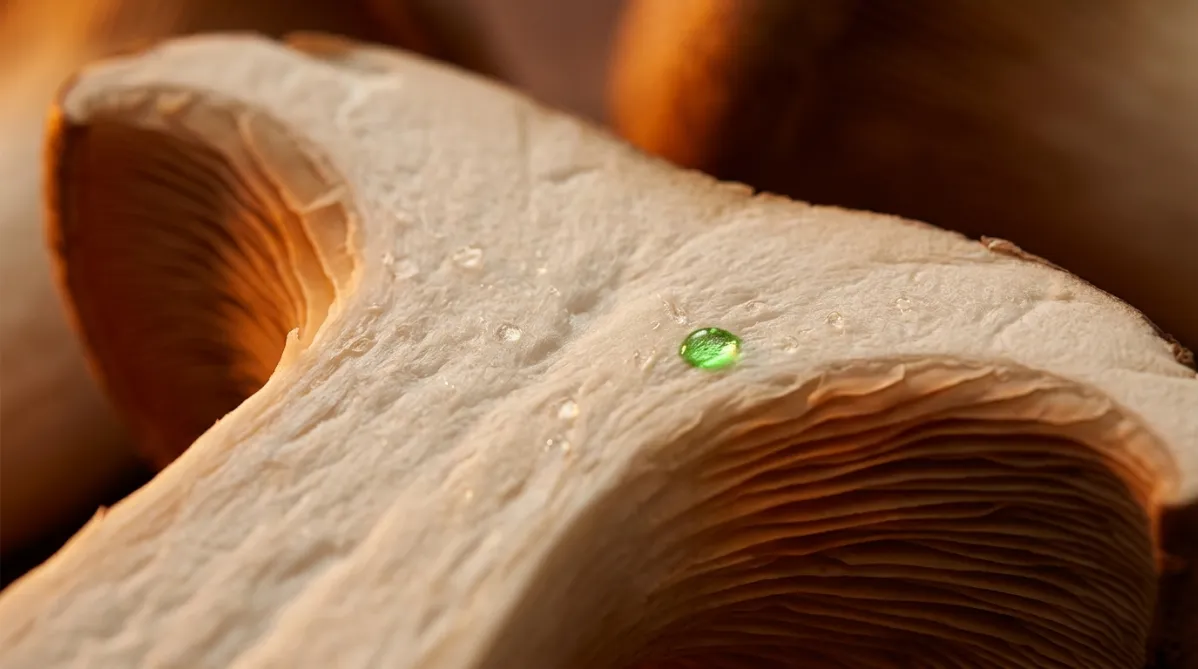
Extreme close-up of a freshly sliced king oyster mushroom stem and gill edge, shot at a slight 30-degree overhead angle with a macro lens and shallow depth of field. The pale cream flesh shows individual fibrous hyphae and glistening moisture beads. Warm low-angle golden light rakes across from the left, turning the gill ridges into amber and copper lines with deep honey-brown shadows. A single tiny droplet on the cut surface catches a pinpoint of electric green reflection, as if lit from a hidden source. Background melts into out-of-focus burnished orange and chocolate tones. The mood is quiet, intimate and investigative, with real organic texture and no text.
longevity

Mushroom 'Longevity Vitamin' Raised NAD+ in Aged Rats via H2S Switch

BY HELIX WARD ·

Ergothioneine, the mushroom compound nicknamed the 'longevity vitamin,' just got a mechanism to match its buzz. In a Cell Metabolism study, aged rats given ET ran farther, gained vascularization and muscle, and showed higher muscle NAD+. The effect traced back to a hydrogen sulfide pathway: CSE, persulfidation, and the enzyme cGPDH. Knock out CSE or cGPDH and the benefits vanished. But this is animal and lab work, and the effective rat dose scales to roughly 10x what supplements typically provide.

Approach: macro science. Palette: bold color field (violet).

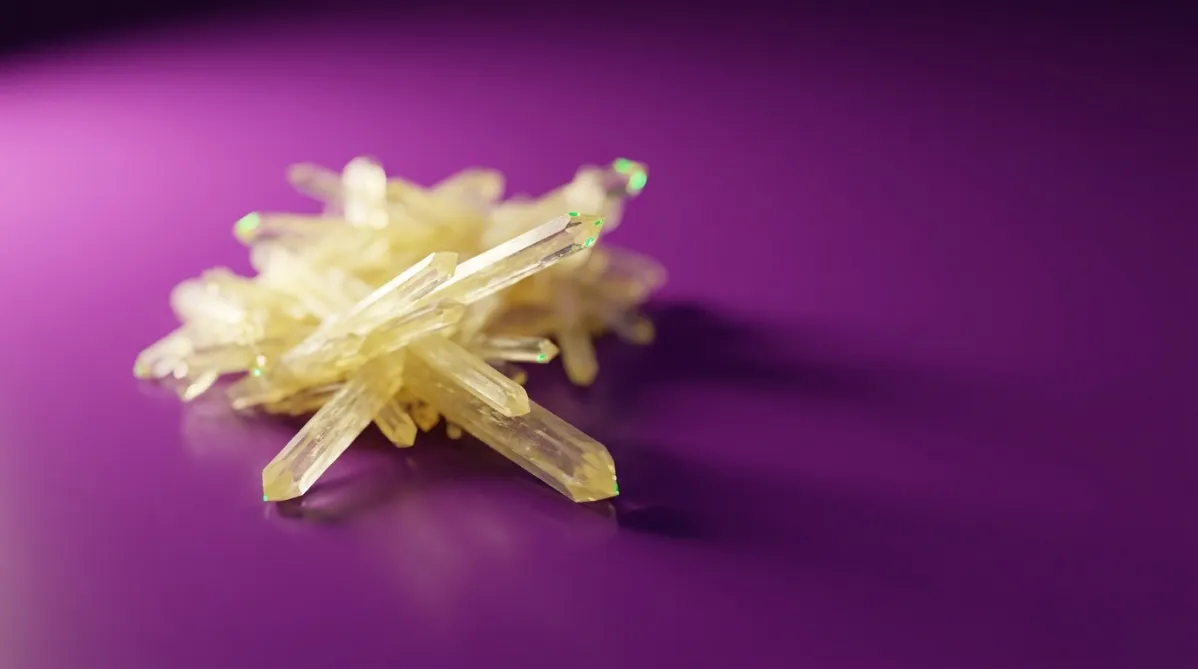
Extreme close-up of fisetin crystals, a small cluster of pale yellow needle-like flavonoid crystals with translucent, faceted edges, resting on a smooth glossy deep violet surface. The camera sits low at a shallow three-quarter angle with a very shallow depth of field, so the front crystals are razor sharp and the rest dissolves into soft magenta-violet blur. Lighting is a single crisp, slightly warm studio key from upper left that makes the crystal edges glow and throws long soft shadows across the violet. A few tiny electric green (#00e676) specks of reflected light catch on the crystal tips. The mood is precise, curious and quietly promising, like a sample under inspection, with plenty of clear violet space on the right side of the frame.
longevity

Fisetin Senolytic Extended Mouse Lifespan—Human Proof Still Missing

BY HELIX WARD ·

Fisetin, a plant flavonoid, emerged as the most potent senolytic among ten compounds in a widely cited 2018 EBioMedicine study. In aged mice, treatment late in life reduced senescence markers, eased age-related pathology and extended both median and maximum lifespan. The catch is that this is mouse and lab evidence, not a completed human longevity trial. This article explains what the researchers found, what the dosing context really means, and who should pay attention as human studies develop.

Approach: conceptual metaphor. Palette: bold color field.

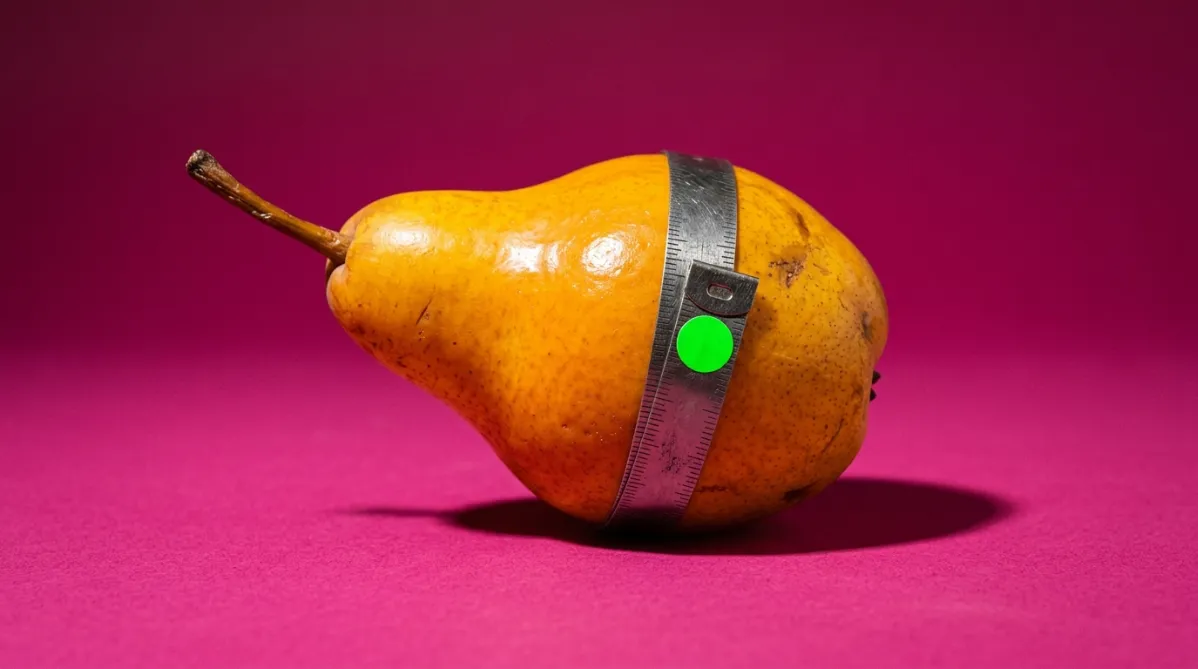
A single steel bathroom-style analog tape measure, pulled taut and wrapped around a ripe, glossy yellow-orange pear lying on its side, with the tape's tip locked at the same unmarked point, suggesting a waistline that did not shrink. The pear sits on a saturated magenta seamless backdrop, shot from a low three-quarter angle with a shallow depth of field, the stem sharp and the background softly blurred. Hard but slightly diffused studio key light from upper left casts a crisp, short shadow in deeper magenta on the surface. A tiny electric green sticky dot marks the tape's end, with no numbers or writing visible. Mood: playful, skeptical, deadpan, scientific restraint rather than hype.
longevity

Weekly Rapamycin for a Year: Safe, But Did Visceral Fat Budge?

BY REX MERIDIAN ·

Everyone wants to know whether weekly rapamycin can shrink visceral fat and boost healthspan, and the PEARL trial has an answer that may surprise you. After 48 weeks in healthy adults, the primary endpoint of visceral fat did not budge, yet safety looked comparable to placebo. Some secondary signals, including lean mass and pain in women on 10 mg and better well-being on 5 mg, hint at benefits. But those are subgroup and self-reported findings, the drug was compounded, and no one has shown that it extends human lifespan. Here is what the data supports and what it does not.

This page is available in