
DHA for the Brain: 12 Months Slowed Hippocampus Shrinkage in MCI
A year of DHA slowed shrinkage of the hippocampus, the brain's memory center, in older adults with mild cognitive impairment. In a 240-person randomized trial from China (219 completers), the DHA group also outperformed placebo on Full-Scale IQ, Information and Digit Span. The dose was a 2 g/day supplement, about 0.9 g of actual DHA. The findings may help explain why omega-3 trials in healthy people have been mixed, since the benefit may be concentrated in those already showing cognitive decline. This article covers the numbers, the likely mechanisms, practical tips on dose and sourcing, and the limits of a single trial.

Chicken Breast Dipeptide Anserine Lifted Memory Scores in MCI
A chicken-breast dipeptide called anserine just posted a surprisingly clean result in people with mild cognitive impairment. In a 12-week randomized trial, 500 mg a day lifted MMSE scores by about 1.9 points while placebo stayed flat (p=0.036). The proposed mechanism involves scavenging hypochlorous acid, a reactive molecule tied to neuroinflammation. It fits with earlier carnosine blend studies and a 2024 meta-analysis showing better delayed recall. But with just 30 people analyzed and one cognitive test, here is what the data does and does not tell you.

Magnesium L-Threonate Lifted Oura Deep and REM Scores in 3 Weeks
A 2024 randomized trial tested a brain-targeted form of magnesium, magnesium L-threonate (Magtein), in 80 adults with sleep complaints. After 21 days at 1 g/day, the MgT group had better Oura deep and REM sleep scores than placebo, along with improved mood, energy and alertness. But the placebo group also got worse, the sleep staging came from a consumer wearable, and the study never compared threonate to glycinate or citrate. Here's what the trial actually shows, what a 1 g dose really delivers in elemental magnesium, and where the caveats lie.
NR + Pterostilbene Lifts NAD+ ~40–90% in Human Trial
Can a daily capsule of nicotinamide riboside and pterostilbene raise NAD+ in older adults? In the first-in-human NRPT (Basis) trial, 120 people aged 60 to 80 took it for eight weeks. Blood NAD+ rose about 40% at the recommended dose and about 90% at double the dose, and the rise held steady through the study. No serious adverse events were reported. Here is what the numbers show, what the dose takeaways are, and what the study cannot tell you.

Spermidine for Memory? A 12-Month Trial in 100 Older Adults Found No Edge Over Placebo
Spermidine has been hyped as a brain-protecting supplement on the strength of autophagy research and animal studies. The SmartAge trial put it to a rigorous test in 100 older adults with subjective cognitive decline, giving about 0.9 mg per day for 12 months. The primary memory outcome did not beat placebo (difference -0.03; P = .47), and secondary outcomes were also null. Exploratory hints on inflammation and verbal memory remain unconfirmed. Here is what the result means for anyone considering a spermidine supplement, and where the study's limits lie.

1,000 mg of Nicotinamide Riboside Daily Raised Blood Cell NAD+ by About 60% in Older Adults, Randomized Trial Finds
A 2018 Nature Communications crossover trial tested nicotinamide riboside at 500 mg twice daily (1,000 mg/day) for six weeks in healthy middle-aged and older adults. The supplement was well tolerated and raised NAD+ in blood immune cells by about 60% compared with placebo. Researchers also saw early signals for lower blood pressure and arterial stiffness, which they flagged as ideas for larger trials, not proven benefits. This article explains why NAD+ is thought to fall with age, what the study did, and what it cannot tell us about disease outcomes or longevity.

GlyNAC Trial: Glycine Plus NAC Reversed Multiple Aging Markers in Older Adults in 16 Weeks, but the Study Is Small
A small randomized trial from Baylor College of Medicine found that 16 weeks of GlyNAC, a combination of glycine and N-acetylcysteine, corrected glutathione deficiency, oxidative stress, mitochondrial dysfunction and inflammation in older adults. Participants also improved on measures of physical function and several aging hallmarks, while a placebo did not. The protocol has used weight-based dosing of roughly 100 mg/kg of each amino acid, which is far above typical supplement doses. But with only 12 people per group and biomarker-focused outcomes, the results are promising rather than definitive. Here is what the study showed, what it means in practice, and where the caveats lie.
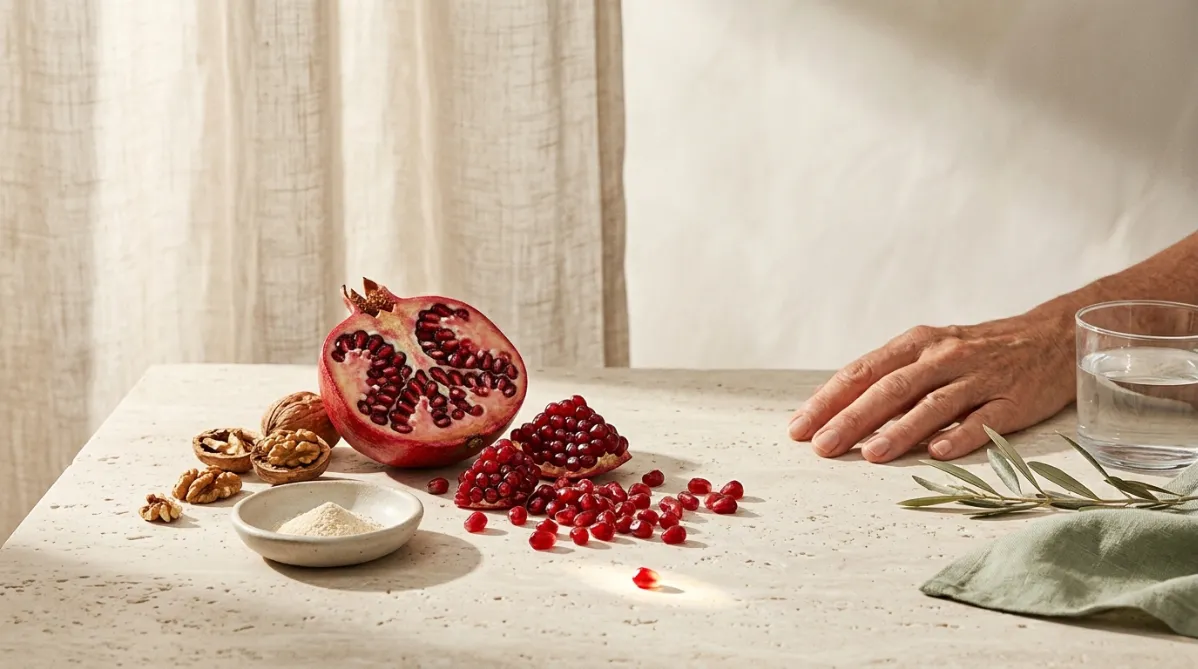
Urolithin A, the Pomegranate Postbiotic, Triggers a Mitophagy Signature in Older Adults
Urolithin A, a molecule made by gut bacteria from pomegranate and walnut polyphenols, has long rejuvenated muscle in aging animals. The first human trial in older adults found it safe, bioavailable, and able to shift mitochondrial biomarkers at 500 to 1,000 mg a day. The study, backed by the company behind Mitopure, showed a molecular signature of improved mitochondrial health in muscle. But it was small, short, and measured biomarkers rather than strength or longevity. Here is what the data show, who it is aimed at, and where the evidence stops.