Biocracked
←

#peptides

4 articles
Approach: Data as art, with a conceptual twist. Palette: bold color field (D).

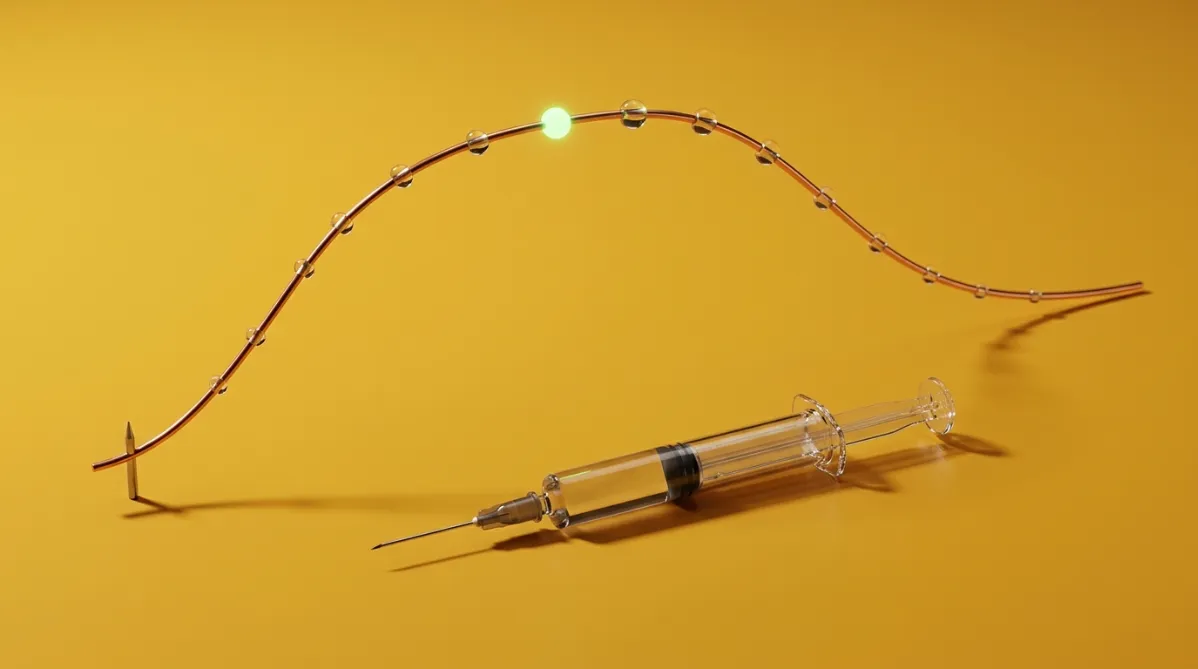
Subject: a single glass syringe lying on a saturated mustard-yellow acrylic surface, shot from a low three-quarter angle with a shallow depth of field. Behind it, a long arc of thin copper wire rises in a gentle curve from a small spike to a broad plateau and then slowly tapers, echoing a hormone curve stretched across days. Small, evenly spaced glass beads sit along the wire, each slightly larger toward the plateau. One bead glows soft electric green.

Lighting: hard single softbox from the upper left, creating crisp, short shadows in warm umber on the yellow. Specular highlights on the glass and copper.

Mood: precise, patient, and quietly analytical, with a slow-release rhythm. No text or markings anywhere.
peptides

CJC‑1295 kliničko ispitivanje na ljudima: šta originalni podaci o GH i IGF‑I pokazuju

BY HELIX WARD ·

Jedna injekcija CJC‑1295 podigla je nivo hormona rasta (GH) 2‑do 10‑puta tokom šest dana ili duže, a IGF‑I 1,5‑do 3‑puta tokom 9‑11 dana kod zdravih odraslih osoba starosti od 21 do 61 godine. Poluživot peptida procenjen je na 5,8‑8,1 dana, a IGF‑I je ostao iznad bazalne vrednosti najduže 28 dana nakon ponovljenog doziranja. Nisu zabeležene ozbiljne neželjene reakcije, a doze od 30‑60 µg/kg su se najbolje podnosile. Ispitivanje iz 2006. godine merilo je samo hormone i sigurnost, ne i promene mišićne mase, masnog tkiva ili sportskih performansi. U nastavku je prikazano šta originalni podaci zaista pokazuju, kako se CJC‑1295 s DAC‑om razlikuje od mod GRF 1‑29 i zašto je ovaj peptid i dalje neodobren i zabranjen od strane WADA‑e.
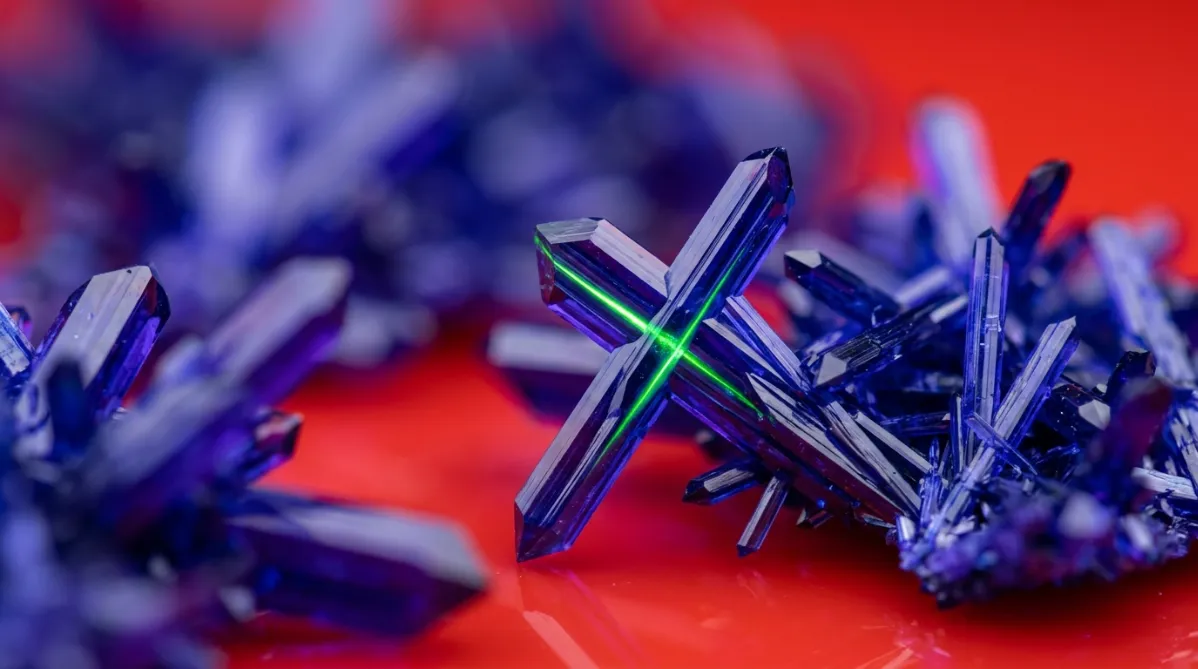
Macro science: an extreme close-up of GHK-Cu copper peptide crystals, deep blue-violet needle-like crystals with faceted edges, shot at a low three-quarter angle with a shallow depth of field so the nearest crystals are razor sharp and the rest dissolve into soft blur. The crystals sit on a smooth, glossy tomato-red backdrop that fills the frame, creating a bold color field. Lighting is a single large softbox from the upper left, giving crisp specular highlights on the crystal faces and a soft, warm-red bounce in the shadows. One tiny thread of electric green light refracts through a single crystal edge as a subtle accent. Mood: striking, precise, curious, scientific without feeling sterile. Photorealistic microscopy-meets-studio look, no text, no labels, no people.
peptides

GHK‑Cu, bakarni peptid, može da podesi genske mreže koje upravljaju obnovom kože

BY NOVA CHEN ·

GHK‑Cu, bakarni peptid koji se nalazi u brojnim serumima, možda radi mnogo više od hidratacije. Pregled iz 2018. g. sugeriše da podaci o ekspresiji gena mogu objasniti kako ovaj mali molekul utiče na sintezu kolagena, popravku tkiva, kontrolu inflamacije i čak na reparaciju DNK. U nastavku su ključni zaključci o starenju kože i regeneraciji, kao i granice postojećih dokaza. Pre nego što se prepustite špekulacijama, pročitajte praktične napomene o lokalnoj upotrebi i šta pregled može, a šta ne može da dokaže.
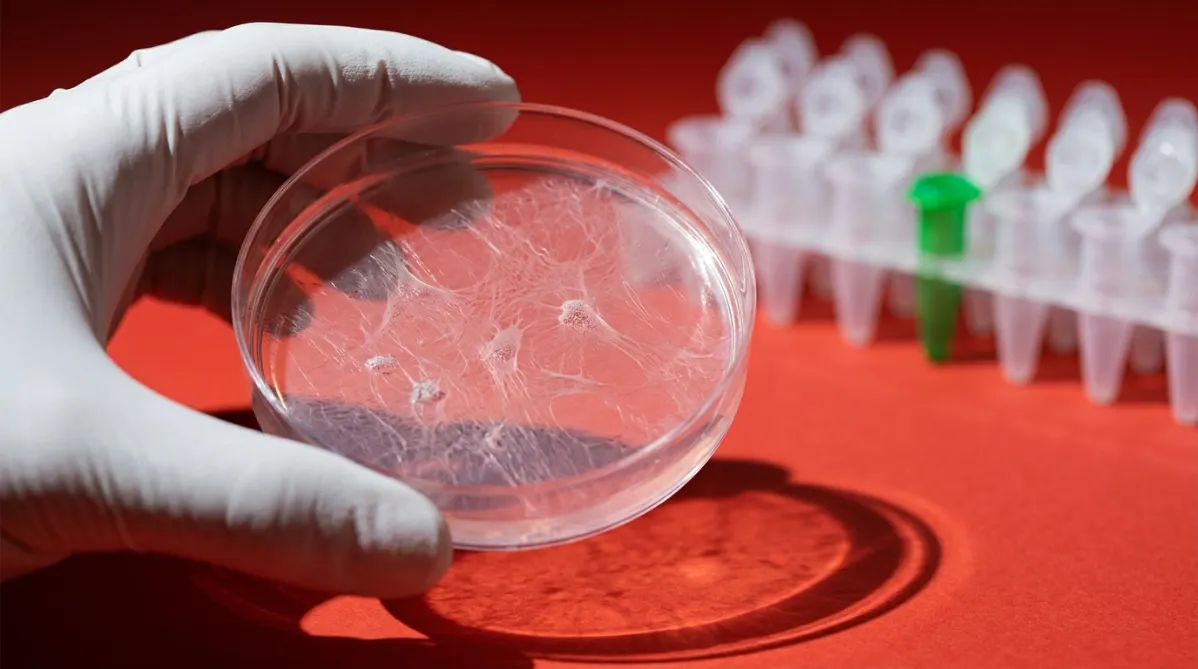
Approach: Lab in action. Palette: D, bold color field.

A gloved hand holds a clear petri dish at a slight low angle, close and slightly above eye level, against a saturated tomato-red backdrop. Inside the dish, a thin, translucent layer of pale pink culture medium holds a faint, lacy web of fibroblast cells, with a few small clusters just visible. Hard, clean studio light from the upper left throws a crisp curved shadow of the dish onto the red surface and picks out bright highlights on the rim and the glove's matte white nitrile. In the soft-focus background, a rack of empty microcentrifuge tubes stands out in cool white. One tiny electric green cap on a single tube adds a small accent. The mood is precise and skeptical: a promising result still confined to the dish.
peptides

Epitalon je aktivirao telomerazu u ćelijama — ali ne i kod ljudi

BY HELIX WARD ·

Mali peptid sastavljen od četiri aminokiselinske jedinice navodno je aktivirao telomerazu, enzim koji većina odraslih ljudskih ćelija drži u tišini, i produžio telomere u ljudskim ćelijama u kulturi. Ovaj rezultat je podstakao hype oko Epitalona i njegove moguće uloge u dugovečnosti, ali eksperiment je izveden na fetalnim fibroblastima, a ne na ljudima. Evo šta studija iz 2003. zaista pokazala, šta izostavlja i kako da je protumačite pre nego što odlučite da ga kupite.
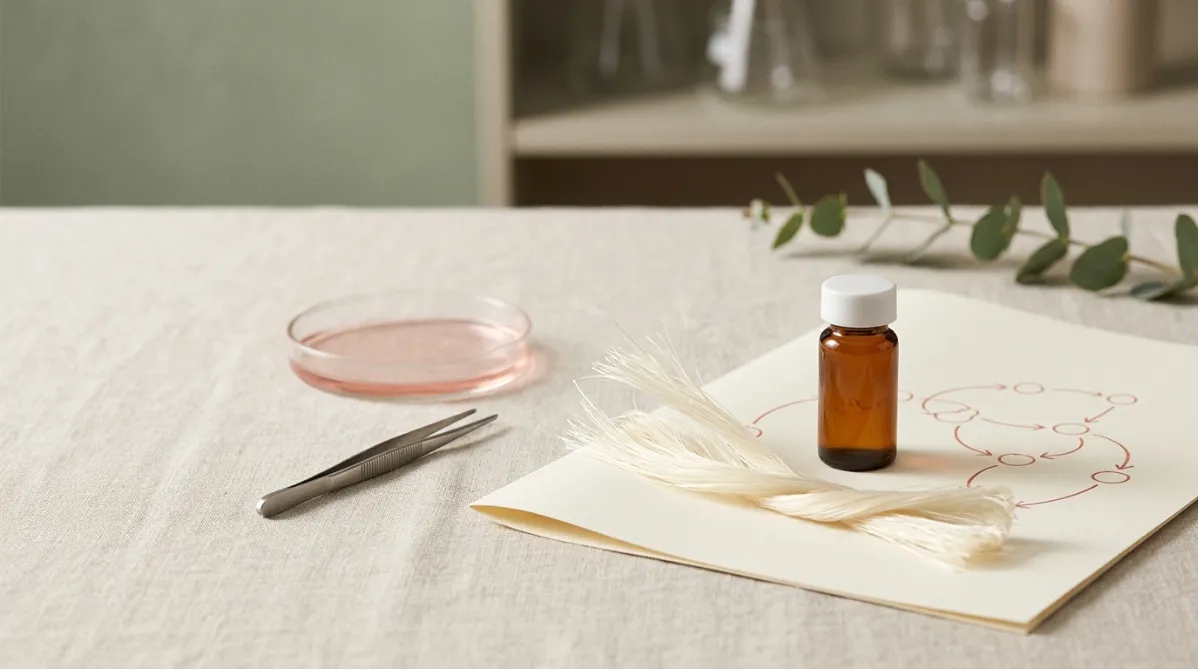
A wide, editorial-style still life photographed in soft natural window light on a pale oatmeal-colored linen surface. In the center foreground, a single small amber glass vial with a matte white cap sits slightly off-center to the right, unlabeled and minimal. Beside it lies a delicate, translucent skein of tendon-like fibers, rendered as fine pale ivory threads gently fanning out and twisting together, resting on a folded sheet of cream paper. To the left, a glass petri dish with a thin layer of soft blush-pink liquid, catching a subtle highlight, and a slim pair of stainless steel tweezers laid diagonally across the surface.

Behind the objects, a softly blurred background in muted sage green and warm taupe suggests a quiet laboratory shelf, with out-of-focus glassware shapes and a single trailing sprig of eucalyptus adding an organic note. A thin, hand-drawn style line diagram of interconnected nodes and curved arrows, in faint terracotta ink, is printed on the paper beneath the fibers. It hints at a cellular signaling pathway without any text or readable labels.

The composition uses generous negative space on the left third for potential title overlay, with a shallow depth of field and a gentle diagonal flow from the petri dish to the vial. The color palette is restrained and warm: cream, sage, blush, amber, and terracotta accents, with soft shadows and a faint film-grain texture. The mood is calm, thoughtful, and scientific but approachable, like a contemporary health and science magazine cover. Shot as if with a 50mm lens at f/2.8, top-down at a slight 30-degree angle, with crisp focus on the vial and fibers. No people, no text, no futuristic elements.
peptides

BPC‑157 i popravka tetiva: šta istraživanje FAK‑paksilin puta pokazuje, a šta ne

BY DR. SYNAPSE ·

BPC‑157 je 15‑amino‑kiselinski peptid koji je popularan u onlajn „lekovnim“ krugovima. Ima dobro citiranu studiju iz 2011. godine koja leži u osnovi njegove reputacije u vezi sa popravkom tetiva. Istraživači su otkrili da ubrzava izrast fibroblasta iz tetiva, poboljšava preživljavanje ćelija pod oksidativnim stresom i pojačava migraciju, najverovatnije putem aktivacije FAK‑paksilin puta. Međutim, ne podstiče direktno proliferaciju ćelija, a svi podaci potiču iz laboratorijskih eksperimenta na pacovima. Ovaj članak razlaže mehanizam, objašnjava zašto to ne predstavlja dokaz za upotrebu kod ljudi i prikazuje neregulisani status peptida.

This page is available in