Biocracked
←

#peptides

4 articles
Approach: Data as art, with a conceptual twist. Palette: bold color field (D).

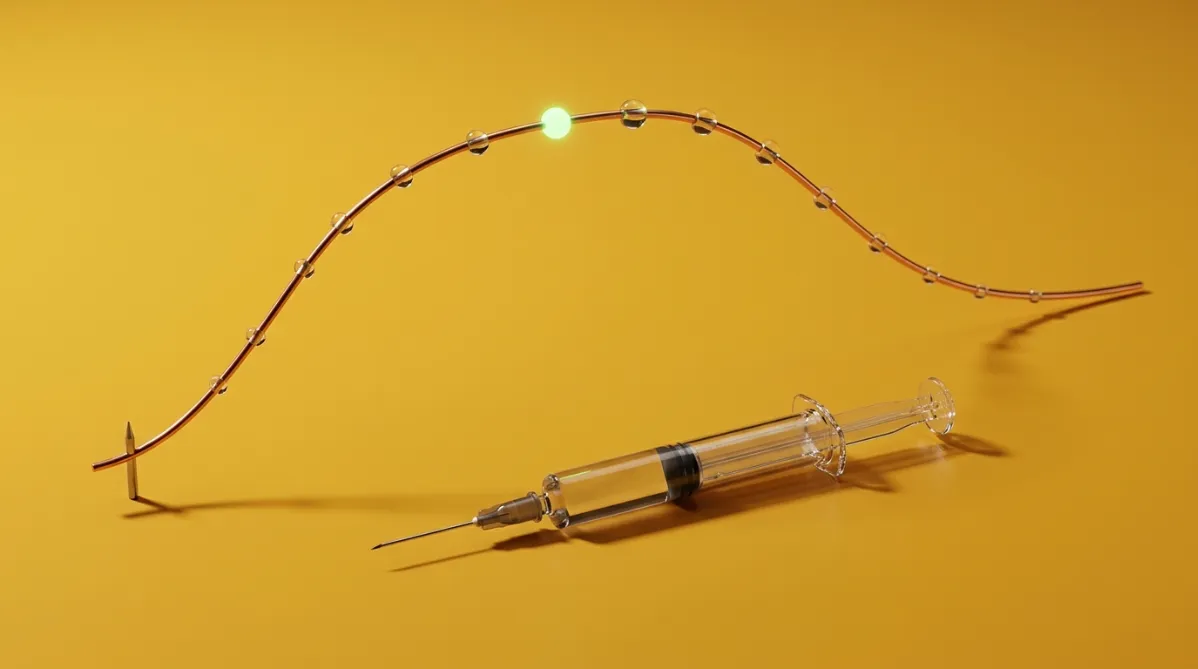
Subject: a single glass syringe lying on a saturated mustard-yellow acrylic surface, shot from a low three-quarter angle with a shallow depth of field. Behind it, a long arc of thin copper wire rises in a gentle curve from a small spike to a broad plateau and then slowly tapers, echoing a hormone curve stretched across days. Small, evenly spaced glass beads sit along the wire, each slightly larger toward the plateau. One bead glows soft electric green.

Lighting: hard single softbox from the upper left, creating crisp, short shadows in warm umber on the yellow. Specular highlights on the glass and copper.

Mood: precise, patient, and quietly analytical, with a slow-release rhythm. No text or markings anywhere.
peptides

Thử Nghiệm Lâm Sàng CJC‑1295: Dữ Liệu Gốc Về GH và IGF‑I Thực Sự Cho Thấy Gì

BY HELIX WARD ·

Một liều tiêm CJC‑1295 duy nhất có thể làm tăng nồng độ hormone tăng trưởng (GH) từ 2‑ đến 10‑ lần trong ít nhất 6 ngày và IGF‑I tăng từ 1,5‑ đến 3‑ lần trong 9‑11 ngày ở người trưởng thành khỏe mạnh từ 21‑61 tuổi. Thời gian bán rã ước tính của peptide là 5,8‑8,1 ngày, và IGF‑I duy trì mức trên nền tới 28 ngày sau khi dùng liều lặp lại. Liều 30‑60 µg/kg được dung nạp tốt nhất và không có phản ứng bất lợi nghiêm trọng nào được ghi nhận. Tuy nhiên, thử nghiệm năm 2006 chỉ đo hormone và độ an toàn, chưa đánh giá cơ bắp, mỡ, hiệu suất hay tác dụng lâu dài.
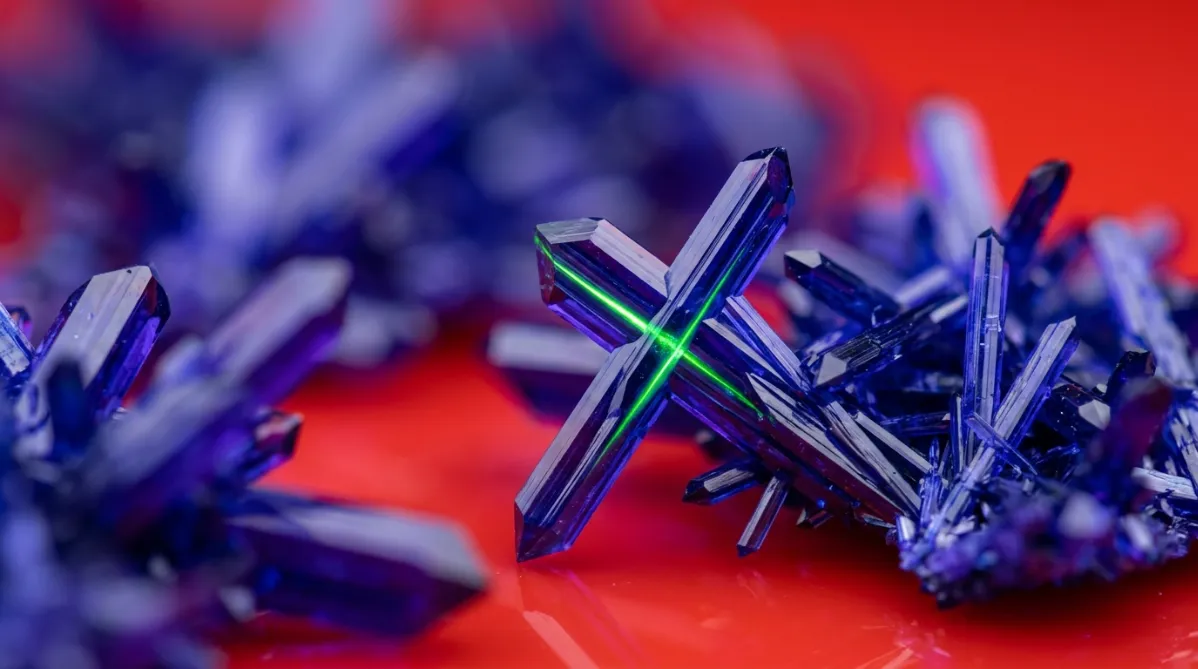
Macro science: an extreme close-up of GHK-Cu copper peptide crystals, deep blue-violet needle-like crystals with faceted edges, shot at a low three-quarter angle with a shallow depth of field so the nearest crystals are razor sharp and the rest dissolve into soft blur. The crystals sit on a smooth, glossy tomato-red backdrop that fills the frame, creating a bold color field. Lighting is a single large softbox from the upper left, giving crisp specular highlights on the crystal faces and a soft, warm-red bounce in the shadows. One tiny thread of electric green light refracts through a single crystal edge as a subtle accent. Mood: striking, precise, curious, scientific without feeling sterile. Photorealistic microscopy-meets-studio look, no text, no labels, no people.
peptides

Peptide Đồng GHK-Cu Có Thể Điều Chỉnh Mạng Gene Đằng Sau Quá Trình Tái Tạo Da

BY NOVA CHEN ·

GHK‑Cu, peptide đồng thường xuất hiện trong nhiều serum, có thể làm được nhiều hơn chỉ dưỡng ẩm. Một bài đánh giá năm 2018 cho rằng dữ liệu biểu hiện gen mới có thể giải thích tại sao phân tử nhỏ này liên quan tới việc tạo collagen, sửa chữa mô, kiểm soát viêm và thậm chí sửa DNA. Bài viết dưới đây tóm tắt những gì các nghiên cứu báo cáo về lão hoá da và tái tạo, đồng thời chỉ ra giới hạn của bằng chứng. Trước khi tin vào các tuyên bố hấp dẫn, hãy xem các đề xuất thực tiễn về việc dùng dạng bôi ngoài da và những gì một bài đánh giá có thể (hoặc không thể) chứng minh.
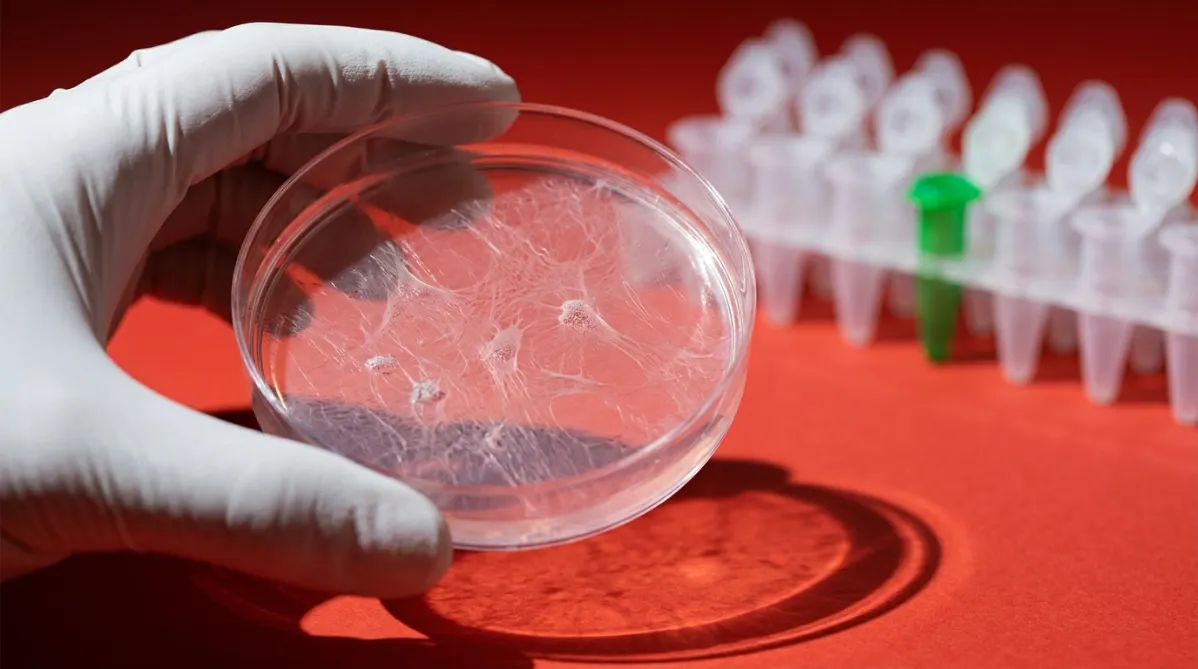
Approach: Lab in action. Palette: D, bold color field.

A gloved hand holds a clear petri dish at a slight low angle, close and slightly above eye level, against a saturated tomato-red backdrop. Inside the dish, a thin, translucent layer of pale pink culture medium holds a faint, lacy web of fibroblast cells, with a few small clusters just visible. Hard, clean studio light from the upper left throws a crisp curved shadow of the dish onto the red surface and picks out bright highlights on the rim and the glove's matte white nitrile. In the soft-focus background, a rack of empty microcentrifuge tubes stands out in cool white. One tiny electric green cap on a single tube adds a small accent. The mood is precise and skeptical: a promising result still confined to the dish.
peptides

Epithalon Kích Hoạt Telomerase Trong Tế Bào—Nhưng Không Ở Người

BY HELIX WARD ·

Một peptide bốn axit amin nhỏ được cho là có khả năng kích hoạt telomerase—enzyme hầu hết các tế bào trưởng thành không biểu hiện—và làm dài các đầu mút telomere trong tế bào người. Đây là phát hiện phía sau tiếng vang về khả năng kéo dài tuổi thọ của Epithalon. Tuy nhiên, nghiên cứu này chỉ được thực hiện trên fibroblast thai trong môi trường nuôi cấy, không phải trên người, và việc liên hệ đến việc kéo dài tuổi thọ vẫn chỉ là giả thuyết. Dưới đây là những gì nghiên cứu năm 2003 thực sự chỉ ra, những gì nó bỏ qua, và cách đọc kết quả trước khi bạn quyết định mua bất kỳ sản phẩm nào.
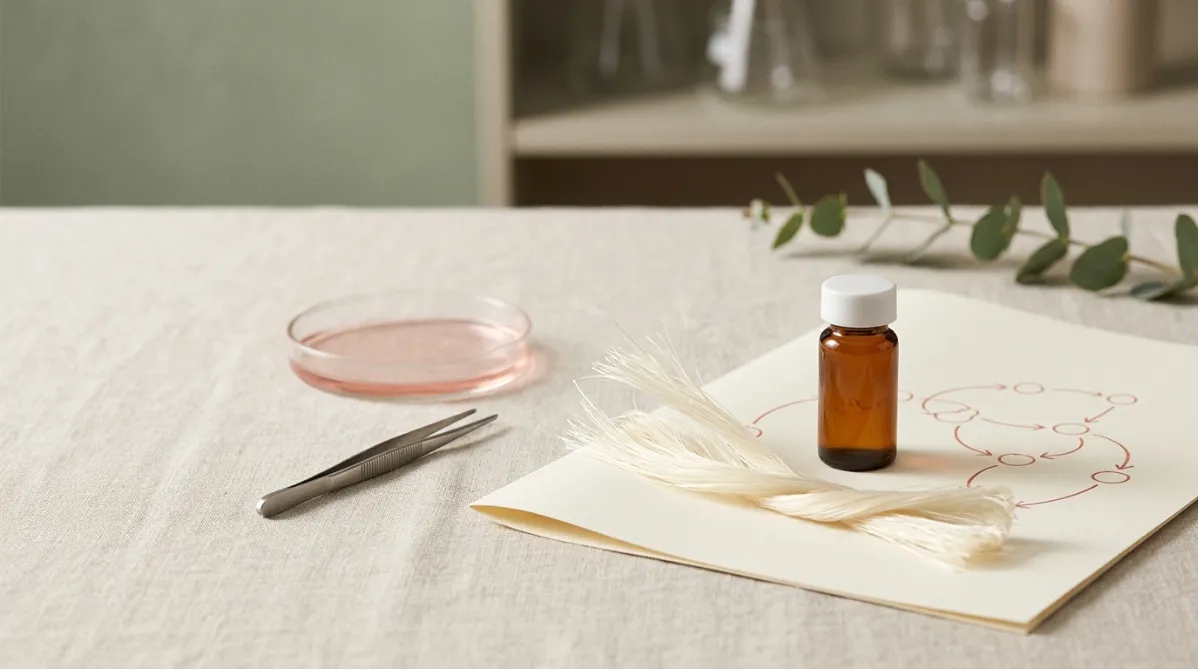
A wide, editorial-style still life photographed in soft natural window light on a pale oatmeal-colored linen surface. In the center foreground, a single small amber glass vial with a matte white cap sits slightly off-center to the right, unlabeled and minimal. Beside it lies a delicate, translucent skein of tendon-like fibers, rendered as fine pale ivory threads gently fanning out and twisting together, resting on a folded sheet of cream paper. To the left, a glass petri dish with a thin layer of soft blush-pink liquid, catching a subtle highlight, and a slim pair of stainless steel tweezers laid diagonally across the surface.

Behind the objects, a softly blurred background in muted sage green and warm taupe suggests a quiet laboratory shelf, with out-of-focus glassware shapes and a single trailing sprig of eucalyptus adding an organic note. A thin, hand-drawn style line diagram of interconnected nodes and curved arrows, in faint terracotta ink, is printed on the paper beneath the fibers. It hints at a cellular signaling pathway without any text or readable labels.

The composition uses generous negative space on the left third for potential title overlay, with a shallow depth of field and a gentle diagonal flow from the petri dish to the vial. The color palette is restrained and warm: cream, sage, blush, amber, and terracotta accents, with soft shadows and a faint film-grain texture. The mood is calm, thoughtful, and scientific but approachable, like a contemporary health and science magazine cover. Shot as if with a 50mm lens at f/2.8, top-down at a slight 30-degree angle, with crisp focus on the vial and fibers. No people, no text, no futuristic elements.
peptides

BPC‑157 và Sửa Chữa Gân: Những gì Nghiên cứu về đường truyền FAK‑Paxillin cho thấy và những gì không

BY DR. SYNAPSE ·

BPC‑157, một peptide gồm 15 axit amin, được ưa chuộng trong các cộng đồng “chữa lành” trực tuyến nhờ một nghiên cứu 2011 rộng rãi trích dẫn về khả năng phục hồi gân. Nghiên cứu cho thấy peptide này tăng tốc độ phát triển của fibroblast gân, cải thiện khả năng sống sót dưới stress oxy hoá và tăng cường di chuyển, có vẻ thông qua việc kích hoạt đường truyền FAK‑Paxillin. Tuy nhiên nó không kích thích sinh sản tế bào và mọi kết quả đều dựa trên mô và tế bào chuột trong phòng thí nghiệm. Bài viết sẽ giải thích cơ chế, chỉ ra tại sao chúng chưa đủ làm chứng cứ cho con người và xem xét tình trạng pháp lý của peptide này.

This page is available in