Biocracked
←

#peptides

4 articles
Approach: Data as art, with a conceptual twist. Palette: bold color field (D).

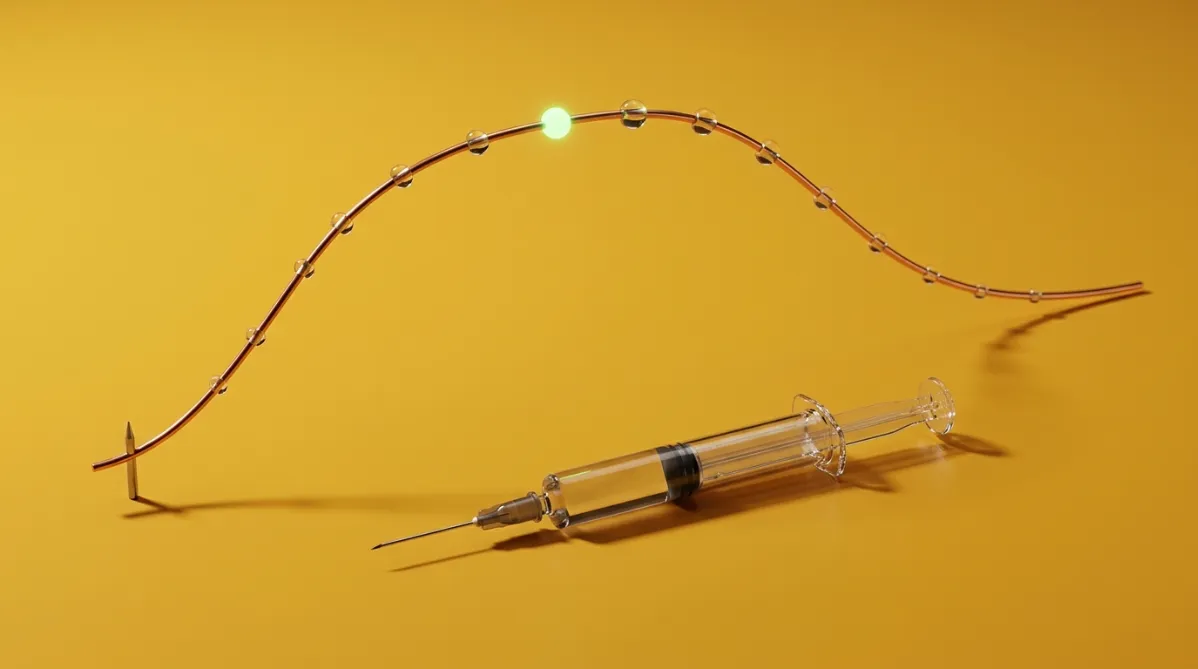
Subject: a single glass syringe lying on a saturated mustard-yellow acrylic surface, shot from a low three-quarter angle with a shallow depth of field. Behind it, a long arc of thin copper wire rises in a gentle curve from a small spike to a broad plateau and then slowly tapers, echoing a hormone curve stretched across days. Small, evenly spaced glass beads sit along the wire, each slightly larger toward the plateau. One bead glows soft electric green.

Lighting: hard single softbox from the upper left, creating crisp, short shadows in warm umber on the yellow. Specular highlights on the glass and copper.

Mood: precise, patient, and quietly analytical, with a slow-release rhythm. No text or markings anywhere.
peptides

Badanie kliniczne CJC‑1295 u ludzi: co pokazują oryginalne dane GH i IGF‑I

BY HELIX WARD ·

Jedno podanie CJC‑1295 podniosło poziom hormonu wzrostu od 2‑ do 10‑krotnie i utrzymało go co najmniej sześć dni, a IGF‑I wzrosło od 1,5‑ do 3‑krotnie przez 9‑11 dni u zdrowych dorosłych w wieku 21‑61 lat. Okres półtrwania peptydu oszacowano na 5,8‑8,1 dnia, a podwyższony poziom IGF‑I utrzymywał się powyżej wartości wyjściowej do 28 dni po powtarzanych dawkach. Nie odnotowano poważnych działań niepożądanych; dobre tolerancję wykazano przy dawkach 30‑60 µg/kg. Badanie z 2006 r. mierzyło jedynie hormony i bezpieczeństwo, nie masę mięśniową, tłuszcz, wydolność ani inne parametry kliniczne. Poniżej wyjaśniamy, co naprawdę pokazują wyniki, jak CJC‑1295 z DAC różni się od mod GRF 1‑29 i dlaczego preparat pozostaje niezatwierdzonym, zabronionym przez WADA peptydem badawczym.
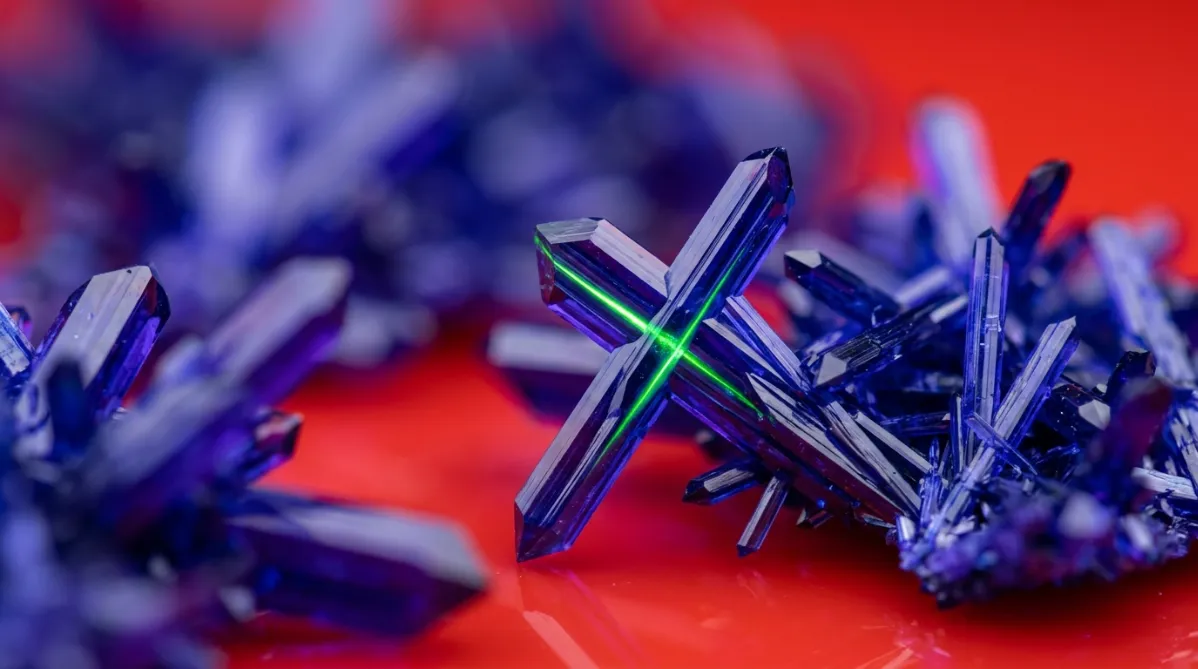
Macro science: an extreme close-up of GHK-Cu copper peptide crystals, deep blue-violet needle-like crystals with faceted edges, shot at a low three-quarter angle with a shallow depth of field so the nearest crystals are razor sharp and the rest dissolve into soft blur. The crystals sit on a smooth, glossy tomato-red backdrop that fills the frame, creating a bold color field. Lighting is a single large softbox from the upper left, giving crisp specular highlights on the crystal faces and a soft, warm-red bounce in the shadows. One tiny thread of electric green light refracts through a single crystal edge as a subtle accent. Mood: striking, precise, curious, scientific without feeling sterile. Photorealistic microscopy-meets-studio look, no text, no labels, no people.
peptides

Peptyd miedziowy GHK‑Cu może regulować sieci genowe stojące za naprawą skóry

BY NOVA CHEN ·

GHK‑Cu, miedziowy peptyd obecny w niezliczonych serum, wykazuje działanie znacznie wykraczające poza nawilżanie skóry. Przegląd literaturowy z 2018 r. sugeruje, że nowe dane o ekspresji genów mogą wyjaśniać, jak tak mała cząsteczka wpływa na syntezę kolagenu, naprawę tkanek, kontrolę zapalenia oraz naprawę DNA. W artykule przedstawiam, co naprawdę wynika z badań nad starzeniem się skóry i regeneracją oraz gdzie kończy się dostępny dowód. Zanim uwierzysz w medialny szum, zapoznaj się z praktycznymi zastrzeżeniami dotyczącymi stosowania miejscowego i z tym, co przegląd może, a czego nie może udowodnić.
Approach: Lab in action. Palette: D, bold color field.

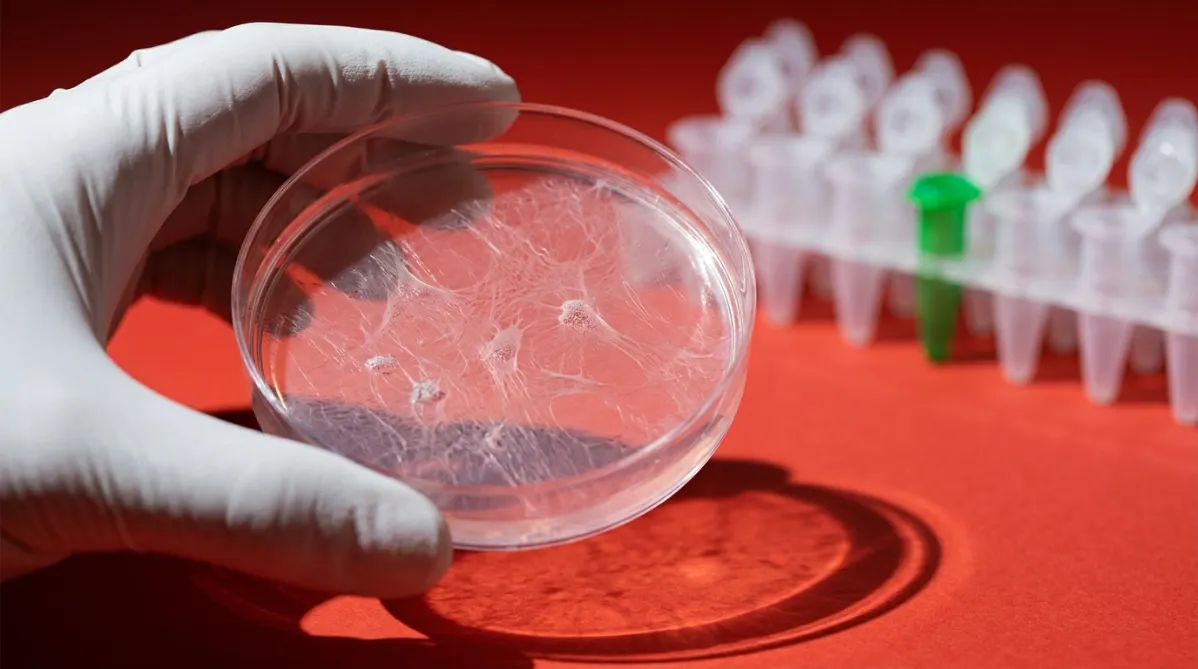
A gloved hand holds a clear petri dish at a slight low angle, close and slightly above eye level, against a saturated tomato-red backdrop. Inside the dish, a thin, translucent layer of pale pink culture medium holds a faint, lacy web of fibroblast cells, with a few small clusters just visible. Hard, clean studio light from the upper left throws a crisp curved shadow of the dish onto the red surface and picks out bright highlights on the rim and the glove's matte white nitrile. In the soft-focus background, a rack of empty microcentrifuge tubes stands out in cool white. One tiny electric green cap on a single tube adds a small accent. The mood is precise and skeptical: a promising result still confined to the dish.
peptides

Epithalon włącza telomerazę w komórkach — ale nie u ludzi

BY HELIX WARD ·

Cztero‑aminokwasowy peptyd rzekomo uruchamia gen kodujący telomerazę – enzym, który w większości komórek dorosłych jest wyciszony – i wydłuża telomery w ludzkich komórkach. To odkrycie napędza hype wokół Epithalonu jako środka długowieczności. Badania odbyły się jednak na fibroblastach płodowych w probówce, a nie na ludziach, a wzmianka o przedłużeniu życia to jedynie hipoteza. Oto, co naprawdę pokazało badanie z 2003 roku, czego nie mówi i jak to odczytać przed zakupem.

A wide, editorial-style still life photographed in soft natural window light on a pale oatmeal-colored linen surface. In the center foreground, a single small amber glass vial with a matte white cap sits slightly off-center to the right, unlabeled and minimal. Beside it lies a delicate, translucent skein of tendon-like fibers, rendered as fine pale ivory threads gently fanning out and twisting together, resting on a folded sheet of cream paper. To the left, a glass petri dish with a thin layer of soft blush-pink liquid, catching a subtle highlight, and a slim pair of stainless steel tweezers laid diagonally across the surface.

Behind the objects, a softly blurred background in muted sage green and warm taupe suggests a quiet laboratory shelf, with out-of-focus glassware shapes and a single trailing sprig of eucalyptus adding an organic note. A thin, hand-drawn style line diagram of interconnected nodes and curved arrows, in faint terracotta ink, is printed on the paper beneath the fibers. It hints at a cellular signaling pathway without any text or readable labels.

The composition uses generous negative space on the left third for potential title overlay, with a shallow depth of field and a gentle diagonal flow from the petri dish to the vial. The color palette is restrained and warm: cream, sage, blush, amber, and terracotta accents, with soft shadows and a faint film-grain texture. The mood is calm, thoughtful, and scientific but approachable, like a contemporary health and science magazine cover. Shot as if with a 50mm lens at f/2.8, top-down at a slight 30-degree angle, with crisp focus on the vial and fibers. No people, no text, no futuristic elements.
peptides

BPC‑157 i naprawa ścięgien: co pokazują badania FAK‑paxillin i czego nie pokazują

BY DR. SYNAPSE ·

BPC‑157, 15‑aminokwasowy peptyd popularny w internetowych kręgach „leczenia”, ma za sobą dobrze cytowane badanie z 2011 r., które buduje jego reputację w kontekście naprawy ścięgien. Naukowcy wykazali, że przyspiesza wzrost fibroblastów ścięgnistych, poprawia ich przeżywalność w stresie oksydacyjnym oraz zwiększa migrację – prawdopodobnie poprzez aktywację szlaku FAK‑paxillin. Nie zwiększa jednak bezpośrednio proliferacji komórek, a wszystkie wyniki pochodzą z tkanek i komórek szczurzych w warunkach laboratoryjnych. Artykuł wyjaśnia, dlaczego nie stanowi to dowodu skuteczności u ludzi oraz omawia niezatwierdzony status regulacyjny peptydu.

This page is available in