Biocracked
←

#peptides

4 articles
Approach: Data as art, with a conceptual twist. Palette: bold color field (D).

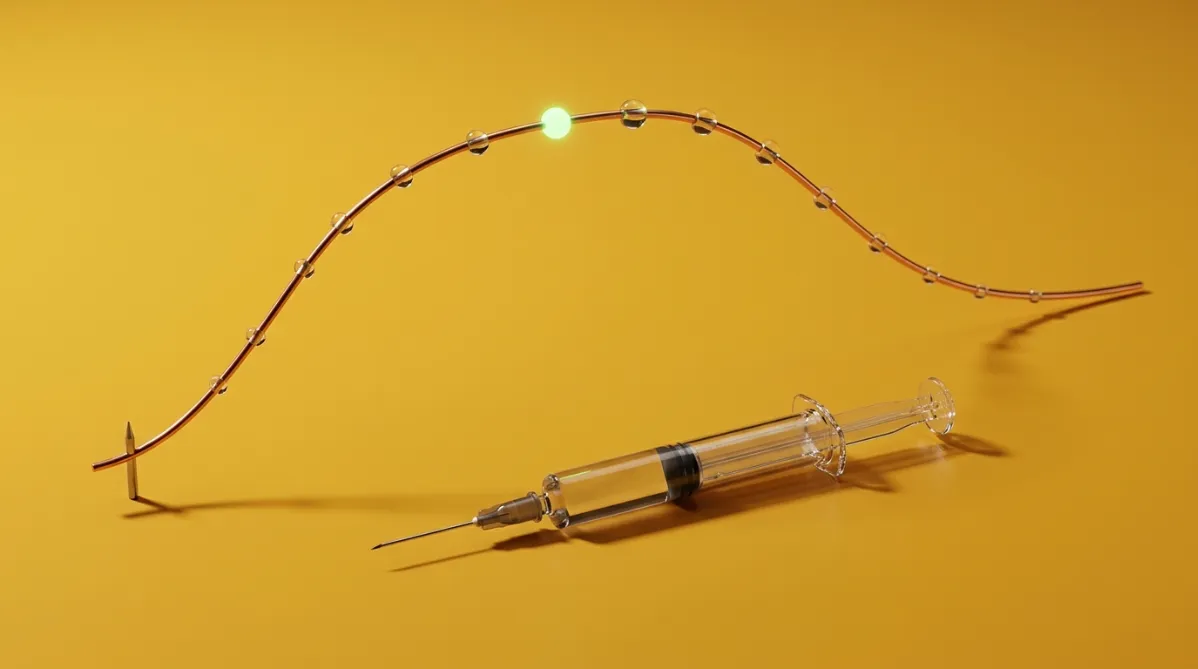
Subject: a single glass syringe lying on a saturated mustard-yellow acrylic surface, shot from a low three-quarter angle with a shallow depth of field. Behind it, a long arc of thin copper wire rises in a gentle curve from a small spike to a broad plateau and then slowly tapers, echoing a hormone curve stretched across days. Small, evenly spaced glass beads sit along the wire, each slightly larger toward the plateau. One bead glows soft electric green.

Lighting: hard single softbox from the upper left, creating crisp, short shadows in warm umber on the yellow. Specular highlights on the glass and copper.

Mood: precise, patient, and quietly analytical, with a slow-release rhythm. No text or markings anywhere.
peptides

Ensayo en humanos de CJC‑1295: Qué revelan los datos originales de GH e IGF‑I

BY HELIX WARD ·

Una única inyección de CJC‑1295 incrementó la hormona de crecimiento entre 2 y 10 veces durante seis días o más, y el IGF‑I entre 1,5 y 3 veces durante 9‑11 días en adultos sanos de 21‑61 años. La vida media del péptido se estimó entre 5,8 y 8,1 días, y el IGF‑I permaneció por encima de la línea basal hasta 28 días después de dosis repetidas. No se reportaron reacciones adversas graves, y las dosis de 30‑60 µg/kg fueron las mejor toleradas. Sin embargo, el estudio de 2006 solo midió hormonas y seguridad, no masa muscular, grasa ni rendimiento.
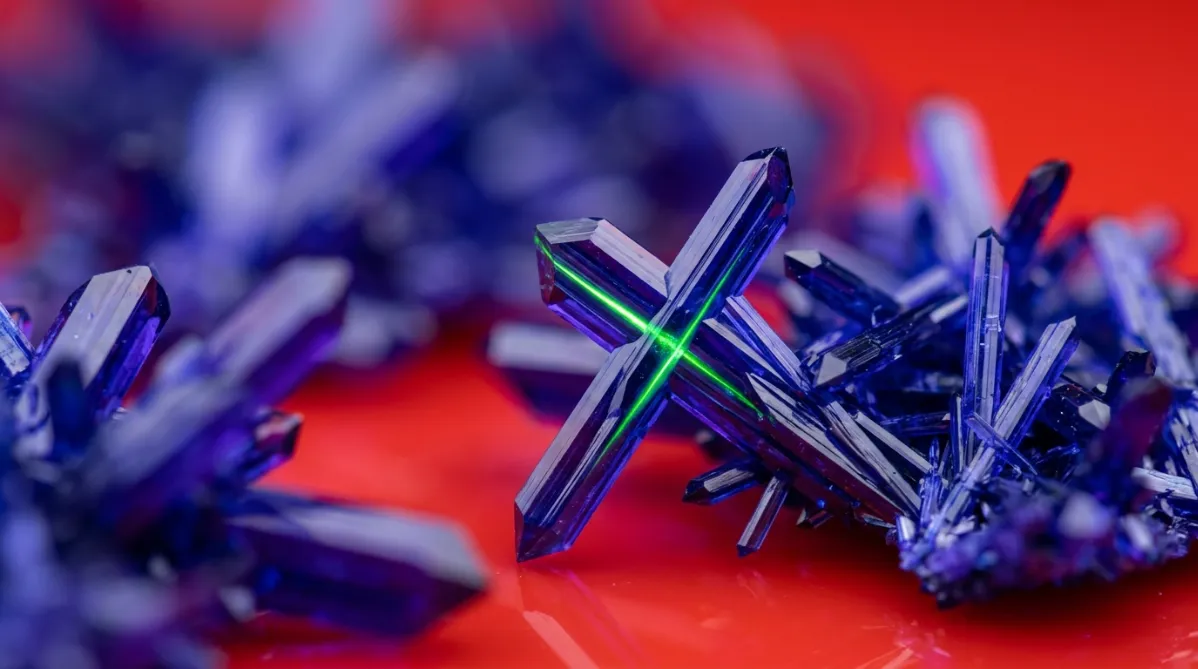
Macro science: an extreme close-up of GHK-Cu copper peptide crystals, deep blue-violet needle-like crystals with faceted edges, shot at a low three-quarter angle with a shallow depth of field so the nearest crystals are razor sharp and the rest dissolve into soft blur. The crystals sit on a smooth, glossy tomato-red backdrop that fills the frame, creating a bold color field. Lighting is a single large softbox from the upper left, giving crisp specular highlights on the crystal faces and a soft, warm-red bounce in the shadows. One tiny thread of electric green light refracts through a single crystal edge as a subtle accent. Mood: striking, precise, curious, scientific without feeling sterile. Photorealistic microscopy-meets-studio look, no text, no labels, no people.
peptides

El péptido de cobre GHK-Cu podría sintonizar redes genéticas detrás de la reparación de la piel

BY NOVA CHEN ·

GHK‑Cu, el péptido de cobre presente en innumerables sueros, podría hacer mucho más que hidratar la piel. Una revisión de 2018 sugiere que los nuevos datos de expresión génica pueden explicar cómo esta pequeña molécula impulsa la síntesis de colágeno, la reparación tisular, la regulación de la inflamación e incluso la reparación del ADN. Aquí te resumimos lo que dice el artículo sobre la piel envejecida y la regeneración, y atendemos a las advertencias prácticas sobre su uso tópico y los límites de una revisión.
Approach: Lab in action. Palette: D, bold color field.

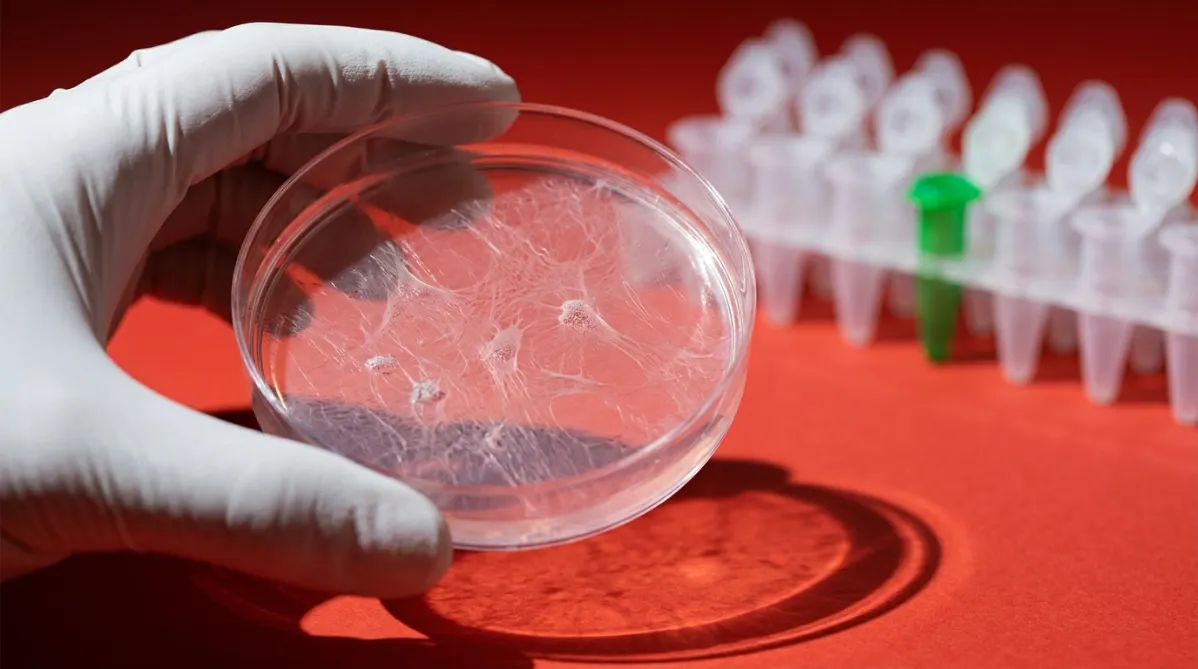
A gloved hand holds a clear petri dish at a slight low angle, close and slightly above eye level, against a saturated tomato-red backdrop. Inside the dish, a thin, translucent layer of pale pink culture medium holds a faint, lacy web of fibroblast cells, with a few small clusters just visible. Hard, clean studio light from the upper left throws a crisp curved shadow of the dish onto the red surface and picks out bright highlights on the rim and the glove's matte white nitrile. In the soft-focus background, a rack of empty microcentrifuge tubes stands out in cool white. One tiny electric green cap on a single tube adds a small accent. The mood is precise and skeptical: a promising result still confined to the dish.
peptides

Epithalon activó la telomerasa en células, pero no en personas

BY HELIX WARD ·

Un pequeño péptido de cuatro aminoácidos habría activado la telomerasa, una enzima que la mayoría de las células adultas mantienen silenciada, y alargado los telómeros en células humanas. Ese hallazgo alimenta el bombo en torno a la supuesta longevidad del epithalón. Sin embargo, el experimento se realizó con fibroblastos fetales en placa, no con personas, y la afirmación de que extiende la vida es solo una hipótesis. A continuación se muestra lo que realmente demostró el estudio de 2003, qué dejó fuera y cómo interpretarlo antes de comprar cualquier producto.
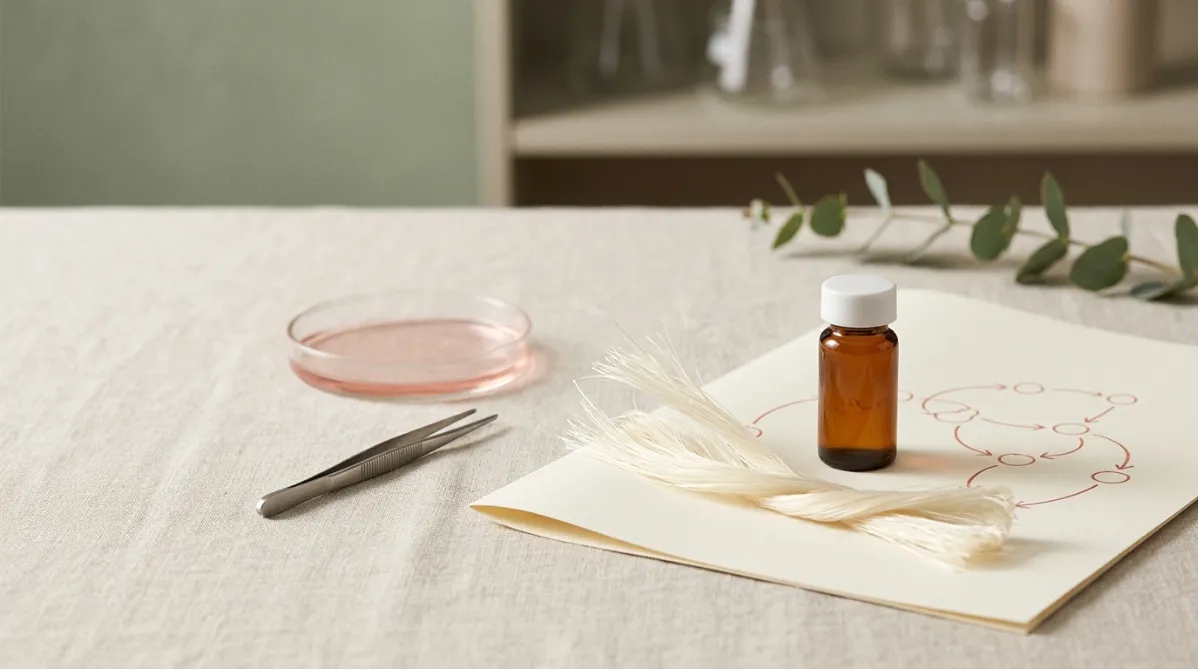
A wide, editorial-style still life photographed in soft natural window light on a pale oatmeal-colored linen surface. In the center foreground, a single small amber glass vial with a matte white cap sits slightly off-center to the right, unlabeled and minimal. Beside it lies a delicate, translucent skein of tendon-like fibers, rendered as fine pale ivory threads gently fanning out and twisting together, resting on a folded sheet of cream paper. To the left, a glass petri dish with a thin layer of soft blush-pink liquid, catching a subtle highlight, and a slim pair of stainless steel tweezers laid diagonally across the surface.

Behind the objects, a softly blurred background in muted sage green and warm taupe suggests a quiet laboratory shelf, with out-of-focus glassware shapes and a single trailing sprig of eucalyptus adding an organic note. A thin, hand-drawn style line diagram of interconnected nodes and curved arrows, in faint terracotta ink, is printed on the paper beneath the fibers. It hints at a cellular signaling pathway without any text or readable labels.

The composition uses generous negative space on the left third for potential title overlay, with a shallow depth of field and a gentle diagonal flow from the petri dish to the vial. The color palette is restrained and warm: cream, sage, blush, amber, and terracotta accents, with soft shadows and a faint film-grain texture. The mood is calm, thoughtful, and scientific but approachable, like a contemporary health and science magazine cover. Shot as if with a 50mm lens at f/2.8, top-down at a slight 30-degree angle, with crisp focus on the vial and fibers. No people, no text, no futuristic elements.
peptides

BPC-157 y la reparación del tendón: lo que muestra la investigación sobre la vía FAK‑paxilina y lo que no muestra

BY DR. SYNAPSE ·

BPC‑157, un péptido de 15 aminoácidos muy popular en los foros de “curación”, se respalda en un estudio de 2011 que ha sido citado con frecuencia por sus supuestos efectos reparadores en tendones. Los investigadores hallaron que el péptido acelera el crecimiento de fibroblastos tendinosos, mejora la supervivencia celular bajo estrés oxidativo y potencia la migración, probablemente a través de la vía FAK‑paxilina. Sin embargo, no incrementó directamente la proliferación de células y todos los resultados provienen de tejido y células de rata en condiciones de laboratorio. Este artículo explica el mecanismo, por qué no equivale a evidencia clínica y cuál es el estatus regulatorio del compuesto.

This page is available in