Biocracked
←

#supplements

9 articles
Approach: The human outcome. Palette: C, Natural.

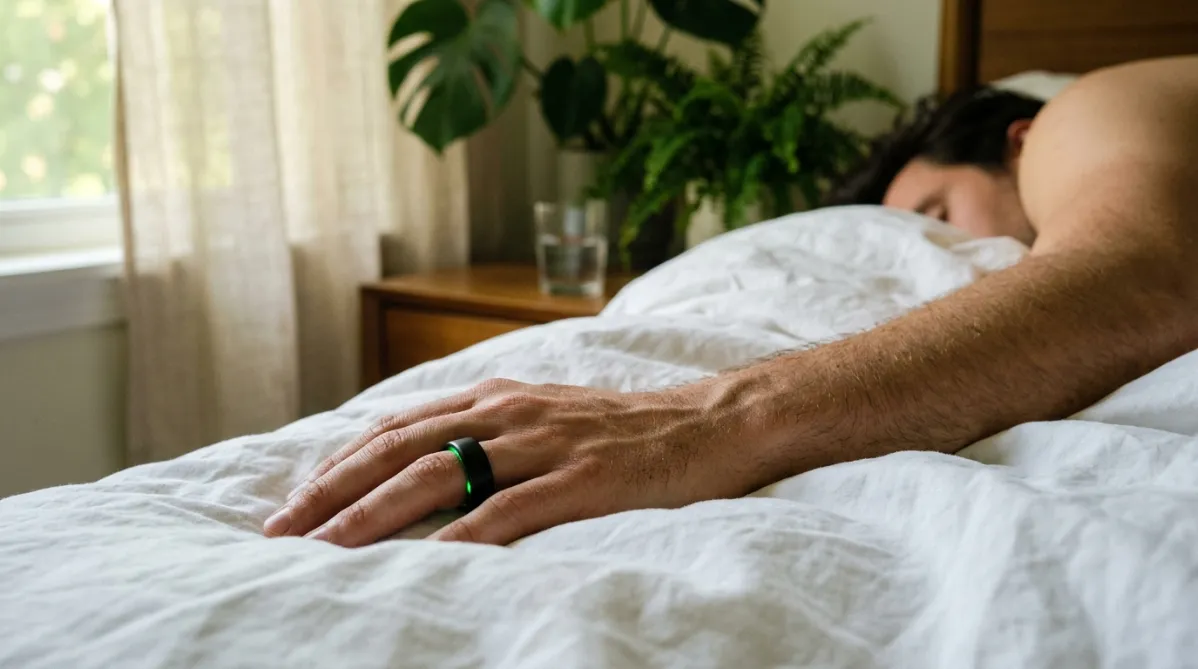
A close, low-angle shot of a sleeping person's bare forearm and hand resting on a rumpled white cotton duvet, a matte black smart ring on the index finger, with a small electric green LED glint on the ring's inner edge. Early morning daylight comes through a sheer curtain at the left and casts soft golden-green light across the skin, showing fine arm hair and natural skin texture. In the background, out of focus, are a wooden nightstand with a glass of water and the blurred green leaves of a houseplant by the window. The face is not shown. Shot at a 35mm equivalent with shallow depth of field, focused on the ring and knuckles. The mood is calm, restorative and quietly observational, as if the night's data were about to be checked.
supplements

Magnesio L‑treonato mejora las puntuaciones de sueño profundo y REM en Oura tras tres semanas

BY NOVA CHEN ·

Un ensayo aleatorizado de 2024 evaluó una forma de magnesio dirigida al cerebro, el magnesio L‑treonato (Magtein), en 80 adultos con quejas de sueño. Tras 21 días con una dosis de 1 g/día, el grupo que recibió MgT obtuvo mejores puntuaciones de sueño profundo y REM en sus anillos Oura, además de mejoras en el estado de ánimo, la energía y la alerta. Sin embargo, el grupo placebo empeoró, la clasificación del sueño provino de un dispositivo de consumo y el estudio nunca comparó el treonato con glicinato o citrato. Aquí explicamos qué muestra realmente el ensayo, qué aporta una dosis de 1 g en magnesio elemental y cuáles son sus limitaciones.
Approach: Macro science. Palette: B, warm.

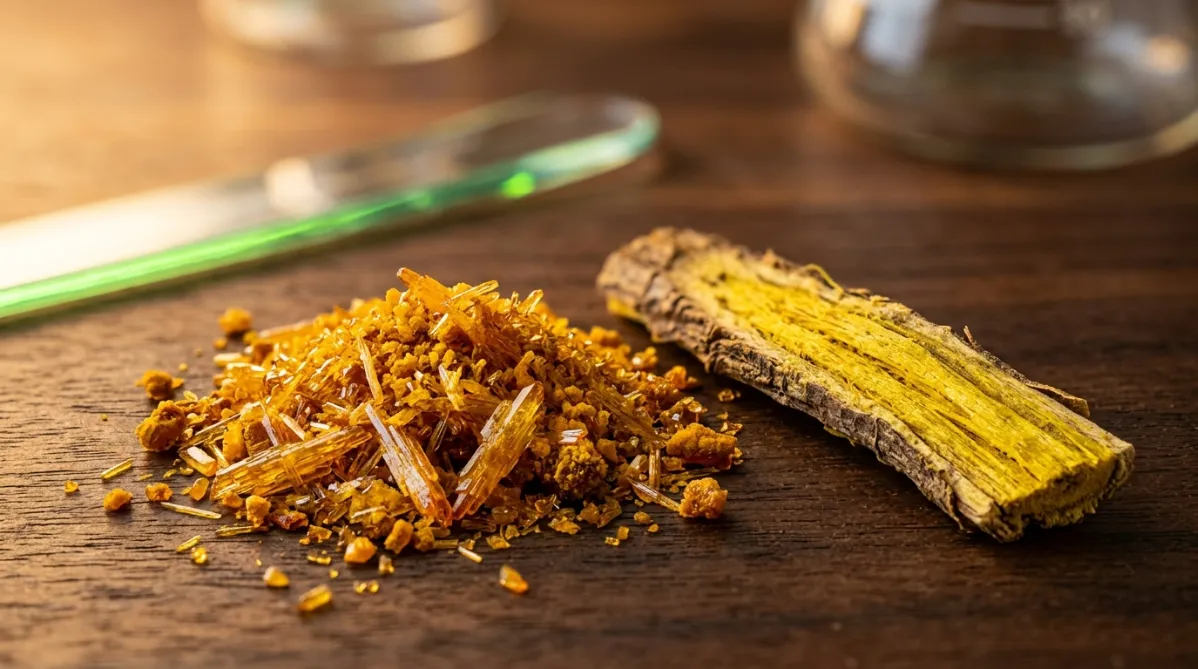
Extreme macro photograph of raw berberine: a small heap of vivid yellow-orange crystalline powder with needle-like crystal clusters, shot at a low 30-degree angle with a shallow depth of field. Beside it, a dry sliver of Berberis root bark shows its bright yellow inner wood and fibrous grain. The surface is a smooth dark walnut board. Low golden-hour side light from the left makes the crystals glint like amber glass and throws long warm copper shadows across the wood. One tiny electric green highlight reflects off a glass spatula edge in the soft background blur. The mood is quiet and investigative, with rich saturated honey and burnt-orange tones and no blue cast. Photorealistic, microscopy-like texture, no text or labels.
metabolism

Berberina vs. Metformina: El ensayo piloto que redujo el HbA1c de 9,5 % a 7,5 %

BY HELIX WARD ·

Un pequeño ensayo piloto de 2008 comparó berberina con metformina en diabéticos recién diagnosticados y mostró una reducción del HbA1c de 9,5 % a 7,5 % en tres meses. Otro estudio con 48 pacientes bajo tratamiento habitual observó una caída del HbA1c de 8,1 % a 7,3 % y una disminución del HOMA‑IR del 44,7 %. Ambos estudios fueron muy pequeños y alrededor de un tercio de los participantes presentaron efectos gastrointestinales. Aquí analizamos los datos, sus limitaciones y qué debes saber antes de considerar la berberina.

**Approach: Conceptual metaphor. Palette: B, Warm.**

A close, slightly high three-quarter view of a single weathered hemp rope stretched horizontally across the frame, shot at a shallow depth of field. On the left the rope is thick and tightly twisted. On the right it has frayed down to a few thin strands, with a short, neat whipping of bright electric green thread binding the rope just where the fraying stops. Golden-hour sunlight enters low from the left and picks out each individual fiber in honey and copper tones. Soft amber shadows fall across a blurred, sun-warmed wooden dock in the background. The mood is quiet and cautiously hopeful, suggesting something worn down slowly but partly held in place. The image is photorealistic and has no text.
longevity

Vitamina D3 preserva 140 pares de bases de los telómeros en un ensayo aleatorizado de 4 años

BY DR. SYNAPSE ·

Un amplio ensayo aleatorizado y controlado con placebo mostró que cuatro años de suplementación con vitamina D3 redujeron el acortamiento de los telómeros en aproximadamente 140 pares de bases. Los datos provienen del estudio VITAL, que incluyó a adultos mayores de EE. UU. que tomaron 2 000 UI al día. El efecto fue modesto y alcanzó significación marginal (p = 0,039); la longitud del telómero es sólo un marcador sustituto, no una prueba de mayor longevidad. Los omega‑3, por su parte, no mostraron ningún efecto sobre los telómeros en este ensayo.
Approach: the human outcome. Palette: natural.

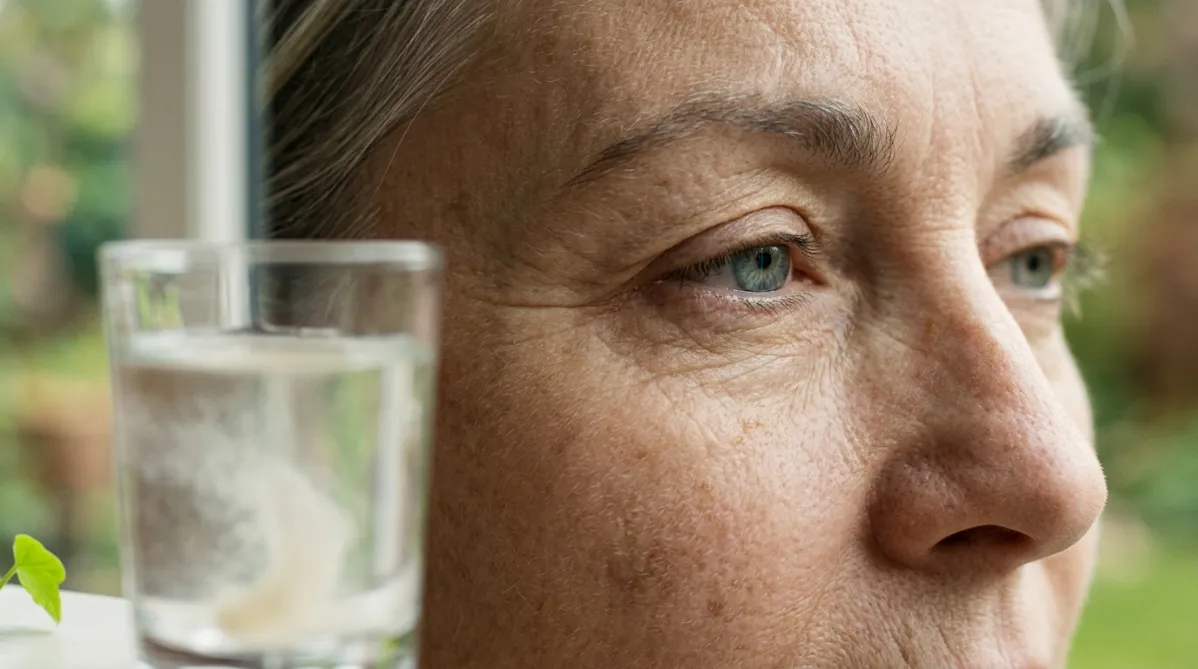
Extreme close-up of a woman's eye and the delicate skin around it, shot from a slight three-quarter angle with a 100mm macro lens and a shallow depth of field. Her skin is a mature 50s complexion with fine crow's feet that are sharp and tactile, with visible pores and soft vellus hairs. Her gaze is relaxed and not at the camera, and the face is cropped so identity isn't the focus. Soft, directional window daylight rakes across the skin from the left to bring out the wrinkle texture, with gentle warm skin tones and a blurred leafy green background outdoors. A single glass of water with a faint dissolving powder swirl sits out of focus in the foreground, with a tiny electric green leaf highlight at the edge. The mood is calm, honest and quietly scientific.
peptides

2,5 g de péptidos de colágeno reducen las arrugas alrededor de los ojos un 20 % en 8 semanas

BY NOVA CHEN ·

El colágeno es uno de los suplementos de belleza y longevidad más demandados, pero pocos productos cuentan con ensayos humanos controlados con placebo. En un estudio con 114 mujeres de 45 a 65 años, 2,5 g diarios del péptido bioactivo Verisol disminuyeron el volumen de las arrugas bajo los ojos un 20 % frente al placebo tras 8 semanas. Las biopsias revelaron un 65 % más de procollagen‑I y un 18 % más de elastina; el aumento de fibrilina (6 %) no resultó significativo. El efecto se mantuvo 4 semanas después de la última dosis, aunque los resultados se limitan a ese péptido de marca y a esa población específica.
A wide landscape editorial photograph of a minimalist laboratory-meets-wellness still life on a pale, warm-gray stone countertop, softly lit by diffused morning window light from the left. In the center foreground, a small amber glass supplement jar with a plain matte white label sits beside a scattering of fine white powder and a few loose white capsules on a ceramic dish. Next to it rests a clean, open notebook with faint hand-drawn line graphs, two diverging curves rising gently, one slightly higher than the other, drawn in muted sage-green and charcoal ink. A slim brass pen lies across the page.

In the soft-focus midground, a delicate glass beaker filled with clear liquid catches a thin streak of light, casting a gentle caustic shimmer across the stone. A sprig of dried eucalyptus and a small sliver of citrus peel add organic texture. Behind them, an out-of-focus wall of pale oat-colored tiles and a floating wooden shelf holds a few blurred ceramic vessels and a small potted fern.

The color palette is calm and editorial: warm creams, sage green, soft amber, muted terracotta accents, and touches of charcoal. Shallow depth of field with a crisp focus on the jar and notebook, creamy bokeh in the background. Subtle film-like grain, natural shadows, and generous negative space on the right third of the frame, suitable for headline overlay. The mood is thoughtful, measured, and trustworthy, like a contemporary science and wellness journal cover: modern, tactile, quietly optimistic, and grounded rather than hyped.
longevity

El calcio alfa‑cetoglutarato prolongó la vida de ratonas hasta un 16,6 %. Qué significa (y qué no) para los humanos

BY DR. SYNAPSE ·

Un estudio de 2020 publicado en *Cell Metabolism* encontró que alimentar a ratones de edad media con una dieta al 2 % de calcio alfa‑cetoglutarato extendió la esperanza de vida media de las hembras hasta un 16,6 % y redujo la fragilidad. En la segunda cohorte el efecto fue menor (10,5 %) y los aumentos de supervivencia en los machos no fueron estadísticamente significativos. Los investigadores relacionan el beneficio con una menor inflamación sistémica y con una elevación propuesta de IL‑10. Sin embargo, se trata sólo de un estudio en ratones y no demuestra que el AKG prolongue la vida humana. A continuación, se explica lo que muestran los datos, en qué difieren de la publicidad de suplementos y por qué el CaAKG debe estar en una lista de vigilancia científica y no en un protocolo probado.
A wide, minimalist editorial still life on a soft, warm-gray linen surface lit by gentle diffused morning window light. At center sit two identical small amber glass supplement bottles, one slightly in front of the other, with plain matte cream labels and no readable text. In front of them, two matching shallow ceramic dishes in muted sage green hold identical small ivory capsules. The capsules are nearly indistinguishable, which quietly suggests placebo versus active. Beside the dishes, a few wheat germ grains, a small cluster of aged cheddar-toned cheese shards, and a halved ripe mushroom hint at natural spermidine food sources. They are arranged with careful negative space.

On the left, a delicate balance scale in brushed brass sits perfectly level, its two small pans empty and even, as a subtle visual metaphor for "no difference." On the right, a neat open notebook with soft blurred pencil lines and a single sprig of dried eucalyptus lies beside a pair of thin round tortoiseshell reading glasses, suggesting older adults and memory without showing any people.

The background is a softly blurred pale oat-colored wall with a long gentle shadow cast diagonally across the scene from a window. The color palette is muted and modern: warm cream, sage green, amber, soft brass, and dusty terracotta accents. Shallow depth of field keeps the bottles and scale crisp while the edges melt into a creamy blur. The mood is calm, thoughtful, and quietly skeptical, like a trendy health and science journal feature. Fine film grain, a subtle matte finish, and a balanced asymmetrical composition leave open space in the upper right for headline overlay. Photographed from a slightly elevated three-quarter angle, high-end editorial photography style.
supplements

¿Spermidina para la memoria? Un ensayo de 12 meses en 100 adultos mayores no mostró ventaja sobre placebo

BY DR. SYNAPSE ·

La spermidina ha sido promocionada como un suplemento protector del cerebro, basándose en investigaciones sobre autofagia y en estudios con animales. El ensayo SmartAge la evaluó en 100 adultos mayores con deterioro cognitivo subjetivo, administrándoles aproximadamente 0,9 mg diarios durante 12 meses. El endpoint primario de memoria no superó al placebo (diferencia = ‑0,03; p = 0,47) y los secundarios también fueron negativos. Los indicios exploratorios sobre inflamación y memoria verbal no se confirmaron. A continuación, se detallan las implicaciones de este hallazgo para quienes consideren tomar spermidina y se describen las limitaciones del estudio.

A bright, minimalist editorial still life on a pale warm-white stone surface, shot from a slightly elevated three-quarter angle in soft natural window light. At center, a small amber glass supplement bottle with a matte cream label, unbranded, sits beside a few loose white capsules. A pair of weathered hands in a light oatmeal linen sleeve, belonging to an older adult, rests gently near the bottle, with a ceramic mug of tea just out of focus. To the right, a clean glass vial and a delicate glass beaker filled with clear liquid catch the light, hinting at laboratory research without any futuristic touch. A small paper notebook with a handwritten simple line graph rising in a gentle curve lies open nearby, along with a sharpened pencil. Scattered at the edges are soft sprigs of dried eucalyptus and a few pale sage-green leaves, adding an organic note. A faint, abstract molecular diagram printed in muted teal ink on a card leans against the bottle, subtle and graphic. The palette is calm and modern: warm ivory, sage green, soft teal, muted amber, and touches of dusty peach. Long, gentle shadows fall across the surface, and the shallow depth of field blurs the background into creamy neutral tones. The composition leaves generous negative space on the left third for headline text. The overall feel is a trendy health and science journal: clean, airy, trustworthy, and quietly sophisticated, with fine film-like grain and true-to-life color. Ultra-detailed, 16:9 landscape.
supplements

1 000 mg de nicotinamida ribósido al día aumentaron el NAD⁺ de las células sanguíneas en aproximadamente un 60 % en adultos mayores, según un ensayo aleatorizado

BY DR. SYNAPSE ·

Un ensayo cruzado publicado en 2018 en *Nature Communications* evaluó nicotinamida ribósido a 500 mg dos veces al día (1 000 mg/día) durante seis semanas en adultos sanos de mediana edad y mayores. El suplemento se toleró bien y elevó el NAD⁺ en las células sanguíneas del sistema inmunitario en torno al 60 % frente al placebo. Los investigadores también observaron indicios preliminares de disminución de la presión arterial y de la rigidez arterial, pero los describen como hipótesis para futuros estudios, no como beneficios demostrados. Este artículo explica por qué se piensa que el NAD⁺ disminuye con la edad, qué hizo el estudio y qué no puede decirnos sobre resultados de enfermedad o longevidad.
A softly lit editorial still life on a pale oat-colored linen surface, shot from a slightly elevated three-quarter angle in a wide landscape frame. At center-left, a small matte white ceramic dish holds a modest pile of fine off-white powder, with a tiny brushed-brass measuring spoon resting beside it. Next to the dish stands a minimalist amber glass supplement bottle with a plain cream label and no readable text. A few capsules spill casually across the linen, some translucent and some opaque ivory.

On the right side of the composition, a ripe blood orange cut in half and a handful of raw almonds sit on a light ash-wood board. A sprig of fresh rosemary adds a muted green accent. A sheer glass of water catches the light and throws a soft, rippled caustic pattern across the fabric.

In the background, out of focus, a woman's hand in a soft sage-green knit sleeve rests near a ceramic mug. This suggests a calm morning routine without showing a face. Behind her, a tall window casts diffused, golden-hour light from the upper left, with gentle shadows and a creamy, shallow depth of field.

The palette is warm and restrained: oat, ivory, terracotta, sage, and amber, with a single pop of coral from the blood orange. A thin, abstract line of muted terracotta paint, like a brushed arc, sweeps across the upper right background. It subtly evokes a rising curve without becoming a literal chart.

The mood is calm, trustworthy, and contemporary, like a premium wellness and science journal feature. The image has crisp focus on the powder and bottle, natural film-like grain, soft contrast, and generous negative space in the upper third for headline overlay. It looks like a high-end editorial photograph with no text, logos, or futuristic elements.
metabolism

El primer éxito humano del NMN: 250 mg al día aumentan la sensibilidad a la insulina muscular en un 25 % en mujeres prediabéticas

BY DR. SYNAPSE ·

El NMN ha sido durante años uno de los suplementos de longevidad más promocionados, pero la evidencia en humanos era escasa hasta un ensayo de 2021 de la Washington University publicado en *Science*. En mujeres posmenopáusicas con prediabetes y sobrepeso/obesidad, 250 mg diarios de NMN durante 10 semanas mejoraron la sensibilidad a la insulina muscular en aproximadamente un 25 %. La señalización de insulina en el músculo y la expresión de genes implicados en la remodelación muscular también se incrementaron, mientras que el grupo placebo no mostró cambios. Sin embargo, el beneficio fue limitado y el estudio no demostró que el NMN redujera la glucosa sanguínea ni revirtiera la prediabetes.
A serene editorial still life shot from a slightly elevated angle on a pale travertine surface, bathed in soft morning window light with gentle long shadows. At the center sits a small matte ceramic bowl in warm oatmeal tone, holding a fine mound of white crystalline powder, with a delicate wooden scoop resting beside it. A few grains are scattered naturally across the stone. To the left, a clear glass of water catches the light, throwing a subtle caustic shimmer onto the surface. To the right, a neatly arranged trio of translucent amber glass capsules and a single sprig of dried eucalyptus add organic texture.

In the softly blurred background, a sage-green linen cloth drapes across the frame, and a vintage brass hourglass stands upright, its sand halfway through. This is a subtle nod to aging and time. A small open notebook with faint, abstract hand-drawn line graphs trending gently downward, with no legible text, rests at the edge of the composition, with a slim pencil placed across it.

The palette is calm and modern: creamy ivory, warm sand, muted sage, soft terracotta, and touches of honey amber. The mood is quiet, thoughtful, and scientific without being clinical, like a contemporary wellness and science magazine cover. Shallow depth of field keeps the powder bowl crisp, with creamy bokeh behind it. Generous negative space on the right side of the wide 16:9 frame leaves room for headline overlay. Fine film-like grain, natural color grading, and minimalist composition give it a refined, trendy journal feel.
longevity

Taurina, el aminoácido económico que prolongó la vida de los ratones en un 12 % y disminuye con la edad en humanos

BY DR. SYNAPSE ·

Un estudio de 2023 publicado en *Science* mostró que la taurina circulante, un aminoácido barato y ampliamente disponible, disminuye con la edad en ratones, monos y humanos. Su suplementación en ratones de edad media prolongó la esperanza de vida media en torno al 10‑12 % y mejoró la salud en roedores y primates. El compuesto pareció reducir la senescencia celular, el daño al ADN, la disfunción mitocondrial y la inflamación asociada al envejecimiento. Los datos humanos son observacionales y las dosis empleadas en ratones se traducirían a varios gramos al día en personas, de modo que la evidencia está lejos de ser concluyente. A continuación se detallan los hallazgos del estudio, las dosis propuestas y por qué los investigadores insisten en que se requieren ensayos clínicos antes de considerar la taurina como una pastilla anti‑envejecimiento.

This page is available in