Biocracked
←

#peptides

4 articles
Approach: Data as art, with a conceptual twist. Palette: bold color field (D).

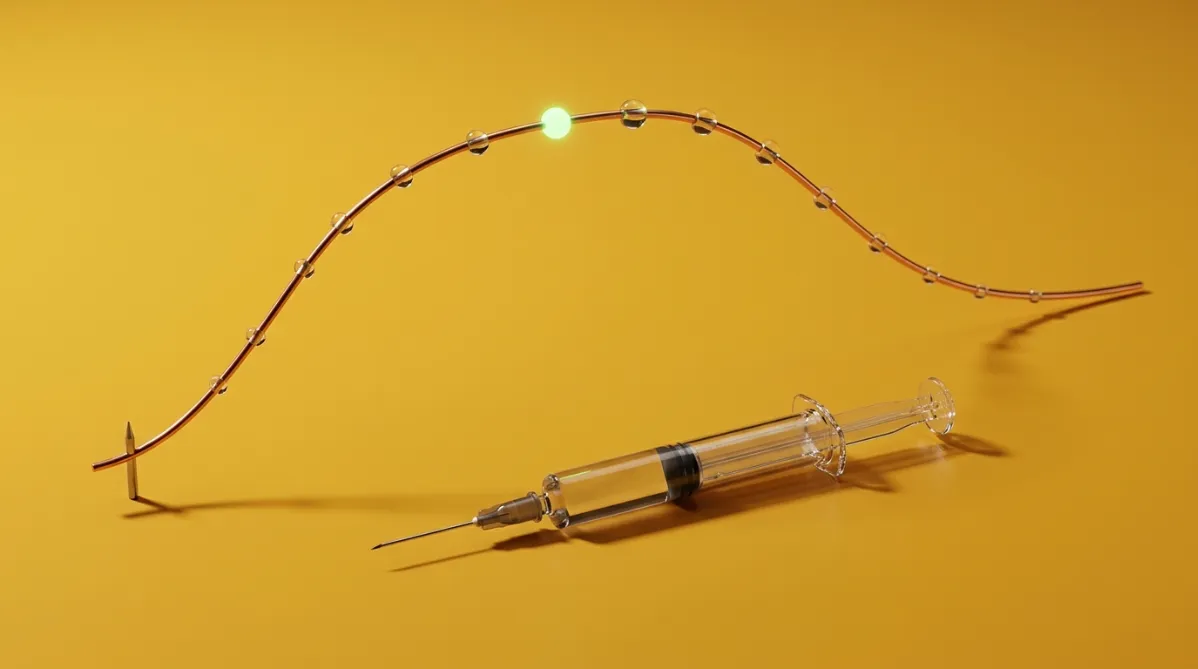
Subject: a single glass syringe lying on a saturated mustard-yellow acrylic surface, shot from a low three-quarter angle with a shallow depth of field. Behind it, a long arc of thin copper wire rises in a gentle curve from a small spike to a broad plateau and then slowly tapers, echoing a hormone curve stretched across days. Small, evenly spaced glass beads sit along the wire, each slightly larger toward the plateau. One bead glows soft electric green.

Lighting: hard single softbox from the upper left, creating crisp, short shadows in warm umber on the yellow. Specular highlights on the glass and copper.

Mood: precise, patient, and quietly analytical, with a slow-release rhythm. No text or markings anywhere.
peptides

Studio umano su CJC‑1295: cosa mostrano i dati originali su GH e IGF‑I

BY HELIX WARD ·

Una singola iniezione di CJC‑1295 ha aumentato il GH da 2 a 10 volte per sei giorni o più e l'IGF‑I da 1,5 a 3 volte per 9‑11 giorni in adulti sani di età compresa tra 21 e 61 anni. L’emivita del peptide è stata stimata tra 5,8 e 8,1 giorni, e l'IGF‑I è rimasto sopra la linea di base fino a 28 giorni dopo somministrazioni ripetute. Non sono state segnalate reazioni avverse gravi; le dosi di 30‑60 µg/kg sono state le meglio tollerate. Tuttavia lo studio del 2006 ha misurato solo ormoni e sicurezza, non massa muscolare, grasso o performance. Qui analizziamo cosa rivelano davvero i dati originali, come CJC‑1295 con DAC si differenzia dal mod GRF 1‑29 e perché il peptide rimane un prodotto di ricerca non approvato e vietato dalla WADA.
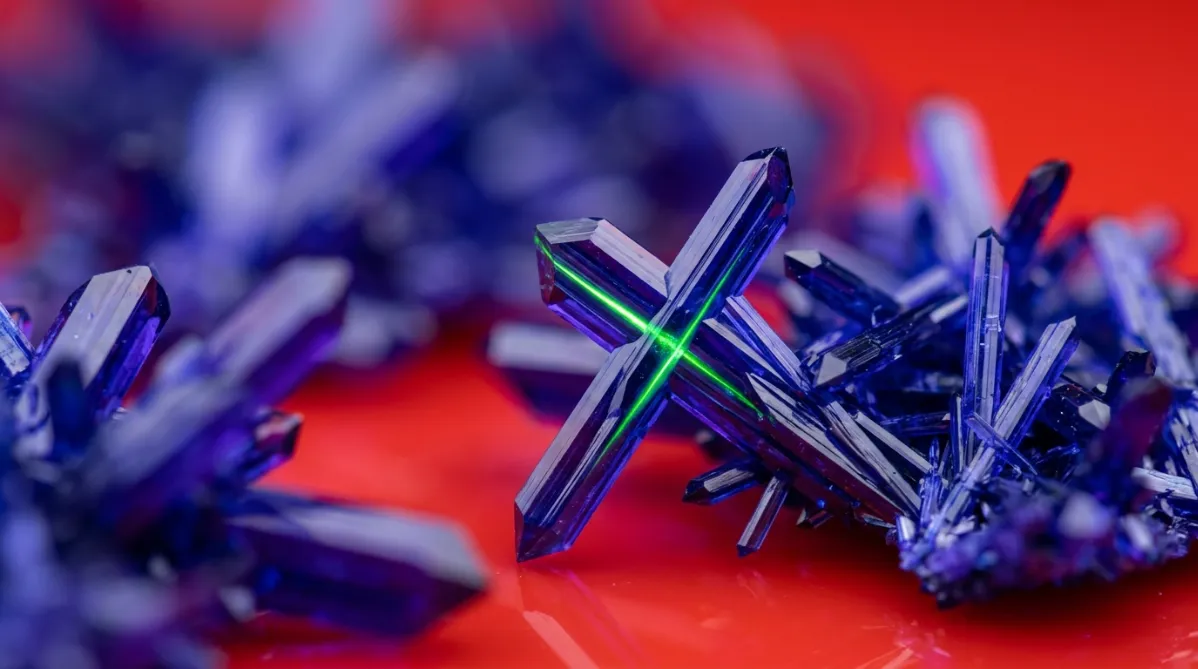
Macro science: an extreme close-up of GHK-Cu copper peptide crystals, deep blue-violet needle-like crystals with faceted edges, shot at a low three-quarter angle with a shallow depth of field so the nearest crystals are razor sharp and the rest dissolve into soft blur. The crystals sit on a smooth, glossy tomato-red backdrop that fills the frame, creating a bold color field. Lighting is a single large softbox from the upper left, giving crisp specular highlights on the crystal faces and a soft, warm-red bounce in the shadows. One tiny thread of electric green light refracts through a single crystal edge as a subtle accent. Mood: striking, precise, curious, scientific without feeling sterile. Photorealistic microscopy-meets-studio look, no text, no labels, no people.
peptides

Il peptide di rame GHK‑Cu potrebbe regolare i circuiti genici alla base della riparazione cutanea

BY NOVA CHEN ·

GHK‑Cu, il peptide di rame presente in numerosi sieri, potrebbe fare molto più che idratare la pelle. Una review del 2018 indica che nuovi dati sull’espressione genica potrebbero spiegare come questa piccola molecola sia collegata alla sintesi del collagene, alla riparazione dei tessuti, al controllo dell’infiammazione e persino alla riparazione del DNA. Scopri cosa dice davvero lo studio sulla pelle invecchiata e sulla rigenerazione, e dove i dati si fermano. Prima di lasciarti trasportare dall’entusiasmo, leggi le avvertenze pratiche sull’uso topico e su cosa una review può e non può dimostrare.
Approach: Lab in action. Palette: D, bold color field.

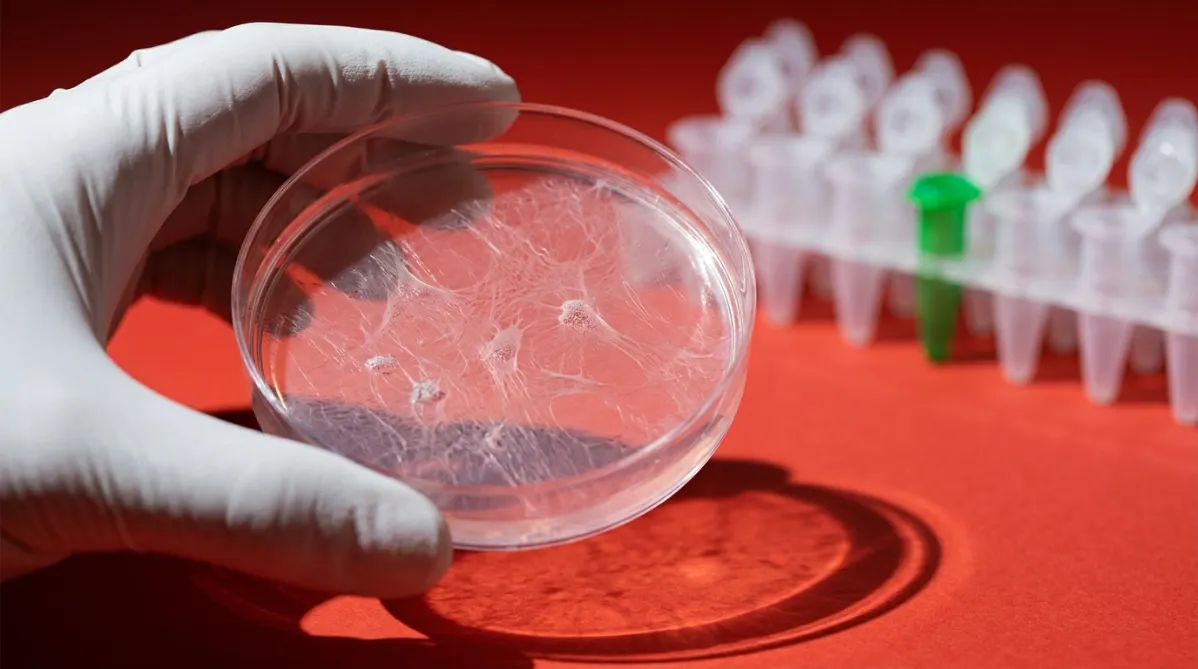
A gloved hand holds a clear petri dish at a slight low angle, close and slightly above eye level, against a saturated tomato-red backdrop. Inside the dish, a thin, translucent layer of pale pink culture medium holds a faint, lacy web of fibroblast cells, with a few small clusters just visible. Hard, clean studio light from the upper left throws a crisp curved shadow of the dish onto the red surface and picks out bright highlights on the rim and the glove's matte white nitrile. In the soft-focus background, a rack of empty microcentrifuge tubes stands out in cool white. One tiny electric green cap on a single tube adds a small accent. The mood is precise and skeptical: a promising result still confined to the dish.
peptides

Epithalon attiva la telomerasi nelle cellule, ma non nelle persone

BY HELIX WARD ·

Un peptide di soli quattro amminoacidi ha riattivato la telomerasi, l'enzima che nella maggior parte delle cellule adulte resta inattivo, e ha allungato i telomeri di cellule umane. Questa è la scoperta alla base del clamore sulla longevità di Epithalon, ma proviene da fibroblasti fetali coltivati in vitro, non da persone. Nel paper del 2003 si ipotizza un’estensione della durata della vita, ma è solo un’ipotesi. Ecco cosa dimostra realmente lo studio, cosa lascia fuori e come interpretarlo prima di acquistare.
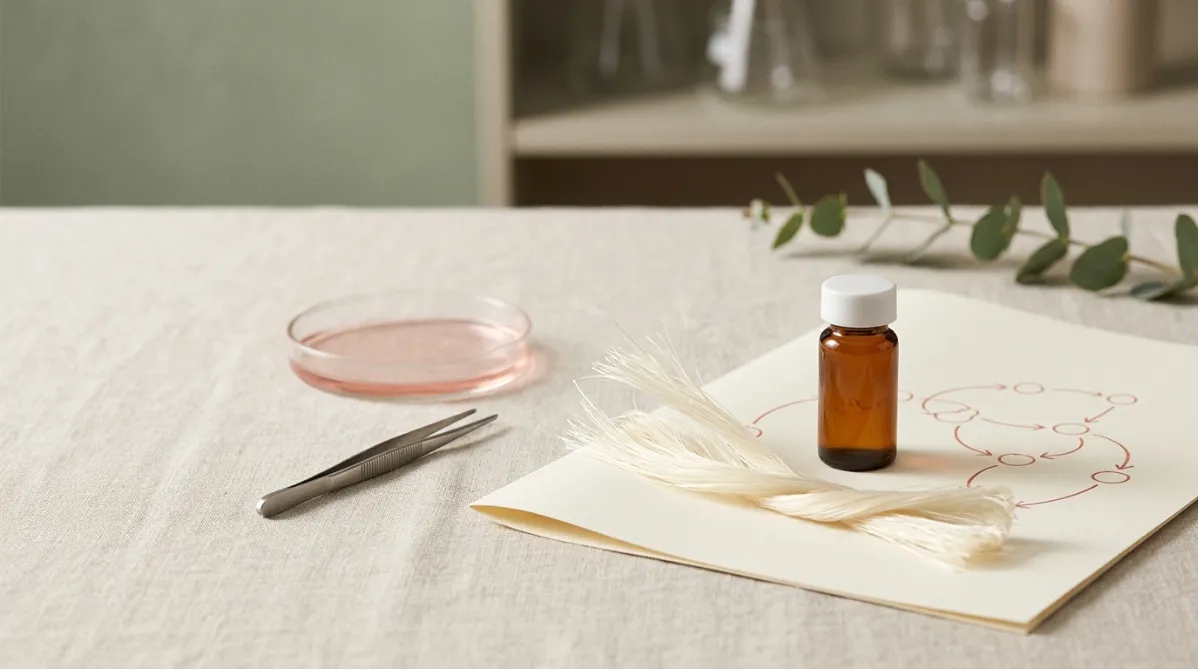
A wide, editorial-style still life photographed in soft natural window light on a pale oatmeal-colored linen surface. In the center foreground, a single small amber glass vial with a matte white cap sits slightly off-center to the right, unlabeled and minimal. Beside it lies a delicate, translucent skein of tendon-like fibers, rendered as fine pale ivory threads gently fanning out and twisting together, resting on a folded sheet of cream paper. To the left, a glass petri dish with a thin layer of soft blush-pink liquid, catching a subtle highlight, and a slim pair of stainless steel tweezers laid diagonally across the surface.

Behind the objects, a softly blurred background in muted sage green and warm taupe suggests a quiet laboratory shelf, with out-of-focus glassware shapes and a single trailing sprig of eucalyptus adding an organic note. A thin, hand-drawn style line diagram of interconnected nodes and curved arrows, in faint terracotta ink, is printed on the paper beneath the fibers. It hints at a cellular signaling pathway without any text or readable labels.

The composition uses generous negative space on the left third for potential title overlay, with a shallow depth of field and a gentle diagonal flow from the petri dish to the vial. The color palette is restrained and warm: cream, sage, blush, amber, and terracotta accents, with soft shadows and a faint film-grain texture. The mood is calm, thoughtful, and scientific but approachable, like a contemporary health and science magazine cover. Shot as if with a 50mm lens at f/2.8, top-down at a slight 30-degree angle, with crisp focus on the vial and fibers. No people, no text, no futuristic elements.
peptides

BPC‑157 e la riparazione dei tendini: cosa dimostra la ricerca sul percorso FAK‑paxillina e cosa non dimostra

BY DR. SYNAPSE ·

Il BPC‑157, peptide di 15 amminoacidi molto popolare nei circoli online di “guarigione”, è basato su uno studio del 2011 ben citato per le sue presunte proprietà nella riparazione dei tendini. I ricercatori hanno osservato una più rapida crescita dei fibroblasti tendinei, una maggiore sopravvivenza cellulare sotto stress ossidativo e una maggiore migrazione, apparentemente tramite l’attivazione del percorso FAK‑paxillina. Tuttavia, il peptide non ha stimolato direttamente la proliferazione cellulare e tutti i risultati provengono da tessuti e cellule di ratto in laboratorio. L’articolo analizza il meccanismo, spiega perché non costituisce prova in uomo e ricontrolla lo status normativo non approvato del peptide.

This page is available in