Biocracked
←

#postbiotics

2 articles
Approach: Macro science. Palette: D, bold color field.

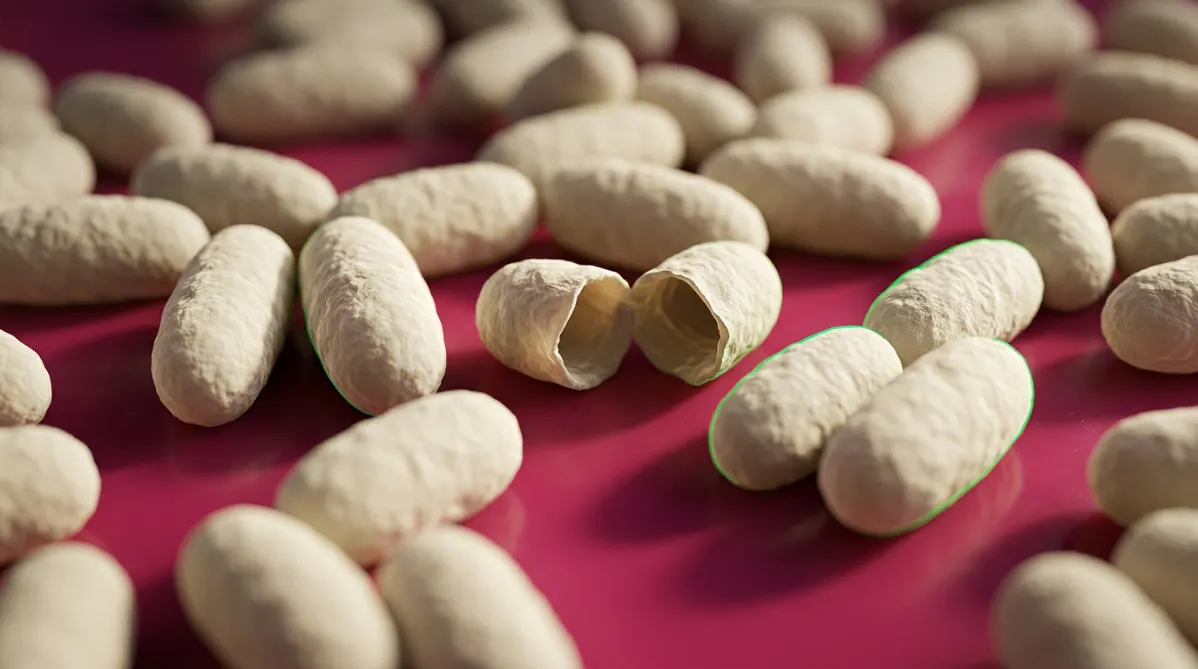
Extreme close-up microscopy-style photograph of a dense cluster of oval, rod-shaped bacterial cells, rendered as slightly wrinkled, matte, pale cream-white forms with visible surface texture. They rest on a smooth, saturated magenta-pink gel surface. Several cells in the foreground are crisp, while the rest fall into soft shallow depth of field. One cell near the center is split open and visibly hollow, to suggest a dead, heat-treated organism. Camera is a low three-quarter angle, as if through a scanning microscope. Lighting is a single hard, warm-white side light that casts short crisp shadows and creates bright rim highlights. A thin electric green (#00e676) line of reflected light traces the edge of one cell. The mood is stark, curious and quietly skeptical. There is no text and no labels.
metabolism

The Gut Bacterium That Worked Better Dead: Akkermansia's 29% Edge

BY HELIX WARD ·

In the first human trial of Akkermansia muciniphila, the pasteurized (heat-killed) version, not the live one, produced the headline results. Insulin sensitivity rose 28.62% and fasting insulin fell 34.08% versus placebo in overweight, insulin-resistant adults. The weight and fat changes everyone hopes for did not reach statistical significance, and several authors hold patents and co-founded a company selling the bacterium. Here is what the study found, what it can't tell you, and what to check before buying a supplement.
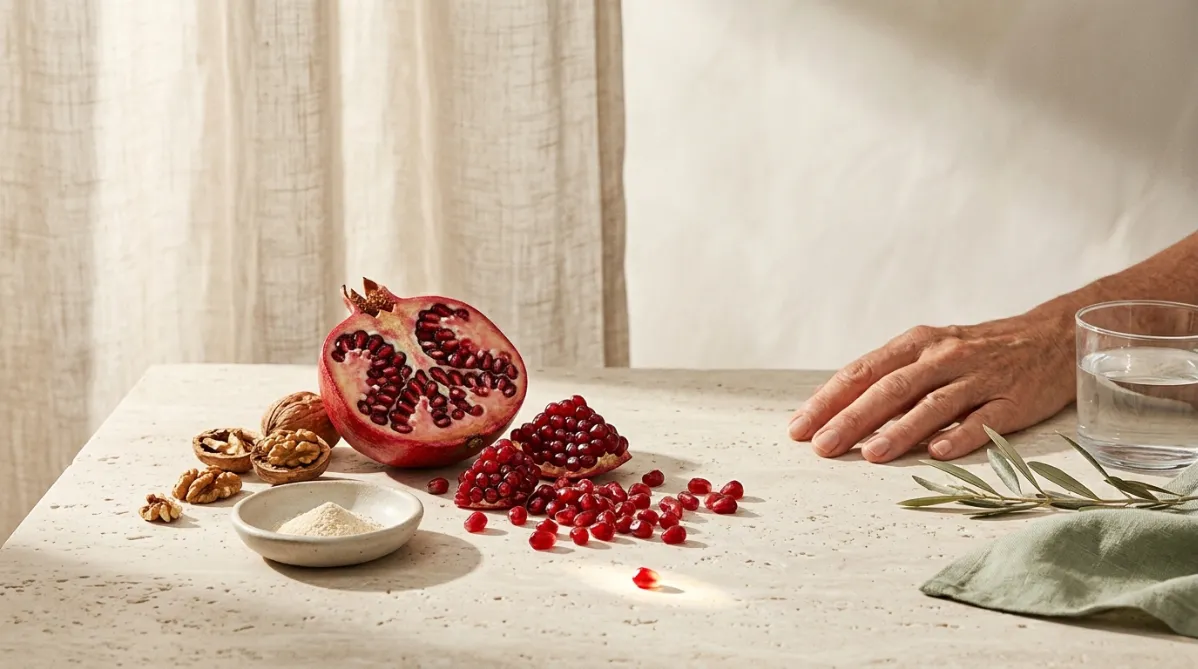
A wide, softly lit editorial still life on a pale travertine surface. In the center-left, a halved ruby-red pomegranate sits open, its glossy arils spilling in a loose cluster onto the stone. Beside it are a few cracked walnut halves and a small matte ceramic dish holding a pinch of fine cream-colored powder. A single aril catches a bright highlight near the foreground. In the soft-focus background, a sheer linen curtain filters warm morning sunlight, which casts long, gentle shadows across the scene.

On the right side, an elegant older woman's hand, seen only from the wrist down, rests lightly on the surface next to a minimalist glass of water. Her skin shows natural texture and warmth. A slim sprig of dried olive branch and a folded sage-green napkin add quiet, organic accents.

The palette is restrained and modern: deep garnet red, warm walnut brown, oat beige, soft sage, and creamy off-white. The composition leaves generous negative space on the upper right for title text. The depth of field is shallow, with crisp focus on the pomegranate and a creamy bokeh falloff. The lighting is natural, diffused, and slightly golden, in the style of a high-end wellness magazine or a contemporary science and nutrition journal. The mood is calm, clean, and quietly authoritative. The finish is photographic, with fine grain, subtle matte tones, and a premium editorial feel.
supplements

Urolithin A, the Pomegranate Postbiotic, Triggers a Mitophagy Signature in Older Adults

BY DR. SYNAPSE ·

Urolithin A, a molecule made by gut bacteria from pomegranate and walnut polyphenols, has long rejuvenated muscle in aging animals. The first human trial in older adults found it safe, bioavailable, and able to shift mitochondrial biomarkers at 500 to 1,000 mg a day. The study, backed by the company behind Mitopure, showed a molecular signature of improved mitochondrial health in muscle. But it was small, short, and measured biomarkers rather than strength or longevity. Here is what the data show, who it is aimed at, and where the evidence stops.

This page is available in