Biocracked
←

#obesity

2 articles
Approach: Macro science. Palette: D, bold color field.

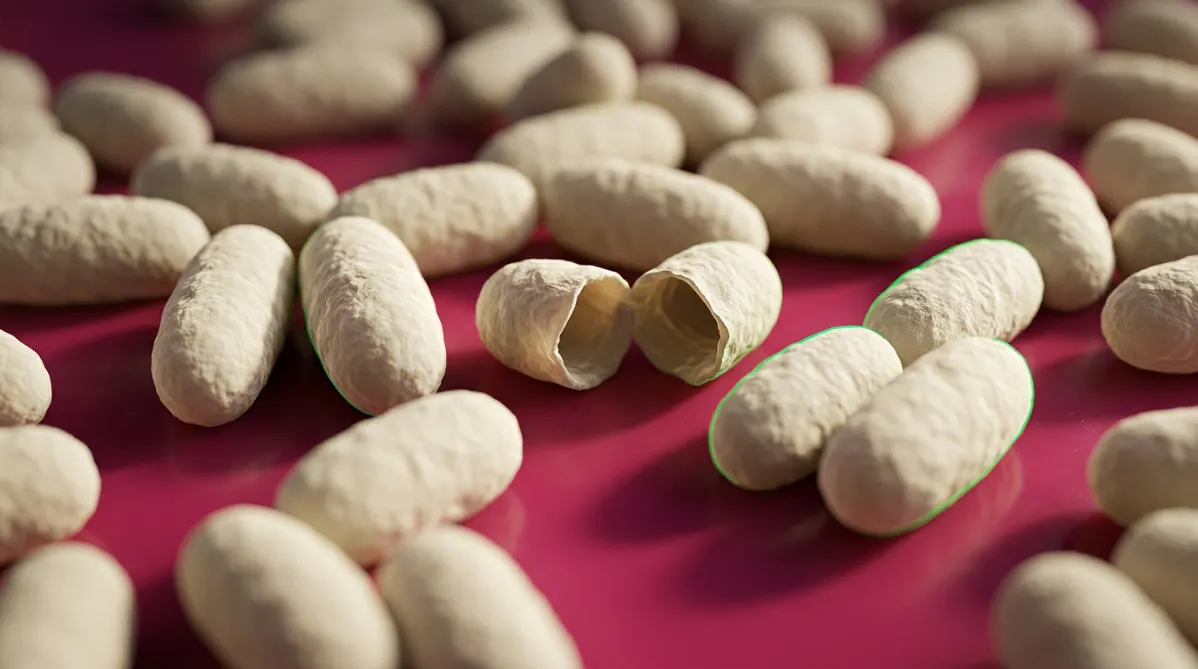
Extreme close-up microscopy-style photograph of a dense cluster of oval, rod-shaped bacterial cells, rendered as slightly wrinkled, matte, pale cream-white forms with visible surface texture. They rest on a smooth, saturated magenta-pink gel surface. Several cells in the foreground are crisp, while the rest fall into soft shallow depth of field. One cell near the center is split open and visibly hollow, to suggest a dead, heat-treated organism. Camera is a low three-quarter angle, as if through a scanning microscope. Lighting is a single hard, warm-white side light that casts short crisp shadows and creates bright rim highlights. A thin electric green (#00e676) line of reflected light traces the edge of one cell. The mood is stark, curious and quietly skeptical. There is no text and no labels.
metabolism

死亡的肠道菌更有效:Akkermansia 的 29% 优势

BY HELIX WARD ·

在首次针对 Akkermansia muciniphila 的人体试验中,热灭活(巴氏灭菌)形式而非活菌显现出显著效果:胰岛素敏感性提升约 28.6%,空腹胰岛素下降约 34.1%。体重和脂肪的下降未达统计学显著,且多位作者持有相关专利并共同创办了该菌商业化公司。本文将解读研究结论、局限性以及选购补充剂时的注意事项。
A wide, editorial-style still life photographed from slightly above on a pale warm-gray stone surface, lit by soft diffused morning light from the left. At the center, a delicate chain of 16 small, glossy beads in alternating muted terracotta, sage green, and cream is arranged in a gentle S-curve, each bead slightly different in size, like a hand-strung necklace. It stands for a peptide chain in a tactile, abstract way. Beside the chain, a translucent glass petri dish holds a thin layer of pale amber liquid with a few soft ripples. Behind it, a cross-section of a ripe fig and a halved blood orange show their intricate internal textures, suggesting cellular structure and mitochondria without literal illustration.

On the left side of the frame, a small ceramic mouse figurine in matte off-white sits calmly next to a sprig of dried wheat. It is a subtle nod to the mouse study and is stylized and minimal, not cartoonish. On the right, an open, softly blurred notebook with thin hand-drawn circles and curved lines, like looping pathway diagrams, lies under a brass pen. A few pages are visible but the text is illegible.

Scatter a few elements for texture: a small sprig of eucalyptus, a folded linen napkin in oatmeal tone, and a single clear glass pipette resting diagonally across the lower foreground. The palette is warm neutrals with accents of sage, terracotta, and soft amber, giving a calm, modern wellness-journal look. Shallow depth of field keeps the bead chain crisp while the background gently dissolves into creamy bokeh. Generous negative space across the upper right leaves room for headline overlay. The overall mood is clean, contemporary, and intellectually curious: scientific but warm, like a premium health and science magazine cover, with fine grain, natural shadows, and no text, logos, or futuristic elements.
peptides

MOTS‑c 解析:激活 AMPK、保护小鼠免受饮食诱导肥胖的 16‑氨基酸线粒体肽

BY DR. SYNAPSE ·

一种仅有 16 个氨基酸、编码于线粒体 DNA(而非细胞核)的微小肽,在 2015 年《Cell Metabolism》研究中激活了肌肉中的 AMPK,并保护小鼠免于饮食诱导的肥胖和胰岛素抵抗。MOTS‑c 因此成为肽类与生物黑客圈的热点话题。但这是一篇仅涉及小鼠和分子机制的发现性论文,尚无人体数据,亦未获批准用于临床。

This page is available in