Biocracked
←

#obesity

2 articles
Approach: Macro science. Palette: D, bold color field.

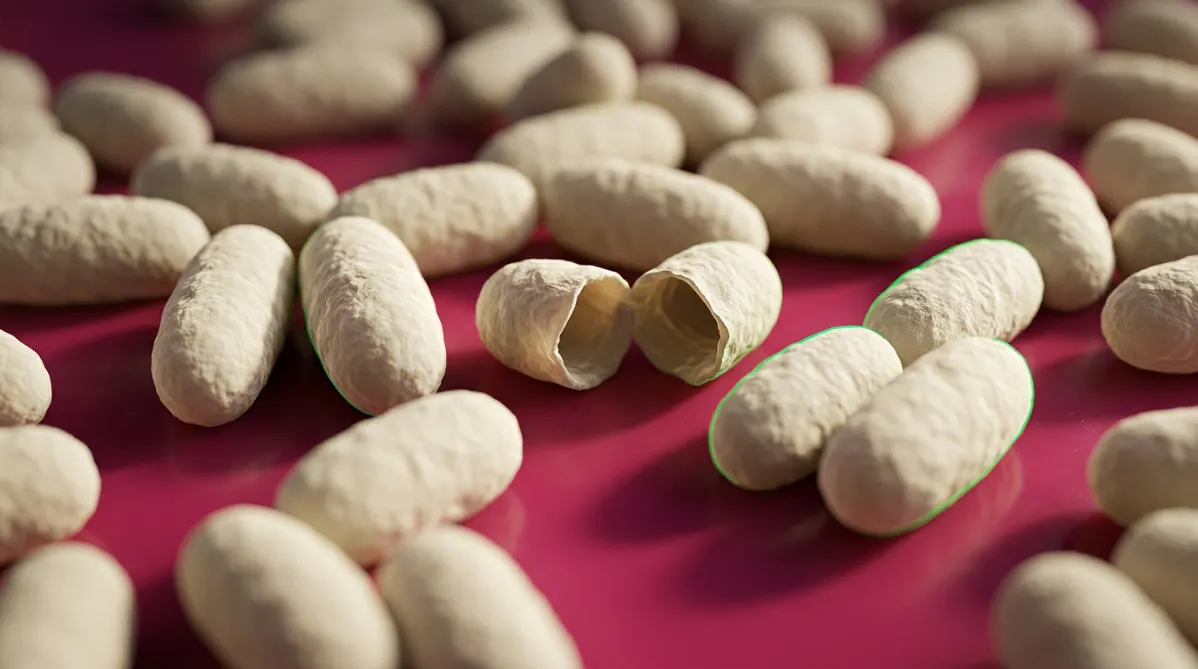
Extreme close-up microscopy-style photograph of a dense cluster of oval, rod-shaped bacterial cells, rendered as slightly wrinkled, matte, pale cream-white forms with visible surface texture. They rest on a smooth, saturated magenta-pink gel surface. Several cells in the foreground are crisp, while the rest fall into soft shallow depth of field. One cell near the center is split open and visibly hollow, to suggest a dead, heat-treated organism. Camera is a low three-quarter angle, as if through a scanning microscope. Lighting is a single hard, warm-white side light that casts short crisp shadows and creates bright rim highlights. A thin electric green (#00e676) line of reflected light traces the edge of one cell. The mood is stark, curious and quietly skeptical. There is no text and no labels.
metabolism

Kwayar Bakteriya a Cikin da Ta Fi Aiki Bayan Mutuwa: Amfanin Akkermansia da Ƙaruwa 29 %

BY HELIX WARD ·

Binciken farko na farfadowa da **Akkermansia muciniphila** a kan mutane masu kiba da rashin amsawar insulin ya nuna ƙaruwa 28.6 % a ƙwarewar insulin da raguwar insulin a jini da 34.1 % idan aka kwatanta da placebo. Ragin nauyi da kitse ba su kai matakin ƙididdiga ba, kuma wasu marubuta suna da hannun jari a kamfanin da ke sayar da wannan kwaya. Ga abin da binciken ya gano, abubuwan da ba a faɗa ba, da abin da ya kamata ku duba kafin sayen kari.
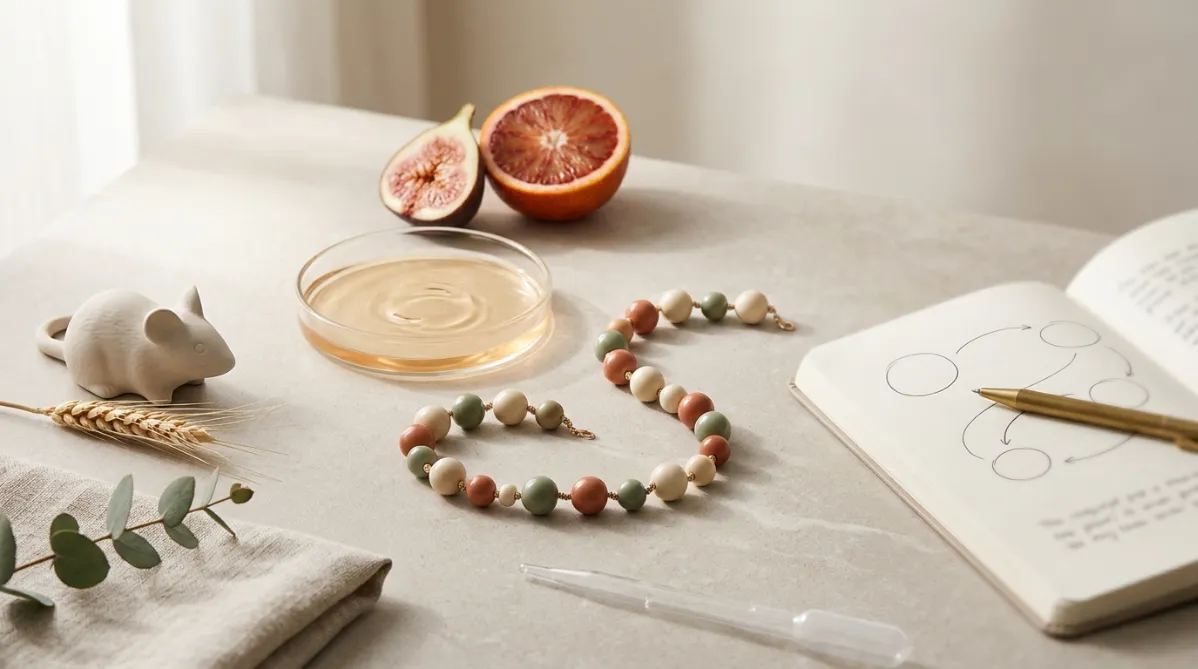
A wide, editorial-style still life photographed from slightly above on a pale warm-gray stone surface, lit by soft diffused morning light from the left. At the center, a delicate chain of 16 small, glossy beads in alternating muted terracotta, sage green, and cream is arranged in a gentle S-curve, each bead slightly different in size, like a hand-strung necklace. It stands for a peptide chain in a tactile, abstract way. Beside the chain, a translucent glass petri dish holds a thin layer of pale amber liquid with a few soft ripples. Behind it, a cross-section of a ripe fig and a halved blood orange show their intricate internal textures, suggesting cellular structure and mitochondria without literal illustration.

On the left side of the frame, a small ceramic mouse figurine in matte off-white sits calmly next to a sprig of dried wheat. It is a subtle nod to the mouse study and is stylized and minimal, not cartoonish. On the right, an open, softly blurred notebook with thin hand-drawn circles and curved lines, like looping pathway diagrams, lies under a brass pen. A few pages are visible but the text is illegible.

Scatter a few elements for texture: a small sprig of eucalyptus, a folded linen napkin in oatmeal tone, and a single clear glass pipette resting diagonally across the lower foreground. The palette is warm neutrals with accents of sage, terracotta, and soft amber, giving a calm, modern wellness-journal look. Shallow depth of field keeps the bead chain crisp while the background gently dissolves into creamy bokeh. Generous negative space across the upper right leaves room for headline overlay. The overall mood is clean, contemporary, and intellectually curious: scientific but warm, like a premium health and science magazine cover, with fine grain, natural shadows, and no text, logos, or futuristic elements.
peptides

MOTS‑c: Peptaid ɗin Mitochondria Mai Ƙwayoyin 16 da Ke Kunna AMPK Kuma Yana Kariya Daga Kiba Da Rashin Juriya Ga Insulin

BY DR. SYNAPSE ·

Peptaid ɗin MOTS‑c mai ƙwayoyin 16 wanda ake samu a cikin mtDNA ya ƙunshi siginar da ke kunna AMPK a tsokar ƙashi, tare da rage rashin juriya ga insulin da kiba da abinci mai kitse, a cewar wani binciken *Cell Metabolism* na 2015. Duk da cike da sha‑sha a sashen peptides da bio‑hacking, ƙididdigar ta ta’allaka ne kan beraye da kwayoyin ƙwaya, ba a gwada a kan mutane ba, kuma ba a amince da MOTS‑c a matsayin magani ba. Wannan labarin zai fayyace menene MOTS‑c, yadda yake aiki, abin da gwaje‑gwajen beraye suka nuna, da kuma abubuwan da ba za a ɗauka a matsayin hujja ba.

This page is available in