Biocracked
←

#obesity

2 articles
Approach: Macro science. Palette: D, bold color field.

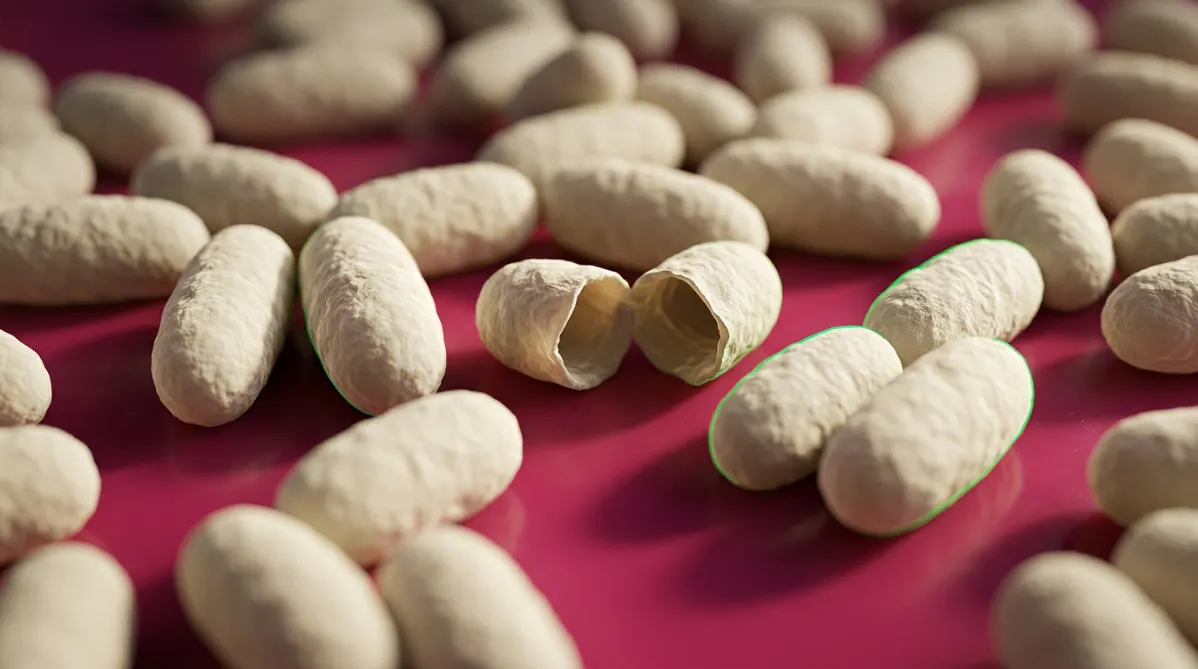
Extreme close-up microscopy-style photograph of a dense cluster of oval, rod-shaped bacterial cells, rendered as slightly wrinkled, matte, pale cream-white forms with visible surface texture. They rest on a smooth, saturated magenta-pink gel surface. Several cells in the foreground are crisp, while the rest fall into soft shallow depth of field. One cell near the center is split open and visibly hollow, to suggest a dead, heat-treated organism. Camera is a low three-quarter angle, as if through a scanning microscope. Lighting is a single hard, warm-white side light that casts short crisp shadows and creates bright rim highlights. A thin electric green (#00e676) line of reflected light traces the edge of one cell. The mood is stark, curious and quietly skeptical. There is no text and no labels.
metabolism

Bakteri Usus Sing Luwih Apik Nalika Mati: Kauntungan 29 % saka Akkermansia

BY HELIX WARD ·

Ing percobaan manungsa kaping pisan nganggokake *Akkermansia muciniphila* versi pasteurisasi (dipatèni panas), dudu sing urip, ditemokaké peningkatan sensitivitas insulin 28,62 % lan penurunan insulin puasa 34,08 % dibandhingake plasebo ing wong kegemukan lan tahan insulin. Perubahan bobot lan lemak ora ngancik tingkat signifikan sacara statistik, lan sawatara penulis nduwèni paten lan dadi co‑founder perusahaan sing ngedol bakteri iki. Artikel iki ngrembug asil studi, apa sing ora kasat mata, lan apa sing kudu dipriksa sadurunge tuku suplemen.
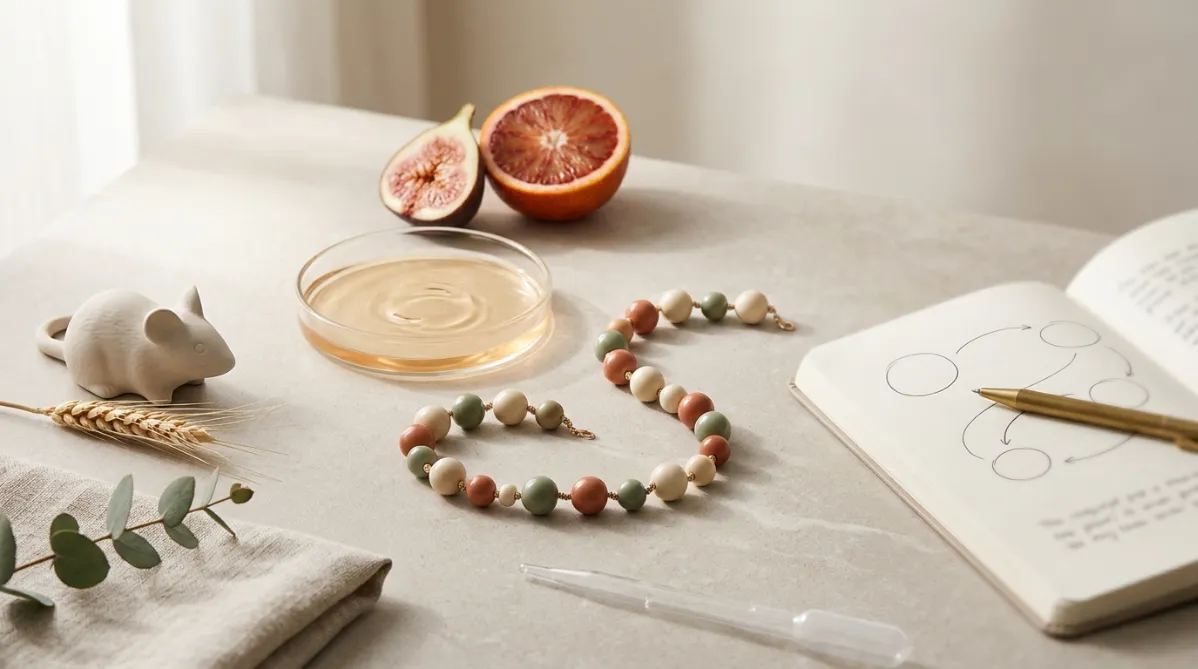
A wide, editorial-style still life photographed from slightly above on a pale warm-gray stone surface, lit by soft diffused morning light from the left. At the center, a delicate chain of 16 small, glossy beads in alternating muted terracotta, sage green, and cream is arranged in a gentle S-curve, each bead slightly different in size, like a hand-strung necklace. It stands for a peptide chain in a tactile, abstract way. Beside the chain, a translucent glass petri dish holds a thin layer of pale amber liquid with a few soft ripples. Behind it, a cross-section of a ripe fig and a halved blood orange show their intricate internal textures, suggesting cellular structure and mitochondria without literal illustration.

On the left side of the frame, a small ceramic mouse figurine in matte off-white sits calmly next to a sprig of dried wheat. It is a subtle nod to the mouse study and is stylized and minimal, not cartoonish. On the right, an open, softly blurred notebook with thin hand-drawn circles and curved lines, like looping pathway diagrams, lies under a brass pen. A few pages are visible but the text is illegible.

Scatter a few elements for texture: a small sprig of eucalyptus, a folded linen napkin in oatmeal tone, and a single clear glass pipette resting diagonally across the lower foreground. The palette is warm neutrals with accents of sage, terracotta, and soft amber, giving a calm, modern wellness-journal look. Shallow depth of field keeps the bead chain crisp while the background gently dissolves into creamy bokeh. Generous negative space across the upper right leaves room for headline overlay. The overall mood is clean, contemporary, and intellectually curious: scientific but warm, like a premium health and science magazine cover, with fine grain, natural shadows, and no text, logos, or futuristic elements.
peptides

MOTS‑c Dijlentrehake: Peptida Mitokondria 16 Asam Amino sing Ngaktifake AMPK lan Nglindhungi Tikus saka Obesitas Akibat Pola Mangan

BY DR. SYNAPSE ·

Peptida cilik 16 asam amino sing dienkode ing DNA mitokondria, dudu ing inti sel, ngaktifake AMPK ing otot lan nglindhungi tikus saka obesitas akibat pola mangan lan resistensi insulin ing studi *Cell Metabolism* taun 2015. MOTS‑c saiki dadi jeneng sing paling akeh dibahas ing komunitas peptida lan bio‑hacking. Nanging iki mung temuan molekuler ing tikus tanpa data manusia, lan MOTS‑c dudu terapi sing wis disetujui. Artikel iki nerangake apa iku MOTS‑c, kepiye cara kerjane liwat siklus folat lan AMPK, apa sing dituduhake ing tikus, lan apa sing kudu lan ora kudu disimpulake pembaca.

This page is available in