Biocracked
←

#obesity

2 articles
Approach: Macro science. Palette: D, bold color field.

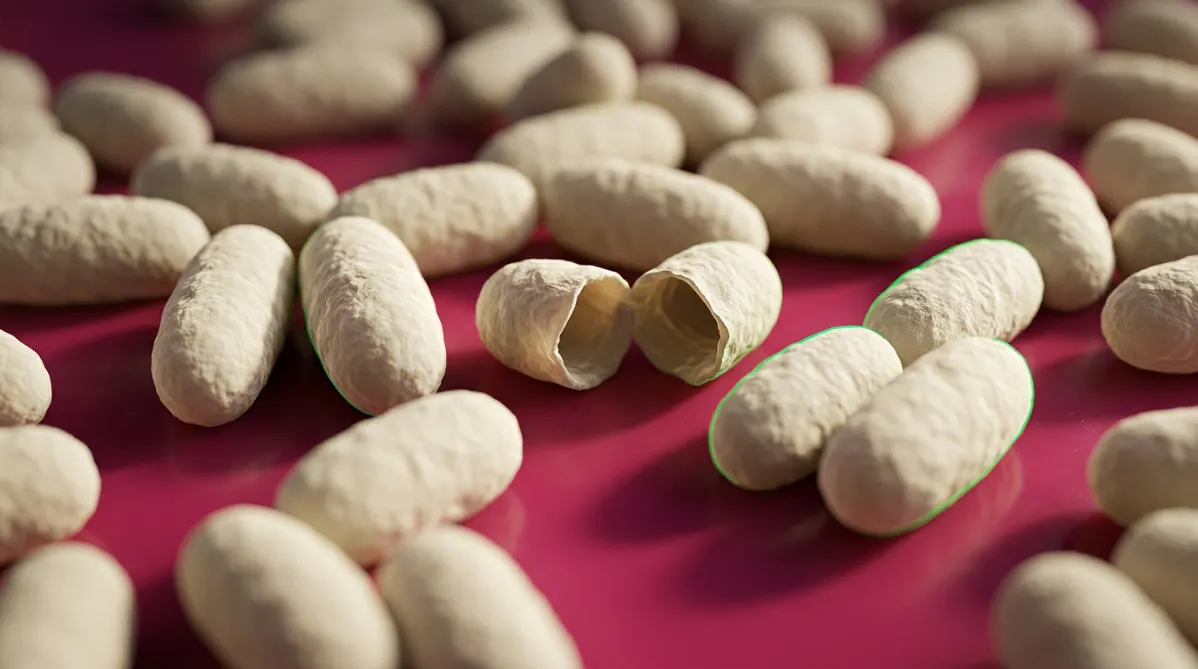
Extreme close-up microscopy-style photograph of a dense cluster of oval, rod-shaped bacterial cells, rendered as slightly wrinkled, matte, pale cream-white forms with visible surface texture. They rest on a smooth, saturated magenta-pink gel surface. Several cells in the foreground are crisp, while the rest fall into soft shallow depth of field. One cell near the center is split open and visibly hollow, to suggest a dead, heat-treated organism. Camera is a low three-quarter angle, as if through a scanning microscope. Lighting is a single hard, warm-white side light that casts short crisp shadows and creates bright rim highlights. A thin electric green (#00e676) line of reflected light traces the edge of one cell. The mood is stark, curious and quietly skeptical. There is no text and no labels.
metabolism

باکتری روده‌ای که مرده بهتر عمل می‌کند: بهبود ۲۹٪ی حساسیت به انسولین

BY HELIX WARD ·

در اولین آزمایش انسانی بر روی آکرمانسی موسینیفلا، نسخه پاستوریزه (کشته‑شده با حرارت) نه زنده، نشان داد که حساسیت به انسولین ۲۸٫۶۲٪ افزایش یافت و سطح انسولین ناشتا ۳۴٫۰۸٪ کاهش پیدا کرد؛ در حالی که کاهش وزن و چربی به‌طور آماری معنی‌دار نبود. برخی از نویسندگان مالک پتنت‌ها و شرکت تولیدکننده این باکتری هستند. در ادامه نتایج مطالعه، محدودیت‌ها و نکات کلیدی قبل از خرید مکمل بررسی می‌شود.

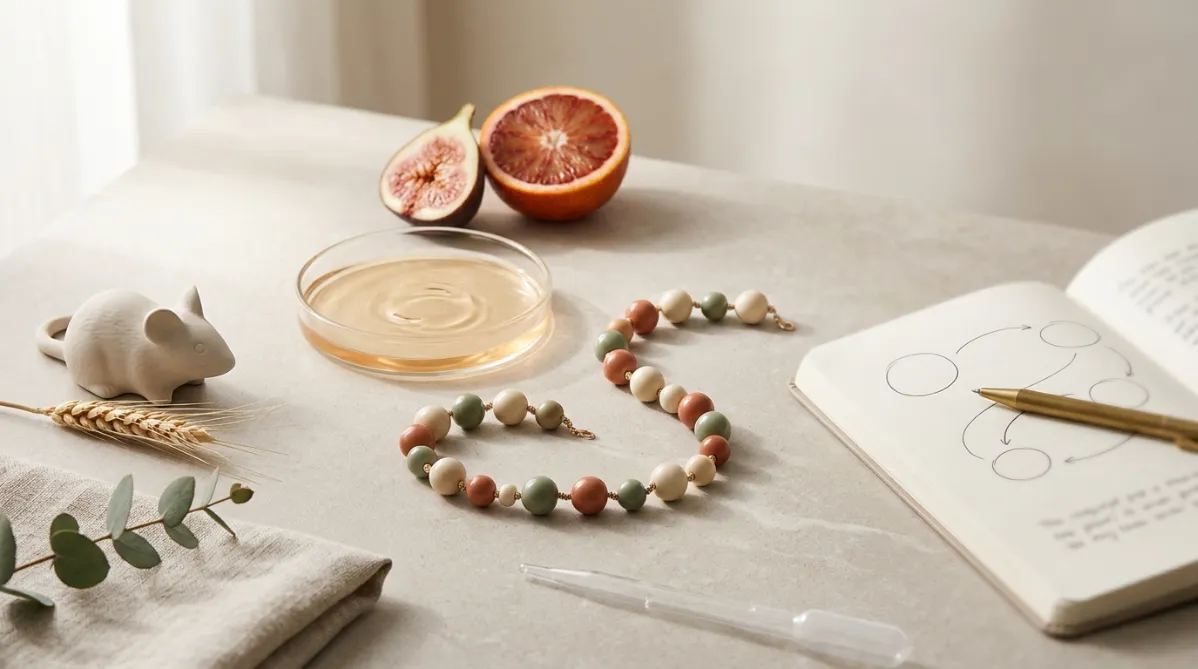
A wide, editorial-style still life photographed from slightly above on a pale warm-gray stone surface, lit by soft diffused morning light from the left. At the center, a delicate chain of 16 small, glossy beads in alternating muted terracotta, sage green, and cream is arranged in a gentle S-curve, each bead slightly different in size, like a hand-strung necklace. It stands for a peptide chain in a tactile, abstract way. Beside the chain, a translucent glass petri dish holds a thin layer of pale amber liquid with a few soft ripples. Behind it, a cross-section of a ripe fig and a halved blood orange show their intricate internal textures, suggesting cellular structure and mitochondria without literal illustration.

On the left side of the frame, a small ceramic mouse figurine in matte off-white sits calmly next to a sprig of dried wheat. It is a subtle nod to the mouse study and is stylized and minimal, not cartoonish. On the right, an open, softly blurred notebook with thin hand-drawn circles and curved lines, like looping pathway diagrams, lies under a brass pen. A few pages are visible but the text is illegible.

Scatter a few elements for texture: a small sprig of eucalyptus, a folded linen napkin in oatmeal tone, and a single clear glass pipette resting diagonally across the lower foreground. The palette is warm neutrals with accents of sage, terracotta, and soft amber, giving a calm, modern wellness-journal look. Shallow depth of field keeps the bead chain crisp while the background gently dissolves into creamy bokeh. Generous negative space across the upper right leaves room for headline overlay. The overall mood is clean, contemporary, and intellectually curious: scientific but warm, like a premium health and science magazine cover, with fine grain, natural shadows, and no text, logos, or futuristic elements.
peptides

توضیح MOTS‑c: پپتید میتوکندریایی ۱۶‑آمینواسیدی که AMPK را فعال کرد و موش‌ها را از چاقی ناشی از رژیم محافظت کرد

BY DR. SYNAPSE ·

پپتید کوچکی ۱۶ آمینواسیدی که در DNA میتوکندری، نه هسته، رمزگذاری می‌شود، AMPK را در عضله فعال کرد و در یک مطالعهٔ ۲۰۱۵ منتشر شده در Cell Metabolism، موش‌ها را از چاقی ناشی از رژیم و مقاومت به انسولین محافظت کرد. MOTS‑c امروز یکی از پراستعلام‌ترین نام‌ها در دنیای پپتیدها و بایوهکینگ است؛ اما این یک تحقیق فقط در موش است و هنوز دادهٔ انسانی نداریم و به‌عنوان درمان تأییدشده‌ای شناخته نمی‌شود.

This page is available in