
Biocracked
←

#inflammaging

3 articles
Approach 1, macro science, in palette D, bold color field.

Extreme close-up microscopy-style photograph of a dense colony of rod-shaped, slightly branched Bifidobacterium cells, rendered as real textured organic forms with soft translucent walls and subtle surface detail. The cells are warm cream and ivory, clustered in the center and thinning toward the edges. The whole backdrop is a saturated tomato-red to orange field, smooth and out of focus, so the bacteria stand out in sharp contrast. A few scattered tiny crystalline metabolite specks glow faintly electric green (#00e676) near the colony. Camera angle is straight-on, slightly oblique, with a very shallow depth of field. Lighting is soft, diffuse backlight with gentle rim highlights on the cell edges and no harsh shadows. The mood is vivid, curious and hopeful, scientific but warm, with no blue cast anywhere. No text.
longevity

Deze darmbacterie maakt 5‑AVAB, een molecuul dat inflammaging temt

BY NOVA CHEN ·

Een darmbacterie die stilletjes verdwijnt naarmate we ouder worden, kan meer doen dan men zich realiseert. Een nieuwe studie in *Nature Aging* toont aan dat *Bifidobacterium pseudocatenulatum* consequent minder voorkomt bij oudere volwassenen in verschillende Chinese cohorten. Bij natuurlijk verouderde muizen verminderde orale toediening van deze bacterie inflammaging en verlengde de healthspan. Het team koppelde een deel van dit effect aan een metaboliet genaamd 5‑AVAB, die ook met de leeftijd afneemt bij mensen. Hieronder lees je wat de studie heeft aangetoond, wat nog niet in mensen is bewezen, en hoe je de hype verantwoord kunt interpreteren.
Approach: Macro science. Palette: D, bold color field.

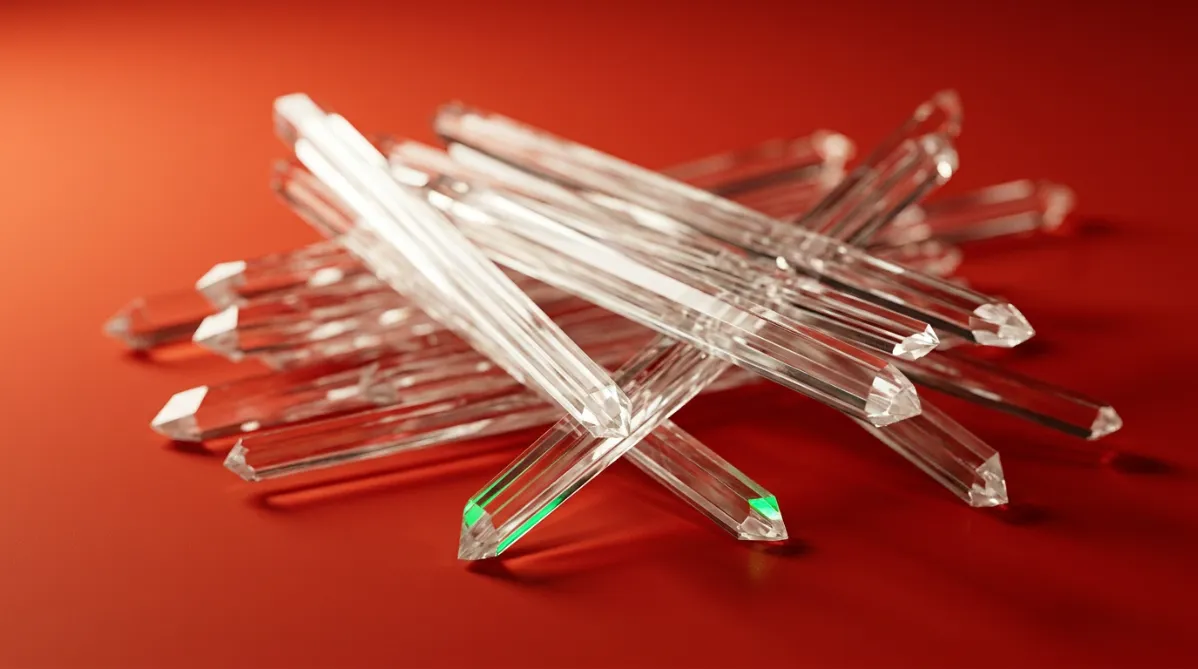
Extreme close-up photograph of taurine crystals, long translucent needle-like prisms with sharp faceted edges, bundled and crossing in a loose cluster. They rest on a saturated tomato-red matte acrylic surface. The camera is a low three-quarter angle with a shallow depth of field, so the front crystals are razor sharp and the back ones melt into soft red blur. A hard, warm key light from the upper left makes the facets glint white and throws crisp, thin red-tinted shadows. A single crystal tip in the foreground catches a tiny edge of electric green (#00e676) light refracted through the glass-like prism. The mood is bold, tense and curious, which suits a paradox in the findings. The image has no text, no labels, and no blue cast.
longevity

Taurine stijgt met de leeftijd – waarom beschermt een hogere concentratie oude muizen?

BY NOVA CHEN ·

Taurine, het aminozuur dat op elk energiedrankblik staat, vertoont een onverwachte trend: de bloedspiegels nemen toe naarmate we ouder worden, zowel bij mensen als bij muizen. Een Yale‑geleid onderzoek laat zien dat een nog hogere concentratie bij oude muizen de gezondheidsspanne verlengt en de sterfte door sepsis en inflammasoom‑gedreven ontsteking vermindert. Het menselijk bewijs is nog uitsluitend observationeel, maar de resultaten roepen interessante vragen op over dosering en timing van suppletie.
Approach: Macro science. Palette: D, bold color field.

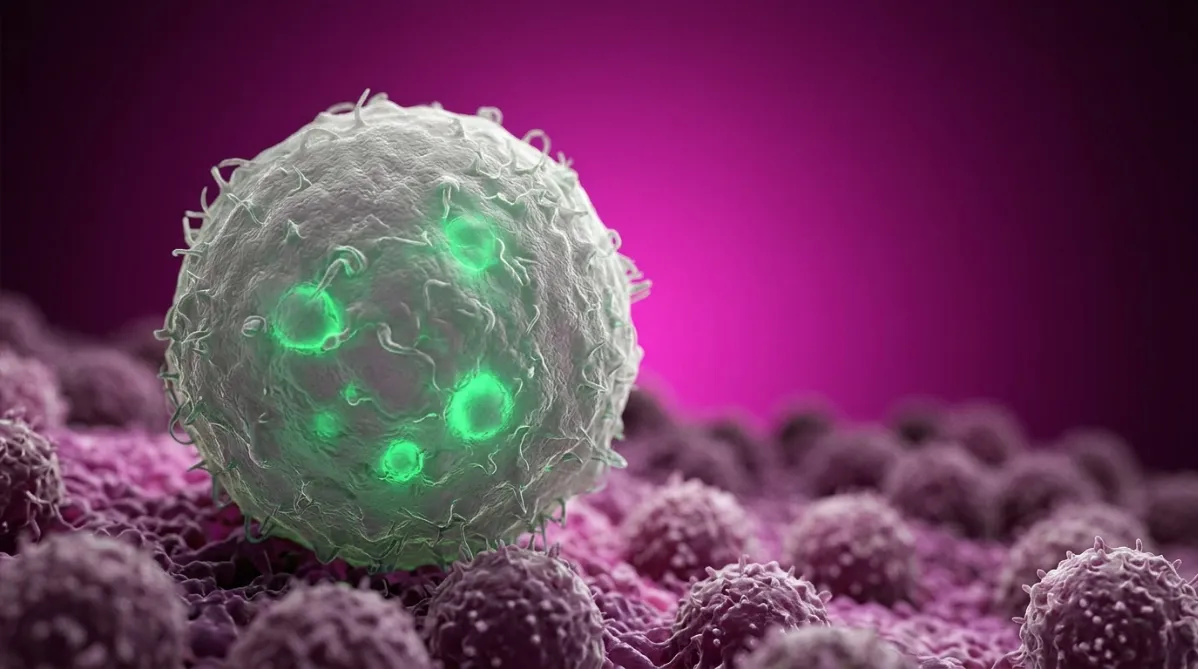
Extreme macro photograph of a single human T cell shown as a slightly bumpy, matte-textured sphere with fine microvilli, resting on a surface of smaller, out-of-focus cells. A faint electric green (#00e676) glow shows through a few lipid droplets inside its translucent membrane, hinting at fat-burning. The backdrop is a saturated magenta-violet field that fades from deep plum at the edges to bright magenta behind the cell. The camera sits at a low three-quarter angle with very shallow depth of field, so the foreground cell is crisp and the background melts into soft bokeh. Lighting is a soft, directional key from upper left with a thin rim light that picks out the membrane texture. The look is scanning-electron-microscope realism with subtle color, not cartoon. The mood is curious, quietly skeptical and precise. There is no text and no labels. The composition leaves open space on the right.
longevity

Urolithin A verschuift verouderende T‑cellen in 4 weken – het addertje onder het gras

BY NOVA CHEN ·

Een gerandomiseerde studie in *Nature Aging* toonde aan dat vier weken suppletie met urolithin A de immuunprofielen van gezonde, middelbare‑leeftijdvolwassenen enigszins veranderde. Er was een toename van naïeve‑achtige CD8‑cellen en hun vetverbrandingscapaciteit nam toe. Het effect was echter klein: een verandering van 0,5 procentpunt. De proef werd uitgevoerd bij 50 deelnemers gedurende vier weken, keek alleen naar biomarkers en werd gefinancierd door de fabrikant van Mitopure. Hier lees je wat de data wel en niet laten zien en voor wie ze relevant kunnen zijn.

This page is available in