Biocracked
←

#inflammaging

3 articles
Approach 1, macro science, in palette D, bold color field.

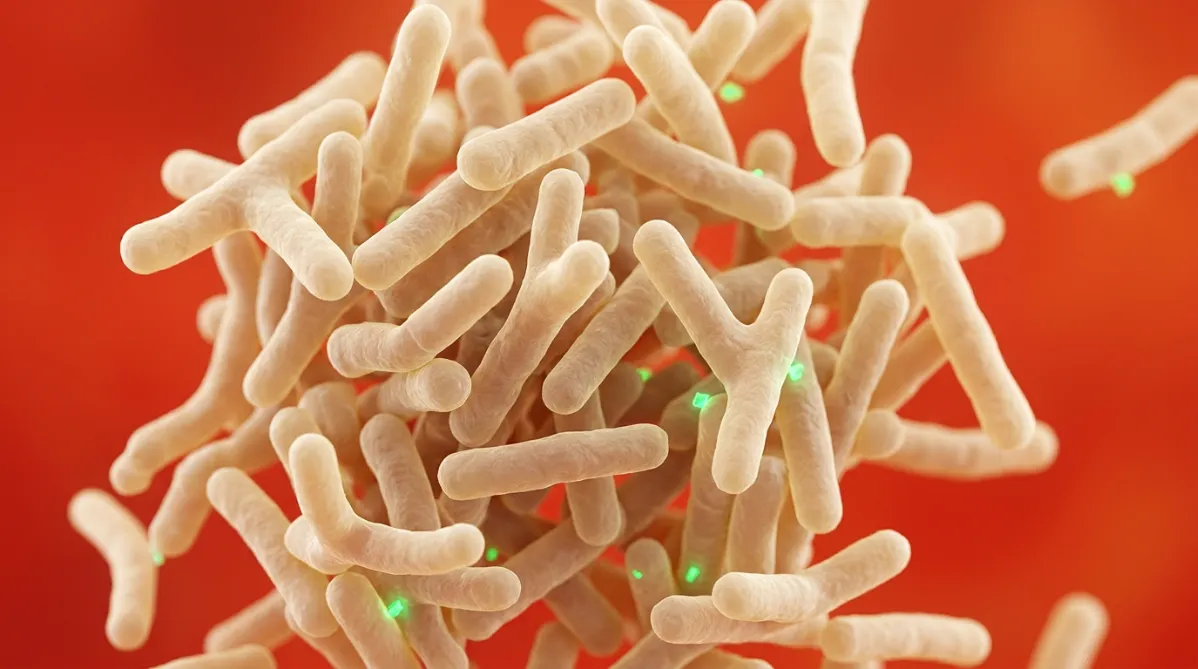
Extreme close-up microscopy-style photograph of a dense colony of rod-shaped, slightly branched Bifidobacterium cells, rendered as real textured organic forms with soft translucent walls and subtle surface detail. The cells are warm cream and ivory, clustered in the center and thinning toward the edges. The whole backdrop is a saturated tomato-red to orange field, smooth and out of focus, so the bacteria stand out in sharp contrast. A few scattered tiny crystalline metabolite specks glow faintly electric green (#00e676) near the colony. Camera angle is straight-on, slightly oblique, with a very shallow depth of field. Lighting is soft, diffuse backlight with gentle rim highlights on the cell edges and no harsh shadows. The mood is vivid, curious and hopeful, scientific but warm, with no blue cast anywhere. No text.
longevity

Esta microbio intestinal produce 5‑AVAB, una molécula que contrarrestó la inflamación del envejecimiento

BY NOVA CHEN ·

Una microbio intestinal que desaparece silenciosamente con la edad podría estar haciendo mucho más de lo que imaginábamos. Un nuevo estudio en *Nature Aging* identifica a *Bifidobacterium pseudocatenulatum* como consistentemente agotada en adultos mayores de varias cohortes chinas. En ratones envejecidos de forma natural, la administración oral de esta bacteria alivió la inflamación sistémica y prolongó la salud. El equipo vinculó parte del efecto a un metabolito llamado 5‑AVAB, que también disminuye con la edad en humanos. Aquí se resume lo que mostró el estudio, lo que aún no se ha probado en personas y cómo interpretar la noticia con sentido crítico.
Approach: Macro science. Palette: D, bold color field.

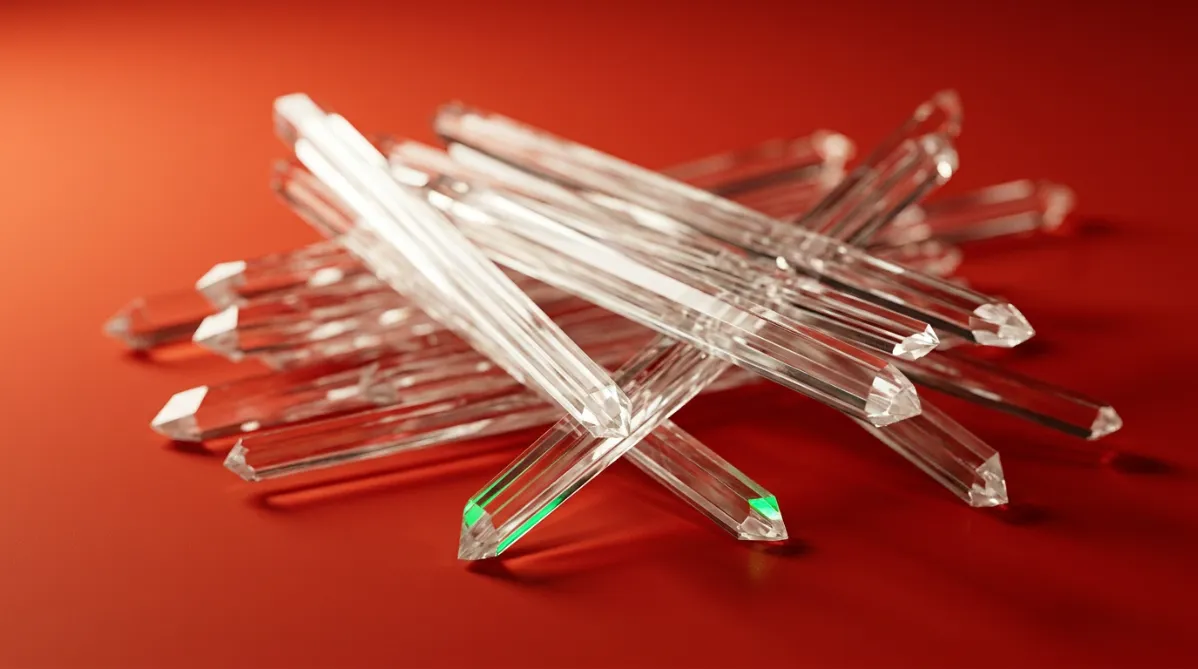
Extreme close-up photograph of taurine crystals, long translucent needle-like prisms with sharp faceted edges, bundled and crossing in a loose cluster. They rest on a saturated tomato-red matte acrylic surface. The camera is a low three-quarter angle with a shallow depth of field, so the front crystals are razor sharp and the back ones melt into soft red blur. A hard, warm key light from the upper left makes the facets glint white and throws crisp, thin red-tinted shadows. A single crystal tip in the foreground catches a tiny edge of electric green (#00e676) light refracted through the glass-like prism. The mood is bold, tense and curious, which suits a paradox in the findings. The image has no text, no labels, and no blue cast.
longevity

La taurina aumenta con la edad. Entonces, ¿por qué más protección en ratones viejos?

BY NOVA CHEN ·

La taurina, el aminoácido que aparece en todas las latas de bebidas energéticas, acaba de recibir un giro inesperado en la revista *Cell*: sus niveles en sangre suben con la edad tanto en humanos como en ratones, y aun así elevarlos todavía más benefició a los ratones ancianos. Un equipo liderado por Yale reportó una mejoría de la salud y menos muertes por sepsis e inflamación mediada por el inflamasoma. El mecanismo propuesto es que las señales de peligro hacen que los macrófagos liberen taurina, lo que desencadena el inflamasoma NLRP3, mientras que reponerla mantiene la alarma apagada. La evidencia humana es solo observacional y el artículo no probó una dosis de suplemento en personas. Aquí se muestra qué demuestran los datos, qué indican otros ensayos sobre las dosis de taurina y quién debería abstenerse.
Approach: Macro science. Palette: D, bold color field.

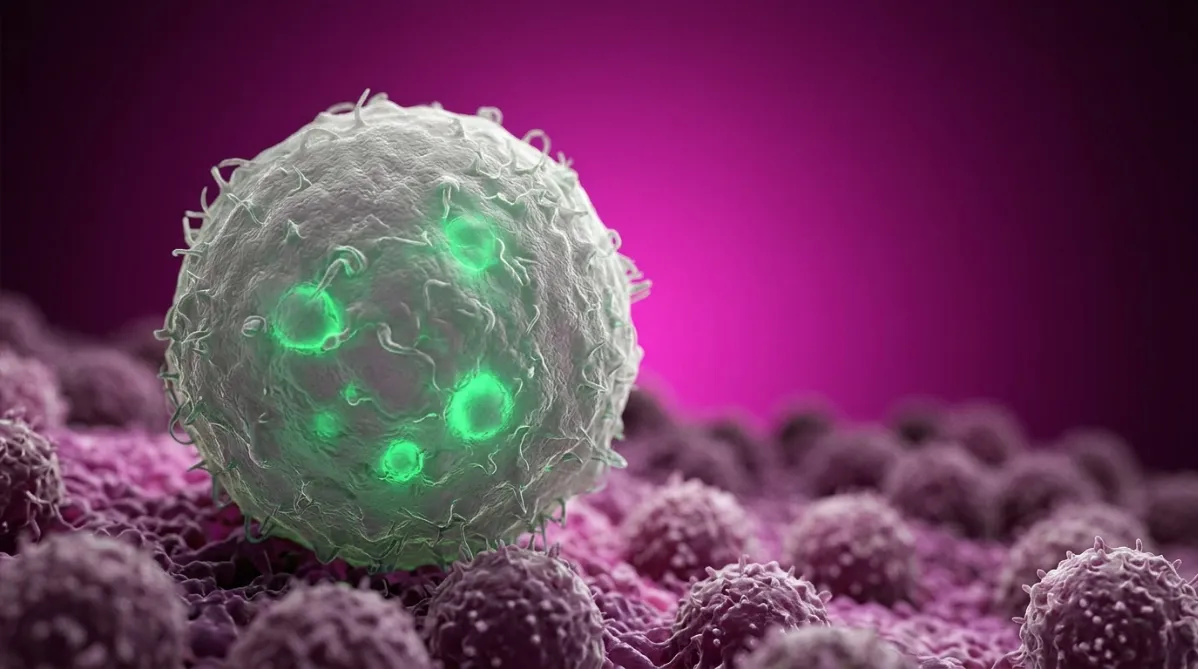
Extreme macro photograph of a single human T cell shown as a slightly bumpy, matte-textured sphere with fine microvilli, resting on a surface of smaller, out-of-focus cells. A faint electric green (#00e676) glow shows through a few lipid droplets inside its translucent membrane, hinting at fat-burning. The backdrop is a saturated magenta-violet field that fades from deep plum at the edges to bright magenta behind the cell. The camera sits at a low three-quarter angle with very shallow depth of field, so the foreground cell is crisp and the background melts into soft bokeh. Lighting is a soft, directional key from upper left with a thin rim light that picks out the membrane texture. The look is scanning-electron-microscope realism with subtle color, not cartoon. The mood is curious, quietly skeptical and precise. There is no text and no labels. The composition leaves open space on the right.
longevity

Urolithin A cambió los linfocitos T envejecidos en 4 semanas: aquí está la trampa

BY NOVA CHEN ·

Un ensayo aleatorizado publicado en *Nature Aging* reveló que cuatro semanas de urolithin A modificaron el perfil inmunitario de adultos sanos de mediana edad. Se observó una expansión de linfocitos T CD8⁺ con fenotipo naïve‑like y un aumento de su capacidad para quemar grasa. Sin embargo, el efecto principal es pequeño: un cambio de 0,5 puntos porcentuales. El estudio duró solo 4 semanas, involucró a 50 personas y midió biomarcadores en lugar de infecciones; además, fue financiado por el fabricante de Mitopure. A continuación, lo que los datos demuestran, lo que no demuestran y a quién podría interesarle.

This page is available in