Biocracked
←

#inflammaging

3 articles
Approach 1, macro science, in palette D, bold color field.

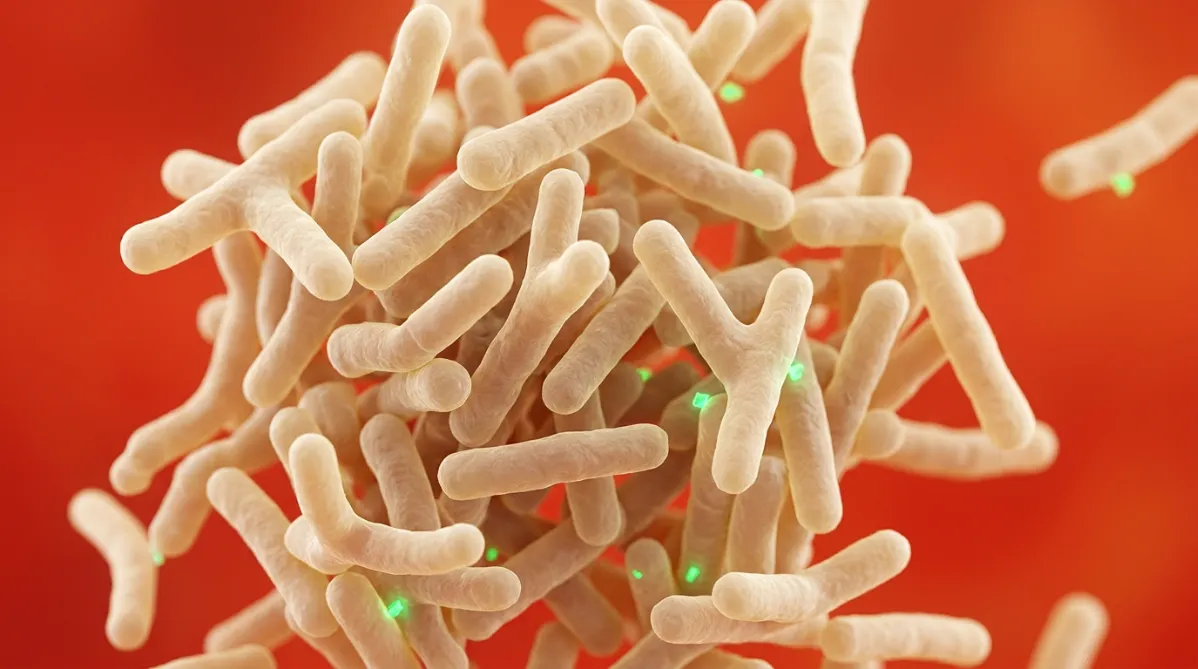
Extreme close-up microscopy-style photograph of a dense colony of rod-shaped, slightly branched Bifidobacterium cells, rendered as real textured organic forms with soft translucent walls and subtle surface detail. The cells are warm cream and ivory, clustered in the center and thinning toward the edges. The whole backdrop is a saturated tomato-red to orange field, smooth and out of focus, so the bacteria stand out in sharp contrast. A few scattered tiny crystalline metabolite specks glow faintly electric green (#00e676) near the colony. Camera angle is straight-on, slightly oblique, with a very shallow depth of field. Lighting is soft, diffuse backlight with gentle rim highlights on the cell edges and no harsh shadows. The mood is vivid, curious and hopeful, scientific but warm, with no blue cast anywhere. No text.
longevity

Цей мікроб кишечника виробляє 5‑AVAB — молекулу, що бореться зі запальним старінням

BY NOVA CHEN ·

Мікроорганізм, що зникає з віком, може робити набагато більше, ніж ми думали. Дослідження в *Nature Aging* показало, що *Bifidobacterium pseudocatenulatum* постійно зменшується у літніх людей у кількох китайських когортах. У природно старих мишей його пероральне введення зменшувало запальне старіння в різних органах і продовжувало здоровий період життя. За ефект відповідає метаболіт 5‑AVAB, рівень якого теж падає з віком.
Approach: Macro science. Palette: D, bold color field.

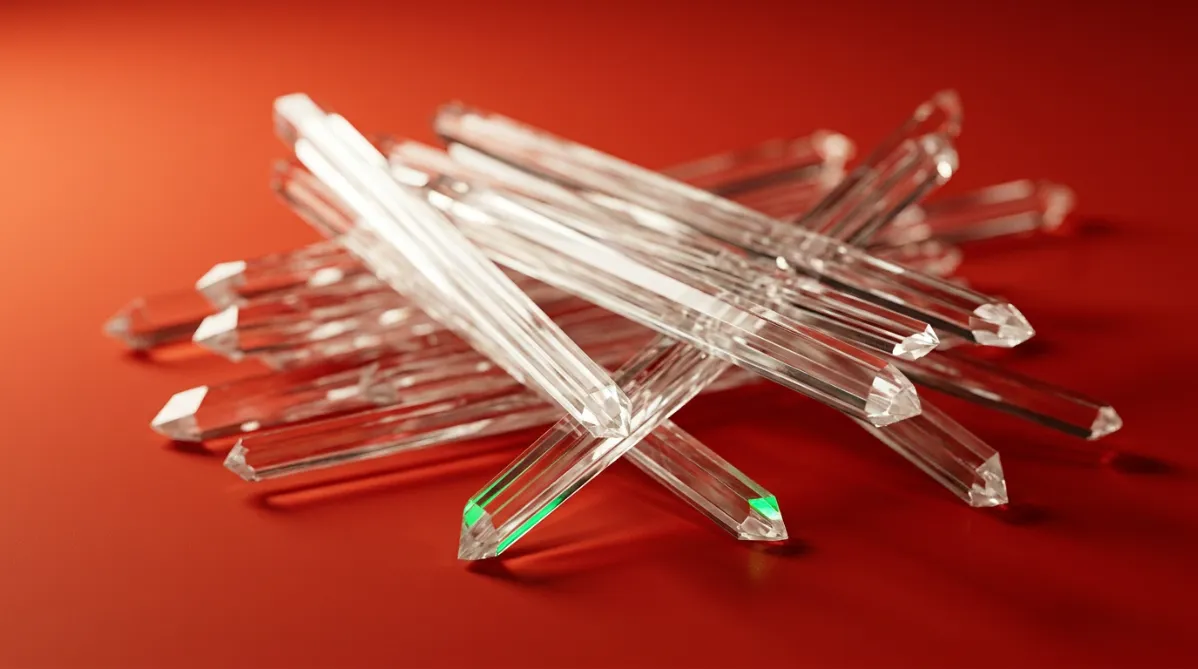
Extreme close-up photograph of taurine crystals, long translucent needle-like prisms with sharp faceted edges, bundled and crossing in a loose cluster. They rest on a saturated tomato-red matte acrylic surface. The camera is a low three-quarter angle with a shallow depth of field, so the front crystals are razor sharp and the back ones melt into soft red blur. A hard, warm key light from the upper left makes the facets glint white and throws crisp, thin red-tinted shadows. A single crystal tip in the foreground catches a tiny edge of electric green (#00e676) light refracted through the glass-like prism. The mood is bold, tense and curious, which suits a paradox in the findings. The image has no text, no labels, and no blue cast.
longevity

Тауїн зростає з віком. Чому його добавка захистила старих мишей?

BY NOVA CHEN ·

Тауїн – амінокислота, яку ви часто зустрічаєте на етикетці енергетичних напоїв, отримала несподіваний поворот у дослідженні *Cell*: рівень у крові підвищується з віком у людей і мишей, а ще більш виражене підвищення у старих мишей покращило їхнє здоров’я та знизило смертність від сепсису. Команда під керівництвом вчених Єльського університету виявила механізм, за яким сигнали небезпеки змушують макрофаги викидати тауїн, активуючи інфламмасом NLRP3, а його внутрішнє відновлення гасить сигнал. Докази у людей – лише спостереження, а дози для людей в статті не досліджувалися. Нижче – що саме продемонстровано, які дози застосовували в інших дослідженнях і кому варто утриматися від прийому.
Approach: Macro science. Palette: D, bold color field.

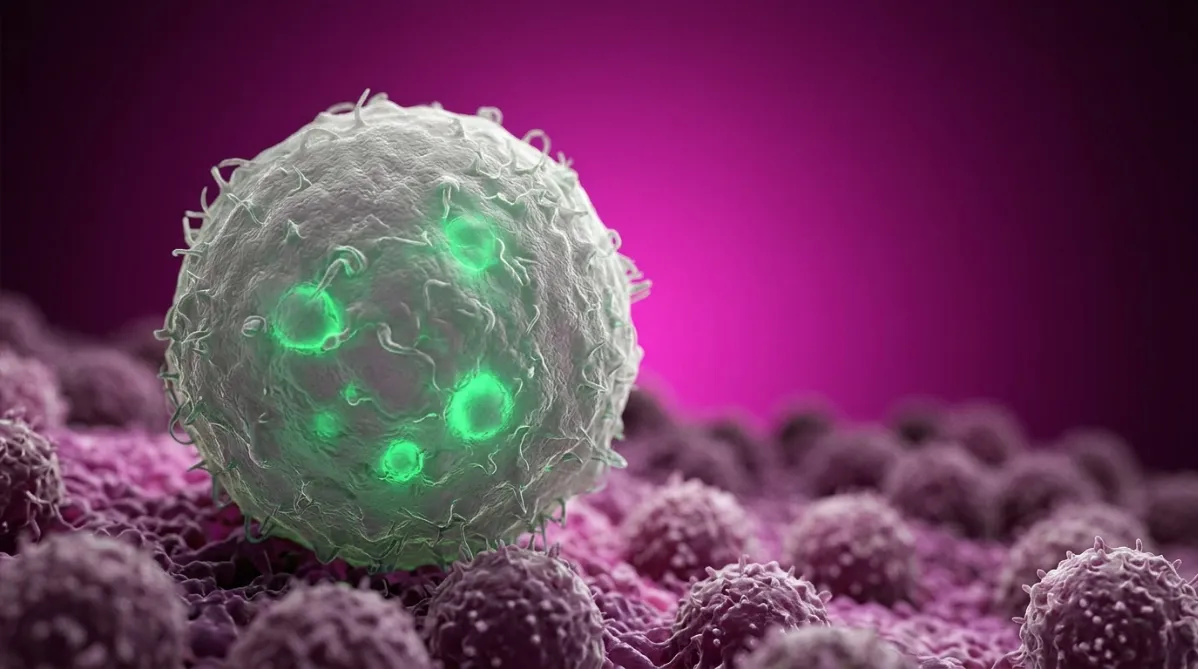
Extreme macro photograph of a single human T cell shown as a slightly bumpy, matte-textured sphere with fine microvilli, resting on a surface of smaller, out-of-focus cells. A faint electric green (#00e676) glow shows through a few lipid droplets inside its translucent membrane, hinting at fat-burning. The backdrop is a saturated magenta-violet field that fades from deep plum at the edges to bright magenta behind the cell. The camera sits at a low three-quarter angle with very shallow depth of field, so the foreground cell is crisp and the background melts into soft bokeh. Lighting is a soft, directional key from upper left with a thin rim light that picks out the membrane texture. The look is scanning-electron-microscope realism with subtle color, not cartoon. The mood is curious, quietly skeptical and precise. There is no text and no labels. The composition leaves open space on the right.
longevity

Уролітан A змінив вікові Т‑клітини за 4 тижні. Ось підводний камінь

BY NOVA CHEN ·

Рандомним дослідженням, опублікованим у журналі *Nature Aging*, виявлено, що чотири тижні прийому уролітану A підвищили кількість наївних CD8⁺ Т‑клітин та їхню здатність окислювати жир. Однак приріст склав лише 0,5 %‑пункту. Дослідження тривало 4 тижні, включало 50 учасників і оцінювало лише біомаркери, а не частоту інфекцій. Фінансування здійснювало виробництво Mitopure. Нижче – що показали дані, що залишилося незрозумілим і кому це може бути цікаво.

This page is available in