Biocracked
←

#inflammaging

3 articles
Approach 1, macro science, in palette D, bold color field.

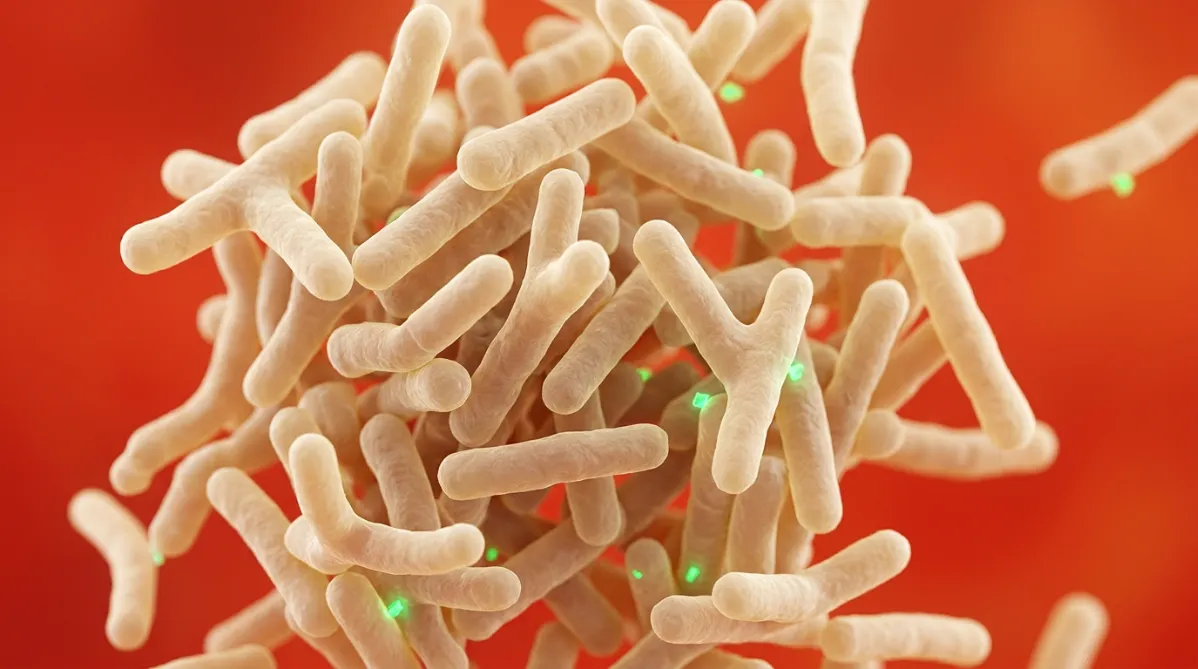
Extreme close-up microscopy-style photograph of a dense colony of rod-shaped, slightly branched Bifidobacterium cells, rendered as real textured organic forms with soft translucent walls and subtle surface detail. The cells are warm cream and ivory, clustered in the center and thinning toward the edges. The whole backdrop is a saturated tomato-red to orange field, smooth and out of focus, so the bacteria stand out in sharp contrast. A few scattered tiny crystalline metabolite specks glow faintly electric green (#00e676) near the colony. Camera angle is straight-on, slightly oblique, with a very shallow depth of field. Lighting is soft, diffuse backlight with gentle rim highlights on the cell edges and no harsh shadows. The mood is vivid, curious and hopeful, scientific but warm, with no blue cast anywhere. No text.
longevity

Dieses Darmmikroben produziert 5‑AVAB – ein Molekül, das Inflammaging bändigt

BY NOVA CHEN ·

Ein Darmmikroben, das mit dem Alter immer seltener wird, könnte mehr bewirken, als bisher angenommen. Eine neue Studie in *Nature Aging* identifiziert *Bifidobacterium pseudocatenulatum* als durchgängig reduzierten Bakterienstamm in mehreren chinesischen Kohorten älterer Menschen. Bei natürlich gealterten Mäusen reduzierte die orale Gabe dieses Stammes multiorganes Inflammaging und verlängerte die Gesundheitsspanne. Der Effekt wurde zumindest teilweise auf das von ihm produzierte Molekül 5‑AVAB zurückgeführt, das beim Menschen ebenfalls im Alter abnimmt.
Approach: Macro science. Palette: D, bold color field.

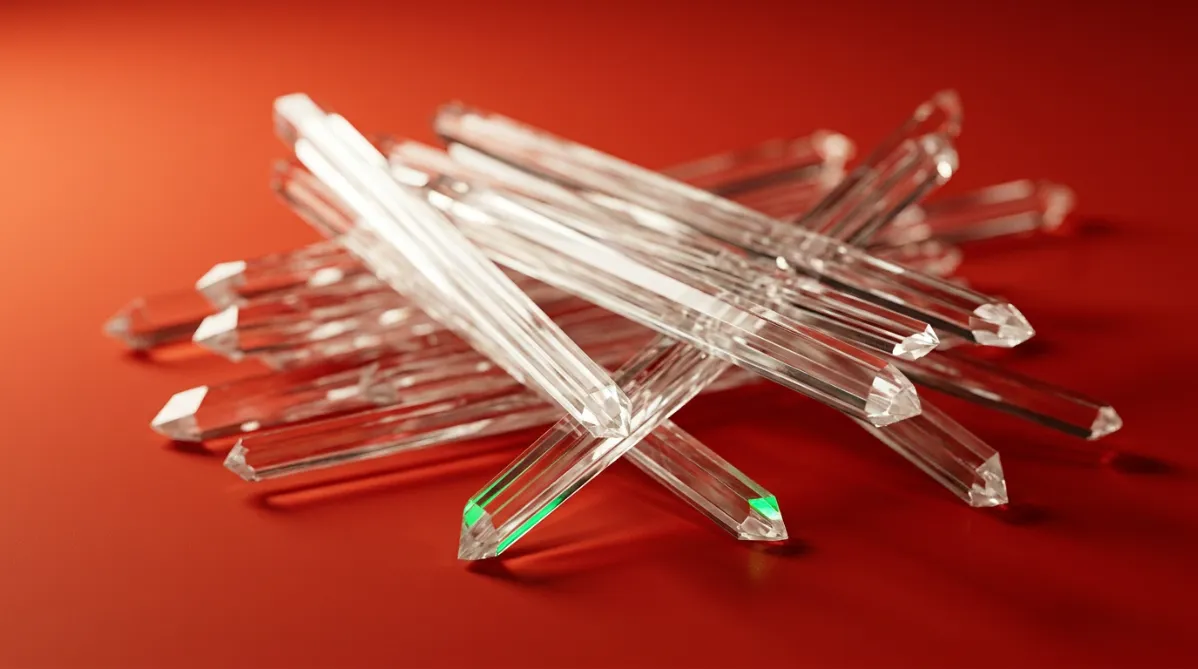
Extreme close-up photograph of taurine crystals, long translucent needle-like prisms with sharp faceted edges, bundled and crossing in a loose cluster. They rest on a saturated tomato-red matte acrylic surface. The camera is a low three-quarter angle with a shallow depth of field, so the front crystals are razor sharp and the back ones melt into soft red blur. A hard, warm key light from the upper left makes the facets glint white and throws crisp, thin red-tinted shadows. A single crystal tip in the foreground catches a tiny edge of electric green (#00e676) light refracted through the glass-like prism. The mood is bold, tense and curious, which suits a paradox in the findings. The image has no text, no labels, and no blue cast.
longevity

Taurin steigt mit dem Alter – warum half mehr bei alten Mäusen?

BY NOVA CHEN ·

Taurin, die Aminosäure, die auf fast jedem Energy‑Drink‑Etikett zu finden ist, bekommt in *Cell* eine überraschende Wendung: Im Blut steigt die Konzentration mit dem Alter sowohl beim Menschen als auch bei Mäusen, und dennoch verbessert eine weitere Erhöhung die Lebensqualität alter Mäuse. Ein von Yale geleitetes Team berichtet von einer verlängerten gesunden Lebensspanne sowie von weniger Todesfällen durch Sepsis und inflammasom‑induzierte Entzündungen. Der vorgeschlagene Mechanismus lautet, dass Gefahrensignale Makrophagen zur Taurin‑Freisetzung veranlassen, wodurch das NLRP3‑Inflammasom aktiviert wird; ein Wiederauffüllen des Taurins dämpft das Alarmsignal. Die menschlichen Daten sind rein korrelativ, und das Paper testete keine menschliche Ergänzungsdosis. Im Folgenden erfahren Sie, was die Studie zeigt, welche Dosierungen in anderen Studien verwendet wurden und wer besser darauf verzichten sollte.
Approach: Macro science. Palette: D, bold color field.

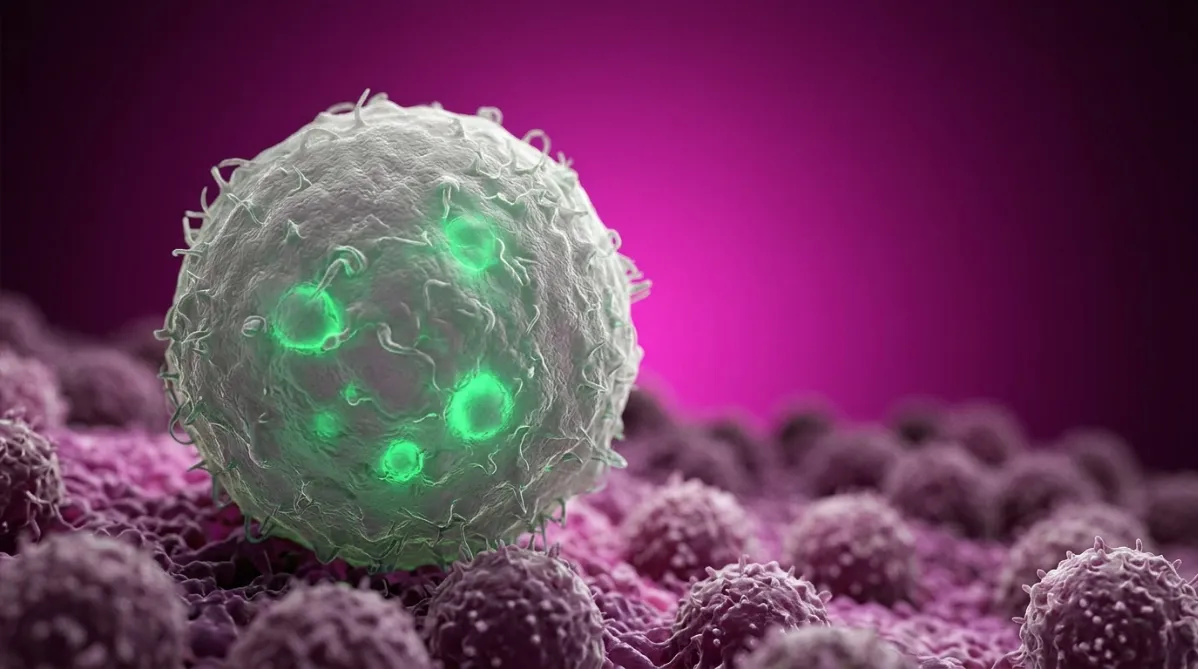
Extreme macro photograph of a single human T cell shown as a slightly bumpy, matte-textured sphere with fine microvilli, resting on a surface of smaller, out-of-focus cells. A faint electric green (#00e676) glow shows through a few lipid droplets inside its translucent membrane, hinting at fat-burning. The backdrop is a saturated magenta-violet field that fades from deep plum at the edges to bright magenta behind the cell. The camera sits at a low three-quarter angle with very shallow depth of field, so the foreground cell is crisp and the background melts into soft bokeh. Lighting is a soft, directional key from upper left with a thin rim light that picks out the membrane texture. The look is scanning-electron-microscope realism with subtle color, not cartoon. The mood is curious, quietly skeptical and precise. There is no text and no labels. The composition leaves open space on the right.
longevity

Urolithin‑A verändert alternde T‑Zellen in 4 Wochen – der Haken

BY NOVA CHEN ·

Eine randomisierte Studie in *Nature Aging* zeigte, dass vier Wochen Urolithin‑A das Immunprofil gesunder, mittelalterlicher Erwachsener leicht verschob. Es erhöhte naive‑ähnliche CD8‑T‑Zellen und steigerte deren Fähigkeit zur Fettsäureoxidation. Der Unterschied beträgt jedoch nur 0,5 Prozentpunkte. Die Studie dauerte vier Wochen, umfasste 50 Teilnehmende, maß ausschließlich Biomarker und wurde vom Hersteller von Mitopure finanziert. Wir zeigen, was die Daten belegen, was sie nicht belegen und für wen sie relevant sein könnten.

This page is available in