Biocracked
←

#alzheimers

2 articles
Approach: conceptual metaphor. Palette: D, bold color field.

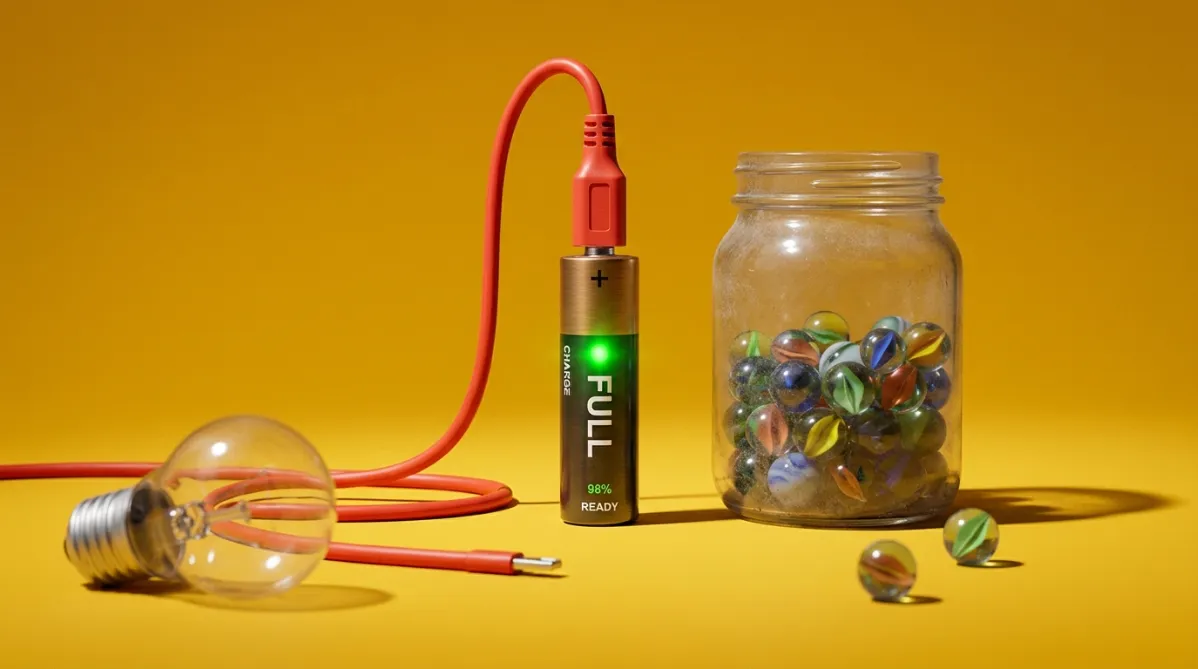
A single AA-style cylindrical battery stands upright, fully charged, on a seamless saturated mustard-yellow backdrop. Beside it sits a matching, untouched, slightly dusty glass jar of marbles, so the charge shows no visible link to any result. More precisely, a bright tomato-red extension cord plugs into the battery's top. Its other end curls away unconnected, lying on the floor beside an unlit incandescent bulb. A small electric green LED glows on the battery's side as the only green accent. Camera: low three-quarter angle, 50mm lens, shallow depth of field, with the bulb softly blurred in the foreground. Lighting: hard, clean studio key light from the upper left, with crisp shadows falling to the right on the yellow surface. Mood: puzzled, wry, a full power source that fails to light anything.
supplements

Nicotinamide riboside podwoił poziom NAD+, ale nie poprawił pamięci

BY NOVA CHEN ·

Suplement podwoił poziom kluczowej cząsteczki we krwi, ale pamięć się nie zmieniła. W 12‑tygodniowym, randomizowanym badaniu osób starszych z amnestycznym łagodnym zaburzeniem poznawczym nicotinamide riboside podniósł NAD+ dwukrotnie, nie przynosząc poprawy funkcji poznawczych, całkowitego przepływu krwi w mózgu ani ciśnienia krwi. Jedna ciekawa, eksploracyjna obserwacja wskazywała na zwiększony przepływ krwi w hipokampie, ale jest to daleko od potwierdzenia. Oto, co naprawdę wykazało badanie, jakie ma ograniczenia i co to oznacza, jeśli rozważasz zakup boostera NAD+.
Approach: macro science, a lithium-themed image built around the actual metal and tissue. Palette: bold color field in saturated teal.

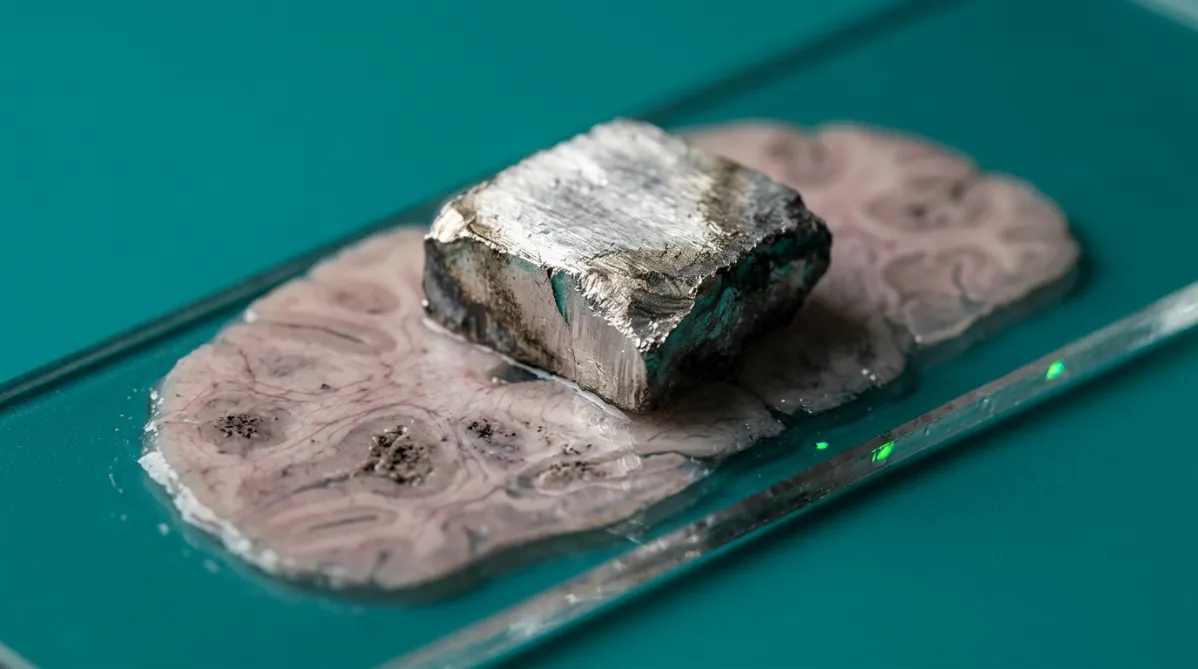
Extreme close-up photograph of a single freshly cut piece of silvery lithium metal, its surface partly tarnishing to grey and matte black at the edges, resting on a thin slice of translucent brain tissue on a glass microscope slide. The slice shows fine pink-grey folds and a few dark clumped plaque-like specks. The backdrop is a smooth saturated teal field, with the slide placed diagonally. Shallow depth of field keeps the metal edge razor sharp while the tissue softens toward the corners. Lighting is a crisp, slightly warm side light from the left, with a small specular highlight on the metal and a soft shadow on the teal. A tiny electric green reflection glints in the glass edge. The mood is quiet, investigative and precise. Shot from a low 30-degree angle, with no text or labels.
research

Śladowy minerał, który zanika w mózgu przed Alzheimerem

BY DR. SYNAPSE ·

Przełomowe badanie opublikowane w *Nature* i przeprowadzone w Harvard Medical School wykazało, że lit jest jedynym metalem istotnie zubożonym w mózgach osób z łagodną niewydolnością poznawczą (MCI). U myszy zmniejszenie poziomu litu o około połowę spowodowało odkładanie amyloidu, patologiczne zmiany tau, zapalenie i utratę pamięci, a podanie niskich dawek litu orotanowego temu zapobiegło. Związek ten zdaje się omijać pułapkę amyloidowych blaszek, które „łapią” inne sole litu. Niestety, wyniki pochodzą wyłącznie z eksperymentów na zwierzętach – nie ma jeszcze badań klinicznych u ludzi, a lit niesie ze sobą ryzyko uszkodzenia nerek, tarczycy oraz interakcji lekowych. Oto, co badanie naprawdę pokazuje, czego nie dowodzi i na co warto zwrócić uwagę w przyszłości.

This page is available in