Biocracked
←

#sirt3

1 article
Approach 4, conceptual metaphor, in palette D, bold color field.

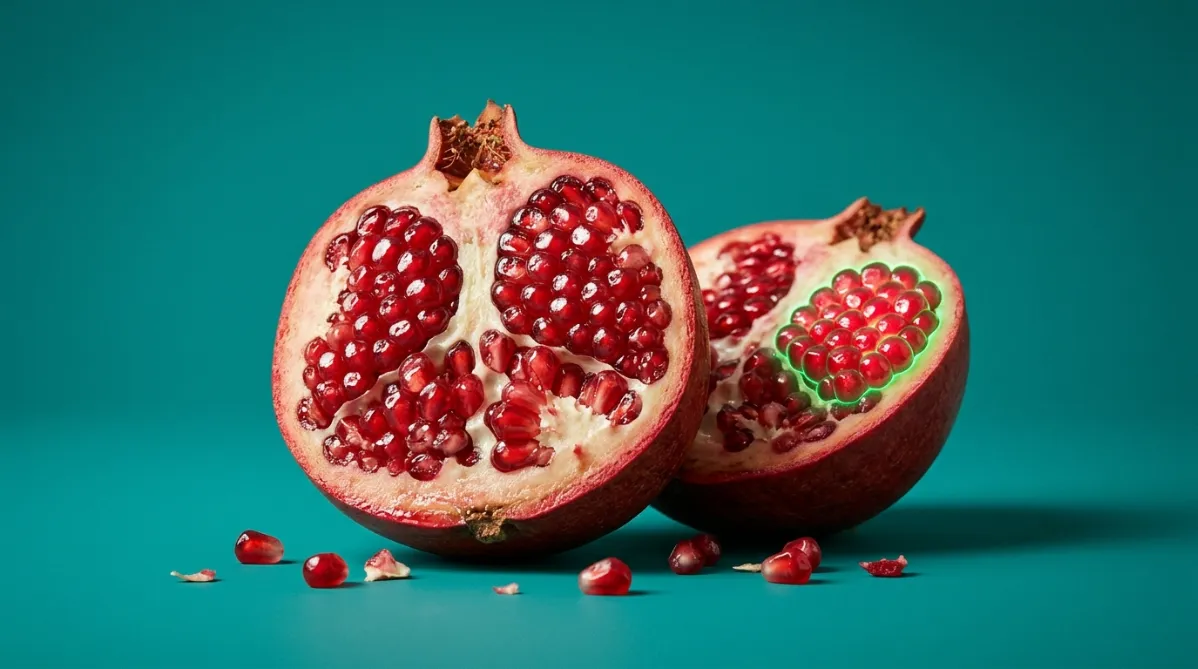
A single pomegranate, split open, sits at the center of a saturated teal backdrop. It is photographed from a slightly high three-quarter angle with a macro lens. One half is pulled slightly forward and the other stays behind it, which hints at two close siblings. The ruby arils are glossy and densely packed. In the smaller half, a few arils glow with a subtle electric green rim light, as if one has been singled out. Pomegranate is a natural source of the precursors that gut bacteria convert into urolithins. Soft, large-source studio light comes from the upper left. It casts crisp, clean shadows on a seamless teal surface and gives the red fruit sharp specular highlights. A few arils are scattered nearby. The mood is curious, vivid and quietly scientific, with a strong red-against-teal contrast and no text.
longevity

Urolithin D – Anh Em Ít Được Biết Của Urolithin A – Bảo Vệ Trí Nhớ Ở Chuột

BY NOVA CHEN ·

Urolithin A luôn thu hút sự chú ý, nhưng anh em ít được biết, urolithin D, vừa cho thấy tác dụng bảo vệ não ở chuột lão hóa. Trong mô hình lão hóa do D‑galactose, urolithin D dạng uống cải thiện các chỉ số liên quan tới trí nhớ và giảm thiểu tổn thương hippocampus, thông qua các tín hiệu AMPK, PGC‑1α và SIRT3 cùng các chỉ thị mitophagy. Các thí nghiệm tế bào cho thấy việc ức chế AMPK hoặc PGC‑1α làm mất đi lợi ích này. Tuy nhiên, đây chỉ là mô hình chuột được tạo ra bằng hoá chất và các thí nghiệm tế bào, chưa có dữ liệu người, và nghiên cứu chưa so sánh urolithin D với urolithin A. Dưới đây là những ý nghĩa, nguồn gốc của urolithin và những gì nên (và không nên) làm trong thời gian chờ đợi.

This page is available in