Biocracked
←

#sirt3

1 article
Approach 4, conceptual metaphor, in palette D, bold color field.

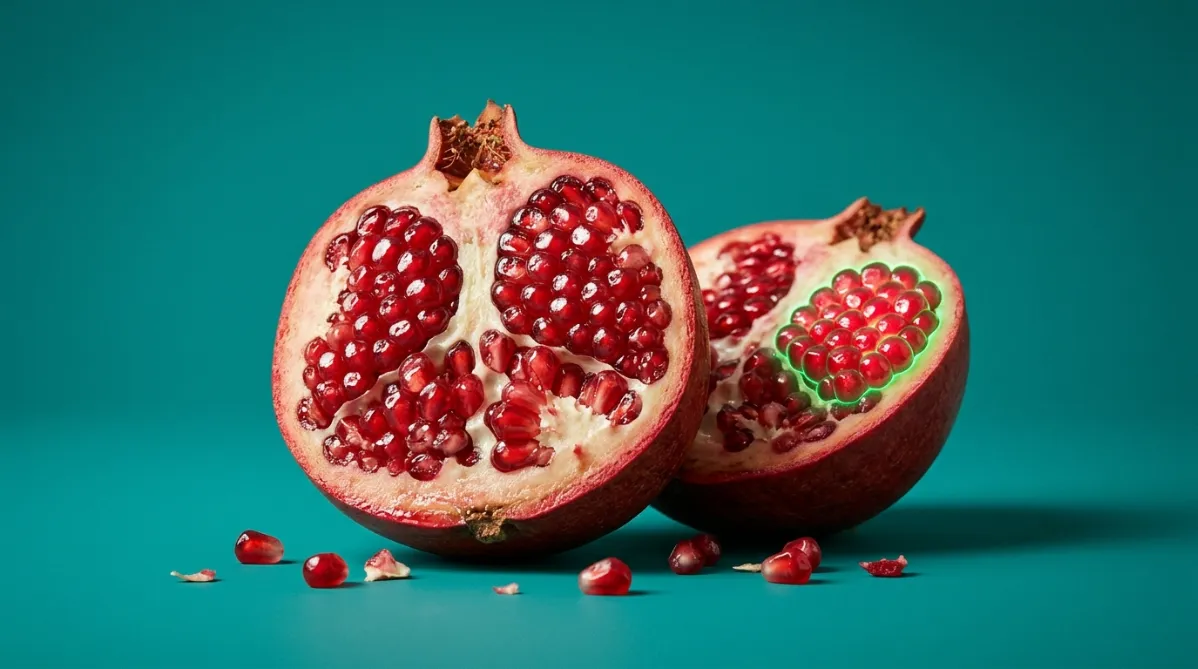
A single pomegranate, split open, sits at the center of a saturated teal backdrop. It is photographed from a slightly high three-quarter angle with a macro lens. One half is pulled slightly forward and the other stays behind it, which hints at two close siblings. The ruby arils are glossy and densely packed. In the smaller half, a few arils glow with a subtle electric green rim light, as if one has been singled out. Pomegranate is a natural source of the precursors that gut bacteria convert into urolithins. Soft, large-source studio light comes from the upper left. It casts crisp, clean shadows on a seamless teal surface and gives the red fruit sharp specular highlights. A few arils are scattered nearby. The mood is curious, vivid and quietly scientific, with a strong red-against-teal contrast and no text.
longevity

Urolithin D vs. A: Sedulur sing Durung Dikenal Nglindhungi Memori Tikus

BY NOVA CHEN ·

Urolithin A wis dadi sorotan, nanging seduluré sing kurang dikenal, urolithin D, saiki nuduhaké efek protektif kanggo otak ing tikus tuwa. Ing model penuaan sing dibangkitaké nganggo D‑galaktosa, urolithin D sing diparingi sacara oral nambah asil sing gegandhengan karo memori lan nyuda kerusakan hippocampus liwat sinyal AMPK, PGC‑1α, lan SIRT3, uga tandha mitophagy. Eksperimen sel nuduhaké yèn ngganggu AMPK utawa PGC‑1α mbatalaké manfaat kasebut. Nanging iki mung model tikus kimia lan uji sel, tanpa data manungsa, lan ora mbandhingaké urolithin D karo urolithin A. Ing ngisor iki apa sing kudu dimangerteni, saka ngendi urolithin asalé, lan apa sing bisa lan ora bisa ditindaki saiki.

This page is available in