Biocracked
←

#sirt3

1 article
Approach 4, conceptual metaphor, in palette D, bold color field.

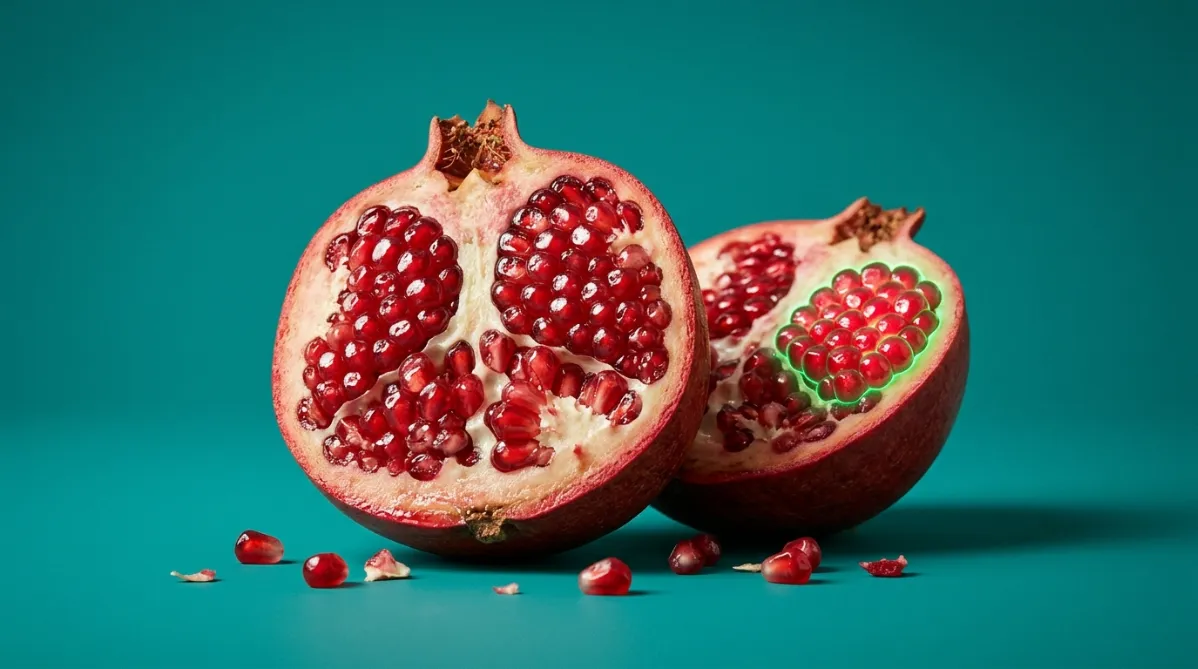
A single pomegranate, split open, sits at the center of a saturated teal backdrop. It is photographed from a slightly high three-quarter angle with a macro lens. One half is pulled slightly forward and the other stays behind it, which hints at two close siblings. The ruby arils are glossy and densely packed. In the smaller half, a few arils glow with a subtle electric green rim light, as if one has been singled out. Pomegranate is a natural source of the precursors that gut bacteria convert into urolithins. Soft, large-source studio light comes from the upper left. It casts crisp, clean shadows on a seamless teal surface and gives the red fruit sharp specular highlights. A few arils are scattered nearby. The mood is curious, vivid and quietly scientific, with a strong red-against-teal contrast and no text.
longevity

우롤리틴 D vs. A: 쥐 기억을 보호한 숨은 형제

BY NOVA CHEN ·

우롤리틴 A가 모든 주목을 받는 반면, 덜 알려진 형제인 우롤리틴 D가 노령 마우스에서 뇌 보호 효과를 보여줬습니다. D‑갈락토스 유도 노화 모델에서 경구 투여된 우롤리틴 D는 기억 관련 지표를 개선하고 해마 손상을 감소시켰으며, 이는 AMPK, PGC‑1α, SIRT3 신호와 미토파지 표지자와 연관됩니다. 세포 실험에서는 AMPK나 PGC‑1α를 차단하면 이 효과가 사라짐을 확인했습니다. 그러나 이는 인간 데이터가 전혀 없고, 우롤리틴 D와 A를 직접 비교하지 않은 화학적 유도 마우스 모델과 세포 실험에 불과합니다. 아래에서는 이것이 의미하는 바와 우롤리틴이 어디서 오는지, 현재 할 수 있는 일과 피해야 할 일을 정리합니다.

This page is available in