Biocracked
←

#sirt3

1 article
Approach 4, conceptual metaphor, in palette D, bold color field.

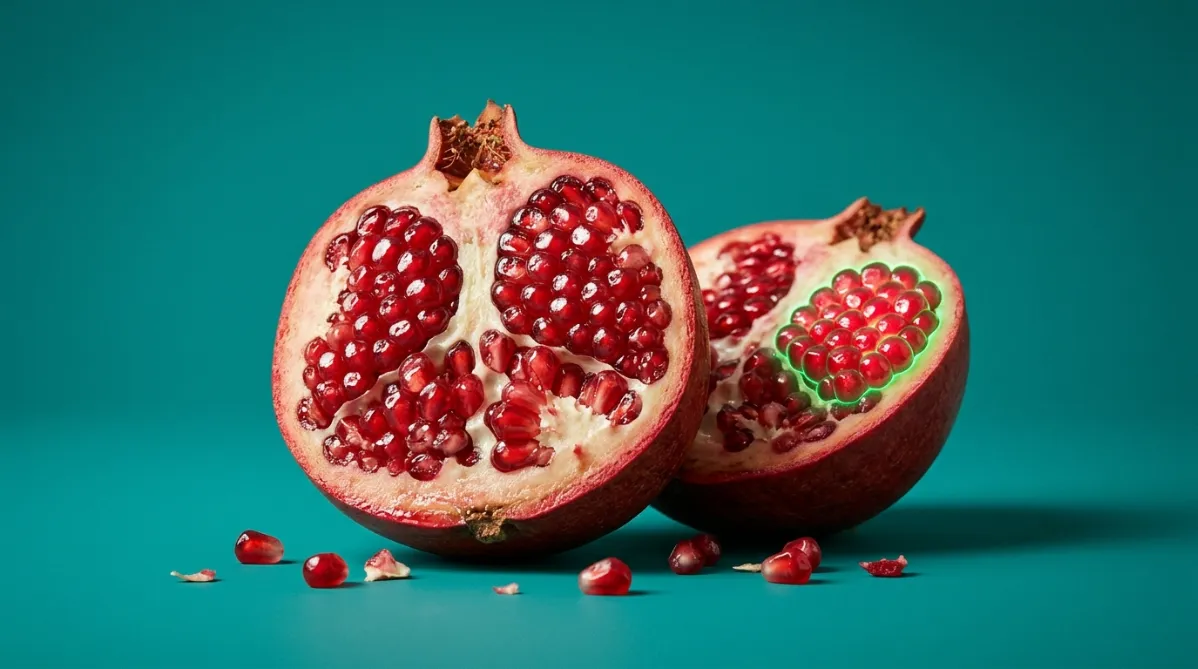
A single pomegranate, split open, sits at the center of a saturated teal backdrop. It is photographed from a slightly high three-quarter angle with a macro lens. One half is pulled slightly forward and the other stays behind it, which hints at two close siblings. The ruby arils are glossy and densely packed. In the smaller half, a few arils glow with a subtle electric green rim light, as if one has been singled out. Pomegranate is a natural source of the precursors that gut bacteria convert into urolithins. Soft, large-source studio light comes from the upper left. It casts crisp, clean shadows on a seamless teal surface and gives the red fruit sharp specular highlights. A few arils are scattered nearby. The mood is curious, vivid and quietly scientific, with a strong red-against-teal contrast and no text.
longevity

Urolithin D vs. A: il fratello oscuro che ha protetto la memoria nei topi

BY NOVA CHEN ·

Urolithin A attira tutta l'attenzione, ma il suo fratello meno conosciuto, l’urolithin D, ha appena mostrato effetti protettivi sul cervello in topi invecchiati. In un modello di invecchiamento indotto da D‑galattosio, l’urolithin D somministrato per via orale ha migliorato le prestazioni mnemoniche e ridotto i danni all’ippocampo, coinvolgendo la segnalazione di AMPK, PGC‑1α, SIRT3 e i marcatori della mitofagia. Gli esperimenti cellulari hanno dimostrato che bloccare AMPK o PGC‑1α annulla il beneficio. Tuttavia si tratta di un modello murino indotto chimicamente e di lavori in vitro, senza dati umani, e lo studio non ha confrontato l’urolithin D con l’urolithin A. Ecco cosa significa, da dove provengono gli urolithin e cosa fare (e cosa evitare) nel frattempo.

This page is available in