Biocracked
←

#sirt3

1 article
Approach 4, conceptual metaphor, in palette D, bold color field.

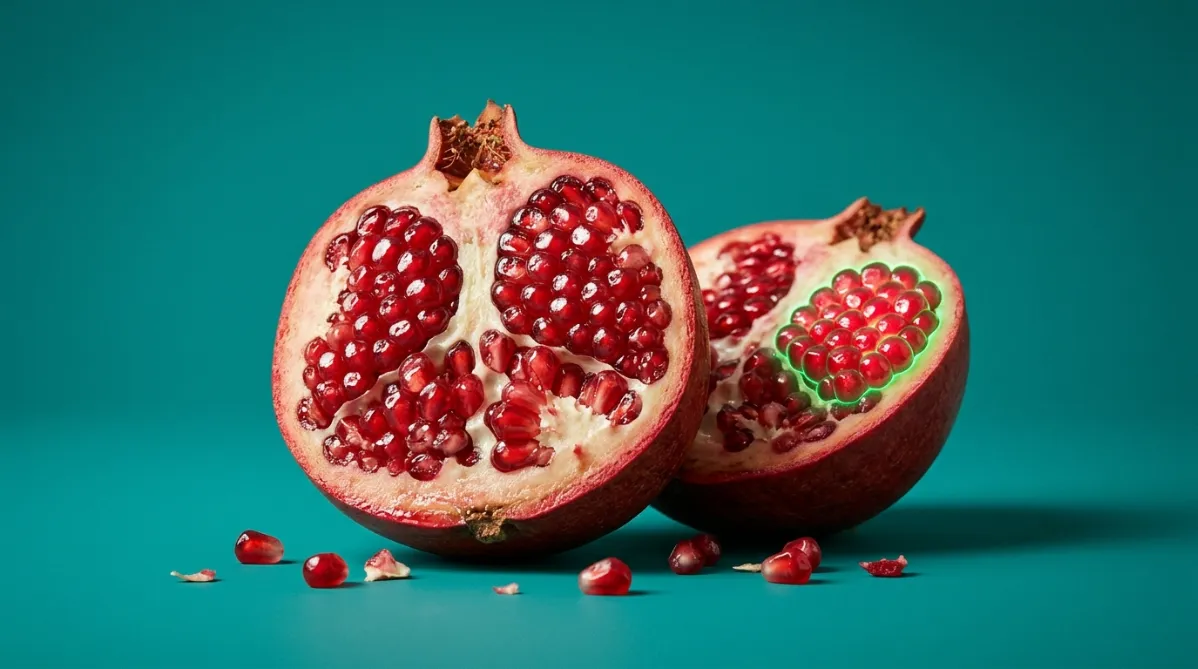
A single pomegranate, split open, sits at the center of a saturated teal backdrop. It is photographed from a slightly high three-quarter angle with a macro lens. One half is pulled slightly forward and the other stays behind it, which hints at two close siblings. The ruby arils are glossy and densely packed. In the smaller half, a few arils glow with a subtle electric green rim light, as if one has been singled out. Pomegranate is a natural source of the precursors that gut bacteria convert into urolithins. Soft, large-source studio light comes from the upper left. It casts crisp, clean shadows on a seamless teal surface and gives the red fruit sharp specular highlights. A few arils are scattered nearby. The mood is curious, vivid and quietly scientific, with a strong red-against-teal contrast and no text.
longevity

اورولیتین دی در مقابل اورولیتین آ: خواهر کم‌سابقه‌ای که حافظه موش‌ها را محافظت کرد

BY NOVA CHEN ·

اورولیتین آ تمام توجه‌ها را به خود جلب کرده است، اما خواهر کمتر شناخته‌شده‌اش، اورولیتین دی، تازه اثرات محافظتی بر مغز در موش‌های پیر نشان داد. در مدلی که با D‑galactose پیری شبیه‌سازی شد، مصرف خوراکی اورولیتین دی باعث بهبود عملکردهای حافظه‌ای و کاهش آسیب هیپوکامپی شد؛ این اثرات از طریق سیگنالینگ AMPK، PGC‑1α، SIRT3 و نشانگرهای میتوفاجی برقرار شد. آزمایش‌های سلولی نشان دادند که مهار AMPK یا PGC‑1α اثر حفاظتی را از بین می‌برد. با این حال، این یک مدل شیمیایی موشی به همراه کارهای سلولی است، داده انسانی وجود ندارد و مطالعه اورولیتین دی را با اورولیتین آ مقایسه نکرده است. در ادامه معنای این یافته‌ها، منبع اورولیتین‌ها و نکات عملی (و نکات پرهیز) را مرور می‌کنیم.

This page is available in