Biocracked
←

#sirt3

1 article
Approach 4, conceptual metaphor, in palette D, bold color field.

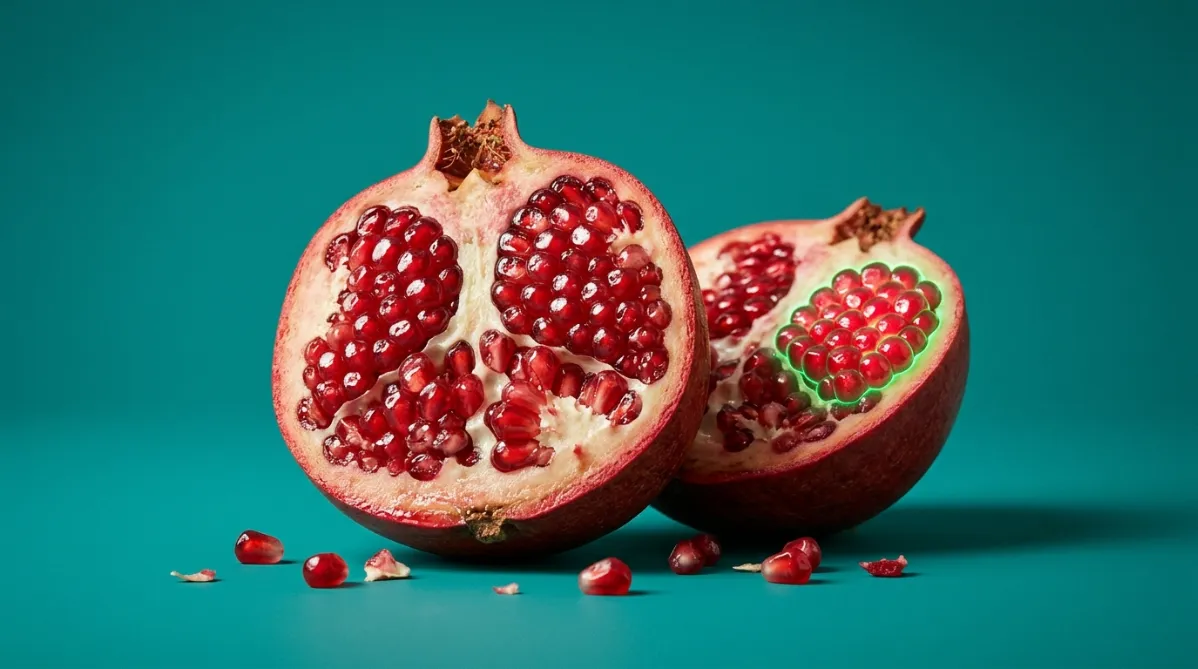
A single pomegranate, split open, sits at the center of a saturated teal backdrop. It is photographed from a slightly high three-quarter angle with a macro lens. One half is pulled slightly forward and the other stays behind it, which hints at two close siblings. The ruby arils are glossy and densely packed. In the smaller half, a few arils glow with a subtle electric green rim light, as if one has been singled out. Pomegranate is a natural source of the precursors that gut bacteria convert into urolithins. Soft, large-source studio light comes from the upper left. It casts crisp, clean shadows on a seamless teal surface and gives the red fruit sharp specular highlights. A few arils are scattered nearby. The mood is curious, vivid and quietly scientific, with a strong red-against-teal contrast and no text.
longevity

يوروليثين D مقابل A: الأخ المجهول الذي يحمي ذاكرة الفئران

BY NOVA CHEN ·

يحظى يوروليثين A بكل الاهتمام، لكن أخاه الأقل شهرة، يوروليثين D، أظهر للتو تأثيرات وقائية للدماغ في الفئران المتقدمة في السن. في نموذج الشيخوخة المستحث بـ D‑جالاكتوز، حسّن يوروليثين D عن طريق الفم النتائج المتعلقة بالذاكرة وقلل من تلف الحُصين، وذلك عبر إشارات AMPK وPGC‑1α وSIRT3 وعلامات الميتوفاجي. أظهرت تجارب الخلايا أن حجب AMPK أو PGC‑1α ألغى الفائدة. ومع ذلك، هذا نموذج فئري كيميائي مع تجارب خلوية، ولا توجد بيانات بشرية، ولم تقارن الدراسة بين يوروليثين D ويوروليثين A. إليكم ما يعنيه ذلك، ومن أين تأتي اليوروليثينات، وما يمكن فعله (وما يجب تجنبه) في الوقت الحالي.

This page is available in