Biocracked
←

#sirt3

1 article
Approach 4, conceptual metaphor, in palette D, bold color field.

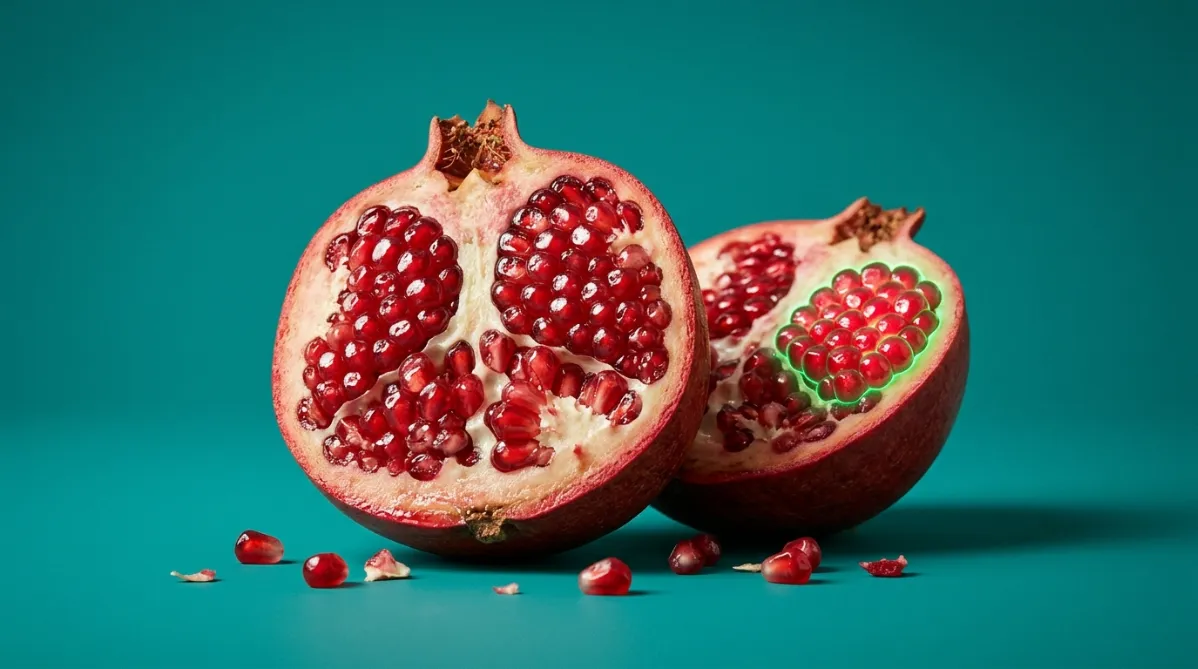
A single pomegranate, split open, sits at the center of a saturated teal backdrop. It is photographed from a slightly high three-quarter angle with a macro lens. One half is pulled slightly forward and the other stays behind it, which hints at two close siblings. The ruby arils are glossy and densely packed. In the smaller half, a few arils glow with a subtle electric green rim light, as if one has been singled out. Pomegranate is a natural source of the precursors that gut bacteria convert into urolithins. Soft, large-source studio light comes from the upper left. It casts crisp, clean shadows on a seamless teal surface and gives the red fruit sharp specular highlights. A few arils are scattered nearby. The mood is curious, vivid and quietly scientific, with a strong red-against-teal contrast and no text.
longevity

Urolithin D da A: Ɗan'uwa Mai Sirri Da Ke Kariya Ga Ƙwaƙwalwar Kura

BY NOVA CHEN ·

Urolithin A na jan hankalin kowa, amma ɗan'uwansa da ba a san shi sosai ba—Urolithin D—ya nuna kariya ga kwakwalwa a cikin berayen da suka tsufa. A cikin tsarin tsufa da aka haifar da D‑galactose, shan Urolithin D ta baki ya inganta ƙwarewar tunawa kuma ya rage lalacewar hippocampus, abin da aka danganta da siginar AMPK, PGC‑1α da SIRT3 da alamomin mitophagy. Gwaje‑gwajen sel sun nuna cewa toshe AMPK ko PGC‑1α ya kawar da fa’idar. Sai dai binciken ya ƙunshi dabbobi da sel kawai, ba tare da bayanan mutane ba, kuma ba a kwatanta Urolithin D da Urolithin A ba. Ga abin da wannan ke nufi, inda urolithins ke fitowa, da abin da za a yi (da abin da za a guje) a yanzu.

This page is available in