Biocracked
←

#sirt3

1 article
Approach 4, conceptual metaphor, in palette D, bold color field.

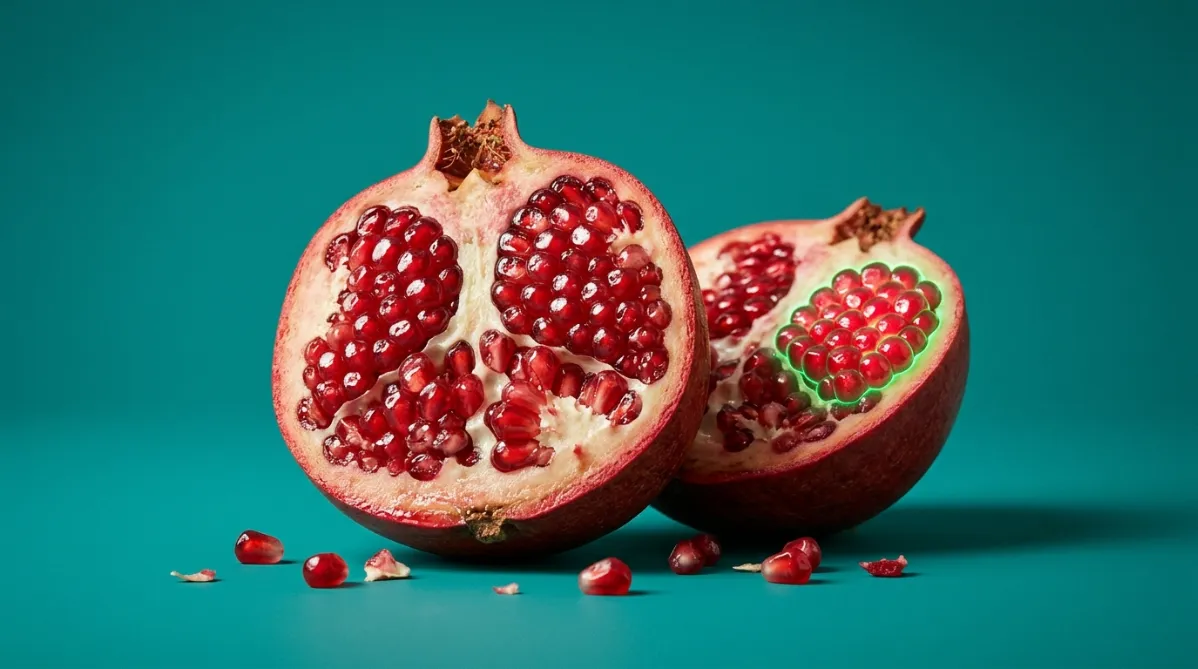
A single pomegranate, split open, sits at the center of a saturated teal backdrop. It is photographed from a slightly high three-quarter angle with a macro lens. One half is pulled slightly forward and the other stays behind it, which hints at two close siblings. The ruby arils are glossy and densely packed. In the smaller half, a few arils glow with a subtle electric green rim light, as if one has been singled out. Pomegranate is a natural source of the precursors that gut bacteria convert into urolithins. Soft, large-source studio light comes from the upper left. It casts crisp, clean shadows on a seamless teal surface and gives the red fruit sharp specular highlights. A few arils are scattered nearby. The mood is curious, vivid and quietly scientific, with a strong red-against-teal contrast and no text.
longevity

Urolitina D vs. A: el hermano oscuro que protegió la memoria de los ratones

BY NOVA CHEN ·

Urolitina A acapara toda la atención, pero su hermano menos conocido, la urolitina D, acaba de demostrar efectos protectores en el cerebro de ratones envejecidos. En un modelo de envejecimiento inducido por D‑galactosa, la administración oral de urolitina D mejoró la memoria y redujo el daño hipocampal, asociándose a la señalización de AMPK, PGC‑1α y SIRT3 y a marcadores de mitofagia. Los experimentos celulares mostraron que bloquear AMPK o PGC‑1α anuló el beneficio. Sin embargo, se trata de un modelo químico y de trabajo in vitro, sin datos en humanos, y el estudio no comparó la urolitina D con la urolitina A. Aquí explicamos qué significa, de dónde provienen las urolitinas y qué hacer (y qué evitar) mientras tanto.

This page is available in