Biocracked
←

#sirt3

1 article
Approach 4, conceptual metaphor, in palette D, bold color field.

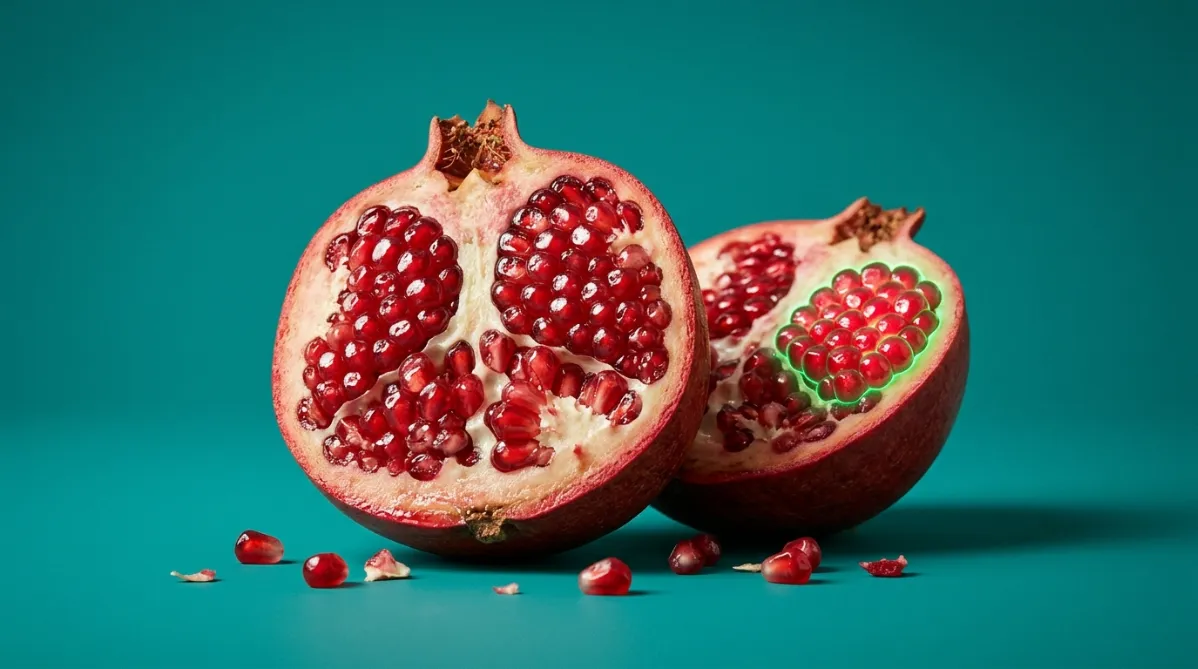
A single pomegranate, split open, sits at the center of a saturated teal backdrop. It is photographed from a slightly high three-quarter angle with a macro lens. One half is pulled slightly forward and the other stays behind it, which hints at two close siblings. The ruby arils are glossy and densely packed. In the smaller half, a few arils glow with a subtle electric green rim light, as if one has been singled out. Pomegranate is a natural source of the precursors that gut bacteria convert into urolithins. Soft, large-source studio light comes from the upper left. It casts crisp, clean shadows on a seamless teal surface and gives the red fruit sharp specular highlights. A few arils are scattered nearby. The mood is curious, vivid and quietly scientific, with a strong red-against-teal contrast and no text.
longevity

Уролітан D проти A: Темний брат, що захистив пам’ять миші

BY NOVA CHEN ·

Уролітан A перебуває в центрі уваги, проте його менш відомий брат — уролітин D — лише нещодавно показав захисний ефект для мозку у старіючих мишей. У моделі старіння, викликаній D‑галактозою, пероральний прийом уролітину D поліпшив пам’ять і зменшив ушкодження гіпокампу, пов’язані з сигналізацією AMPK, PGC‑1α, SIRT3 та маркерами мітофагії. У клітинних експериментах блокування AMPK або PGC‑1α знищувало цей ефект. Однак це лише модель хімічно індукованого старіння у мишей та клітинні дослідження, без даних на людях, і у статті не порівнювали уролітин D з уролітином A.

This page is available in