Biocracked
←

Metabolism

3 articles
Approach: Macro science. Palette: B, warm.

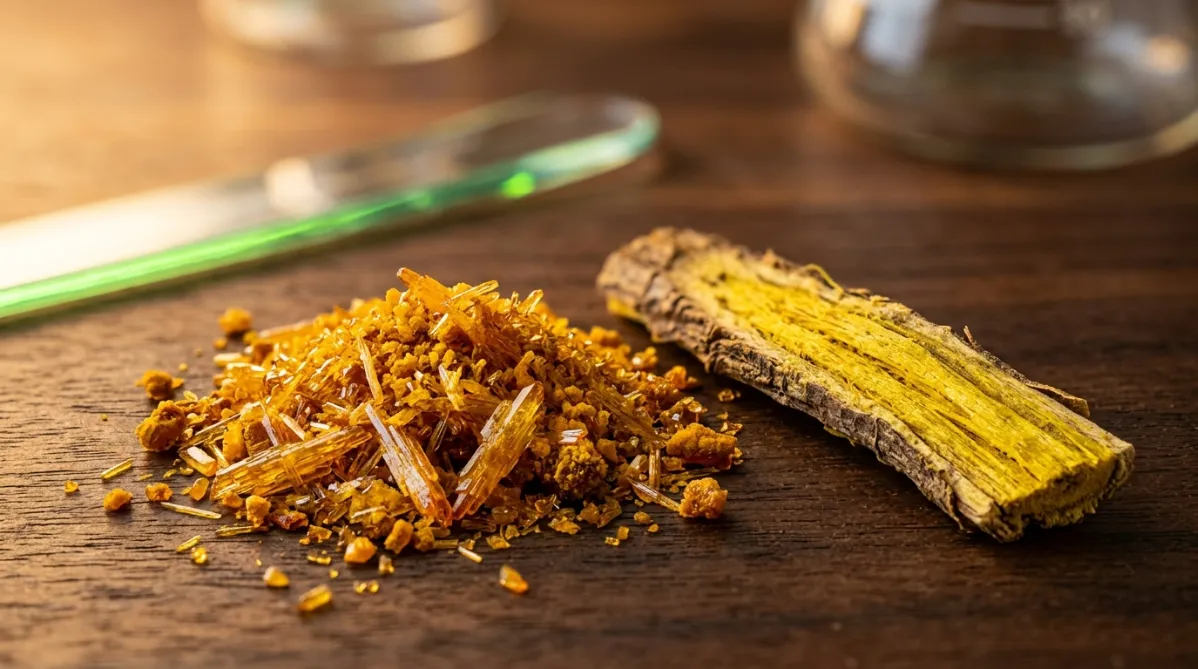
Extreme macro photograph of raw berberine: a small heap of vivid yellow-orange crystalline powder with needle-like crystal clusters, shot at a low 30-degree angle with a shallow depth of field. Beside it, a dry sliver of Berberis root bark shows its bright yellow inner wood and fibrous grain. The surface is a smooth dark walnut board. Low golden-hour side light from the left makes the crystals glint like amber glass and throws long warm copper shadows across the wood. One tiny electric green highlight reflects off a glass spatula edge in the soft background blur. The mood is quiet and investigative, with rich saturated honey and burnt-orange tones and no blue cast. Photorealistic, microscopy-like texture, no text or labels.
metabolism

Berbérine vs. Metformine : l’essai pilote derrière une baisse d’HbA1c de 9,5 % à 7,5 %

BY HELIX WARD ·

En 2008, un petit essai pilote a opposé la berbérine à la metformine chez des diabétiques de type 2 récemment diagnostiqués ; l’effet hypoglycémiant semblait comparable. Le groupe berbérine a vu son HbA1c passer de 9,5 % à 7,5 % en trois mois. Une seconde étude, menée chez 48 patients déjà traités, a fait baisser l’HbA1c de 8,1 % à 7,3 % et le HOMA‑IR de 44,7 %. Ces travaux restent modestes, portent sur des patients diabétiques et ont signalé des effets indésirables gastro‑intestinaux chez environ un tiers des participants. Voici ce que les données montrent, ce qu’elles ne montrent pas, et ce qu’il faut savoir avant d’envisager la berbérine.
Approach: Macro science. Palette: D, bold color field.

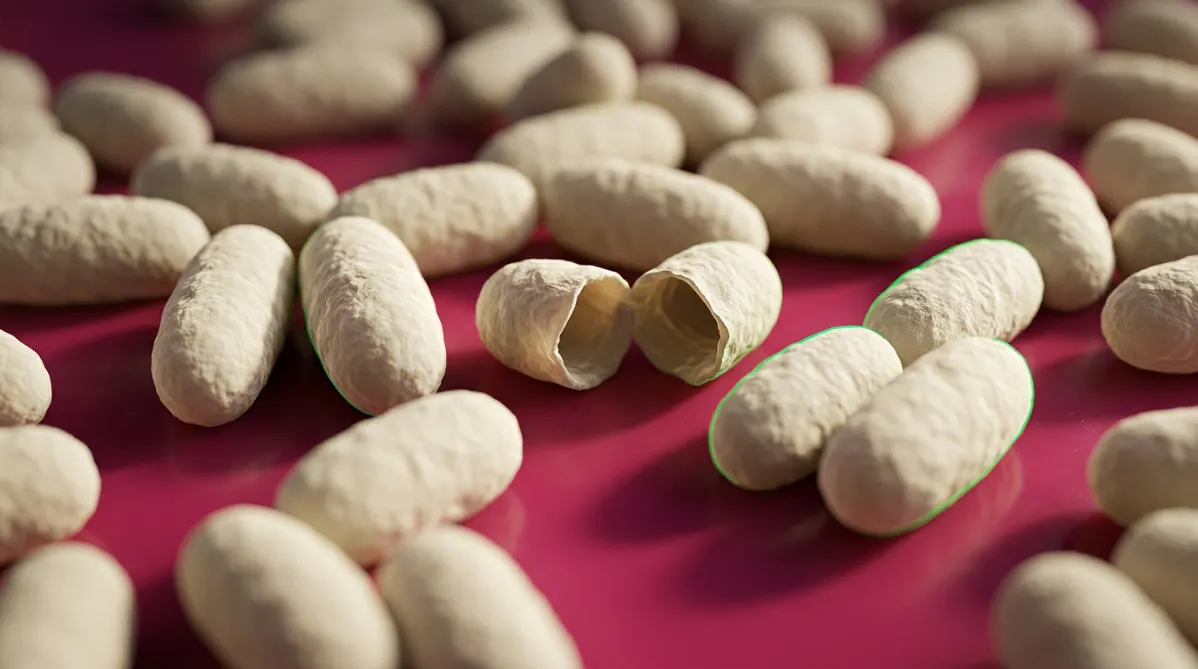
Extreme close-up microscopy-style photograph of a dense cluster of oval, rod-shaped bacterial cells, rendered as slightly wrinkled, matte, pale cream-white forms with visible surface texture. They rest on a smooth, saturated magenta-pink gel surface. Several cells in the foreground are crisp, while the rest fall into soft shallow depth of field. One cell near the center is split open and visibly hollow, to suggest a dead, heat-treated organism. Camera is a low three-quarter angle, as if through a scanning microscope. Lighting is a single hard, warm-white side light that casts short crisp shadows and creates bright rim highlights. A thin electric green (#00e676) line of reflected light traces the edge of one cell. The mood is stark, curious and quietly skeptical. There is no text and no labels.
metabolism

La bactérie intestinale qui fonctionne mieux lorsqu’elle est morte : un gain de 29 % grâce à Akkermansia

BY HELIX WARD ·

Lors du premier essai clinique humain d’Akkermansia muciniphila, c’est la forme pasteurisée (tuée par la chaleur), et non la forme vivante, qui a donné les résultats les plus frappants. La sensibilité à l’insuline a augmenté de 28,6 % et l’insulinémie à jeun a chuté de 34,1 % versus placebo chez des adultes en surpoids et résistants à l’insuline. Les pertes de poids et de masse grasse attendues n’ont pas atteint la significativité statistique, et plusieurs auteurs détiennent des brevets et ont co‑fondé une société commercialisant la bactérie. Voici ce que l’étude montre réellement, ce qu’elle ne garantit pas, et les points à vérifier avant d’acheter un complément.
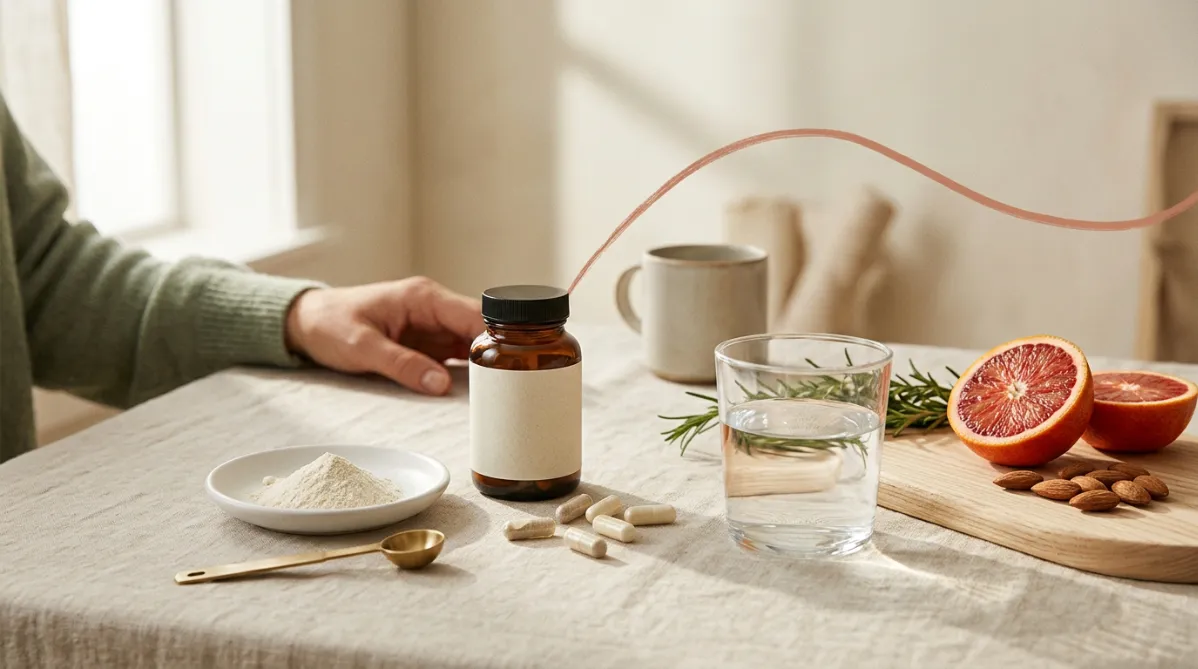
A softly lit editorial still life on a pale oat-colored linen surface, shot from a slightly elevated three-quarter angle in a wide landscape frame. At center-left, a small matte white ceramic dish holds a modest pile of fine off-white powder, with a tiny brushed-brass measuring spoon resting beside it. Next to the dish stands a minimalist amber glass supplement bottle with a plain cream label and no readable text. A few capsules spill casually across the linen, some translucent and some opaque ivory.

On the right side of the composition, a ripe blood orange cut in half and a handful of raw almonds sit on a light ash-wood board. A sprig of fresh rosemary adds a muted green accent. A sheer glass of water catches the light and throws a soft, rippled caustic pattern across the fabric.

In the background, out of focus, a woman's hand in a soft sage-green knit sleeve rests near a ceramic mug. This suggests a calm morning routine without showing a face. Behind her, a tall window casts diffused, golden-hour light from the upper left, with gentle shadows and a creamy, shallow depth of field.

The palette is warm and restrained: oat, ivory, terracotta, sage, and amber, with a single pop of coral from the blood orange. A thin, abstract line of muted terracotta paint, like a brushed arc, sweeps across the upper right background. It subtly evokes a rising curve without becoming a literal chart.

The mood is calm, trustworthy, and contemporary, like a premium wellness and science journal feature. The image has crisp focus on the powder and bottle, natural film-like grain, soft contrast, and generous negative space in the upper third for headline overlay. It looks like a high-end editorial photograph with no text, logos, or futuristic elements.
metabolism

Premier succès humain du NMN : 250 mg par jour ont accru la sensibilité musculaire à l’insuline d’environ 25 % chez les femmes prédiabétiques

BY DR. SYNAPSE ·

Le NMN est depuis longtemps la star du marché de la longévité, mais les données humaines étaient rares jusqu’à l’essai de l’Université de Washington publié dans *Science* en 2021. Chez les femmes ménopausées prédiabétiques, en surpoids ou obèses, 250 mg de NMN quotidiens pendant 10 semaines ont amélioré la sensibilité à l’insuline du muscle d’environ 25 %. Le signal insulinique musculaire et l’expression des gènes liés au remodelage musculaire se sont également renforcés, tandis que le groupe placebo n’a montré aucune évolution. Cependant, le bénéfice reste limité et l’étude n’a pas démontré que le NMN réduisait la glycémie ou inversait le prédiabète. Voici ce que l’essai a révélé, à qui il s’applique et ce qu’il n’a pas changé.

This page is available in