Biocracked
←

#ampk

2 articles
Approach: Macro science. Palette: B, warm.

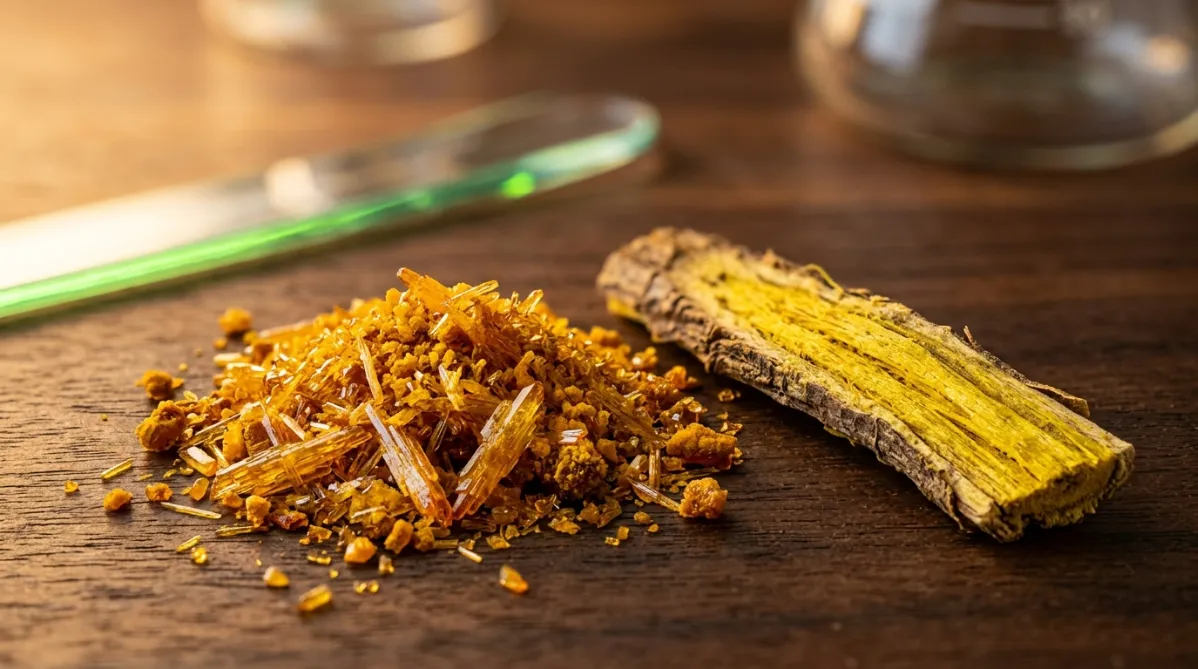
Extreme macro photograph of raw berberine: a small heap of vivid yellow-orange crystalline powder with needle-like crystal clusters, shot at a low 30-degree angle with a shallow depth of field. Beside it, a dry sliver of Berberis root bark shows its bright yellow inner wood and fibrous grain. The surface is a smooth dark walnut board. Low golden-hour side light from the left makes the crystals glint like amber glass and throws long warm copper shadows across the wood. One tiny electric green highlight reflects off a glass spatula edge in the soft background blur. The mood is quiet and investigative, with rich saturated honey and burnt-orange tones and no blue cast. Photorealistic, microscopy-like texture, no text or labels.
metabolism

ベルベリン vs メトホルミン:HbA1c 9.5% から 7.5% へのパイロット試験

BY HELIX WARD ·

2008 年に実施された小規模パイロット試験で、ベルベリンとメトホルミンを直接比較した結果、血糖降下効果はほぼ同等と報告されました。ベルベリン群では HbA1c が 9.5% から 7.5% に、わずか 3 カ月で低下しました。同様の規模で行われた別の試験(48 名)でも、既存治療にベルベリンを加えることで HbA1c が 8.1% から 7.3% に、HOMA‑IR が 44.7% 改善しました。ただし、どちらも糖尿病患者を対象とした少人数の研究で、約 3 分の 1 が胃腸障害を訴えています。本稿では、これらのデータが示すこと・示さないこと、そしてベルベリンを検討する際に知っておくべき重要ポイントを解説します。
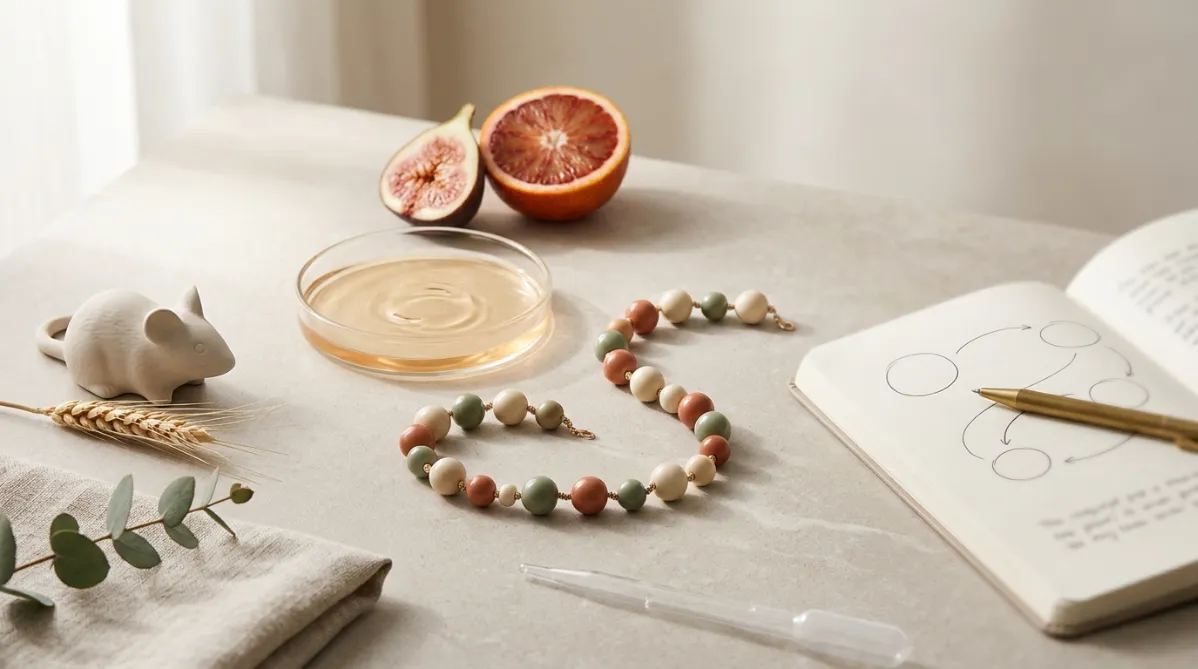
A wide, editorial-style still life photographed from slightly above on a pale warm-gray stone surface, lit by soft diffused morning light from the left. At the center, a delicate chain of 16 small, glossy beads in alternating muted terracotta, sage green, and cream is arranged in a gentle S-curve, each bead slightly different in size, like a hand-strung necklace. It stands for a peptide chain in a tactile, abstract way. Beside the chain, a translucent glass petri dish holds a thin layer of pale amber liquid with a few soft ripples. Behind it, a cross-section of a ripe fig and a halved blood orange show their intricate internal textures, suggesting cellular structure and mitochondria without literal illustration.

On the left side of the frame, a small ceramic mouse figurine in matte off-white sits calmly next to a sprig of dried wheat. It is a subtle nod to the mouse study and is stylized and minimal, not cartoonish. On the right, an open, softly blurred notebook with thin hand-drawn circles and curved lines, like looping pathway diagrams, lies under a brass pen. A few pages are visible but the text is illegible.

Scatter a few elements for texture: a small sprig of eucalyptus, a folded linen napkin in oatmeal tone, and a single clear glass pipette resting diagonally across the lower foreground. The palette is warm neutrals with accents of sage, terracotta, and soft amber, giving a calm, modern wellness-journal look. Shallow depth of field keeps the bead chain crisp while the background gently dissolves into creamy bokeh. Generous negative space across the upper right leaves room for headline overlay. The overall mood is clean, contemporary, and intellectually curious: scientific but warm, like a premium health and science magazine cover, with fine grain, natural shadows, and no text, logos, or futuristic elements.
peptides

MOTS‑c 解説:AMPK を活性化し、食事誘発性肥満からマウスを守った 16 アミノ酸ミトコンドリアペプチド

BY DR. SYNAPSE ·

ミトコンドリア DNA(核ではなく)にコードされたたった 16 アミノ酸からなるペプチドが、筋肉で AMPK を活性化し、2015 年の *Cell Metabolism* 研究で食事誘発性肥満とインスリン抵抗性からマウスを保護した。MOTS‑c は現在、ペプチドやバイオハックのコミュニティで最も話題に上がる名前のひとつだ。だが、これはヒトのデータが一切ないマウスと分子レベルの探索研究であり、MOTS‑c は承認された治療薬ではない。この稿では、MOTS‑c が何か、葉酸回路と AMPK を通じてどのように作用すると考えられるか、マウスで何が観察されたか、読者が何を結論付けるべきか・すべきでないかを解説する。

This page is available in