Biocracked
←

#ampk

2 articles
Approach: Macro science. Palette: B, warm.

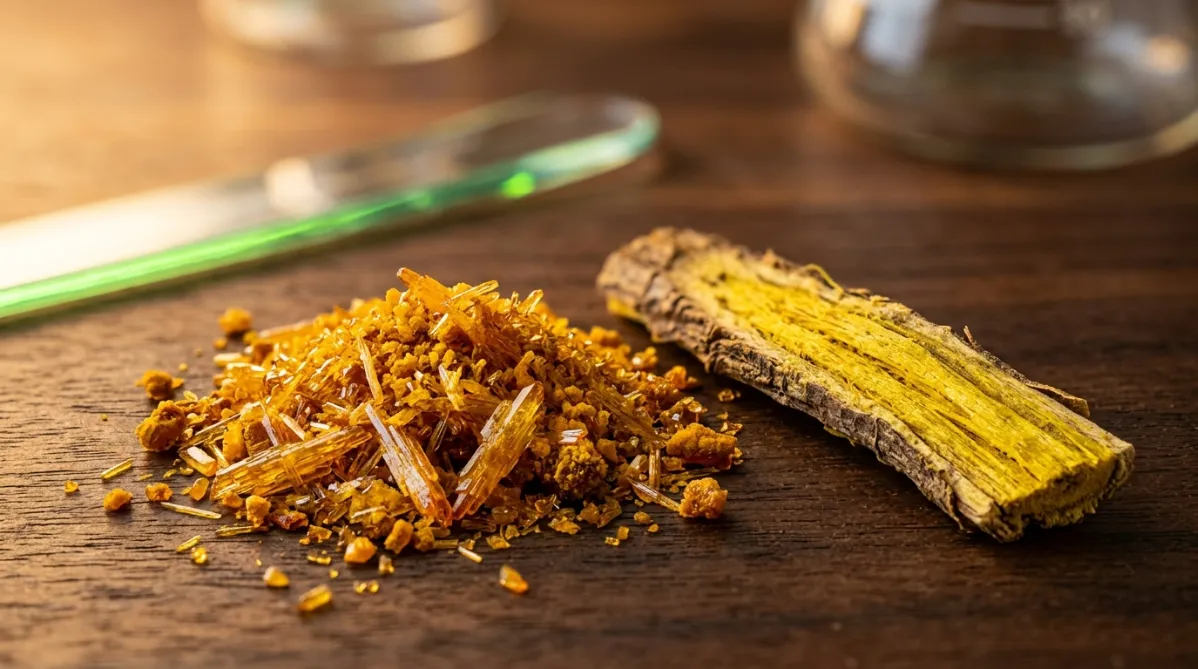
Extreme macro photograph of raw berberine: a small heap of vivid yellow-orange crystalline powder with needle-like crystal clusters, shot at a low 30-degree angle with a shallow depth of field. Beside it, a dry sliver of Berberis root bark shows its bright yellow inner wood and fibrous grain. The surface is a smooth dark walnut board. Low golden-hour side light from the left makes the crystals glint like amber glass and throws long warm copper shadows across the wood. One tiny electric green highlight reflects off a glass spatula edge in the soft background blur. The mood is quiet and investigative, with rich saturated honey and burnt-orange tones and no blue cast. Photorealistic, microscopy-like texture, no text or labels.
metabolism

Berberin vs. Metformin: Studi Pilot yang Menurunkan HbA1c dari 9,5% menjadi 7,5%

BY HELIX WARD ·

Sebuah studi pilot kecil pada tahun 2008 membandingkan berberin langsung dengan metformin pada pasien diabetes tipe 2 yang baru didiagnosis. Pada kelompok berberin, HbA1c turun dari 9,5 % menjadi 7,5 % dalam tiga bulan. Pada percobaan kedua dengan 48 peserta yang sudah menjalani pengobatan, HbA1c menurun dari 8,1 % menjadi 7,3 % serta HOMA‑IR turun 44,7 %. Namun, studi ini berskala kecil, melibatkan hanya pasien diabetes, dan sekitar sepertiga peserta mengalami efek samping gastrointestinal.
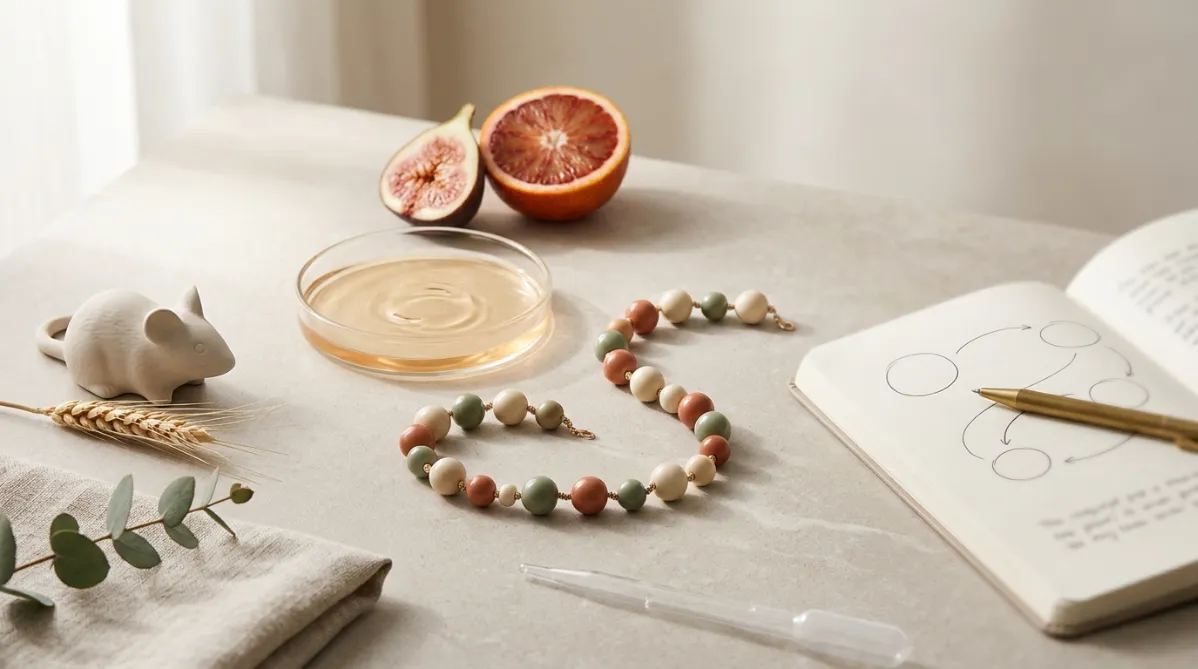
A wide, editorial-style still life photographed from slightly above on a pale warm-gray stone surface, lit by soft diffused morning light from the left. At the center, a delicate chain of 16 small, glossy beads in alternating muted terracotta, sage green, and cream is arranged in a gentle S-curve, each bead slightly different in size, like a hand-strung necklace. It stands for a peptide chain in a tactile, abstract way. Beside the chain, a translucent glass petri dish holds a thin layer of pale amber liquid with a few soft ripples. Behind it, a cross-section of a ripe fig and a halved blood orange show their intricate internal textures, suggesting cellular structure and mitochondria without literal illustration.

On the left side of the frame, a small ceramic mouse figurine in matte off-white sits calmly next to a sprig of dried wheat. It is a subtle nod to the mouse study and is stylized and minimal, not cartoonish. On the right, an open, softly blurred notebook with thin hand-drawn circles and curved lines, like looping pathway diagrams, lies under a brass pen. A few pages are visible but the text is illegible.

Scatter a few elements for texture: a small sprig of eucalyptus, a folded linen napkin in oatmeal tone, and a single clear glass pipette resting diagonally across the lower foreground. The palette is warm neutrals with accents of sage, terracotta, and soft amber, giving a calm, modern wellness-journal look. Shallow depth of field keeps the bead chain crisp while the background gently dissolves into creamy bokeh. Generous negative space across the upper right leaves room for headline overlay. The overall mood is clean, contemporary, and intellectually curious: scientific but warm, like a premium health and science magazine cover, with fine grain, natural shadows, and no text, logos, or futuristic elements.
peptides

MOTS‑c Dijelaskan: Peptida Mitokondria 16 Asam Amino yang Mengaktifkan AMPK dan Melindungi Tikus dari Obesitas Karena Diet

BY DR. SYNAPSE ·

Peptida kecil 16 asam amino yang dikodekan dalam DNA mitokondria, bukan nukleus, mengaktifkan AMPK di otot dan melindungi tikus dari obesitas diet serta resistensi insulin dalam studi *Cell Metabolism* 2015. MOTS‑c kini menjadi topik hangat di kalangan peptida dan biohacking, namun data masih terbatas pada penelitian pada tikus dan sel. Artikel ini menjelaskan apa itu MOTS‑c, bagaimana ia bekerja lewat siklus folat dan AMPK, temuan pada tikus, serta apa yang dapat dan tidak dapat disimpulkan oleh pembaca.

This page is available in