
Biocracked
←

#cardiovascular health

4 articles
**Approach:** Conceptual metaphor. **Palette:** Bold color field (teal).

A single flexible garden hose, shot from a low three-quarter angle, lies coiled against a saturated teal seamless backdrop. One half of the hose is pale and wrinkled, with a stiff, cracked rubber texture and a visible kink. The other half is supple, glossy and smoothly curved. A thin stream of water arcs from the open end, catching the light. Soft, large-source studio light comes from the upper left and casts gentle, neutral grey shadows with no blue cast. A small electric green brass fitting, with a clean metallic sheen, sits where the two halves meet. The shallow depth of field blurs the coils in the foreground. The mood is quietly doubtful but curious, as if the result is promising and still unproven. There is no text anywhere in the frame.
longevity

Le magnésium a détendu les artères rigides après six mois – puis un essai nul

BY DR. SYNAPSE ·

Pendant les 12 premières semaines, le magnésium n’a montré aucun effet mesurable sur la rigidité artérielle. À la semaine 24, un essai randomisé portant sur 52 participants a révélé une amélioration de la vitesse d’onde de pouls de 1,0 m/s par rapport au placebo, sans aucune modification de la tension artérielle. Ce résultat intéresse quiconque s’intéresse au vieillissement vasculaire. Cependant, un suivi plus important réalisé en 2022 sur le même groupe, incluant 164 adultes et trois formes de magnésium, n’a trouvé aucun effet significatif. Nous passons en revue les résultats de l’étude initiale, ses limites et les enseignements à retenir face à ces preuves contradictoires.
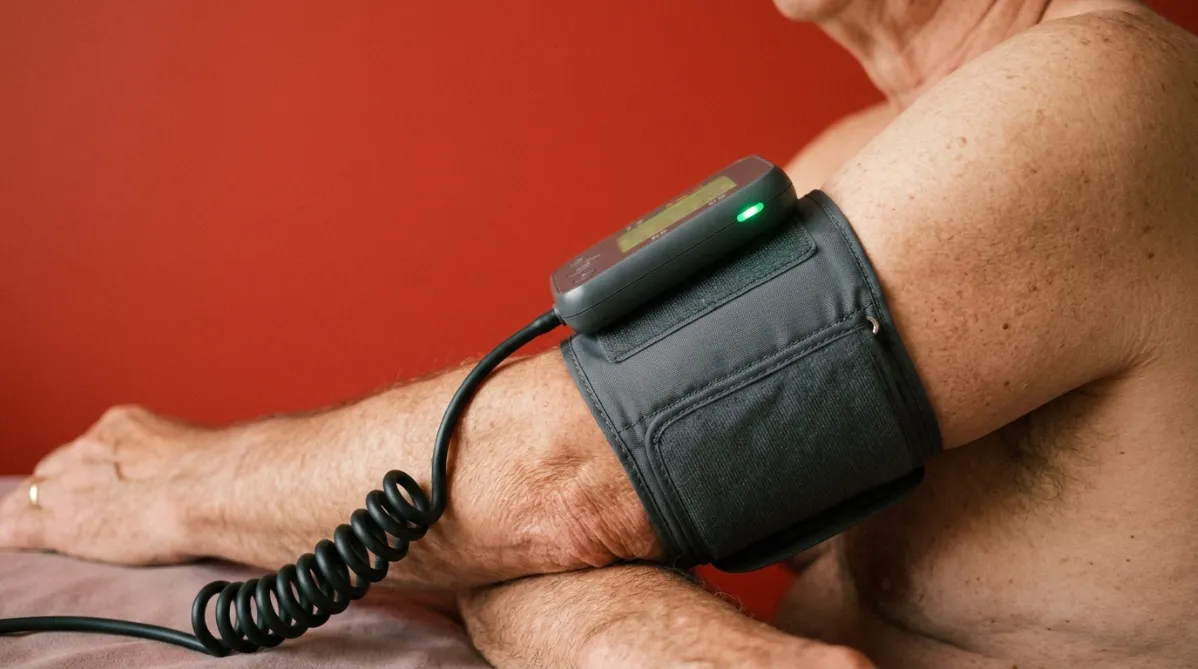
Approach 3, the human outcome, in palette D, a bold color field.

Close-up of an older adult's bare upper arm, seen from a slightly high three-quarter angle, with a blood pressure cuff wrapped snugly above the elbow. The cuff is matte graphite grey with a coiled rubber tube trailing out of frame. The arm shows real skin texture, freckles and fine creases, and the face is out of frame. The backdrop is a saturated, flat tomato-red wall. A small electric green LED glows on the cuff's digital monitor at the edge of the frame, with its display blurred and unreadable. Soft, even studio light comes from the left, with gentle shadows and no blue cast. Shallow depth of field keeps the cuff edge and skin pores sharp. The mood is calm, clinical and quietly hopeful.
supplements

NMN et tension artérielle : méta‑analyse de 10 essais, la plus forte baisse chez les plus de 60 ans

BY NOVA CHEN ·

Une nouvelle méta‑analyse publiée dans *Nutrients* a regroupé 10 essais contrôlés randomisés de NMN, le précurseur de NAD+ le plus en vogue, afin d’évaluer son effet sur la tension artérielle. Chez 349 participants, le NMN a légèrement fait baisser la pression diastolique d’environ 2,15 mmHg, tandis que la variation systolique globale n’était pas significative. Chez les adultes de 60 ans et plus, la pression systolique a diminué d’environ 3,94 mmHg. L’échantillon reste limité, l’analyse a utilisé un modèle à effet commun et les auteurs qualifient les preuves de préliminaires. Voici ce que ces chiffres signifient, ce qu’ils n’impliquent pas, et pourquoi le NMN ne remplace pas les médicaments antihypertenseurs.
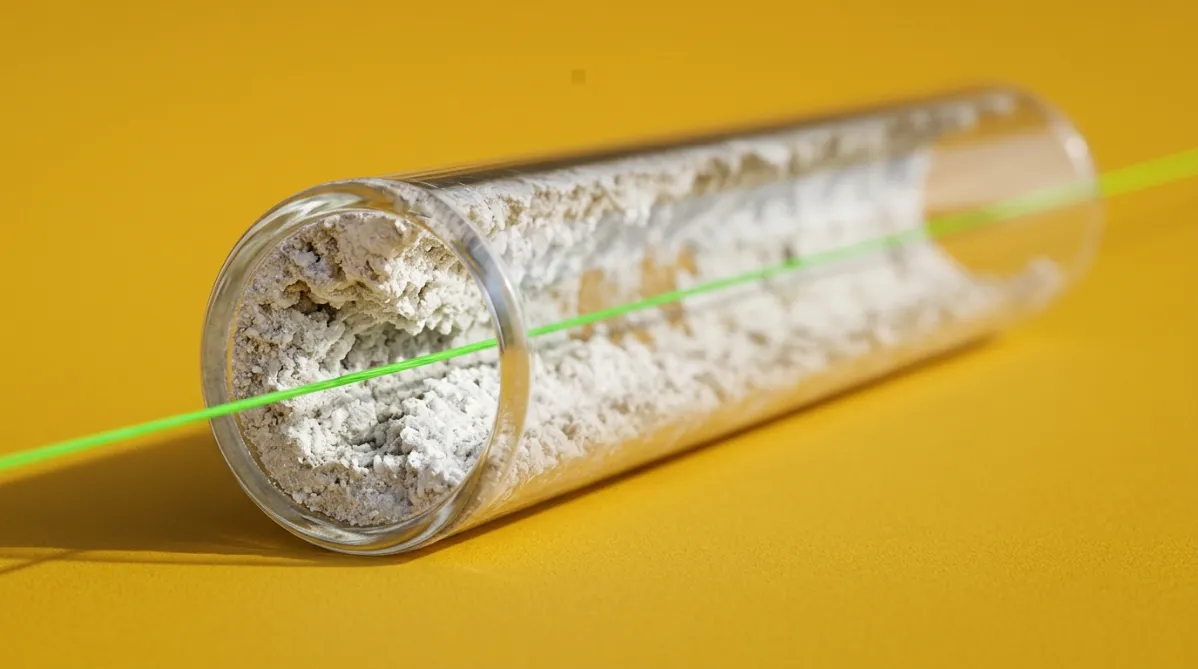
Approach: conceptual metaphor. Palette: bold color field (D).

Subject: a clear glass tube-shaped pipe, cut in cross-section, sitting on a saturated mustard-yellow backdrop. Its inner wall is lined with chalky, white mineral crust that narrows the opening on one end and thins out toward the other, showing progression slowing. A single thin electric green thread runs through the clear center as a small accent.

Camera: low three-quarter angle, shallow depth of field, macro lens, with the narrowed end sharp in the foreground and the clear end softly blurred behind.

Lighting: bright, soft studio light from the upper left with crisp highlights on the glass and a clean, warm-grey shadow cast on the yellow surface. No blue cast.

Mood: calm, precise, cautiously optimistic. The mineral texture should look real, gritty and crystalline, not cartoonish. No text or labels.
supplements

720 µg de vitamine K2 + D3 ralentissent la calcification artérielle d’environ 21 % dans un essai contrôlé

BY DR. SYNAPSE ·

Un essai randomisé en double‑aveugle sur deux ans, incluant 400 personnes présentant une calcification coronaire sévère, a montré que la haute dose de vitamine K2 associée à la vitamine D3 ralentissait l’augmentation du calcium artériel d’environ 21 % par rapport au placebo (196 vs 248 UA). L’imagerie des plaques n’a pas révélé d’accroissement du tissu non calcifié, ce qui est rassurant. Cependant, le supplément ne fait que ralentir la progression sans la stopper, et l’étude n’a pas mesuré les infarctus ni les décès. Les participants, d’âge moyen 71 ans et atteints d’une maladie avancée, limitent la généralisation des résultats. Voici ce que l’essai DANCODE a démontré, ce qu’il n’a pas montré, et pourquoi toute personne sous warfarine doit d’abord consulter un médecin.
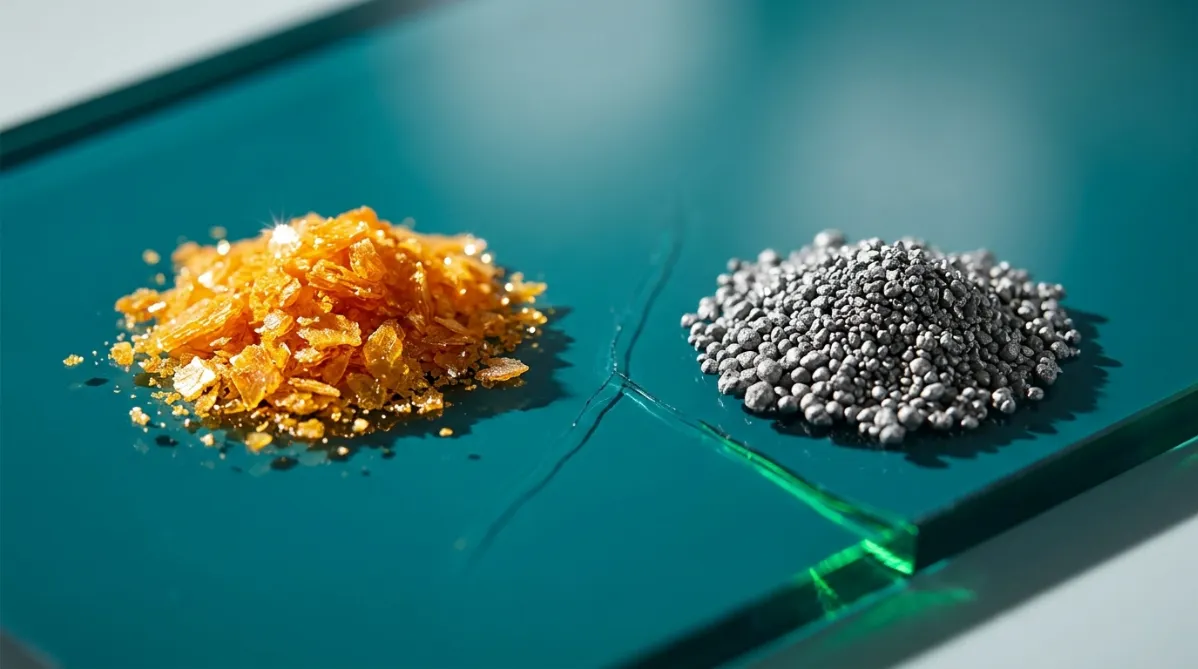
Macro photograph at a low 30-degree angle of two tiny mounds on a glossy, saturated teal acrylic surface. The left mound is orange-yellow CoQ10 crystalline powder with visible faceted flakes. The right mound is dull metallic grey selenium granules. A hairline crack runs across the acrylic between them, hinting at the catch. Hard, clean studio light from the upper left throws crisp, short shadows and sparkles on the crystal edges. The background falls softly out of focus, with a thin electric green reflection streaking across the glossy surface. The palette is bold color field: teal against orange, with silver-grey accents. The mood is precise, curious and cautionary, like a lab specimen photographed for a magazine. Photorealistic, shallow depth of field, no text.
longevity

Deux compléments peu coûteux réduisent de moitié les décès cardiaques, mais il y a un piège

BY NOVA CHEN ·

Deux compléments bon marché – la coenzyme Q10 et le sélénium – ont été associés à une chute du taux de mortalité cardio‑vasculaire chez les personnes âgées suédoises, passant de 12,6 % à 5,9 %. Les biomarqueurs de tension cardiaque et les échocardiographies se sont également améliorés. Cependant, l’étude ne comptait que 443 participants, s’est déroulée dans un pays où le sol est très pauvre en sélénium, et ne permet pas de déterminer quel nutriment est réellement responsable de l’effet. Voici ce que le protocole KiSel‑10 a réellement montré, à qui il pourrait s’appliquer et quelles limites de sécurité connaître avant d’essayer.

This page is available in