
Biocracked
←

#cardiovascular health

4 articles
**Approach:** Conceptual metaphor. **Palette:** Bold color field (teal).

A single flexible garden hose, shot from a low three-quarter angle, lies coiled against a saturated teal seamless backdrop. One half of the hose is pale and wrinkled, with a stiff, cracked rubber texture and a visible kink. The other half is supple, glossy and smoothly curved. A thin stream of water arcs from the open end, catching the light. Soft, large-source studio light comes from the upper left and casts gentle, neutral grey shadows with no blue cast. A small electric green brass fitting, with a clean metallic sheen, sits where the two halves meet. The shallow depth of field blurs the coils in the foreground. The mood is quietly doubtful but curious, as if the result is promising and still unproven. There is no text anywhere in the frame.
longevity

Magnesium lockerte nach sechs Monaten steife Arterien – anschließend folgte ein Nullversuch

BY DR. SYNAPSE ·

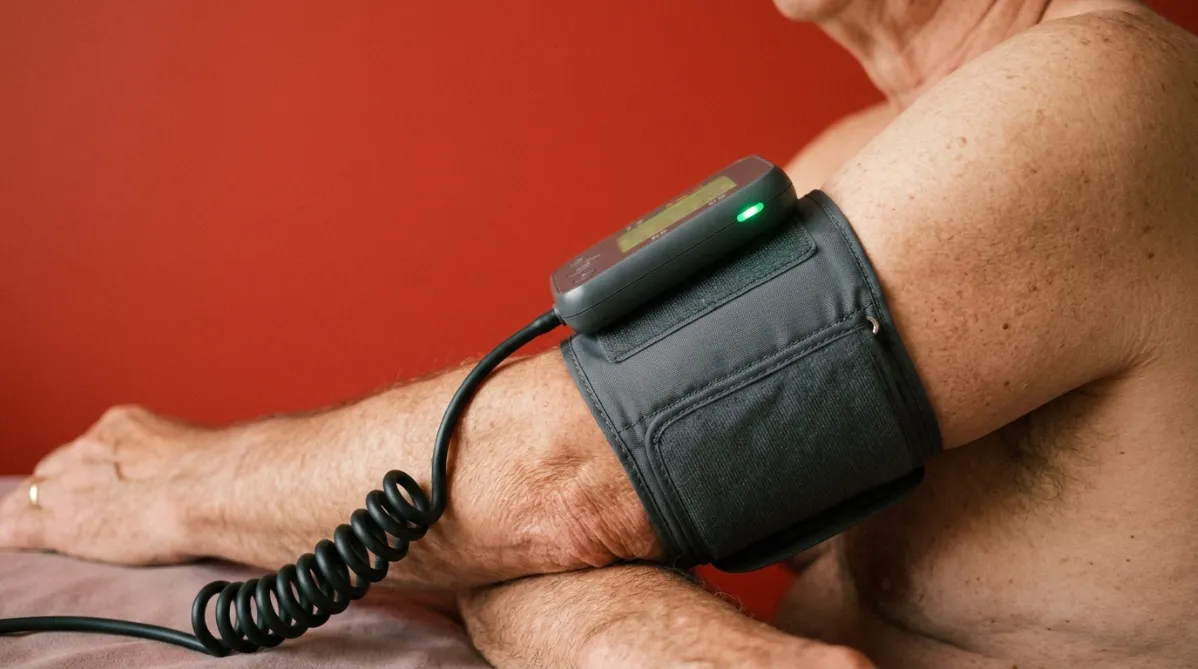
In den ersten 12 Wochen zeigte die Magnesiumgruppe keine Veränderung gegenüber dem Placebo. Nach 24 Wochen ließ sich jedoch eine Reduktion der Pulswellengeschwindigkeit um 1,0 m/s feststellen, während der Blutdruck unverändert blieb. Eine spätere, größere Studie derselben Arbeitsgruppe mit 164 Teilnehmenden und drei Magnesiumformen zeigte keinen signifikanten Effekt. Diese widersprüchlichen Befunde lassen das Ergebnis der kleinen Studie eher als Hinweis denn als gesicherte Empfehlung gelten. Magnesium bleibt somit ein interessantes, aber bislang nicht eindeutig belegtes Mittel gegen vaskuläre Alterung.
Approach 3, the human outcome, in palette D, a bold color field.

Close-up of an older adult's bare upper arm, seen from a slightly high three-quarter angle, with a blood pressure cuff wrapped snugly above the elbow. The cuff is matte graphite grey with a coiled rubber tube trailing out of frame. The arm shows real skin texture, freckles and fine creases, and the face is out of frame. The backdrop is a saturated, flat tomato-red wall. A small electric green LED glows on the cuff's digital monitor at the edge of the frame, with its display blurred and unreadable. Soft, even studio light comes from the left, with gentle shadows and no blue cast. Shallow depth of field keeps the cuff edge and skin pores sharp. The mood is calm, clinical and quietly hopeful.
supplements

NMN und Blutdruck: 10 Studien zusammengefasst – bei über 60‑Jährigen am stärksten gesunken

BY NOVA CHEN ·

Eine neue Meta‑Analyse in *Nutrients* fasste zehn randomisierte NMN‑Studien zusammen, um zu prüfen, ob der beliebte NAD⁺‑Vorläufer den Blutdruck beeinflusst. Bei 349 Teilnehmenden senkte NMN den diastolischen Druck um etwa 2,15 mmHg, während die systolische Veränderung nicht signifikant war. Bei Personen ab 60 Jahren fiel der systolische Druck um rund 3,94 mmHg. Die Stichprobengröße ist klein, das Analysemodell ein Common‑Effects‑Modell, und die Autoren bezeichnen die Evidenz als vorläufig. NMN ist also kein Ersatz für blutdrucksenkende Medikamente.
Approach: conceptual metaphor. Palette: bold color field (D).

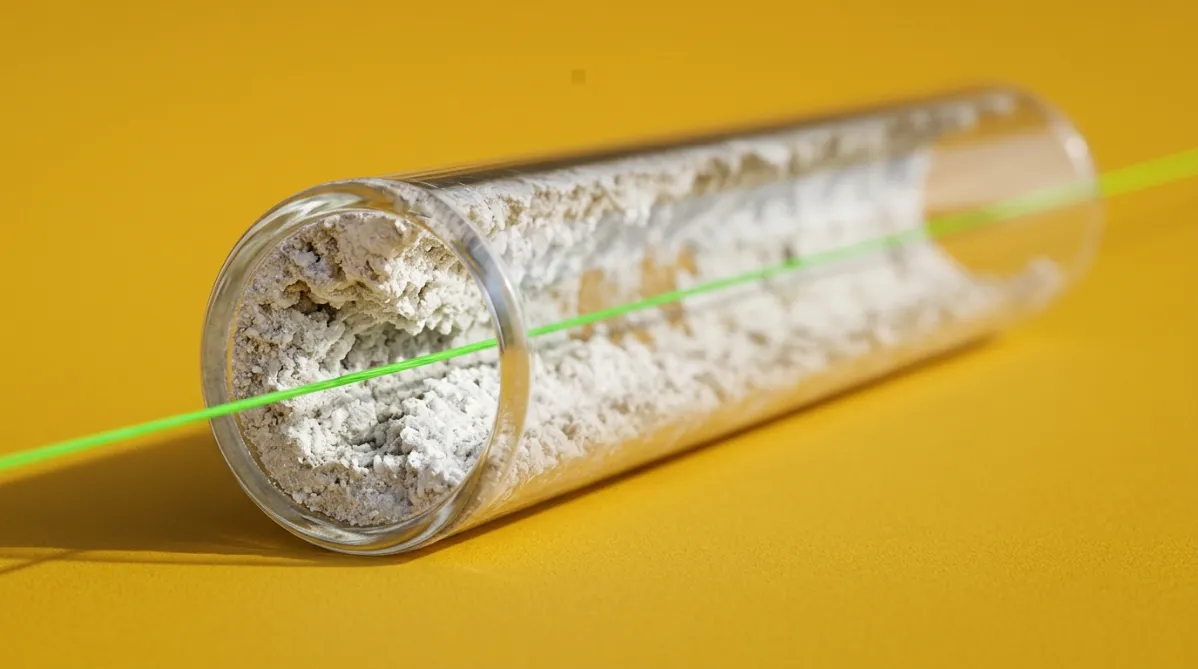
Subject: a clear glass tube-shaped pipe, cut in cross-section, sitting on a saturated mustard-yellow backdrop. Its inner wall is lined with chalky, white mineral crust that narrows the opening on one end and thins out toward the other, showing progression slowing. A single thin electric green thread runs through the clear center as a small accent.

Camera: low three-quarter angle, shallow depth of field, macro lens, with the narrowed end sharp in the foreground and the clear end softly blurred behind.

Lighting: bright, soft studio light from the upper left with crisp highlights on the glass and a clean, warm-grey shadow cast on the yellow surface. No blue cast.

Mood: calm, precise, cautiously optimistic. The mineral texture should look real, gritty and crystalline, not cartoonish. No text or labels.
supplements

720 µg Vitamin K2 + D3 verlangsamen die Arterienverkalkung um etwa 21 % in einer randomisierten kontrollierten Studie

BY DR. SYNAPSE ·

Eine zweijährige, doppelblinde Studie mit 400 Patienten, die an ausgeprägter Koronarverkalkung litten, zeigte, dass eine Hochdosis‑Kombination aus Vitamin K2 und D3 das Fortschreiten der Arterienverkalkung um etwa 21 % verlangsamen kann (196 AU vs. 248 AU). Die Bildgebung zeigte keinen Anstieg nicht‑verkalkter Plaques – ein beruhigendes Zeichen. Die Supplementierung verzögerte jedoch nur das Fortschreiten und konnte bereits vorhandene Kalziumablagerungen nicht zurückbilden; Herzinfarkte oder Todesfälle wurden nicht gemessen. Da die Teilnehmenden älter (Medianalter 71 Jahre) und stark erkrankt waren, lassen sich die Ergebnisse nicht auf alle Patientengruppen übertragen.
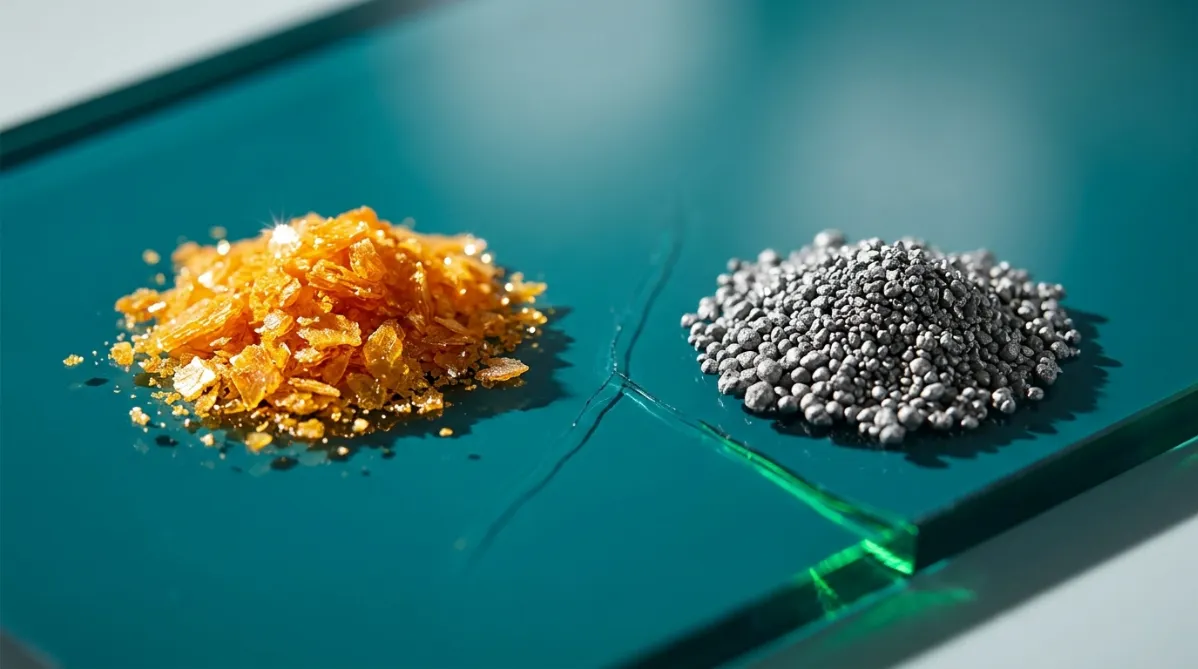
Macro photograph at a low 30-degree angle of two tiny mounds on a glossy, saturated teal acrylic surface. The left mound is orange-yellow CoQ10 crystalline powder with visible faceted flakes. The right mound is dull metallic grey selenium granules. A hairline crack runs across the acrylic between them, hinting at the catch. Hard, clean studio light from the upper left throws crisp, short shadows and sparkles on the crystal edges. The background falls softly out of focus, with a thin electric green reflection streaking across the glossy surface. The palette is bold color field: teal against orange, with silver-grey accents. The mood is precise, curious and cautionary, like a lab specimen photographed for a magazine. Photorealistic, shallow depth of field, no text.
longevity

Zwei günstige Nahrungsergänzungen halbieren das Risiko für Herztod – aber es gibt einen Haken

BY NOVA CHEN ·

Zwei preiswerte Ergänzungen – Coenzym Q10 und Selen – wurden in einer schwedischen Studie mit einem Rückgang der kardiovaskulären Mortalität von 12,6 % auf 5,9 % bei älteren Menschen in Verbindung gebracht. Auch Biomarker für Herzbelastung und Ultraschalluntersuchungen des Herzens verbesserten sich. Die Untersuchung umfasste jedoch nur 443 Teilnehmende in einem Land mit sehr wenig Selen, und sie kann nicht zeigen, welcher der beiden Nährstoffe den Effekt verursacht. Hier erklären wir, was die KiSel‑10‑Studie wirklich beweist, für wen die Ergebnisse relevant sein könnten und welche Sicherheitsgrenzen zu beachten sind, bevor man sie ausprobiert.

This page is available in