Biocracked
←

#meta-analysis

3 articles
**Approach:** Macro science. **Palette:** D, bold color field.

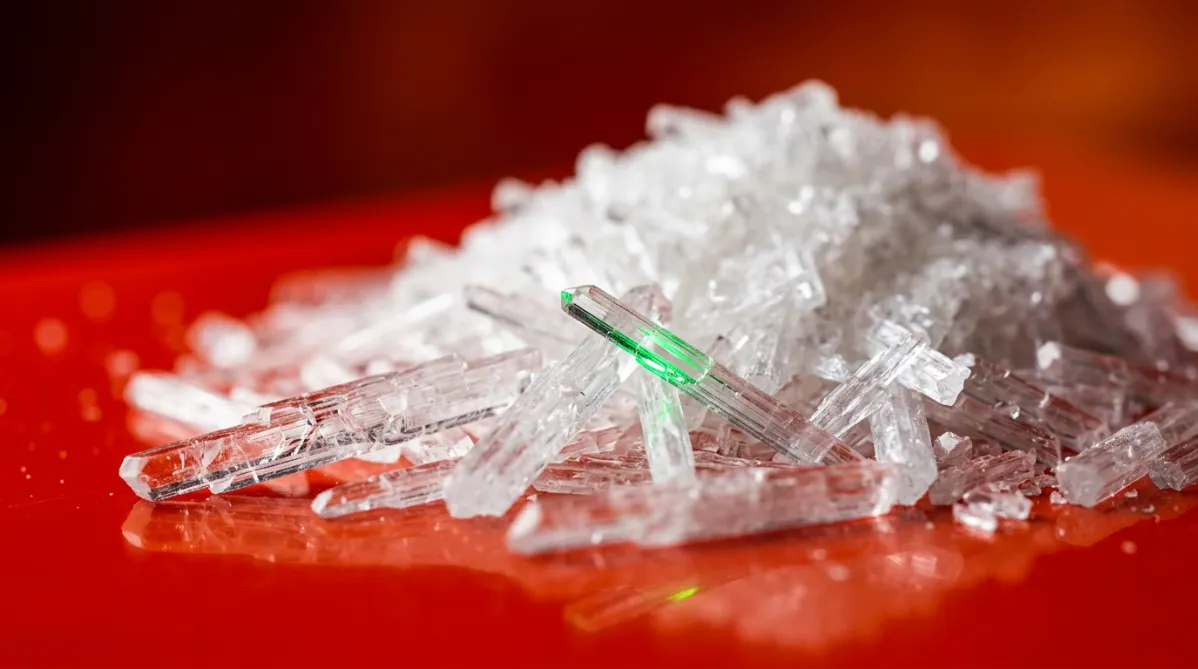
Extreme close-up of a small mound of white taurine crystals, needle-like and prismatic, shot at a 35-degree angle with a macro lens and shallow depth of field. The front crystals are razor sharp, with faceted edges that catch light and show tiny internal fractures. The mound sits on a glossy, saturated tomato-red acrylic surface that reflects a soft, blurred mirror image of the crystals. A large softbox from the upper left gives crisp highlights and warm red bounce in the shadows. A single crystal near the focal point carries a faint electric green (#00e676) refraction glint. The background melts into an out-of-focus gradient of deep red and orange. The mood is precise, energetic and confident, with a clean scientific feel. No text, no labels, no containers.
supplements

El punto óptimo de 1,5–3 g de taurina: lo que 34 ensayos hallaron sobre glucosa y presión arterial

BY NOVA CHEN ·

La taurina es más conocida por su reputación anti‑envejecimiento, pero un nuevo metaanálisis de 34 ensayos aleatorizados examinó marcadores de salud habituales. La suplementación se asoció a menores niveles de glucosa en ayunas, HbA1c, triglicéridos, colesterol, presión arterial e inflamación. Los efectos se concentraron entre 1,5 y 3 g al día, y la duración mostró patrones curiosos: la glucosa y los lípidos mejoraron más después de ocho semanas o más, mientras que la presión arterial y la inflamación respondieron mejor en ensayos más cortos. Los efectos son modestos y los estudios fueron heterogéneos; a continuación se explica qué demuestra realmente el artículo y a quién conviene ser cauteloso.
Approach 4, conceptual metaphor, in palette D, bold color field.

A single AA-style cylindrical battery, shown as a real physical object with a matte metal casing, stands upright at the center of a saturated tomato-red seamless paper backdrop. Its top half is bright and glossy, while the lower half is scuffed and dull. A thin, crisp line of electric green liquid light fills the clear gauge window along its side, stopping about three-quarters of the way up. Three smaller, identical dead batteries lie tipped over in the foreground, slightly out of focus, to suggest the rival compounds. The camera sits at a low three-quarter angle with a shallow depth of field. A hard, warm key light from the upper left casts a sharp, long shadow across the red surface. The mood is punchy and skeptical: one cell charged, the others spent.
supplements

NMN vs NR vs NADH: uno mejoró la resistencia, ninguno la fatiga

BY NOVA CHEN ·

Un nuevo meta‑análisis de red que incluye 27 estudios y 1 599 adultos comparó NMN, NR, NADH y nicotinamida. Los resultados no coinciden con lo que promete el marketing de suplementos. NMN mostró un aumento de la resistencia dependiente de la dosis, con una diferencia media estandarizada de 1,02 en la dosis alta. NADH lideró en mejoras cognitivas, pero mayormente en grupos con deterioro cognitivo y con resultados sensibles a estudios influyentes. La sorpresa fue que ningún precursor mejoró significativamente la fatiga percibida ni el sueño.
Approach 3, the human outcome, in palette D, a bold color field.

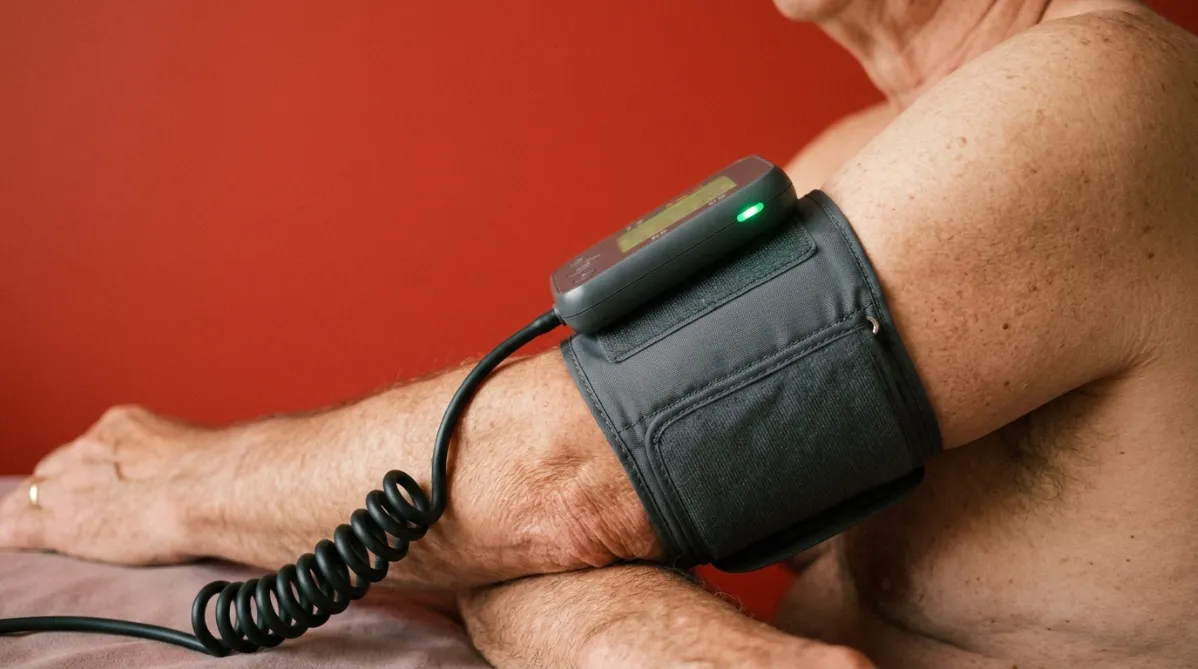
Close-up of an older adult's bare upper arm, seen from a slightly high three-quarter angle, with a blood pressure cuff wrapped snugly above the elbow. The cuff is matte graphite grey with a coiled rubber tube trailing out of frame. The arm shows real skin texture, freckles and fine creases, and the face is out of frame. The backdrop is a saturated, flat tomato-red wall. A small electric green LED glows on the cuff's digital monitor at the edge of the frame, with its display blurred and unreadable. Soft, even studio light comes from the left, with gentle shadows and no blue cast. Shallow depth of field keeps the cuff edge and skin pores sharp. The mood is calm, clinical and quietly hopeful.
supplements

NMN y presión arterial: análisis de 10 ensayos, la mayor reducción se observó en mayores de 60 años

BY NOVA CHEN ·

Un nuevo meta‑análisis publicado en *Nutrients* agrupó 10 ensayos aleatorizados con NMN, el precursor de NAD+ más popular, para evaluar su efecto sobre la presión arterial. En 349 participantes, NMN redujo modestamente la presión diastólica en torno a 2,15 mmHg, mientras que el cambio sistólico global no fue significativo. En adultos de 60 años o más, la presión sistólica descendió aproximadamente 3,94 mmHg. Sin embargo, la muestra es reducida, se usó un modelo de efectos comunes y los autores advierten que la evidencia es preliminar.

This page is available in