Biocracked
←

#urolithin d

1 article
Approach 4, conceptual metaphor, in palette D, bold color field.

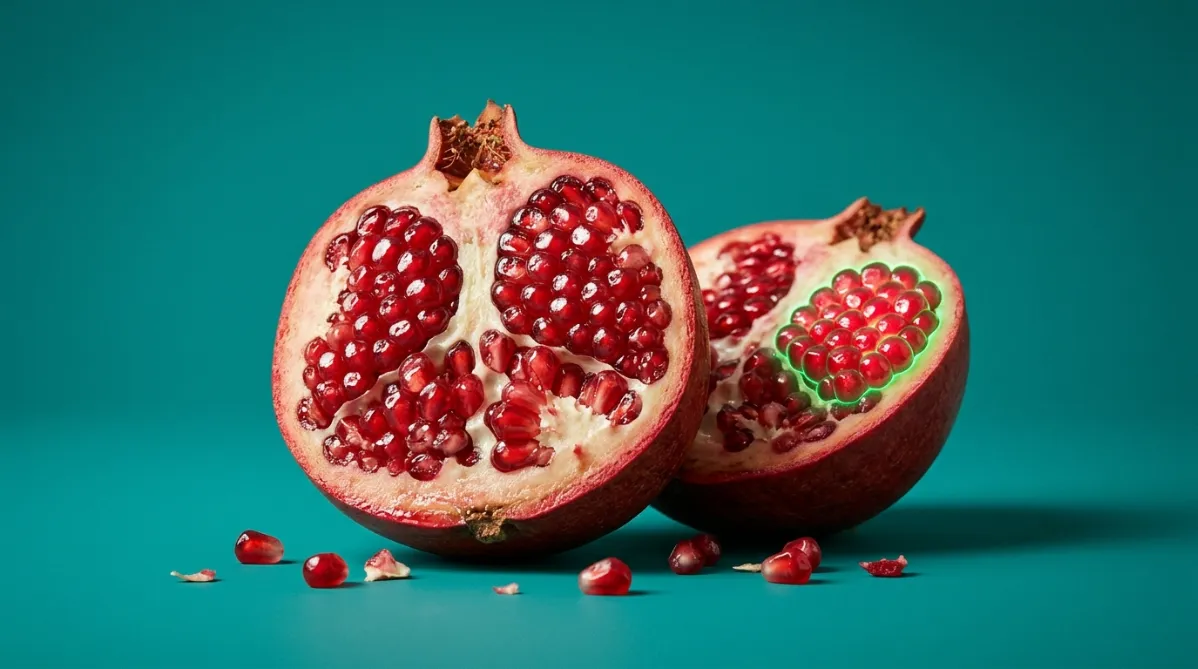
A single pomegranate, split open, sits at the center of a saturated teal backdrop. It is photographed from a slightly high three-quarter angle with a macro lens. One half is pulled slightly forward and the other stays behind it, which hints at two close siblings. The ruby arils are glossy and densely packed. In the smaller half, a few arils glow with a subtle electric green rim light, as if one has been singled out. Pomegranate is a natural source of the precursors that gut bacteria convert into urolithins. Soft, large-source studio light comes from the upper left. It casts crisp, clean shadows on a seamless teal surface and gives the red fruit sharp specular highlights. A few arils are scattered nearby. The mood is curious, vivid and quietly scientific, with a strong red-against-teal contrast and no text.
longevity

Urolithin D 对比 A:这位鲜为人知的兄弟保护小鼠记忆

BY NOVA CHEN ·

Urolithin A 总是抢尽风头,但它那鲜为人知的兄弟——Urolithin D,最近在老化小鼠实验中显示出脑保护作用。研究采用 D-半乳糖诱导的老化模型,口服 Urolithin D 可改善记忆表现并减轻海马损伤,且涉及 AMPK、PGC-1α、SIRT3 信号通路及线粒体自噬标志物。细胞实验进一步表明,阻断 AMPK 或 PGC-1α 会抵消其益处。需注意,这仅是化学诱导的鼠模型加细胞实验,尚无人体数据,且文中未将 Urolithin D 与 Urolithin A 直接比较。下面我们来看看这意味着什么、Urolithin 的来源,以及目前该怎么做(或不做)。

This page is available in