Biocracked
←

#urolithin d

1 article
Approach 4, conceptual metaphor, in palette D, bold color field.

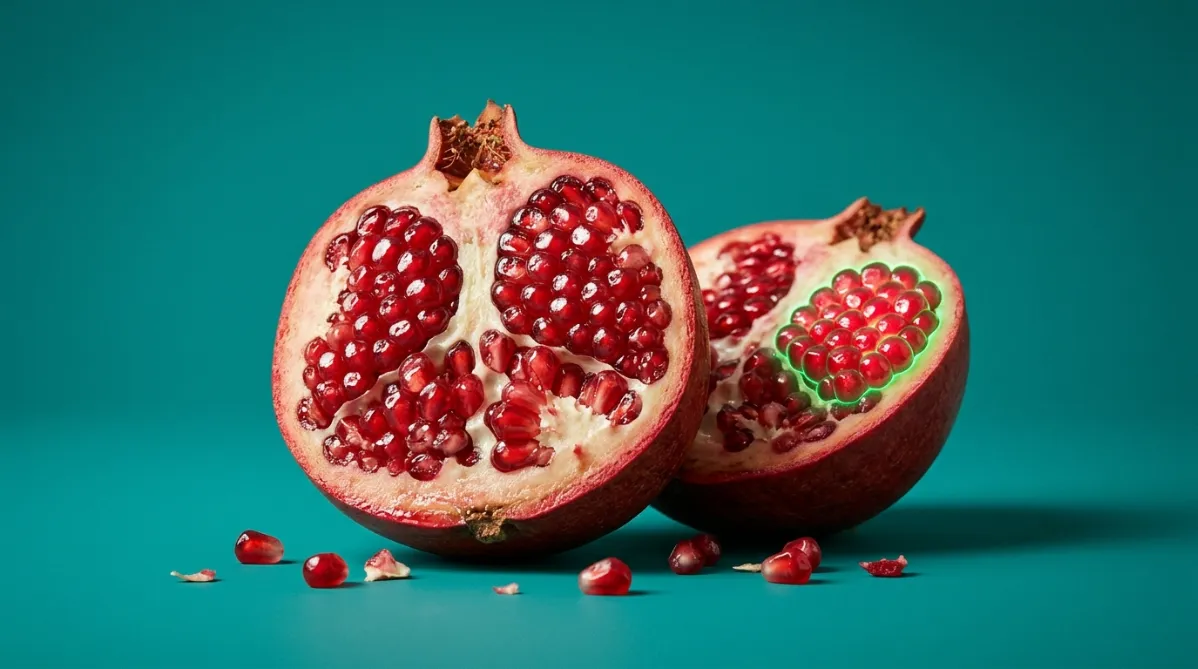
A single pomegranate, split open, sits at the center of a saturated teal backdrop. It is photographed from a slightly high three-quarter angle with a macro lens. One half is pulled slightly forward and the other stays behind it, which hints at two close siblings. The ruby arils are glossy and densely packed. In the smaller half, a few arils glow with a subtle electric green rim light, as if one has been singled out. Pomegranate is a natural source of the precursors that gut bacteria convert into urolithins. Soft, large-source studio light comes from the upper left. It casts crisp, clean shadows on a seamless teal surface and gives the red fruit sharp specular highlights. A few arils are scattered nearby. The mood is curious, vivid and quietly scientific, with a strong red-against-teal contrast and no text.
longevity

Urolithin D vs. A – zapomniany brat chroniący pamięć myszy

BY NOVA CHEN ·

Urolithin A przyciąga całą uwagę, ale jego mniej znany brat, urolithin D, wykazał ochronne działanie na mózg starzejących się myszy. W modelu starzenia wywołanym D‑galaktozą doustny urolithin D poprawił wyniki pamięciowe i zmniejszył uszkodzenia hipokampu, wiążąc to z szlakiem AMPK‑PGC‑1α‑SIRT3 oraz markerami mitofagii. Eksperymenty komórkowe pokazały, że blokada AMPK lub PGC‑1α wymazała ten efekt. Badanie opiera się jednak na modelu chemicznie indukowanego starzenia u myszy oraz testach in vitro, nie ma danych klinicznych i nie porównano urolithinu D z urolithinem A. Oto, co to oznacza, skąd pochodzą urolithiny i co można (a czego nie należy) zrobić w międzyczasie.

This page is available in