Biocracked
←

#urolithin d

1 article
Approach 4, conceptual metaphor, in palette D, bold color field.

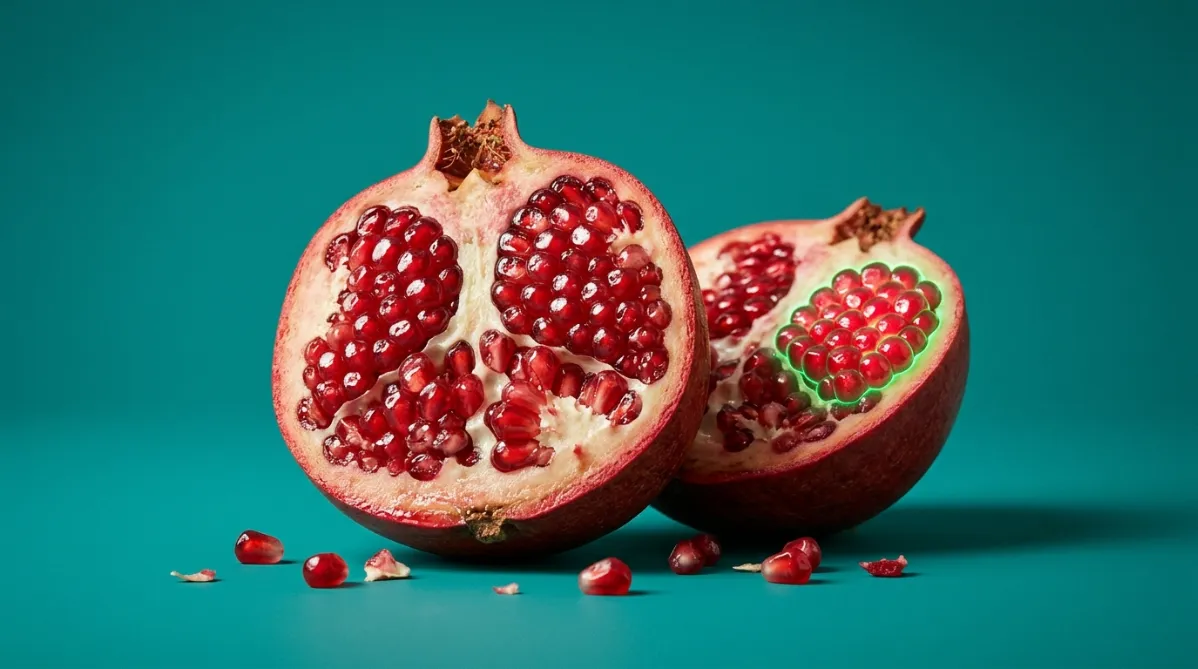
A single pomegranate, split open, sits at the center of a saturated teal backdrop. It is photographed from a slightly high three-quarter angle with a macro lens. One half is pulled slightly forward and the other stays behind it, which hints at two close siblings. The ruby arils are glossy and densely packed. In the smaller half, a few arils glow with a subtle electric green rim light, as if one has been singled out. Pomegranate is a natural source of the precursors that gut bacteria convert into urolithins. Soft, large-source studio light comes from the upper left. It casts crisp, clean shadows on a seamless teal surface and gives the red fruit sharp specular highlights. A few arils are scattered nearby. The mood is curious, vivid and quietly scientific, with a strong red-against-teal contrast and no text.
longevity

Urolitin D naspram A: Zaboravljeni brat koji štiti pamćenje kod miševa

BY NOVA CHEN ·

Urolitin A dobija svu pažnju, ali njegov manje poznati brat, urolitin D, pokazao je neurozaštitna dejstva kod starijih miševa. U modelu starenja izazvanom D‑galaktozom, oralni urolitin D poboljšao je pokazatelje pamćenja i smanjio oštećenja hipokampusa, povezujući to sa signalizacijom AMPK, PGC‑1α i SIRT3 i markerima mitofagije. Ćelijski eksperimenti su pokazali da blokiranje AMPK ili PGC‑1α poništava ovaj benefic. Međutim, radi se o hemijski induciranom modelu miševa uz ćelijske eksperimente, bez podataka na ljudima, a studija nije uporedila urolitin D sa urolitinom A. Evo šta to znači, odakle urolitini potiču i šta (i kako) raditi u međuvremenu.

This page is available in