Biocracked
←

#urolithin d

1 article
Approach 4, conceptual metaphor, in palette D, bold color field.

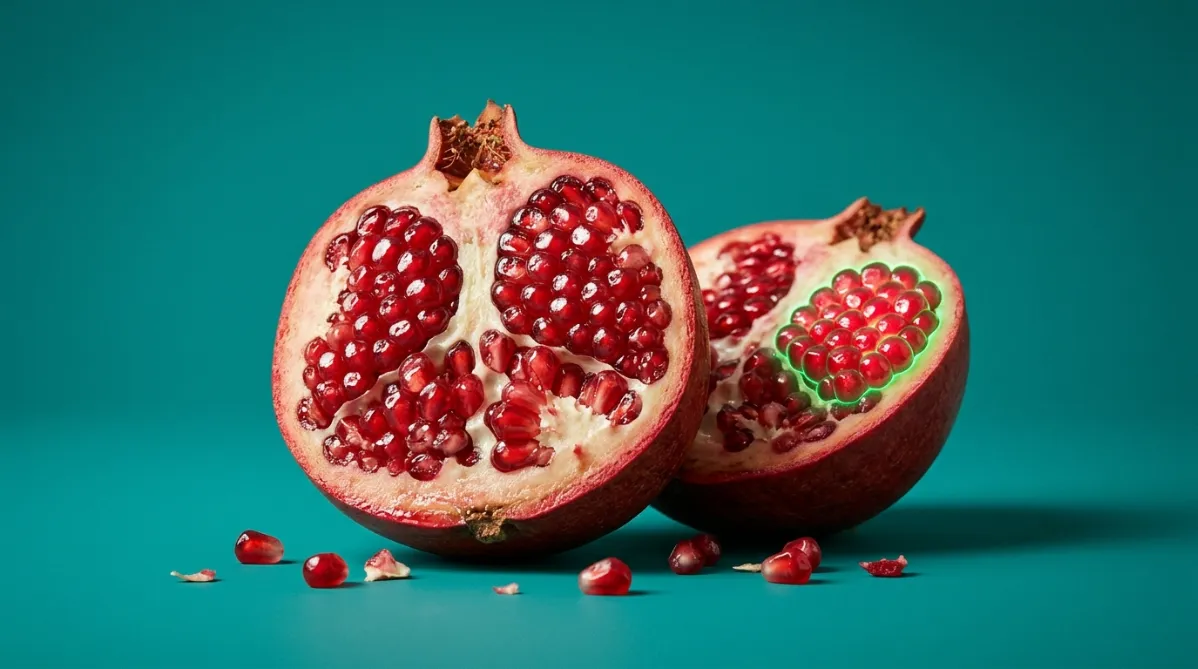
A single pomegranate, split open, sits at the center of a saturated teal backdrop. It is photographed from a slightly high three-quarter angle with a macro lens. One half is pulled slightly forward and the other stays behind it, which hints at two close siblings. The ruby arils are glossy and densely packed. In the smaller half, a few arils glow with a subtle electric green rim light, as if one has been singled out. Pomegranate is a natural source of the precursors that gut bacteria convert into urolithins. Soft, large-source studio light comes from the upper left. It casts crisp, clean shadows on a seamless teal surface and gives the red fruit sharp specular highlights. A few arils are scattered nearby. The mood is curious, vivid and quietly scientific, with a strong red-against-teal contrast and no text.
longevity

Urolithin D vs. A: The Obscure Sibling That Shielded Mouse Memory

BY NOVA CHEN ·

Urolithin A gets all the attention, but its lesser-known sibling, urolithin D, just showed brain-protective effects in aging mice. In a D-galactose-induced aging model, oral urolithin D improved memory-related outcomes and reduced hippocampal damage, tied to AMPK, PGC-1α and SIRT3 signaling and mitophagy markers. Cell experiments showed that blocking AMPK or PGC-1α erased the benefit. But this is a chemically induced mouse model plus cell work, with no human data, and the study did not compare urolithin D with urolithin A. Here is what it means, where urolithins come from, and what to do (and skip) in the meantime.

This page is available in